Calendula Oil in Your Face Routine: Step by Step
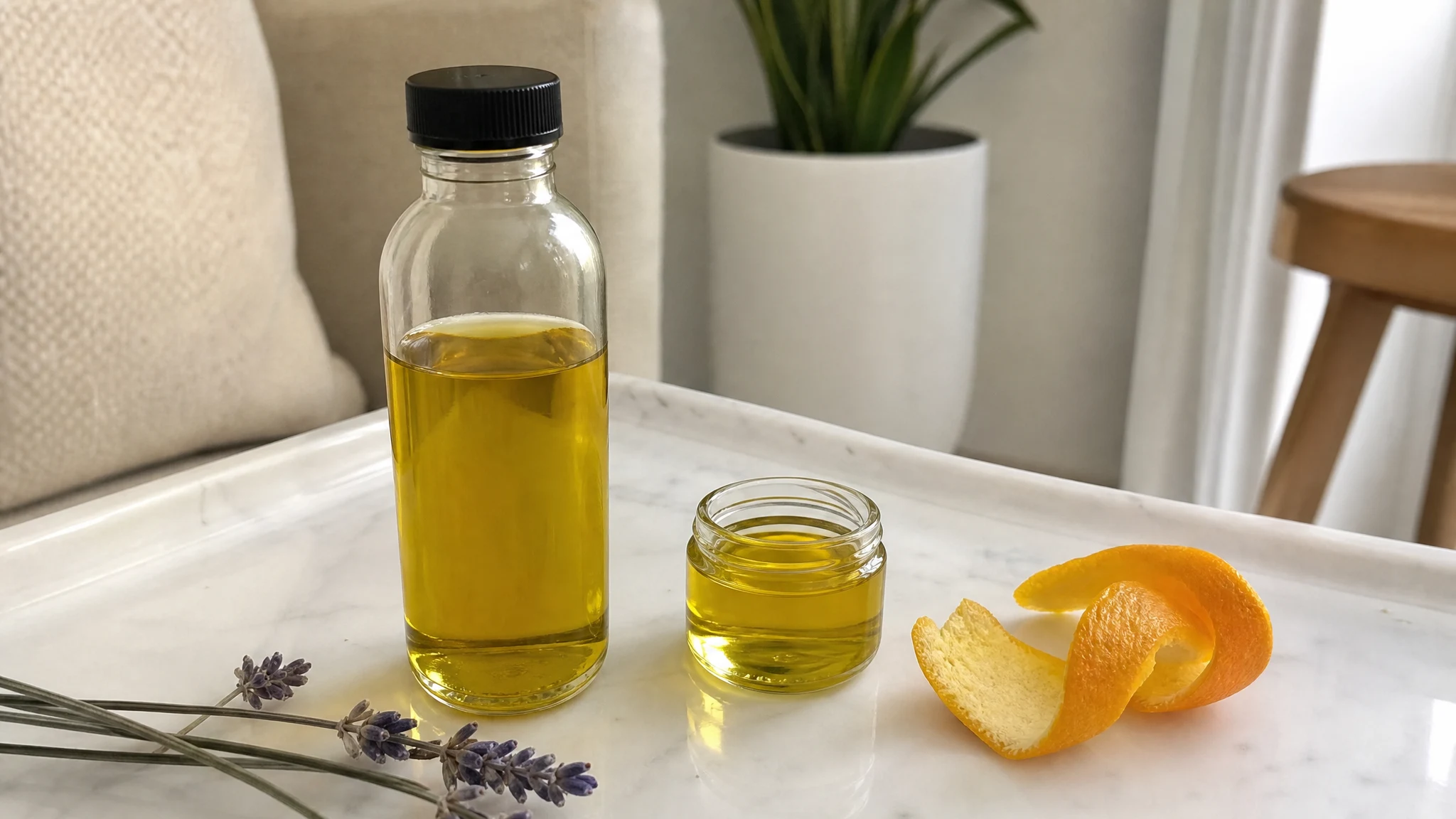
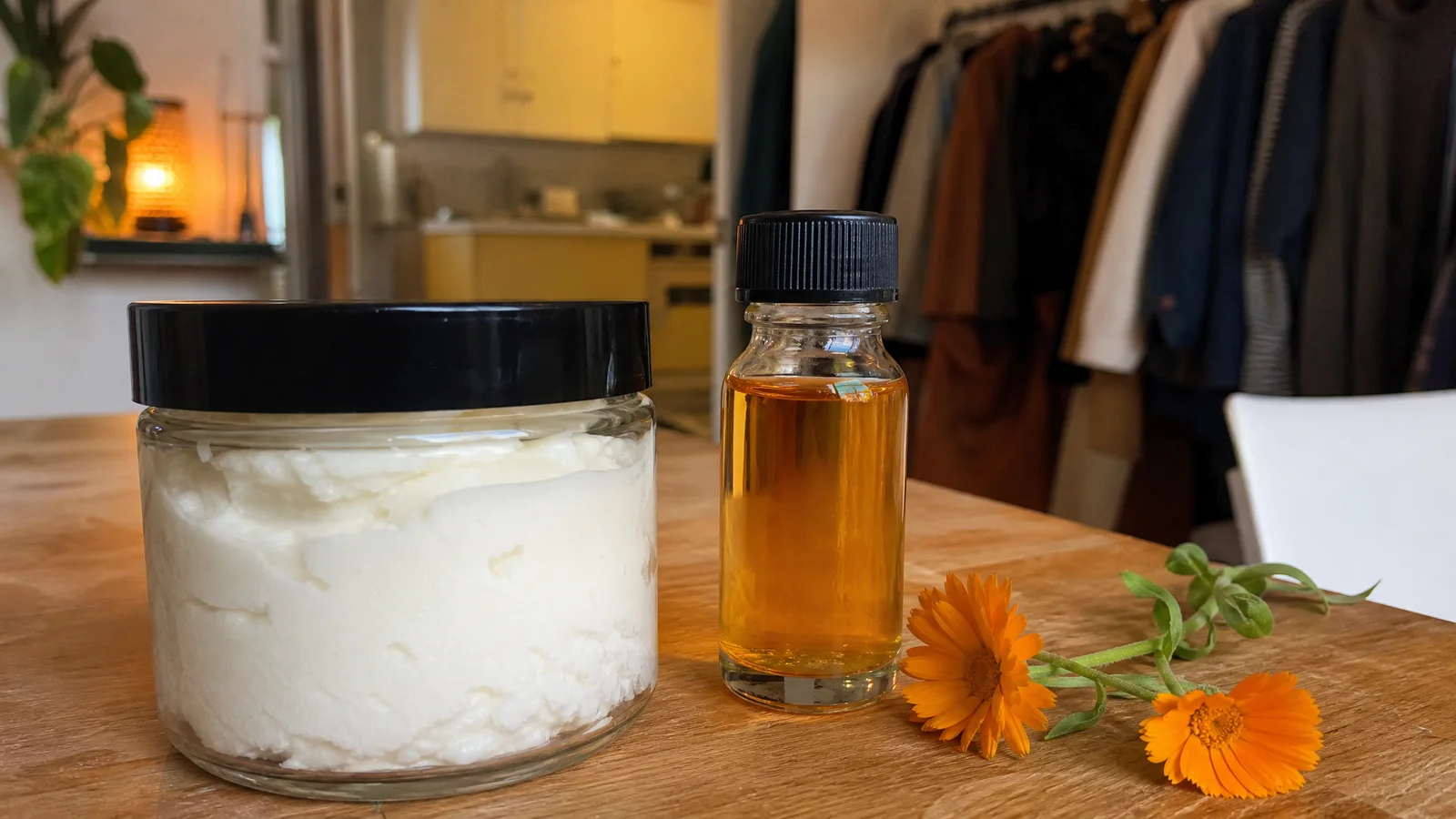
If you want to add calendula oil to your face routine, the simplest place for it is the very last step of your evening. That one decision answers most of the questions people have: it sits on top of everything else, it stays out of the way of your daytime sunscreen, and it gives you a quiet moment to see how your skin likes it. Here is how we would build the routine around it.
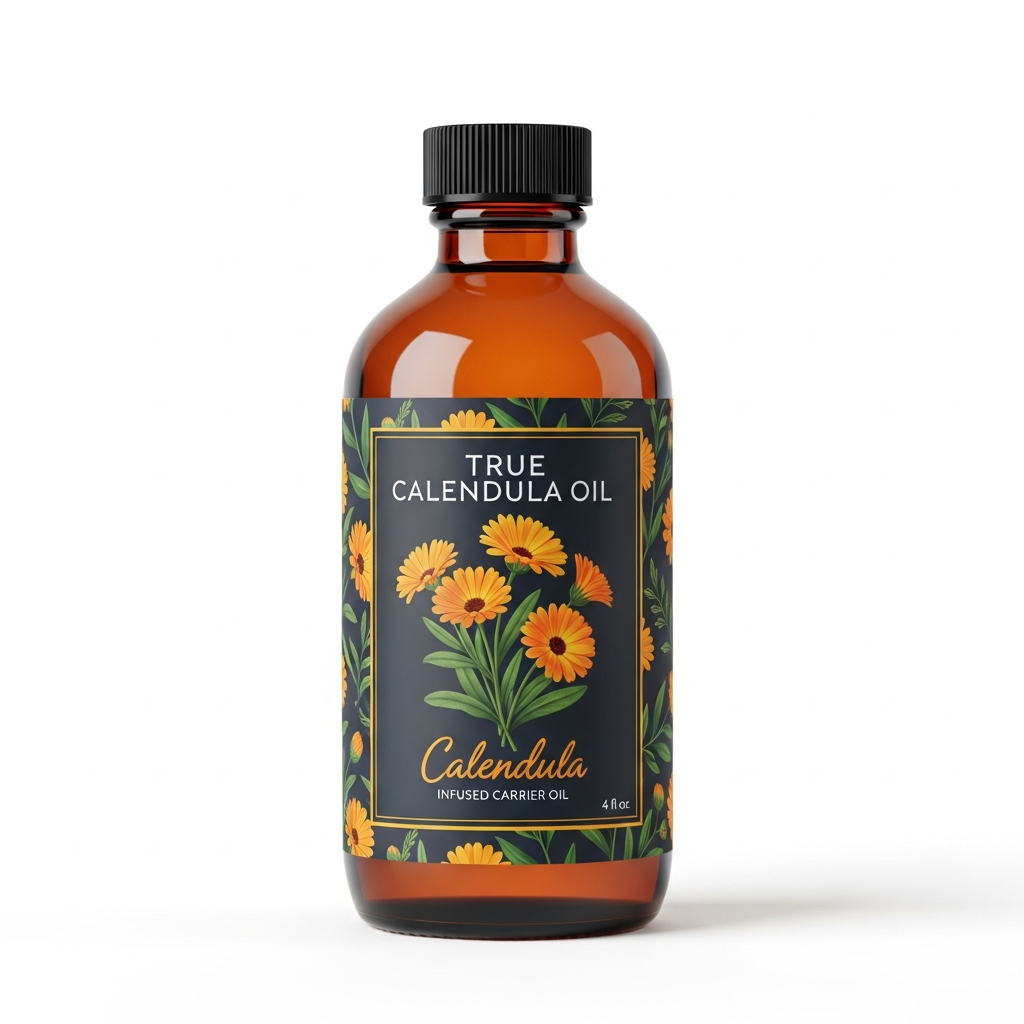
Calendula Oil
Our own small-batch calendula oil, in sizes from 0.5 oz to bulk.
From $13.99
Shop Calendula Oil →Gentle cleansing before any face oil
A calendula oil does not replace a cleanser or a moisturizer, so the foundation is the American Academy of Dermatology's face-washing advice (Face washing 101). Use a gentle, non-abrasive cleanser without alcohol and lukewarm water. Wash with your fingertips rather than washcloths or mesh sponges, skip the scrubbing, pat dry, and wash twice a day and after sweating. The same page suggests a moisturizer when skin feels dry or itchy.
That gives a natural order for the evening: cleanse, add a water-based moisturizer if your skin wants one, then finish with a thin layer of calendula oil. An oil contains no water, so it works best as a top layer over a water-based step. Skin that loves a plain oil may not need the moisturizer at all.
How thin should a calendula oil layer be?
We do not give a drop count, because no source offers one for the face and every face is different. Begin with the smallest amount that spreads thinly. Our oil is an infused oil, made by extracting calendula on its own and bringing the extract into a carrier oil, so how it feels on the skin depends in part on that carrier. If you want to know which one is in your bottle, email us the lot number at support@truecalendulaoil.com and we will send the batch paperwork.
Change nothing else in your routine that first week. If skin looks and feels comfortable, you can carry on. If a breakout or redness appears, you will know the new oil is the likely cause, and you can stop. Our piece on comedogenicity explains why published pore-clogging ratings are a weak guide and why your own skin is the best test.
How does a face oil feel once applied?
Pour two drops into your palm, rub your palms together to warm it, and press the oil onto the cheeks, forehead and chin. Sweep gently upward along the jaw. You will notice a soft sheen at first, and it should settle within several minutes into a smooth, slightly dewy finish. If the sheen is still there when you turn off the light, use fewer drops tomorrow.
Patch testing calendula oil before first use
Calendula belongs to the daisy family (Asteraceae). The European herbal monograph lists hypersensitivity to that family as a contraindication, notes that skin sensitization has been reported, and says safety in pregnancy and breastfeeding, and skin use under age 6, has not been established (European Union herbal monograph on Calendula officinalis L., flos). If any of that applies to you, check with your doctor, midwife or pediatrician before using it.
For everyone else, a patch test costs a week and spares your face a surprise. Dermatologists use the repeated open application test, which in its original form applies a product to the inner forearm twice a day for seven days (The repeated open application test (ROAT)). Our patch test walkthrough has the steps.
Pillowcase tinting from golden face oil
Oil on skin can transfer to fabric, and calendula oil has a golden color, so a light pillowcase may pick up a tint. While you are trying it, use an older or darker case, and wash it on your usual day. It is a small thing that saves a lot of surprise.
Our recommendation is to give the oil one fixed place in the routine, the last step of the evening, and leave it there for a few weeks before you move anything. The routine is easier to judge when it is easy to remember.
Is calendula oil optional in the morning routine?
Some people like a few drops of oil under a tinted moisturizer for a dewy finish, and that is a matter of taste. Calendula oil is not a sunscreen and does not stand in for one, so if you go outdoors, rely on a sunscreen you trust and follow its label. Keeping the oil for evenings keeps the two jobs separate and easy to understand.
Keeping oil out of eyes and spotting irritation
Keep oil away from the eyes. The Cosmetic Ingredient Review panel concluded that calendula-derived ingredients are safe in cosmetics as used but may be mild ocular irritants (Final report of the Cosmetic Ingredient Review Expert Panel amended safety assessment of Calendula officinalis-derived cosmetic ingredients). If you notice burning, a rash or lasting redness, stop using it and contact a healthcare provider, as the FDA advises for any cosmetic (Using Cosmetics Safely). Skin conditions such as acne, rosacea or eczema belong with a dermatologist, who can tell you what suits your skin.
Done this way, calendula oil is a small, pleasant end to the day: a golden, lightly herbal layer on clean skin. Our guide on using calendula oil on your face answers the follow-up questions, and the oil cleansing article covers the other way to use it on the face.
Calendula Oil
Nature's Golden Botanical, bottled: small-batch calendula oil in sizes from 0.5 oz to bulk.
From $13.99
Shop Calendula Oil →Sources & Further Reading
- American Academy of Dermatology, "Face washing 101." aad.org
- Hannuksela M, Salo H, "The repeated open application test (ROAT)." Contact Dermatitis, 1986. PubMed
- European Medicines Agency, "European Union herbal monograph on Calendula officinalis L., flos" (EMA/HMPC/437450/2017). ema.europa.eu
- Andersen FA et al., "Final report of the Cosmetic Ingredient Review Expert Panel amended safety assessment of Calendula officinalis-derived cosmetic ingredients." Int J Toxicol, 2010. PubMed
- US Food and Drug Administration, "Using Cosmetics Safely." fda.gov