Can You Put Calendula Oil in Candles? What to Know
A calendula candle is a lovely idea: golden wax, a flower on the label, a little sunshine in a jar. Before you pour, it helps to know what calendula oil does and does not do in wax, because that shapes every choice after. Spoiler: it brings color and a good story, and the fragrance comes from somewhere else.
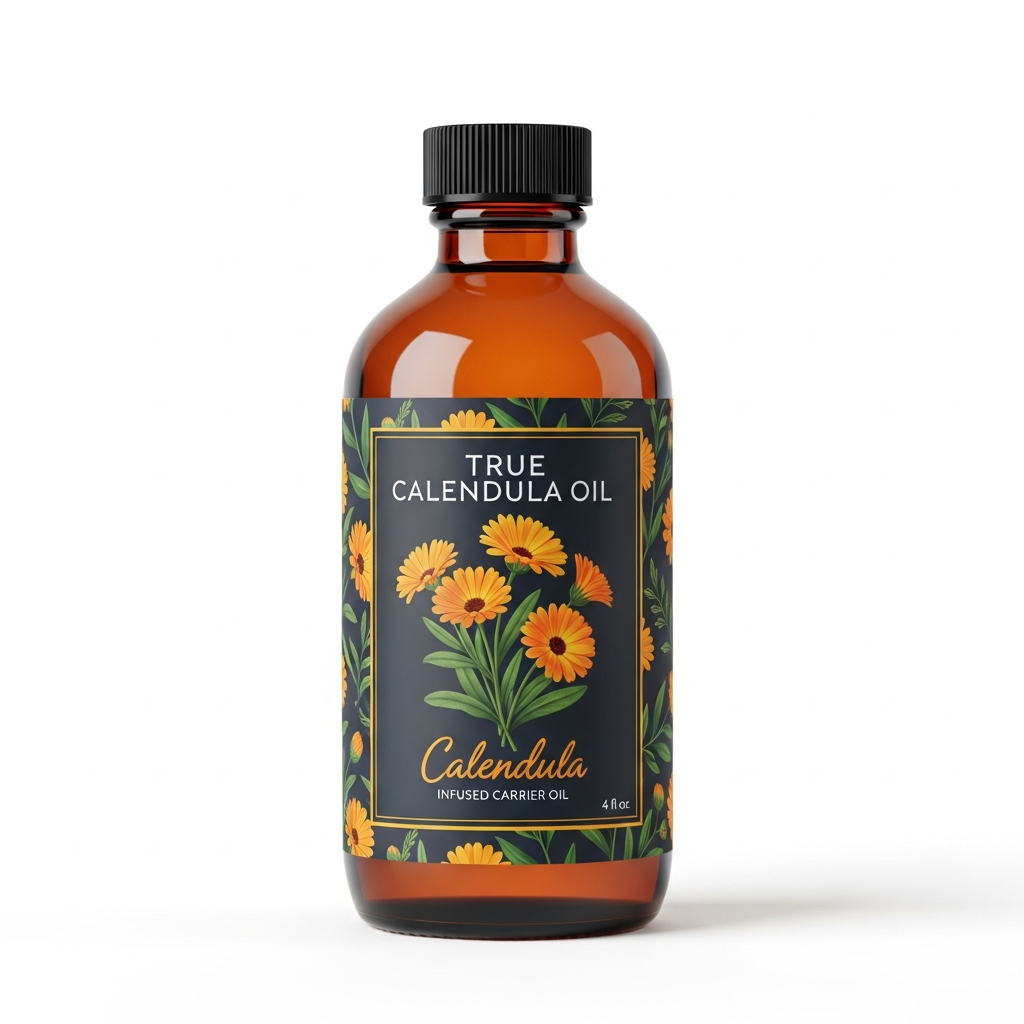
Calendula Oil
Our own small-batch calendula oil, in sizes from 0.5 oz to bulk.
From $13.99
Shop Calendula Oil →Calendula infused oil and candle wax compatibility
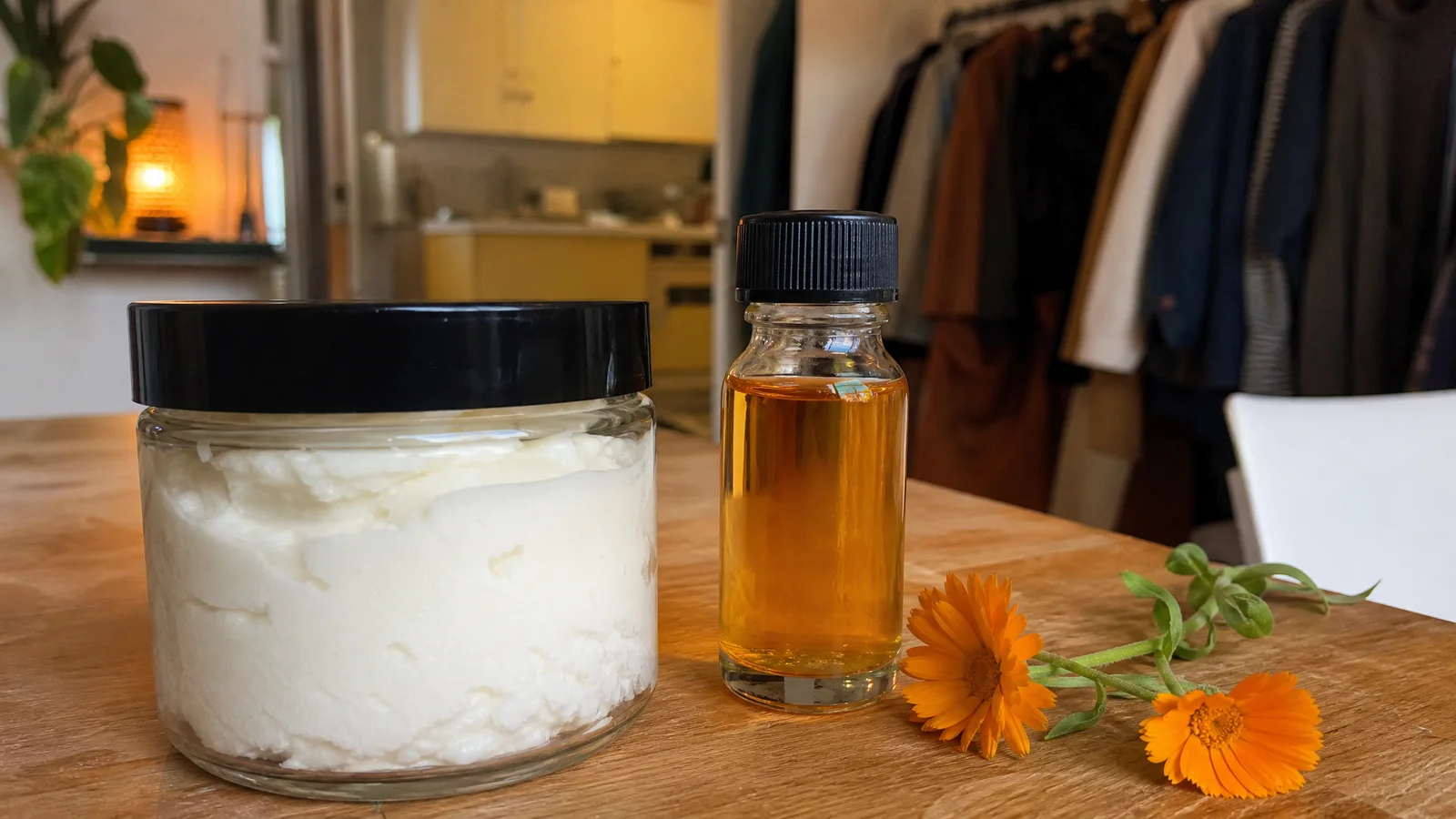
Our calendula oil is a whole-flower infusion. We extract the dried petals, then bring that extract into a carrier oil, so the finished oil is mostly carrier, tinted by the flower. It is not a distilled essential oil, and the difference is explained in our infused oil versus essential oil comparison. Scent in candles comes from volatile aromatics, and an infusion does not behave like one. Reasoning from how it is made, pouring it into melted wax will tint and soften the wax, but it will not fill a room with calendula.
That is not a letdown; it just gives the oil a clearer job. If you want a scented candle, choose the scent separately from a supplier that sells candle-grade fragrance, and treat the calendula oil as a color and softening ingredient.
Setting up a candle-making workspace
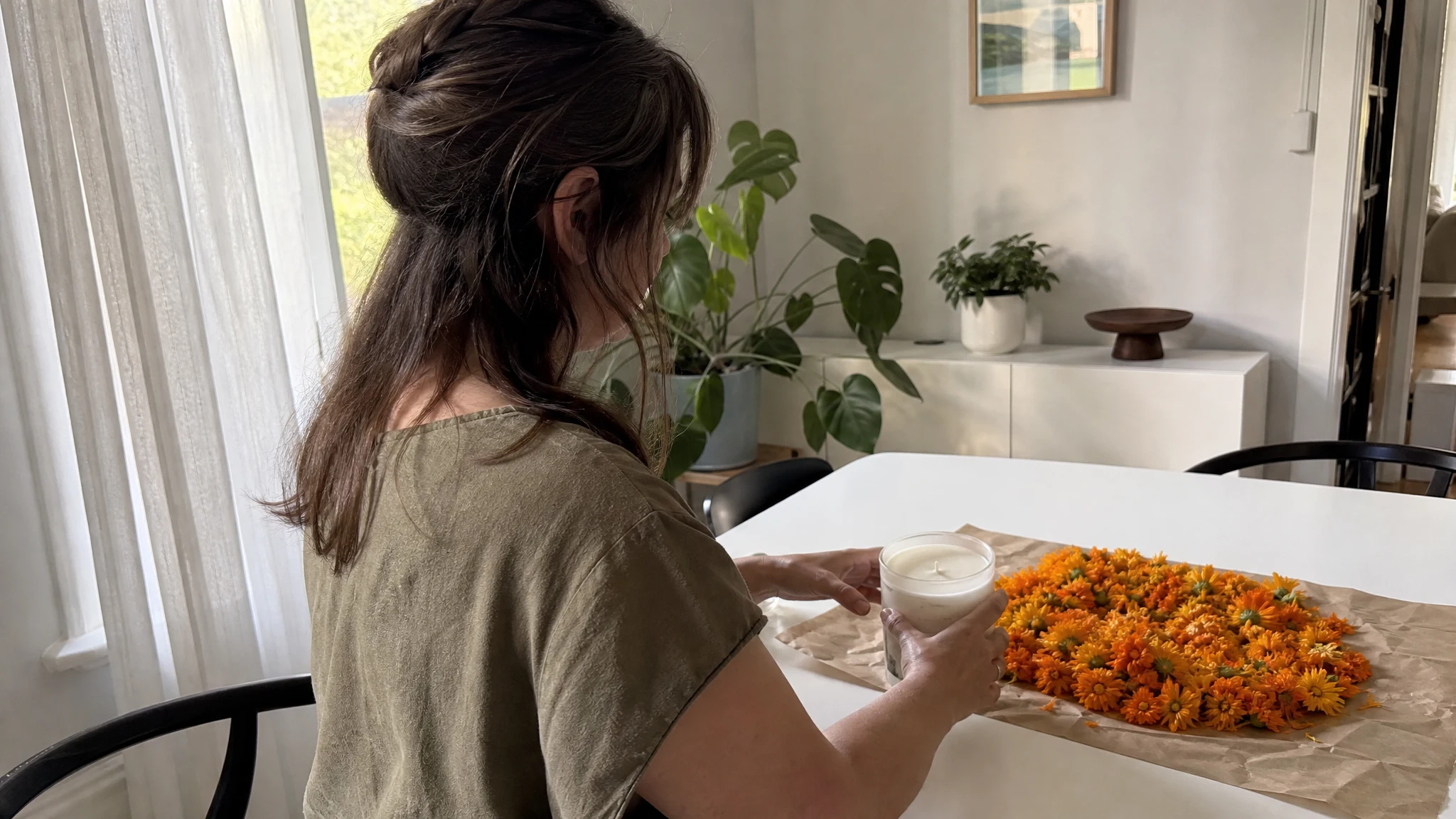
Candle making rewards patience and a tidy table. Cover your work surface with newspaper or parchment, set out your pouring pitcher, thermometer, wick holders and jars, and keep a fire extinguisher or a lid for smothering a flame nearby. Wax gets hot, and it is slippery when it spills, so work slowly. Wash your jars and let them dry before you start, since a damp jar can make the wax look patchy as it sets. There is a lot of pleasure in the quiet hour of setting up and pouring, and good preparation is what makes the finished candle look good.
Wax pool decisions: additives and the wick
A candle burns by drawing melted wax up the wick, so whatever is in the pool is part of the fuel. The National Candle Association tested candles with flowers, leaves and herbs embedded near the flame and reported that those botanicals can join the liquid wax pool, get coated in wax and sustain a flame themselves (NCA's Report on Botanical Candles). So skip pressing dried calendula petals into the surface, however pretty they look. If you love the look, put the flowers on the tray or in the gift box, and keep them out of the wax.
Liquid oil is a different matter from solid petals, but it still changes the pool. We have not found a published limit for how much infused oil any particular wax can take, so we will not offer a percentage. Your wax supplier is the best guide: pick a wax and wick pair with a published wick chart and ask what additives they allow.
Test-batch method for adding calendula oil
- Make a baseline candle with the wax and wick exactly as the supplier instructs, and burn it to see how the flame and pool behave.
- Make a second candle with a small amount of calendula oil stirred into the melted wax. Start low, and change only one thing at a time. Extra liquid oil changes how the pool behaves, so a wick that worked well alone may need adjusting. That is reasoning, so the test is what tells you.
- Let it cure fully, then burn it on a heat-safe surface with someone present. Watch for a tall flame, soot, a sinking wick or beads of oil on top.
The National Candle Association's safety tips apply to every candle you make: trim the wick to a quarter inch before each burn, never leave a burning candle unattended, and keep it at least 12 inches from curtains, bedding and other flammable items (Candle Safety Tips).
Does calendula oil color candle wax?
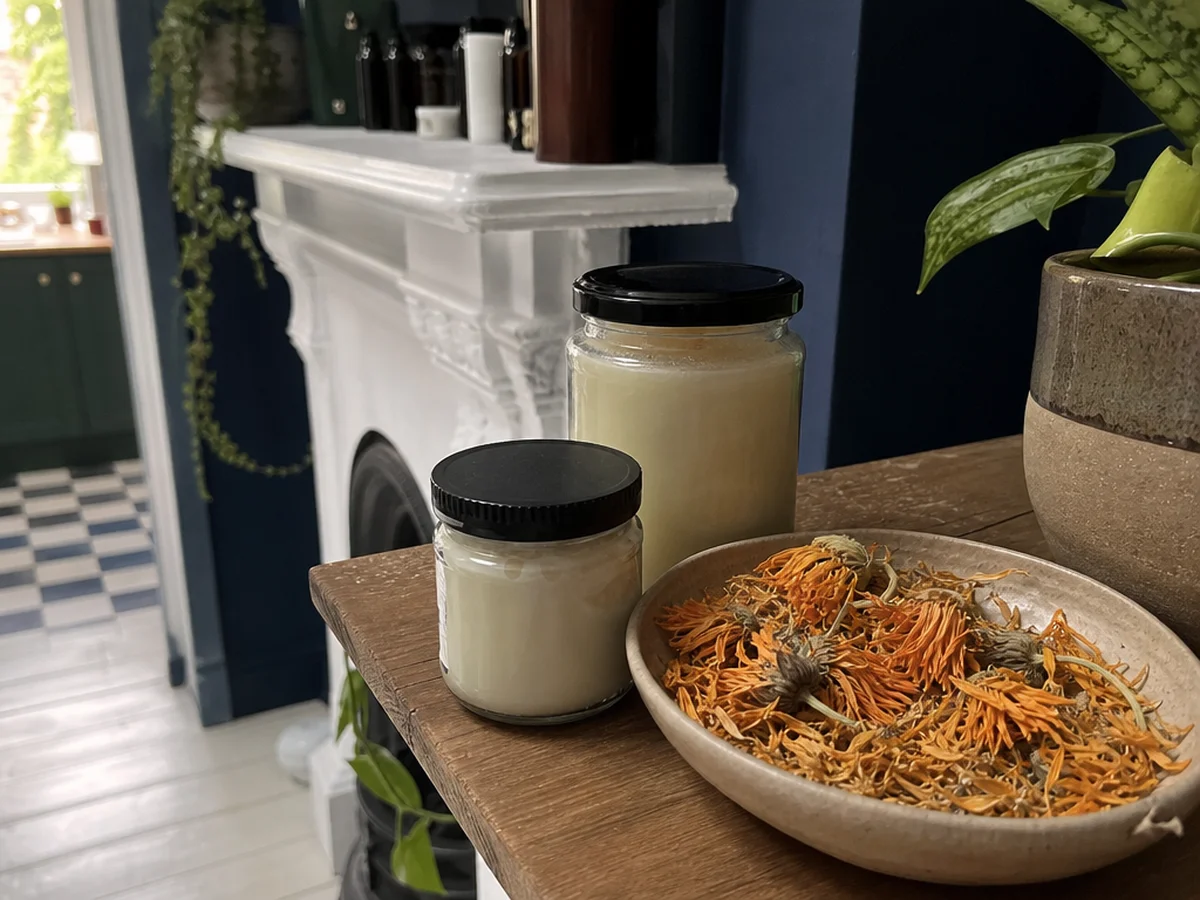
When you stir a small amount of calendula oil into melted wax, you may notice the color warm up toward a pale gold. The effect depends on how much you add and which wax you use, so do not expect a deep orange. If you want a stronger color, a candle dye from a craft supplier will do that job more predictably. The charm of calendula is more subtle, and a soft golden candle in a clear jar can look lovely on a windowsill.
Candle labels and aromatherapy claims
The word aromatherapy tempts people toward health claims about mood or sleep. The FDA explains that how an aromatherapy product is regulated depends mainly on its intended use, judged from labeling, websites and advertising, so describe what the candle is and how it smells, not what it does to the body (Aromatherapy). If you are gifting a candle, "made with calendula-infused oil" is an honest, charming description.
Where is calendula oil best used instead?
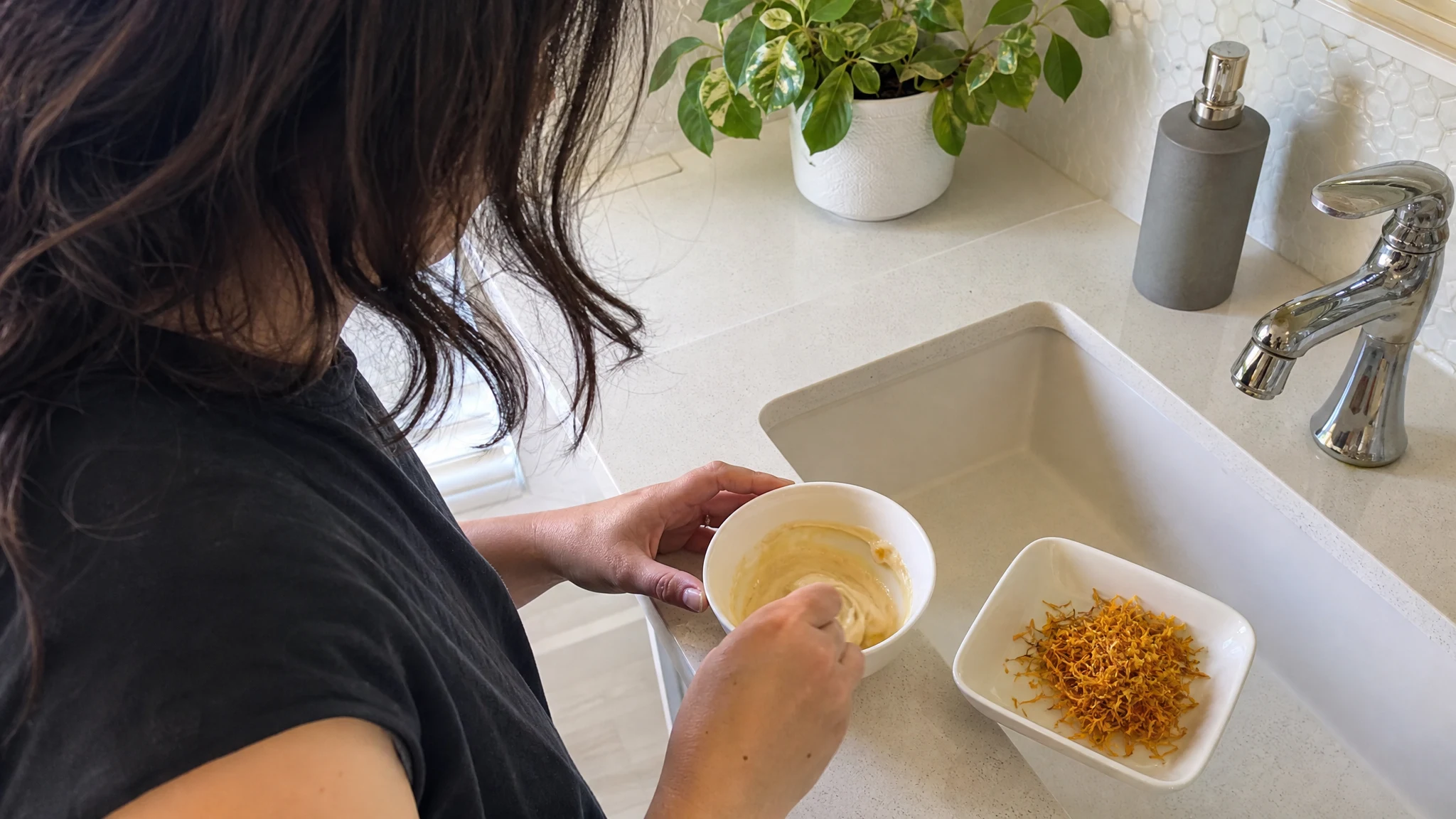
Honestly, the oil is happiest on skin, where it is the main ingredient. A wax-based salve or a lotion bar uses it far better than a candle can. If you want to pair it with scent for a skin project, our essential oil blending guide covers that.
Calendula is a daisy-family plant, and the EU herbal monograph lists hypersensitivity to Asteraceae plants as a contraindication (European Union herbal monograph on Calendula officinalis L., flos). Candle wax is not skin contact, but if you are gifting, tell the recipient what is in it. Our oil has no preservatives, tocopherol or stabilizers added, and the bottle carries a date and lot number, so you can keep clean notes on every batch you pour. If you want to know the carrier for your wax calculations, ask us for it on the batch paperwork.
A calendula candle is a craft project with a golden glow. Treat it as one, test it carefully, and you will end up with something pretty and safe to burn.
Calendula Oil
Nature's Golden Botanical, bottled: small-batch calendula oil in sizes from 0.5 oz to bulk.
From $13.99
Shop Calendula Oil →Sources & Further Reading
- National Candle Association. NCA's Report on Botanical Candles. candles.org
- National Candle Association. Candle Safety Tips. candles.org
- U.S. Food and Drug Administration. Aromatherapy. fda.gov
- European Medicines Agency, HMPC. European Union herbal monograph on Calendula officinalis L., flos. ema.europa.eu