Can You Use Calendula Oil on Your Face?
Yes, calendula oil is a cosmetic ingredient people use on the face, and a cosmetic safety panel has looked at it for exactly that kind of use. Whether it suits your face is a more personal question, so here is how we would walk you through it: the safety picture, a sensible way to test, and the small habits that make a facial oil feel good.
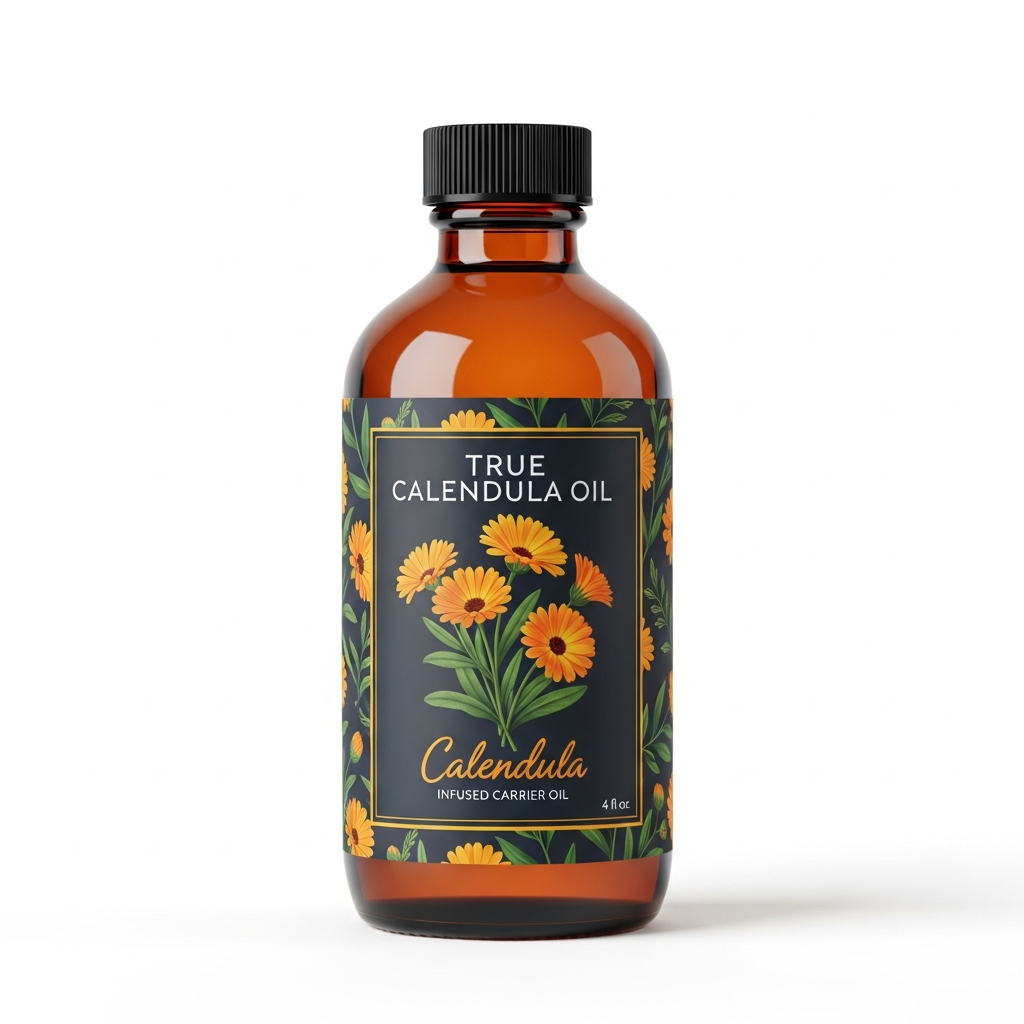
Calendula Oil
Our own small-batch calendula oil, in sizes from 0.5 oz to bulk.
From $13.99
Shop Calendula Oil →Cosmetic Ingredient Review findings on calendula flower oil
The Cosmetic Ingredient Review Expert Panel assessed calendula-derived cosmetic ingredients, including calendula flower oil, and concluded they are safe for use in cosmetics in the practices of use and concentration described in the assessment. The same review found them not irritating, sensitizing or photosensitizing in animal or clinical tests, but noted they may be mild eye irritants (Final report of the Cosmetic Ingredient Review Expert Panel amended safety assessment of Calendula officinalis-derived cosmetic ingredients).
That last detail is the practical one for faces. We keep oil off the lid margin and out of the eyes, and we would do the same with any facial oil.
Who should patch test calendula oil first?
Calendula belongs to the daisy family, Asteraceae, alongside ragweed, chamomile, chrysanthemum and arnica. The EU herbal monograph lists hypersensitivity to Asteraceae plants as a contraindication and notes that skin sensitization has been reported, with the frequency unknown. The same document says safety in pregnancy and breastfeeding has not been established, and it does not establish use on skin for children under six (European Union herbal monograph on Calendula officinalis L., flos). If any of those describes you or the person you are buying for, an allergist, dermatologist, midwife or pediatrician is the right first conversation.
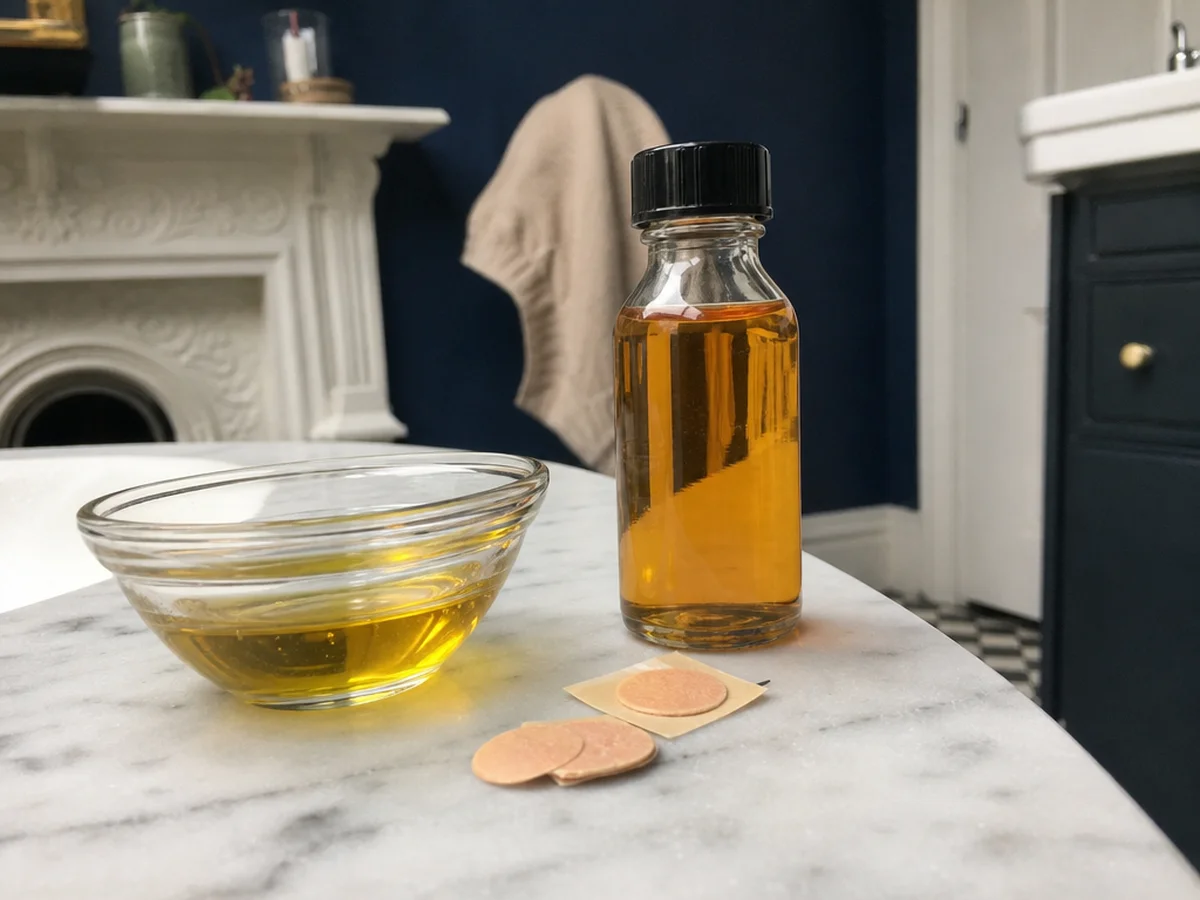
For a sense of scale, an Austrian clinic tested 443 patients who had been referred for dermatitis and found that 9, about 2%, reacted to a marigold preparation (The seamy side of natural medicines: contact sensitization to arnica (Arnica montana L.) and marigold (Calendula officinalis L.)). Those were people already having skin trouble, so it is not a rate for everyone, but it is a fair reminder that plant oils deserve a test run. Our own advice has always been the same: patch test first, and skip it if you react.
Forearm patch test: a week before facial use
The quick "dab on the wrist and wait a day" test is popular, but the dermatology literature points to something longer. The repeated open application test, first described in 1986, applies the product twice a day for 7 days to the inner forearm unless dermatitis shows up sooner (The repeated open application test (ROAT)). A survey of American Contact Dermatitis Society members found no single standard, with most using one to two weeks (Clinical Utilization of Repeated Open Application Test Among American Contact Dermatitis Society Members). The reason is timing: the American Academy of Dermatology notes that an allergic rash tends to appear hours or days after contact (Eczema types: Contact dermatitis overview).
Taking a week on the forearm is our suggestion, not a clinical protocol, and it costs you a few drops. Our patch test guide has the steps. If your skin ever reacts, FDA's advice is to stop using the product, call a healthcare provider, and report the reaction to FDA (Using Cosmetics Safely).
Applying facial oil to slightly damp skin
Our oil is a whole-flower infusion in a carrier oil with nothing else added, which makes it a simple, single-purpose facial oil. A few suggestions based on how oils behave, rather than on any trial:
- Press a few drops onto slightly damp skin, so the oil seals in the water already there.
- Start with the evening, once a day, and add more only if your skin stays comfortable.
- Warm the drops between your palms and press, rather than rub, around the cheeks and forehead.
Pores are the other common question. Comedogenic ratings of ingredients mostly come from animal tests, and a small human study found that finished products containing ingredients rated comedogenic are not necessarily comedogenic (A re-evaluation of the comedogenicity concept). Because an infused oil is mostly carrier oil, the carrier counts for as much as the calendula. Email us the lot number from your bottle and we will send the batch paperwork that names it. We go deeper in our comedogenic explainer.
What does a facial oil feel like after a minute?
When you press the first drops onto your cheeks, you will see the oil spread quickly and settle into a light sheen. A good rule is to wait a minute before you move on to the next step in your morning or evening, so you can tell how the oil feels once it has had time to sink in. If your skin feels tight and dry, you may want a drop more next time; if it looks shiny a few minutes later, you used a little too much.
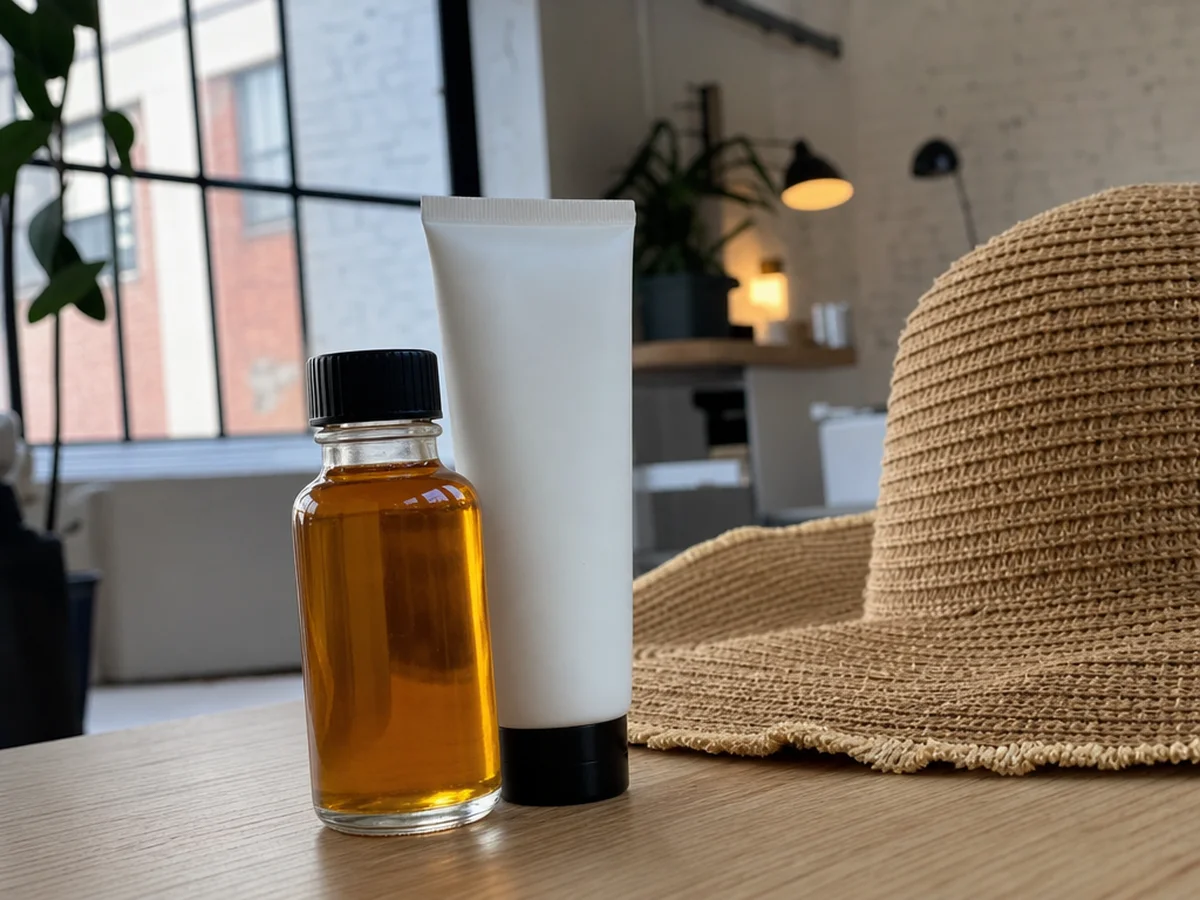
Notice the aroma, too. It is soft and plant-like, not perfumed, so a facial oil from us will not announce itself across the room. Many people prefer that when the product is going on the skin they look at every day.
Be gentle around the eyes, as we mentioned. Pat, do not drag, and let any extra oil that wandered toward the lid margin be wiped away with a clean tissue.
Calendula oil is a finishing step, not sunscreen
Calendula oil leaves skin feeling soft and smooth, and that is the job we offer it for. It does not stand in for sunscreen: the AAD recommends broad-spectrum, water-resistant sunscreen of SPF 30 or higher (Sunscreen FAQs). Our morning and night routine shows where an oil slots in alongside it.
If your skin is happy after the test week, a few drops each evening is an easy habit to build, and the bottle will last longer than you expect.
Calendula Oil
Nature's Golden Botanical, bottled: small-batch calendula oil in sizes from 0.5 oz to bulk.
From $13.99
Shop Calendula Oil →Sources & Further Reading
- Final report of the Cosmetic Ingredient Review Expert Panel amended safety assessment of Calendula officinalis-derived cosmetic ingredients (Andersen et al., 2010)
- European Union herbal monograph on Calendula officinalis L., flos (EMA/HMPC/437450/2017)
- The seamy side of natural medicines: contact sensitization to arnica (Arnica montana L.) and marigold (Calendula officinalis L.) (Reider et al., 2001)
- The repeated open application test (ROAT) (Hannuksela and Salo, 1986)
- Clinical Utilization of Repeated Open Application Test Among American Contact Dermatitis Society Members (Brown et al., 2015)
- Eczema types: Contact dermatitis overview (American Academy of Dermatology)
- Using Cosmetics Safely (FDA)
- A re-evaluation of the comedogenicity concept (Draelos and DiNardo, 2006)
- Sunscreen FAQs (American Academy of Dermatology)