Oil Cleansing With Calendula: A Two-Step Method
Oil cleansing has a devoted following for good reason: massaging a little oil over a dry face is a nicely sensory ritual, and it feels like the opposite of scrubbing. Calendula oil can take a part in it. The one thing to know before you start is that a plain infused oil, ours included, contains no emulsifier, so it wipes away rather than rinsing off. A good method simply plans for that.
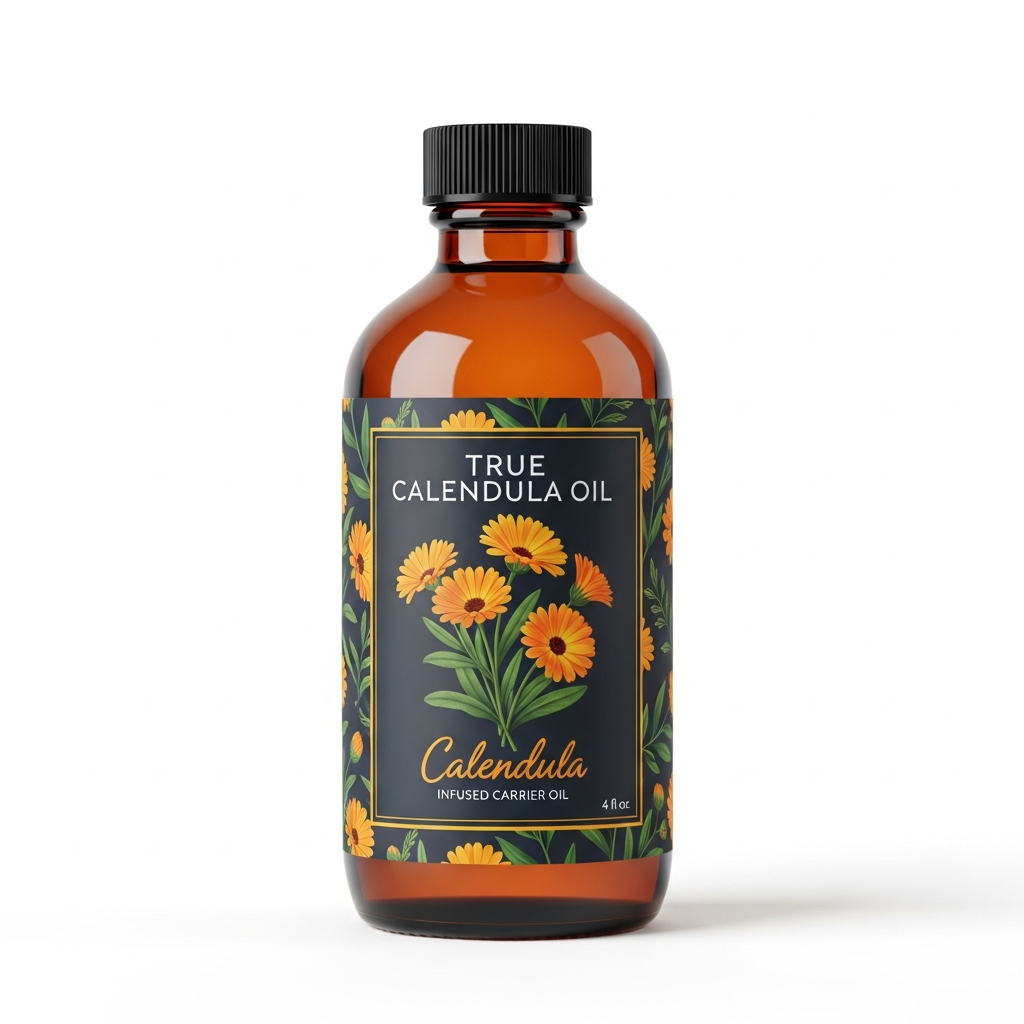
Calendula Oil
Our own small-batch calendula oil, in sizes from 0.5 oz to bulk.
From $13.99
Shop Calendula Oil →How does calendula oil differ from cleansing oil?
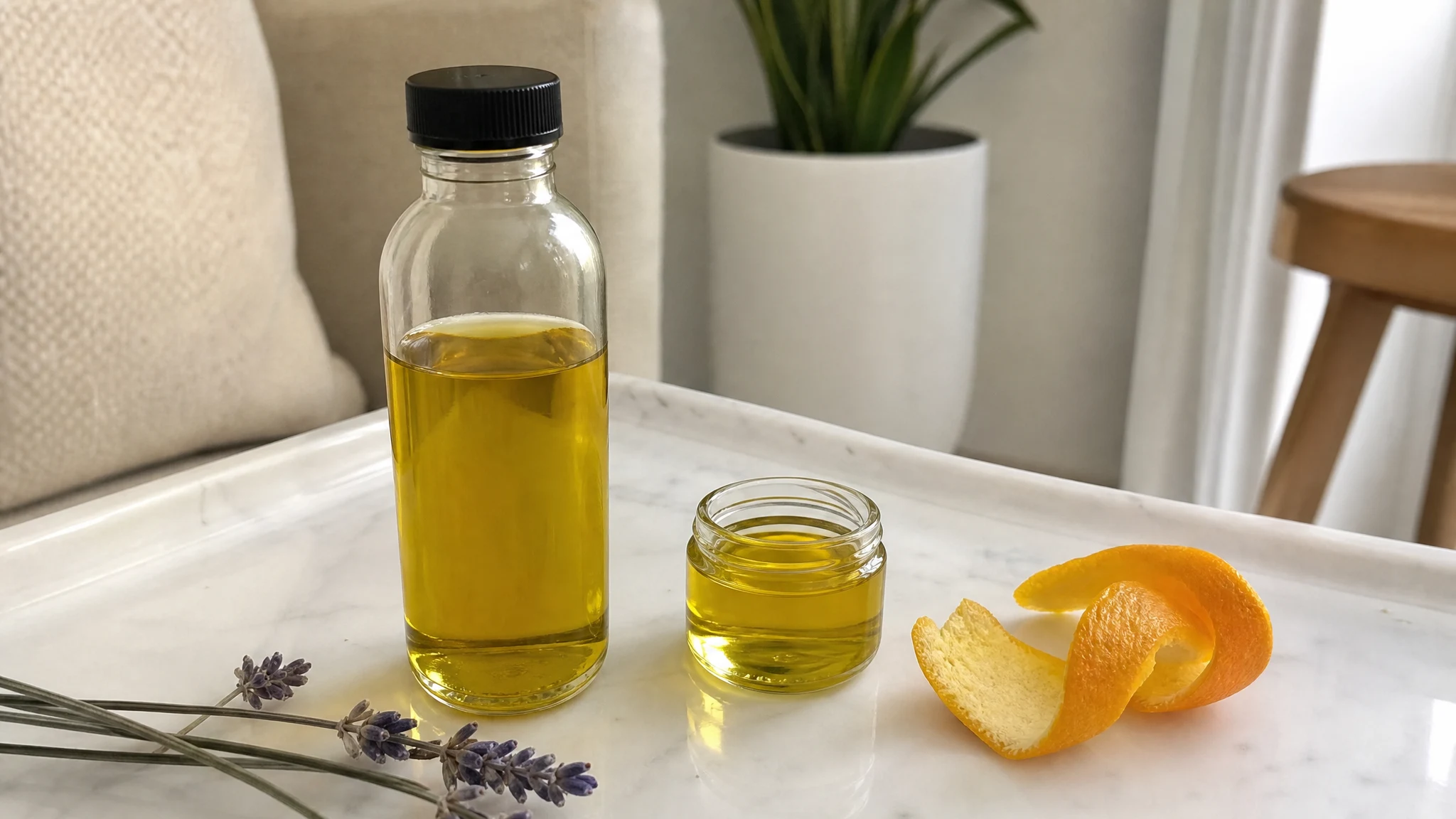
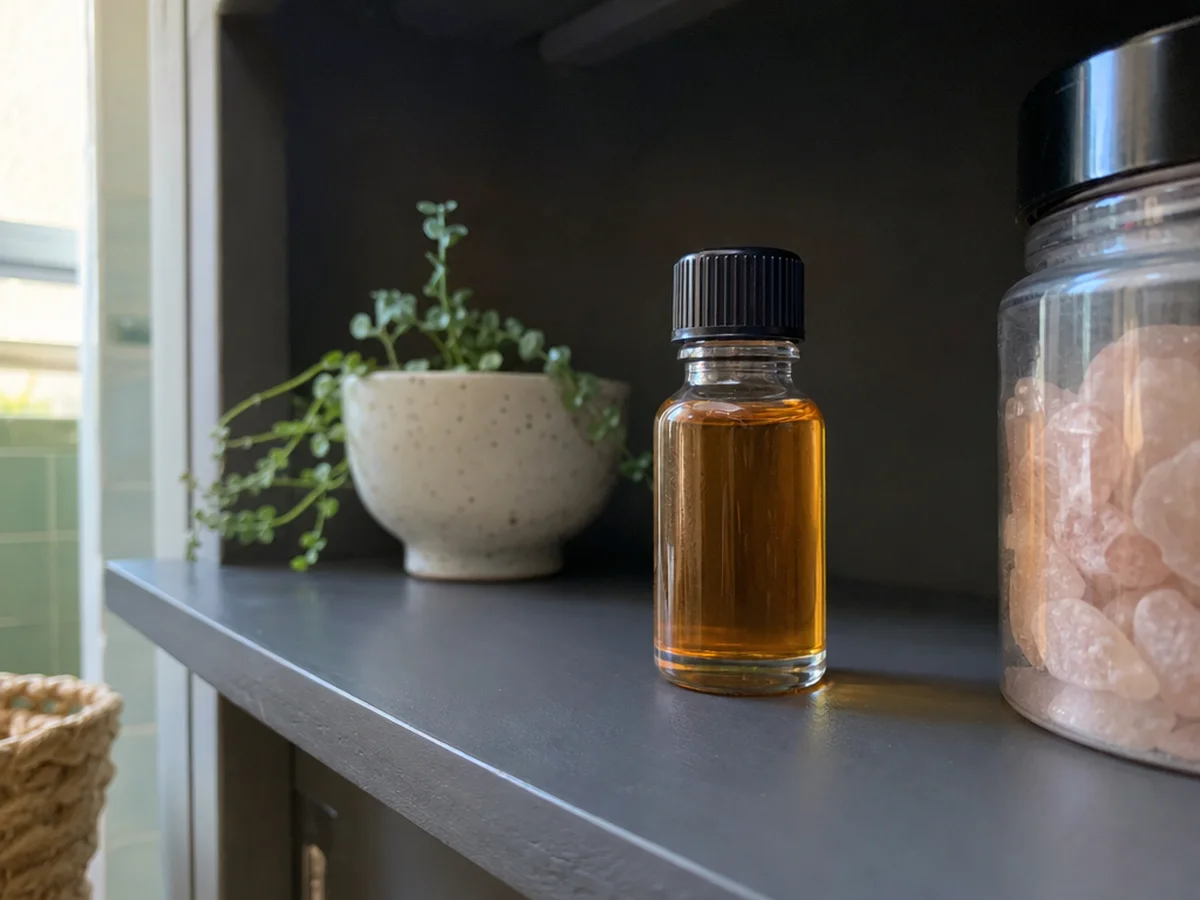
A product sold as a cleansing oil is formulated to turn milky and rinse clean with water. Our calendula oil is a different thing: calendula extracted on its own and brought into a carrier oil, with nothing added. It leaves a soft, golden, lightly herbal film, which is lovely as the first step and means a second step finishes the job. That is why we suggest a two-step cleanse, not an oil on its own.
The American Academy of Dermatology's face-washing guidance does not mention oil cleansing; it recommends a gentle, non-abrasive cleanser without alcohol, lukewarm water, fingertips, no scrubbing, patting dry, and washing twice a day and after sweating (Face washing 101). Think of oil cleansing as a personal preference layered on that foundation, and the foundation stays the same.
Oil cleansing method: start on a dry face
- Begin dry. Pour a little oil onto a dry palm and apply it to a dry face. Keep the bottle closed and free of water, since our oil has no preservatives and water in a bottle of oil is best avoided. That is simple reasoning rather than a test result, and it costs nothing.
- Use the least that spreads. No source gives an amount for cleansing, so we will not invent one. Massage gently with your fingertips; the AAD notes that scrubbing irritates skin.
- Take the oil off softly. Many recipes call for a hot washcloth, but the AAD names washcloths and mesh sponges as possible irritants. We would choose a soft, lukewarm, wrung-out cloth pressed on the skin, not rubbed, or skip the cloth and go straight to step four.
- Follow with a gentle cleanser. Use fingertips and lukewarm water, then pat dry. This is the step that rinses away residue.
- Moisturize if skin feels dry or itchy, as the AAD advises, and take care around the eyes.
Once in the evening is plenty to begin with. A two-step cleanse counts as a wash, and more frequent oil cleansing simply means more handling of your skin.
Slow evening oil cleansing and its herbal scent
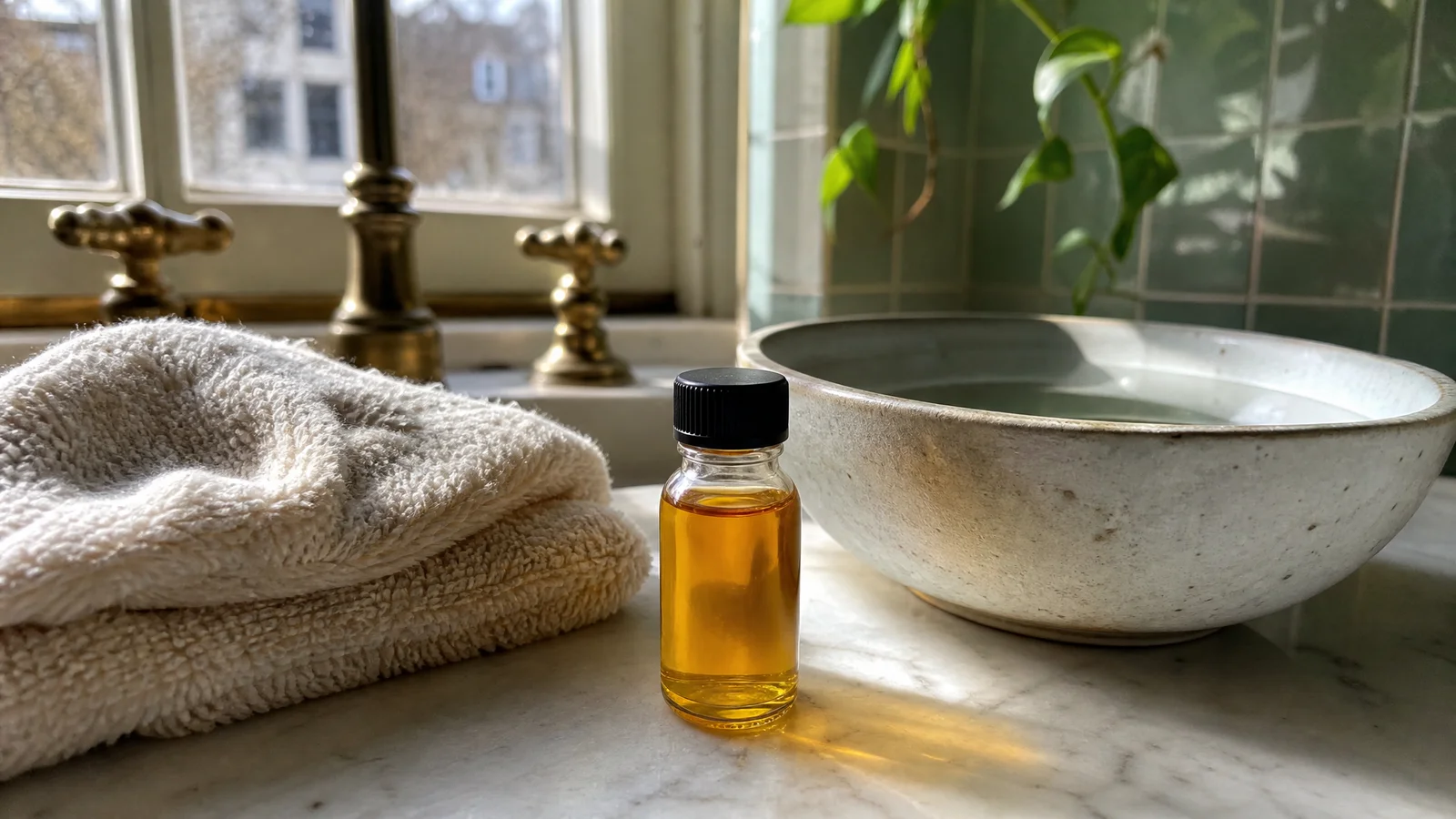
One of the real pleasures of oil cleansing is how slow it is. Put your hair back, wash your hands, and stand somewhere comfortable. Pour a little oil into a dry palm and take a moment to smell it: a warm, lightly herbal, sunny scent, with a golden tint you can see against your skin. Use your fingertips in soft, unhurried circles, and breathe. When you reach the second step, the lukewarm water and gentle cleanser will feel like a refresh. Keep a clean towel nearby, and pat rather than rub.
Patch testing calendula oil before cleansing
Calendula is a daisy-family (Asteraceae) plant. The European herbal monograph lists hypersensitivity to that family as a contraindication, notes skin sensitization has been reported, says safety in pregnancy and breastfeeding has not been established, and does not recommend skin use under age 6 (European Union herbal monograph on Calendula officinalis L., flos). If any of that applies to you, check with your doctor first.
Everyone else should patch test. The repeated open application test used by dermatologists applies a product twice daily to the inner forearm, for seven days in its original form (The repeated open application test (ROAT)). Our patch test walkthrough has the steps. If you have acne, rosacea or eczema, or follow a dermatologist's regimen, ask them before adding an oil. Keep oil out of your eyes; the Cosmetic Ingredient Review panel noted calendula-derived ingredients may be mild ocular irritants (Final report of the Cosmetic Ingredient Review Expert Panel amended safety assessment of Calendula officinalis-derived cosmetic ingredients).
Does calendula oil cause breakouts?
This is the question everyone asks, and comedogenic ratings are not a reliable guide. Many numeric scales trace back to rabbit-ear assays (Comedogenicity of current therapeutic products, cosmetics, and ingredients in the rabbit ear), and a later human study argued that the whole comedogenicity concept needs re-evaluation, since finished products containing comedogenic ingredients are not necessarily comedogenic (A re-evaluation of the comedogenicity concept). Your own skin is the best test, which is another reason to change one thing at a time. If breakouts increase, stop and ask a dermatologist. Our comedogenicity article goes deeper.
Pay attention to where you keep the bottle, too. A bathroom counter that gets steamy is not the best place, because water is the one thing you want to keep out of the oil. A drawer or a shelf away from the shower is better, and a dry hand each time you pour keeps things tidy.
Waterproof makeup removal and oil storage
For waterproof makeup or water-resistant sunscreen, a cleansing oil made to emulsify and rinse, or your usual remover, is the more dependable partner; calendula oil is better thought of as a gentle, aromatic first step for everyday cleansing. Keep the bottle cool, closed and out of light, and see our storage article. If redness, itching or burning appears, stop and contact a healthcare provider, as the FDA advises for any cosmetic (Using Cosmetics Safely).
Our guide to the face routine shows where this fits in a full evening, and a regular gentle cleanser remains a perfectly good choice any night you prefer it.
Calendula Oil
Nature's Golden Botanical, bottled: small-batch calendula oil in sizes from 0.5 oz to bulk.
From $13.99
Shop Calendula Oil →Sources & Further Reading
- American Academy of Dermatology, "Face washing 101." aad.org
- European Medicines Agency, "European Union herbal monograph on Calendula officinalis L., flos" (EMA/HMPC/437450/2017). ema.europa.eu
- Hannuksela M, Salo H, "The repeated open application test (ROAT)." Contact Dermatitis, 1986. PubMed
- Andersen FA et al., "Final report of the Cosmetic Ingredient Review Expert Panel amended safety assessment of Calendula officinalis-derived cosmetic ingredients." Int J Toxicol, 2010. PubMed
- Fulton JE et al., "Comedogenicity of current therapeutic products, cosmetics, and ingredients in the rabbit ear." J Am Acad Dermatol, 1984. PubMed
- Draelos ZD, DiNardo JC, "A re-evaluation of the comedogenicity concept." J Am Acad Dermatol, 2006. PubMed
- US Food and Drug Administration, "Using Cosmetics Safely." fda.gov