How to Patch Test Calendula Oil: A 7-Day Guide
A patch test is a small act of kindness to your skin. Before a new oil goes on your face or body, you give it a trial run on a small, quiet patch of skin and see how you get on. The trick is knowing how long to wait, because the quick "dab it on and check tomorrow" version is the one most likely to miss a slow reaction. Here is the longer version we recommend for our calendula oil.
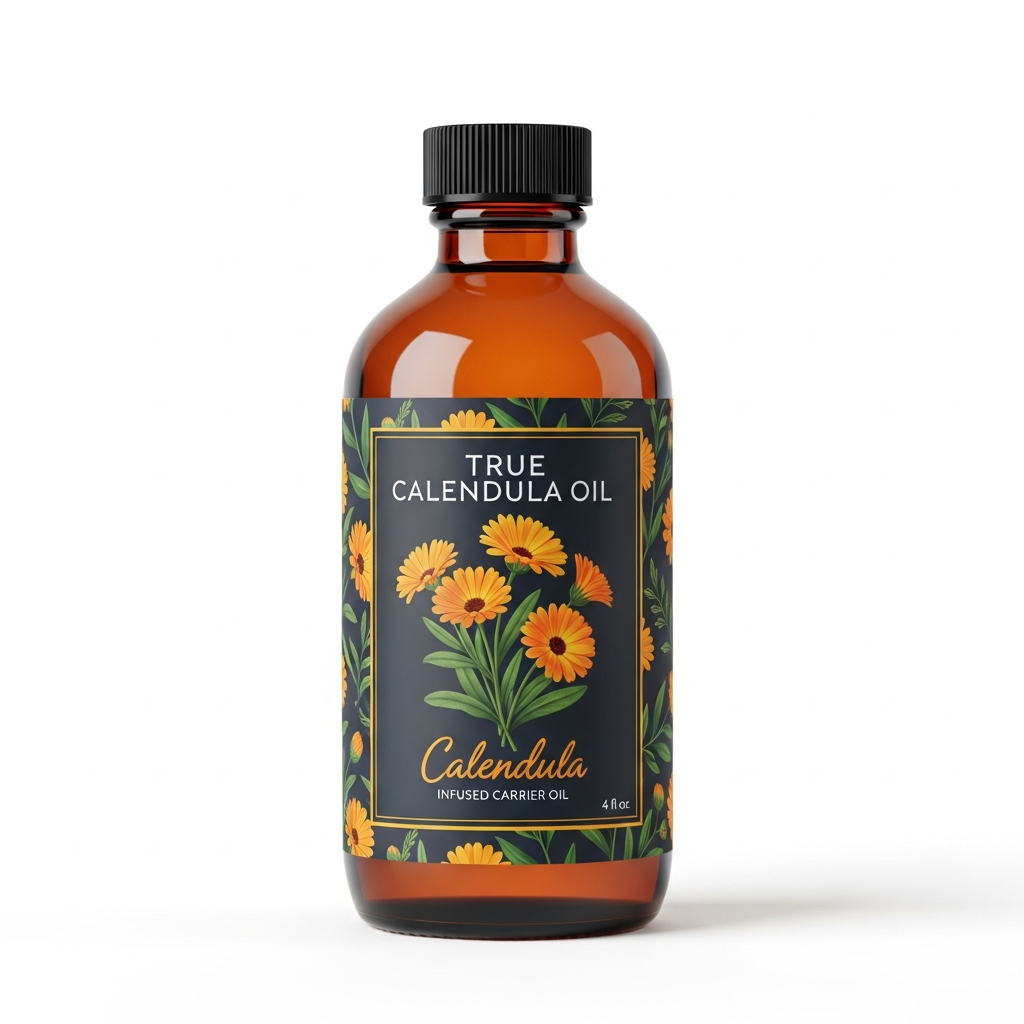
Calendula Oil
Our own small-batch calendula oil, in sizes from 0.5 oz to bulk.
From $13.99
Shop Calendula Oil →Is a home calendula oil patch test right for you?
Calendula belongs to the daisy family, Asteraceae, along with ragweed, chamomile, chrysanthemum and arnica. The EU herbal monograph lists hypersensitivity to the active substance and to other plants of that family as a contraindication, and notes that skin sensitization has been reported, with the frequency not known (European Union herbal monograph on Calendula officinalis L., flos). Our own advice has always been the same: patch test first, and skip it if you react.
If you already know you react to daisy-family plants, a home test is itself an exposure, so the better first step is an appointment with an allergist or dermatologist. Allergy specialists have reported that some people with weed-pollen allergy, such as ragweed or mugwort, also react to herbal products from related plants, with marigold among them (Diagnostic Workup in IgE-Mediated Allergy to Asteraceae Weed Pollen and Herbal Medicine Products in Europe). Our ragweed article goes into that overlap.
Longer patch tests catch delayed allergic rashes
The American Academy of Dermatology notes that an allergic rash tends to appear hours or days after skin touches what it is allergic to (Eczema types: Contact dermatitis overview). A test you read after one day can end before a delayed reaction has started. That is the reason dermatologists use a repeated approach.
The repeated open application test was described in 1986: the product is applied twice a day for 7 days to the inner forearm, near the elbow crease, unless dermatitis appears sooner (The repeated open application test (ROAT)). A later survey of American Contact Dermatitis Society members found there is no single standard, with the most common practice for leave-on products being twice a day on the forearm for one week or two (Clinical Utilization of Repeated Open Application Test Among American Contact Dermatitis Society Members).
Seven-day calendula oil patch test routine
This is our home adaptation of that design. It is a screening step and not a clinical diagnosis.
- Test what you will actually use. If you plan to blend the oil with anything else, test the finished blend, since the other ingredient could be the culprit.
- Choose the inner forearm, near the elbow crease, on clean, unbroken skin.
- Apply a thin layer to a small patch, about the size of a coin, twice a day for seven days. If you plan to use the oil for a long time, a second week matches what many specialists in that survey do.
- Leave the patch alone otherwise. Avoid scrubbing it, and keep it away from other new products.
- Stop at the first sign of redness, itching, bumps or burning. Do not push through a mild reaction to finish the week.
- Keep watching for several days after the last application, because of the hours-or-days timing.
If all is quiet, you can move on to the area you actually want to use the oil on, starting with a small amount. A calm forearm is encouraging, though it is not a guarantee, so keep an eye on your skin as you go.
Tying patch test applications to daily habits
The biggest reason a patch test fails is simple: people forget. Our suggestion is to tie the two daily applications to things you already do, such as brushing your teeth in the morning and again at night. Write the start date on a sticky note on your bathroom mirror, and tick off each day as you go.
Use a thin, even layer, and let it sink in before you dress. Calendula oil is golden-orange, so a long sleeve over a wet patch can leave a mark, and rolling your sleeve up for a minute is all it takes to avoid it. Look at the patch in good light each morning. You are looking for anything different from the skin beside it: pinkness, tiny bumps, dryness that was not there before, or an itch you notice more than usual.
Take a quick photo in the same light on day one and again on day seven if you like. A picture is a gentle way to compare, and it helps if you do want to show a dermatologist later.
How common are calendula patch test reactions?
The one calendula-specific patch-test figure we found comes from an Austrian clinic. Of 443 consecutive patients, 9, about 2%, reacted to a marigold test preparation (The seamy side of natural medicines: contact sensitization to arnica (Arnica montana L.) and marigold (Calendula officinalis L.)). Those patients had been referred for dermatitis, so the figure does not describe the general population, and it is best read as a reason to test rather than a prediction. For most people with no daisy-family allergy, the test week passes uneventfully.
If your skin does react, stop using the product, rinse the area gently, and speak to a healthcare provider. A dermatologist can run a clinic patch test to find out exactly what the trigger is, which is far more useful than guessing. Pregnant or breastfeeding readers, and anyone considering the oil for a child, should ask their midwife, OB/GYN or pediatrician first, since the EU monograph says safety has not been established in those groups.
Third-party lab testing of calendula oil
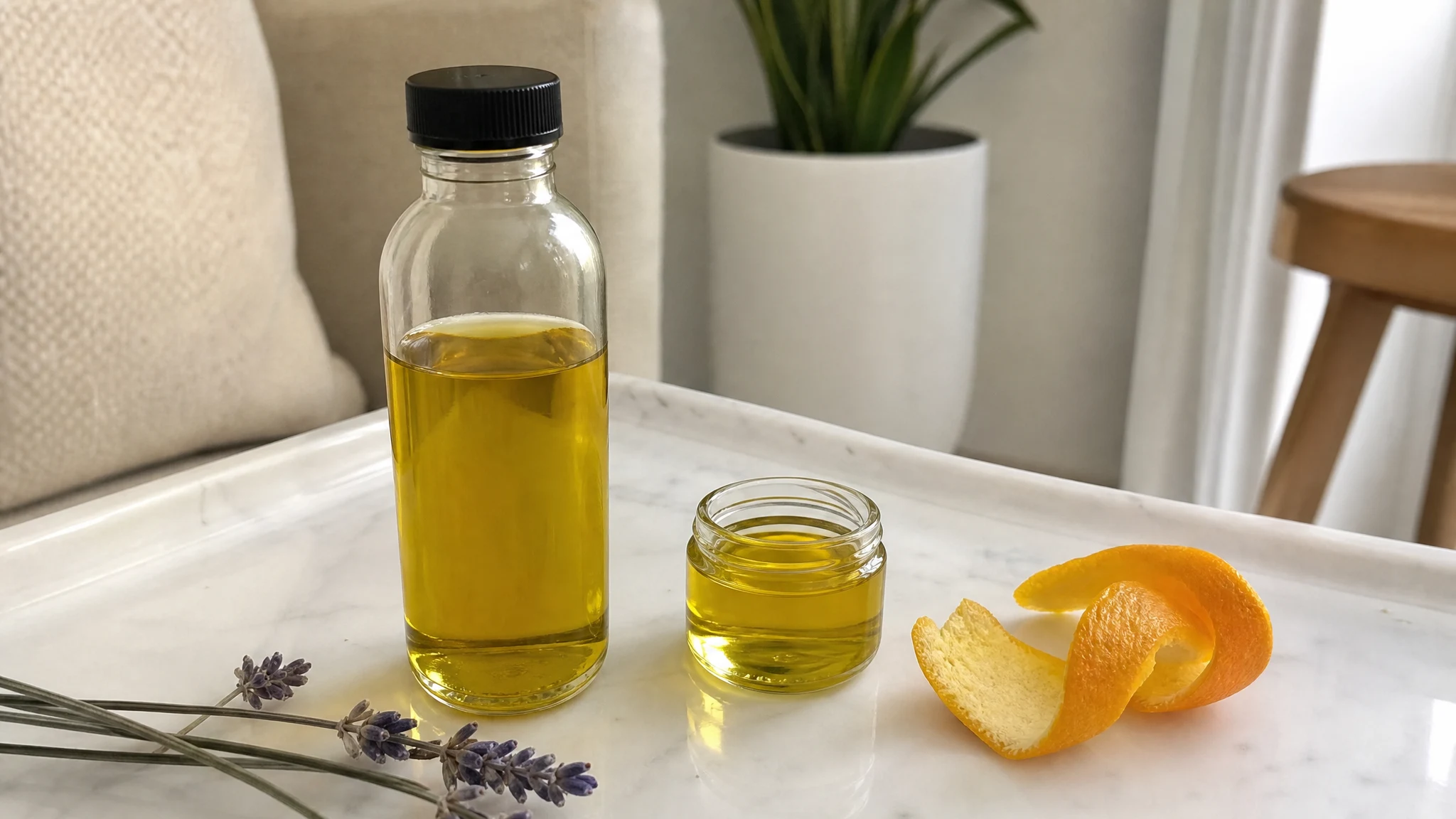
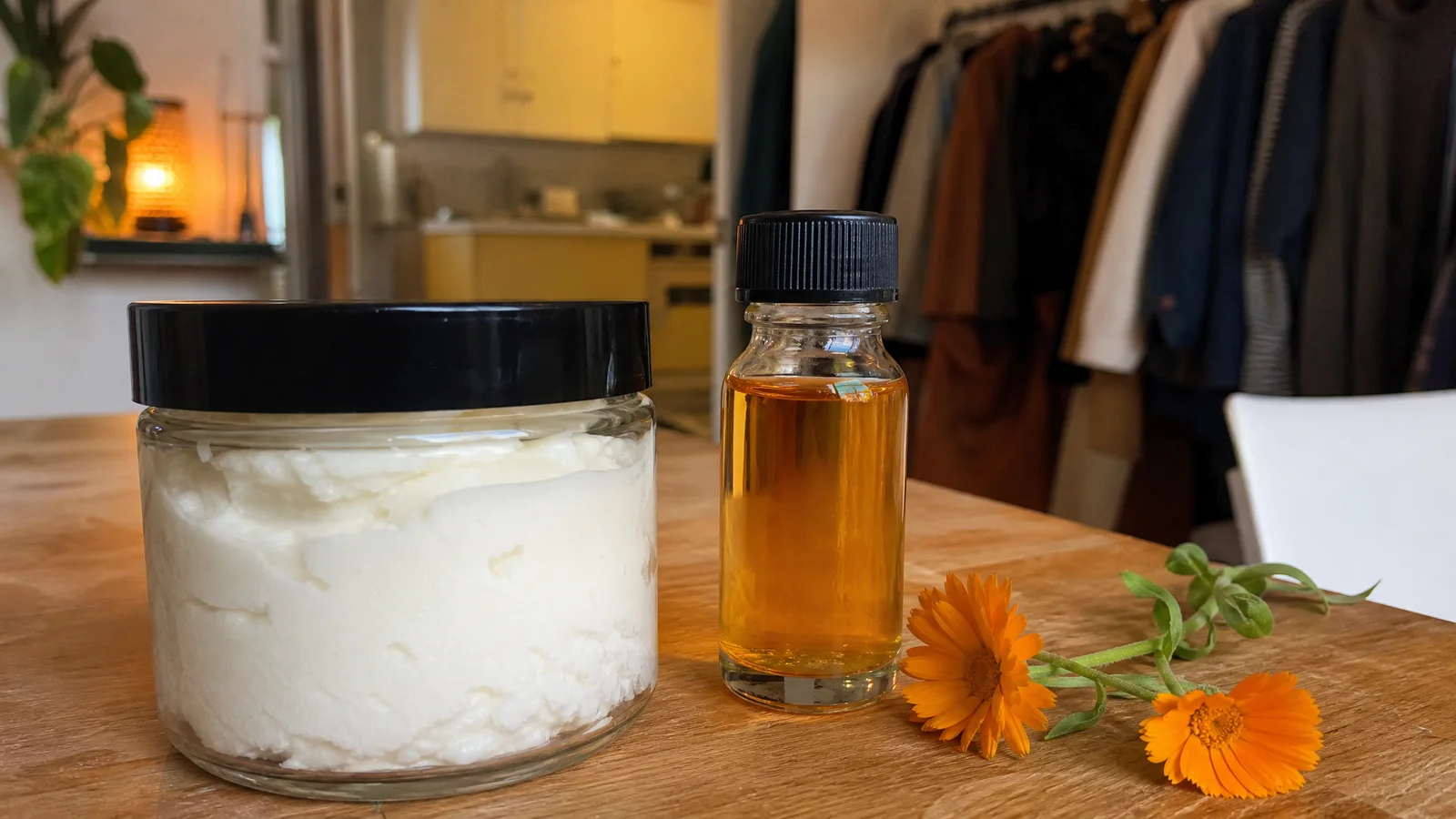
Our oil is a whole-flower infusion in a carrier oil, and nothing else goes in. Every batch is tested by independent third-party labs, and the bottles are dated and lot-numbered. If your skin does react and you want to see what is in the bottle, email us the lot number at support@truecalendulaoil.com and we will send the batch paperwork, including the carrier. It makes a conversation with a dermatologist easier. Our safety and side effects guide covers the wider picture.
A week of patience now is a small price for an oil you can enjoy with confidence.
Calendula Oil
Nature's Golden Botanical, bottled: small-batch calendula oil in sizes from 0.5 oz to bulk.
From $13.99
Shop Calendula Oil →Sources & Further Reading
- European Union herbal monograph on Calendula officinalis L., flos (EMA/HMPC/437450/2017)
- Diagnostic Workup in IgE-Mediated Allergy to Asteraceae Weed Pollen and Herbal Medicine Products in Europe (Preda et al., 2024)
- Eczema types: Contact dermatitis overview (American Academy of Dermatology)
- The repeated open application test (ROAT) (Hannuksela and Salo, 1986)
- Clinical Utilization of Repeated Open Application Test Among American Contact Dermatitis Society Members (Brown et al., 2015)
- The seamy side of natural medicines: contact sensitization to arnica (Arnica montana L.) and marigold (Calendula officinalis L.) (Reider et al., 2001)