Is Calendula Oil Comedogenic? What the Ratings Miss
If your skin breaks out easily, a golden facial oil can feel like a gamble. Search for "comedogenic" and you will find tidy numbered lists of oils from zero to five, and calendula is rarely on them. The truth is more interesting than a number, and it gives you a better way to choose any oil.
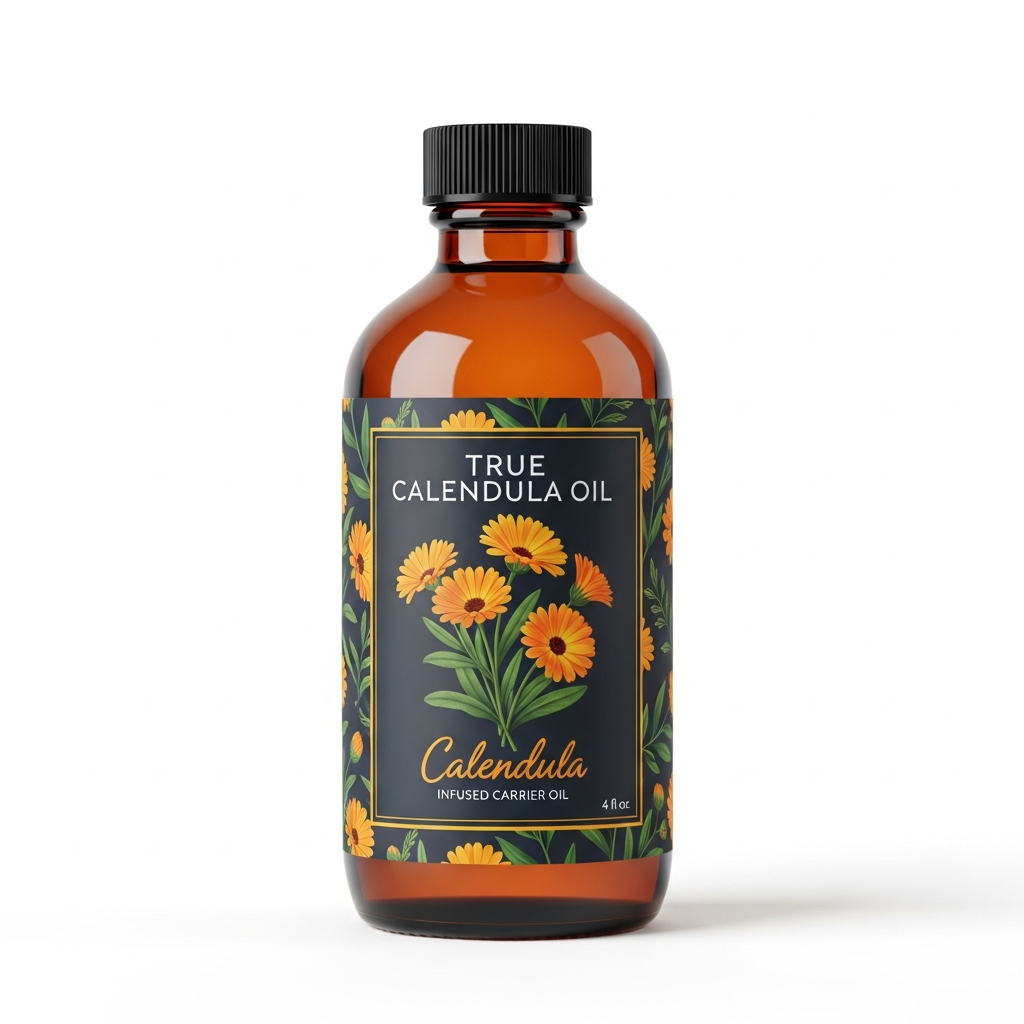
Calendula Oil
Our own small-batch calendula oil, in sizes from 0.5 oz to bulk.
From $13.99
Shop Calendula Oil →Where comedogenic ratings come from: rabbit-ear tests
Many of the lists trace back to rabbit-ear tests, where materials are applied to a rabbit's ear and researchers look for blocked follicles. One widely cited paper is titled "Comedogenicity of current therapeutic products, cosmetics, and ingredients in the rabbit ear" (Fulton JE, Pay SR, Fulton JE. J Am Acad Dermatol, 1984), and later work kept testing ingredients and vehicles the same way (Comedogenicity in rabbit: some cosmetic ingredients/vehicles). A rabbit ear is not a human face, so ratings from that model are a starting point at best.
Do comedogenic ingredients clog pores in people?
A human study makes the point nicely. Researchers applied finished cosmetic products to the upper back of six volunteers, three times a week for four weeks, and concluded that finished products using comedogenic ingredients are not necessarily comedogenic (A re-evaluation of the comedogenicity concept). In plain English, a rating for a raw ingredient does not predict how a finished product behaves on your skin. It is a small study, and it suggests that the whole product and your own skin matter more than a number.
Carrier oil is most of an infused calendula oil
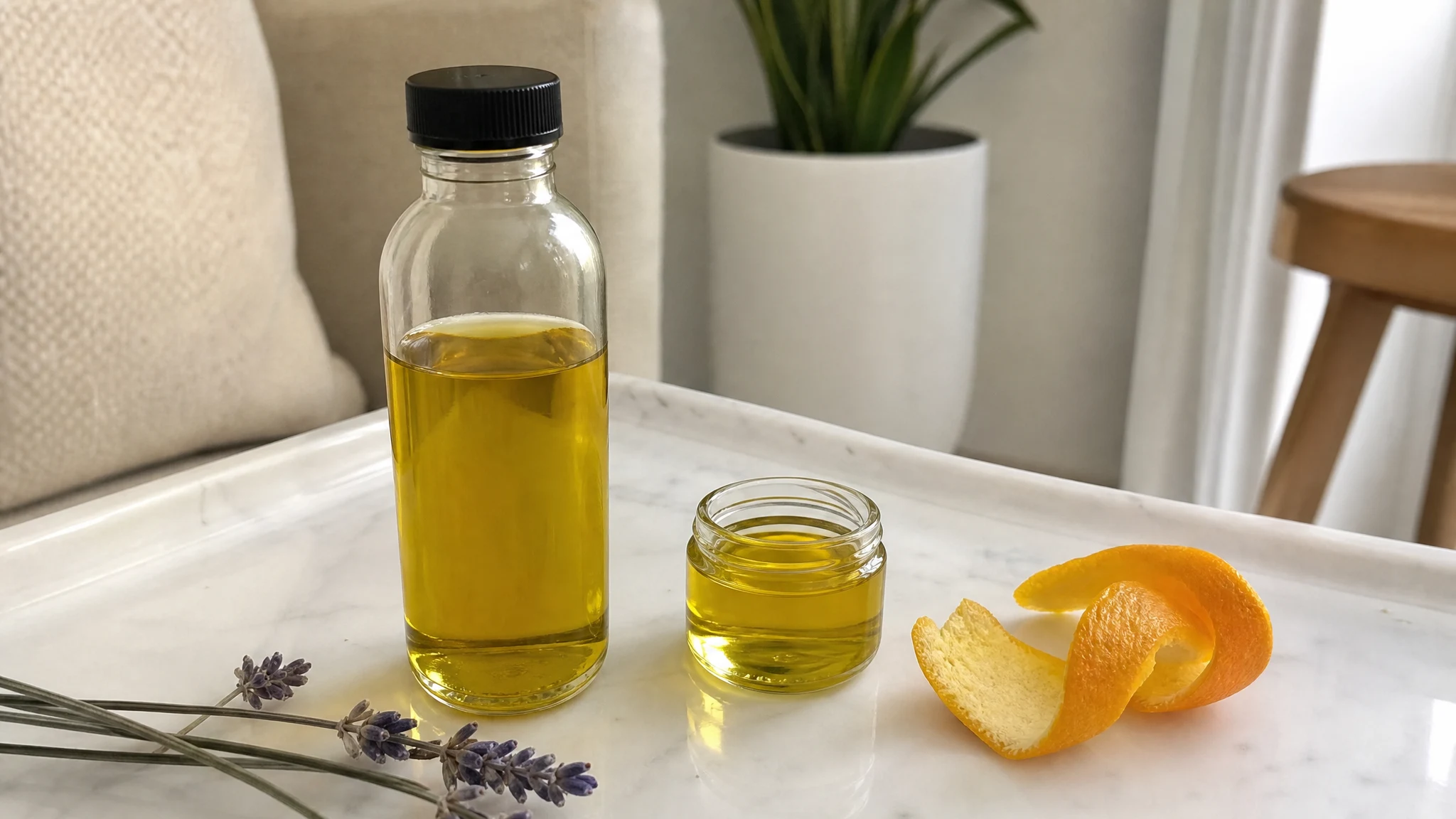
Our oil is an infused oil. We extract calendula on its own, then bring that extract into a carrier oil, so most of what you smooth onto your skin is that carrier. That is our reasoning from how the oil is made, and it is why carrier-oil questions matter more than any calendula number. Our batch paperwork lists the carrier, and you can request it by emailing the lot number to support@truecalendulaoil.com. If you are choosing between facial oils, our comparison of calendula and jojoba oil explains how the two differ.
This is also why we encourage you to ask any seller about the carrier, the process and the paperwork. Our oil is made by extracting calendula petals, separated by hand from sound dried flower heads, and bringing that extract into the carrier with nothing else added: no preservatives, no tocopherol, no stabilizers. A short, clear ingredient story is easier to test on skin than a long one, because there are fewer variables to untangle if you notice a change.
What should a thin film of oil feel like?
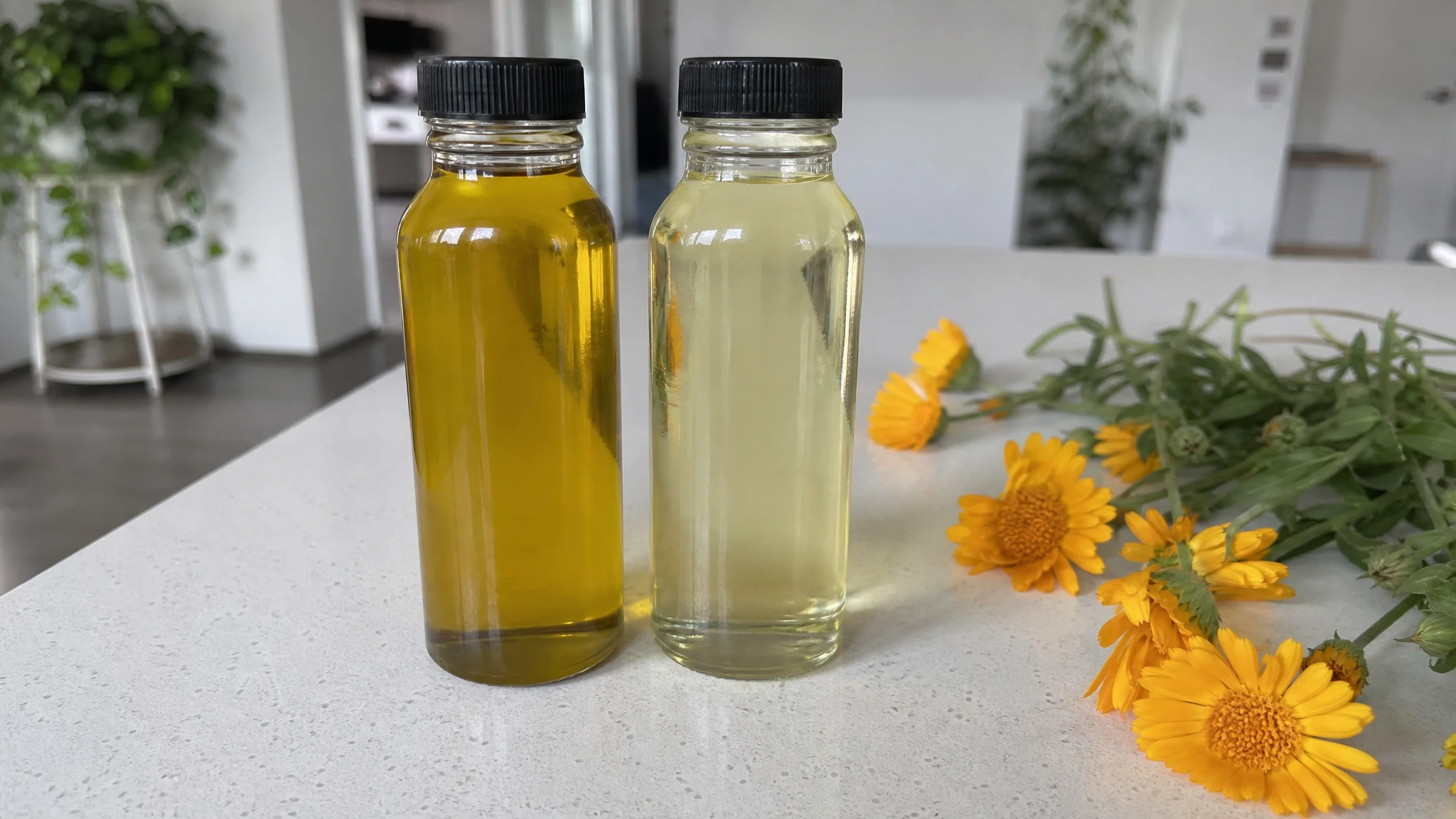
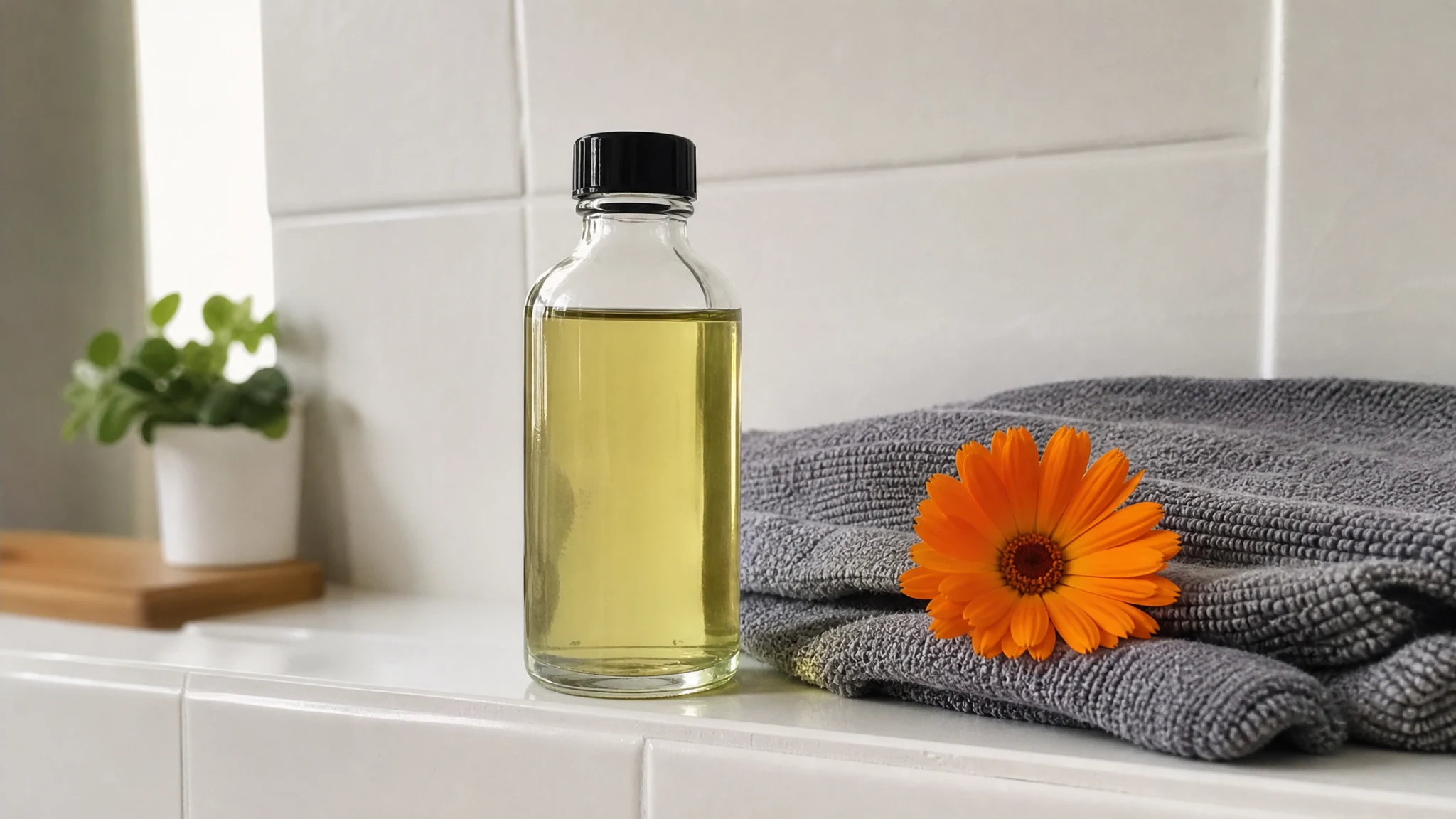
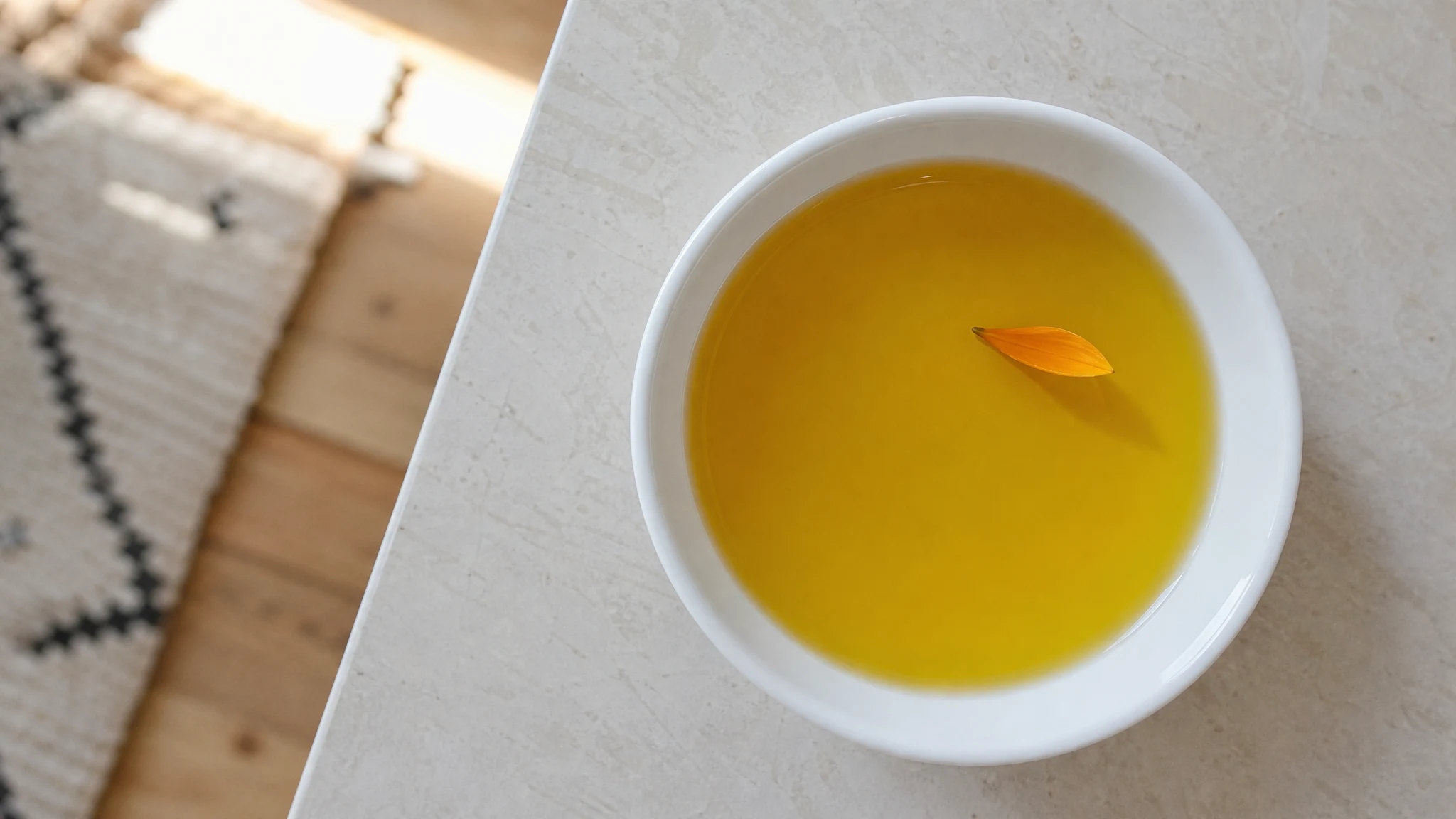
Before it goes anywhere near your face, pour a drop onto the back of your hand and look at it in daylight. It is a golden oil, and it spreads easily. Now press it in rather than rubbing, and wait a minute. A thin film should settle into a soft, slightly glossy finish. If your skin still feels slick or tacky after several minutes, that tells you more than any chart could: you used more than your skin wanted, and next time you can halve it.

Texture is personal. Some skin drinks up a few drops and asks for more, and some prefers a single drop pressed in over the cheekbones. Neither is wrong. What matters is that you notice, and that you change only one thing at a time so the notice means something.
Patch testing calendula oil before judging pores
- Patch test for allergy first. This is separate from pores. Calendula is in the daisy family, and the European herbal monograph lists hypersensitivity to that family as a contraindication (European Union herbal monograph on Calendula officinalis L., flos). Follow our patch test guide.
- Introduce one new product at a time, on a small area, so any change has a clear cause.
- Give it weeks, not days. The four-week design of the study above is a hint that follicles change slowly, so a three-day trial tells you little. That is our reading, not the authors' advice.
- Use a thin film. A few drops warmed between the palms is usually plenty for a face.
If breakouts are persistent or painful, a dermatologist can help in a way no oil list can. For more on using oil on your face, see using calendula oil on your face and our acne article.
Keeping a skin note after starting a new oil
Our small-business recommendation is a low-tech one: write the start date on a sticky note or in your phone, and add a line each week about how your skin looks. Jot down anything else that changed, such as a new cleanser, a new pillowcase, a stressful week or a change in weather. A month later, you will be able to read your own notes instead of trusting a memory that tends to blame whatever was newest.
Pillowcases deserve a mention too. Oil on skin can transfer to fabric, so a fresh case on your usual wash day keeps things tidy while you experiment.
A calm routine helps too. Cleanse gently, apply a thin film to slightly damp or dry skin, and let it settle before you add anything else. Keep the rest of your routine steady for those weeks so the oil is the only thing that changes.
So the honest answer to "is calendula oil comedogenic?" is that the number does not exist, and the better question is how your skin responds to the oil and its carrier over a few calm weeks.
Calendula Oil
Nature's Golden Botanical, bottled: small-batch calendula oil in sizes from 0.5 oz to bulk.
From $13.99
Shop Calendula Oil →Sources & Further Reading
- Fulton JE, Pay SR, Fulton JE. Comedogenicity of current therapeutic products, cosmetics, and ingredients in the rabbit ear. J Am Acad Dermatol, 1984
- Nguyen SH, Dang TP, Maibach HI. Comedogenicity in rabbit: some cosmetic ingredients/vehicles. Cutan Ocul Toxicol, 2007
- Draelos ZD, DiNardo JC. A re-evaluation of the comedogenicity concept. J Am Acad Dermatol, 2006
- European Union herbal monograph on Calendula officinalis L., flos, EMA/HMPC/437450/2017