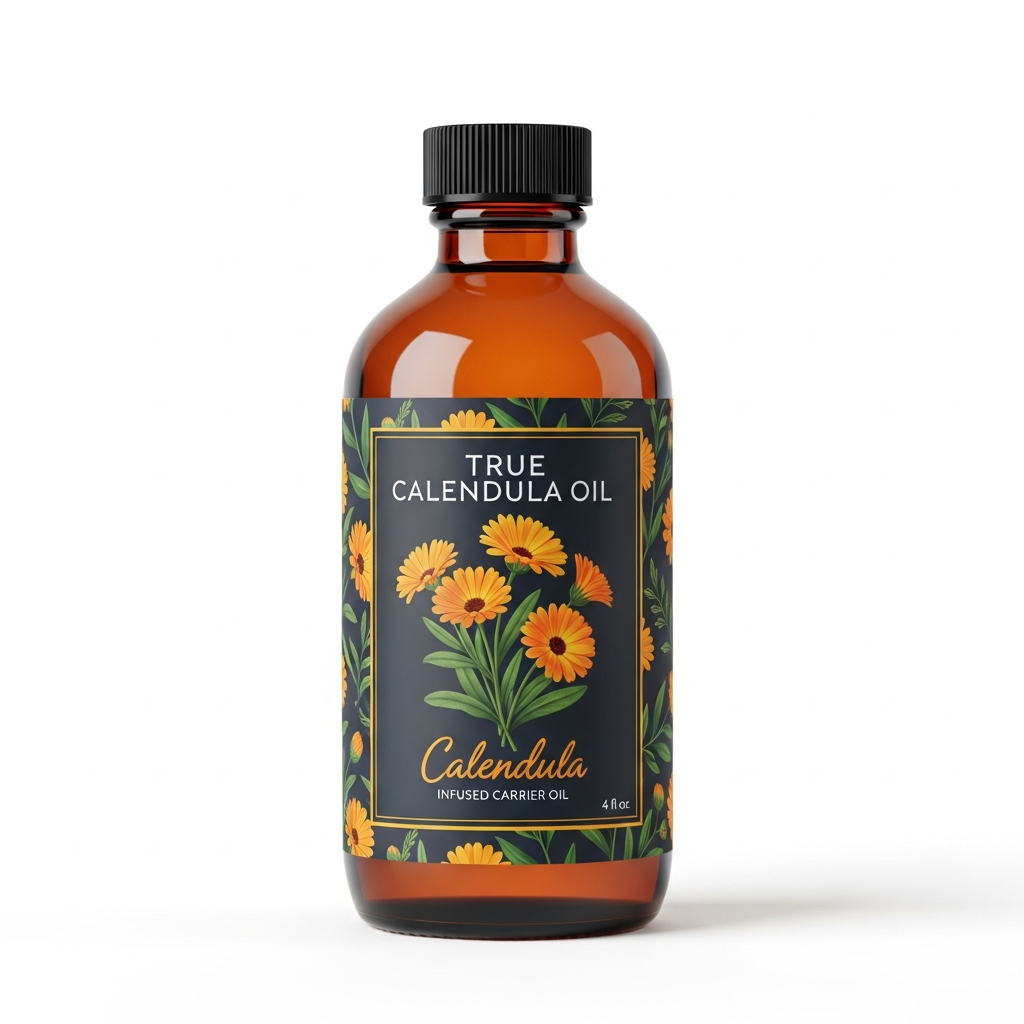
Calendula Oil for Men: A Simple Shave-Day Routine
Calendula oil suits the last step of a simple routine: damp skin after the shave. What dermatologists say about beards, razor bumps and patch testing.
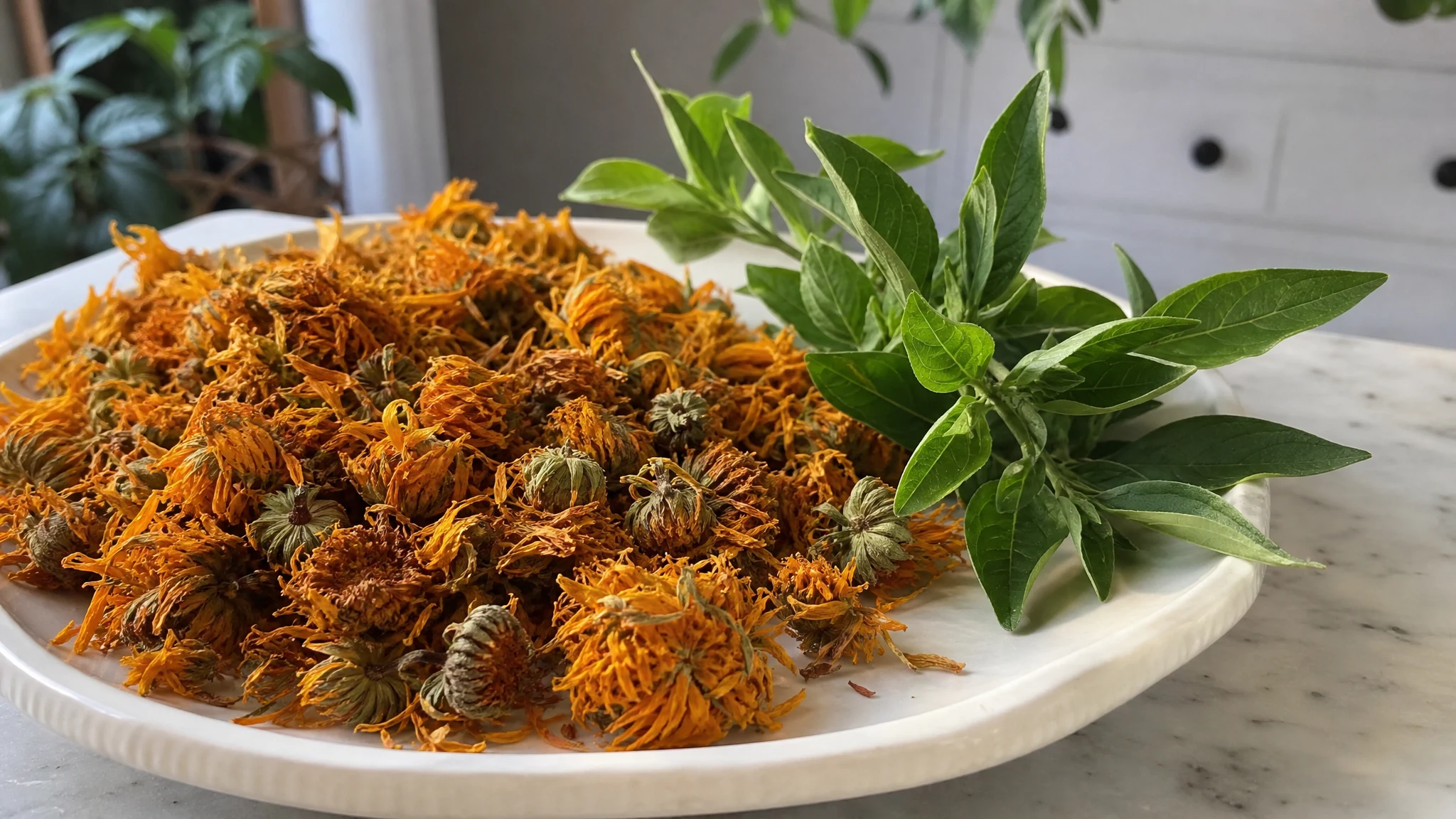
Calendula History: From Garland Flower to Herbal
Calendula's history is later and more colorful than most copy suggests: a calendar flower, a Greek myth, a late medieval herbal and a modern EU monograph.
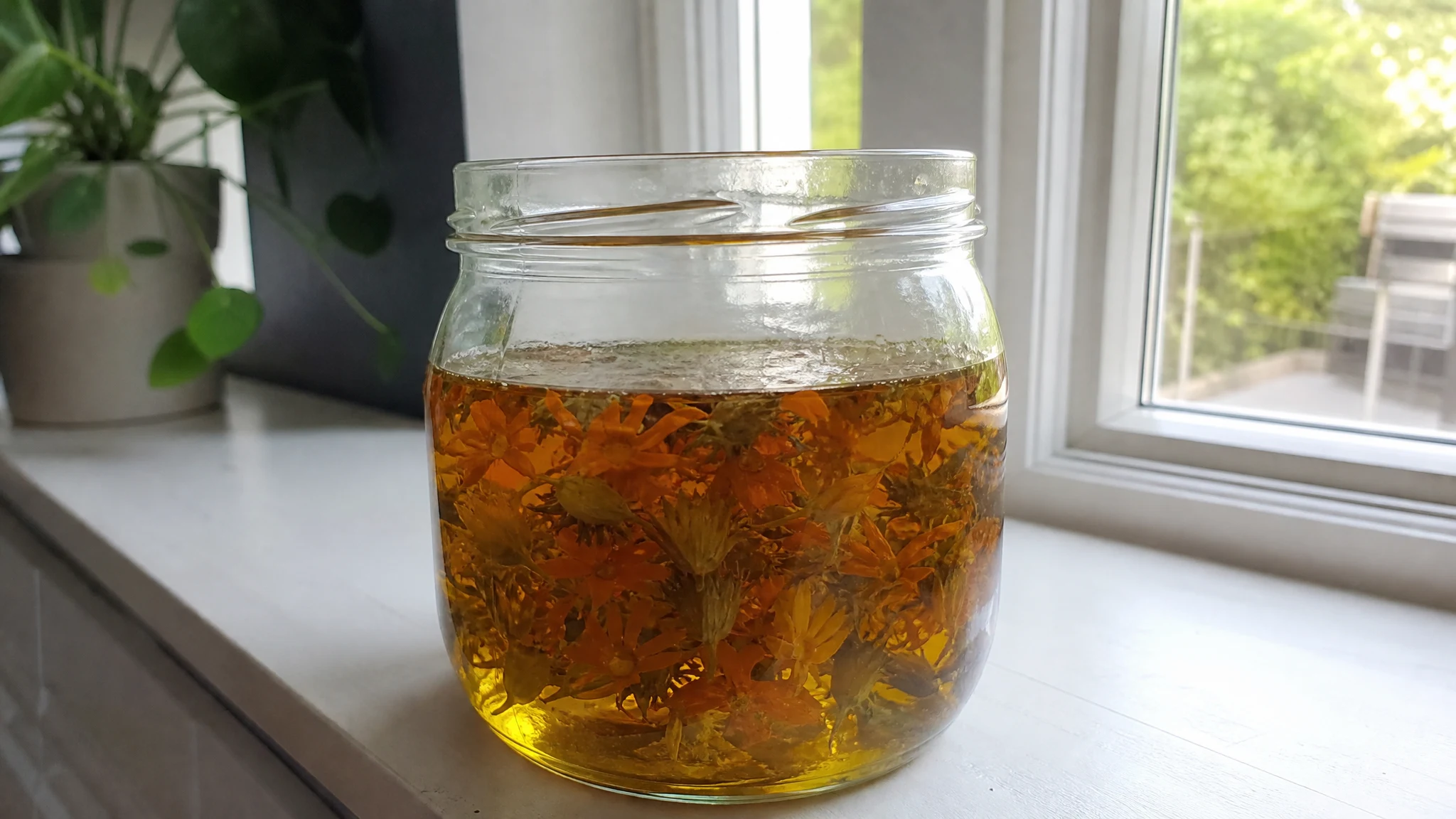
What Is Calendula Oil? Infused, Essential and Seed Oils
Calendula oil is flowers infused in a carrier, not an essential oil or a seed oil. Here is what that means for the bottle and who should check first.
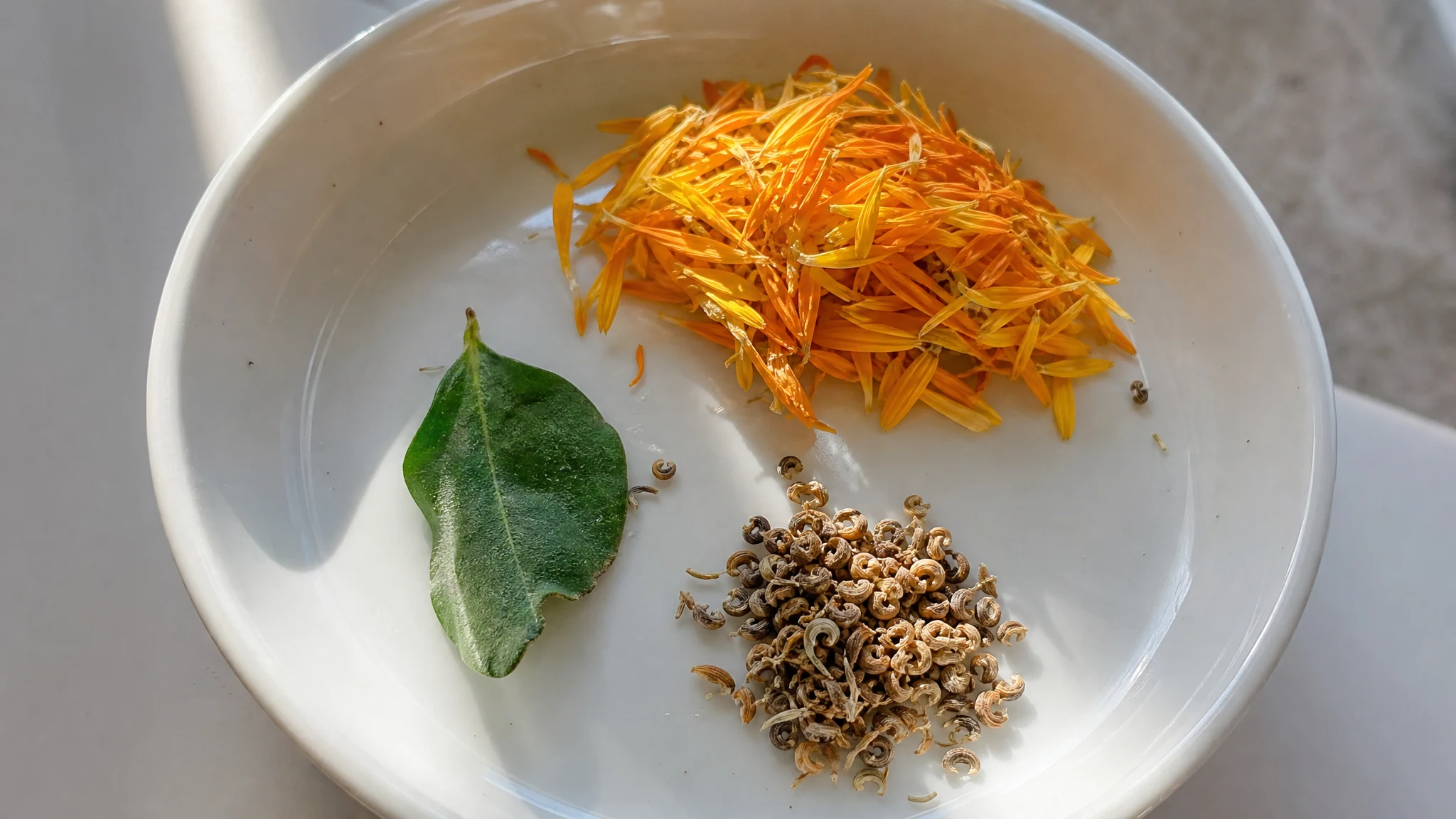
Calendula Oil Composition: What's Really in the Bottle
Long compound lists describe the calendula flower, not the bottle. An infused oil is mostly carrier. Here is what is measured and what is reasoned.
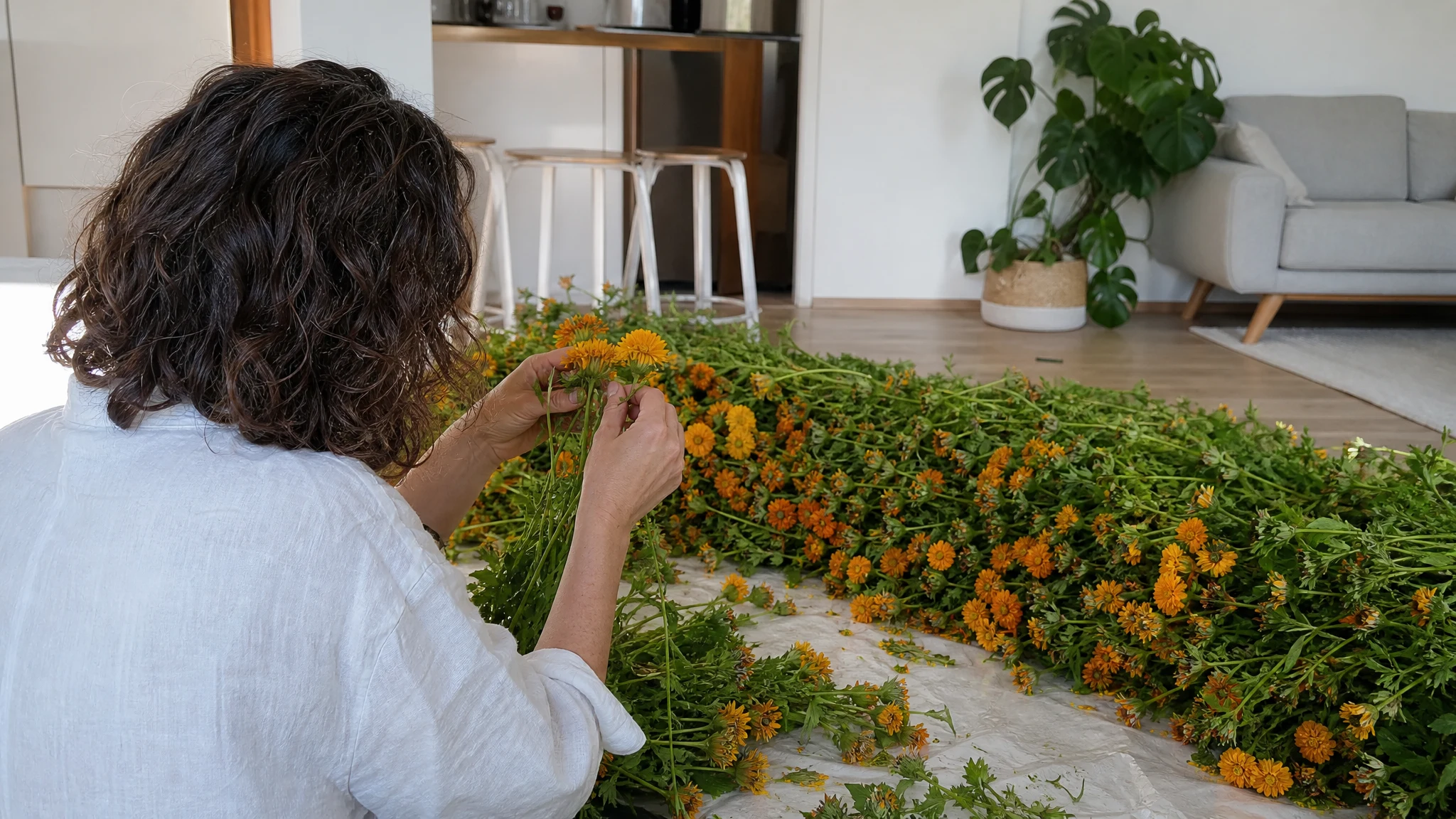
Organic Calendula Oil: What the Label Really Tells You
Organically grown tells you how the flowers were farmed, not the carrier, freshness or tests. Here is how to read the rest of a calendula oil label.
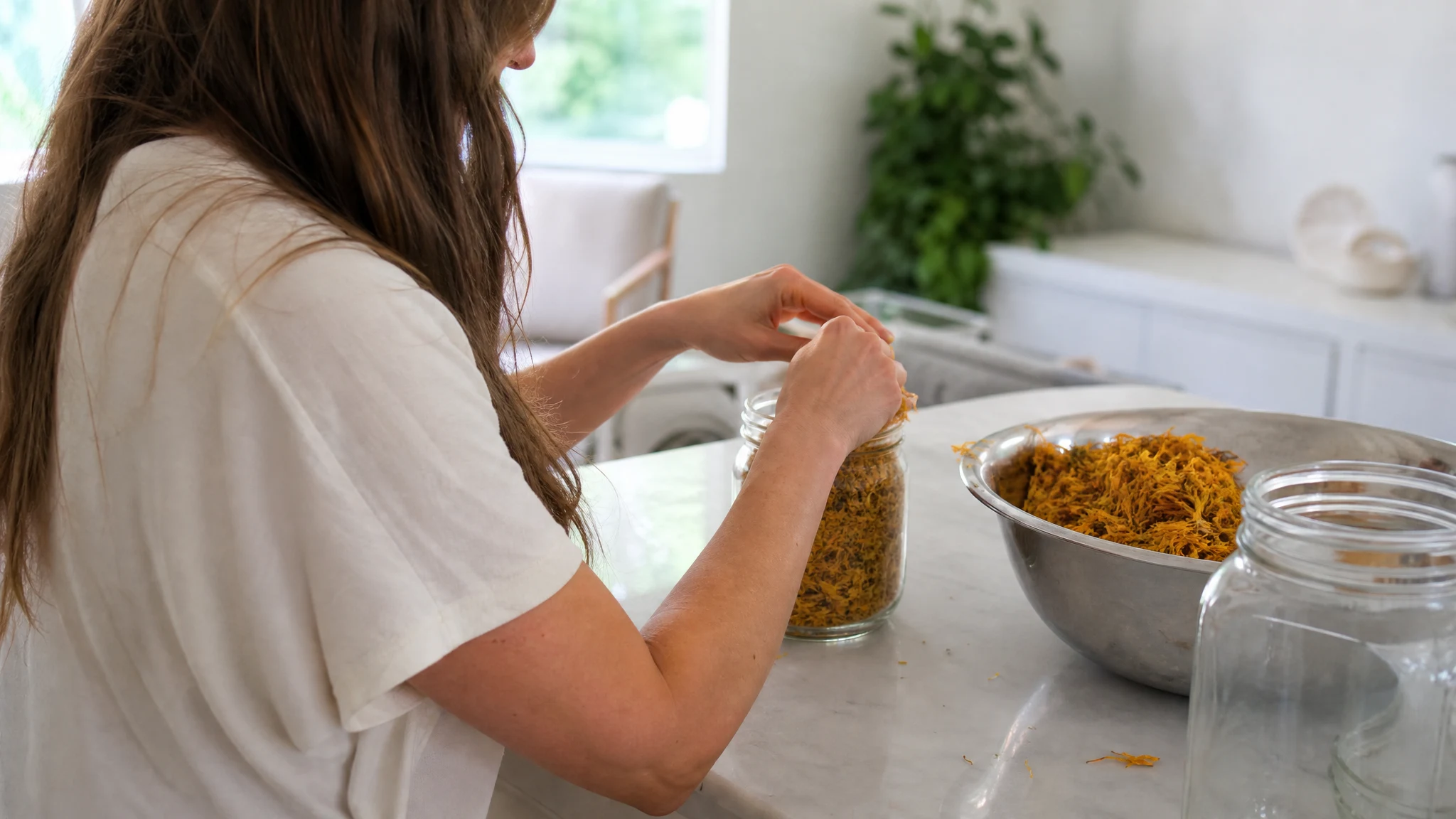
Make Calendula Oil at Home: A Step-by-Step Recipe
Dried flowers, a plain oil, a scale and a clean jar are enough to make calendula oil in your kitchen. Here is a method built on published guidance.
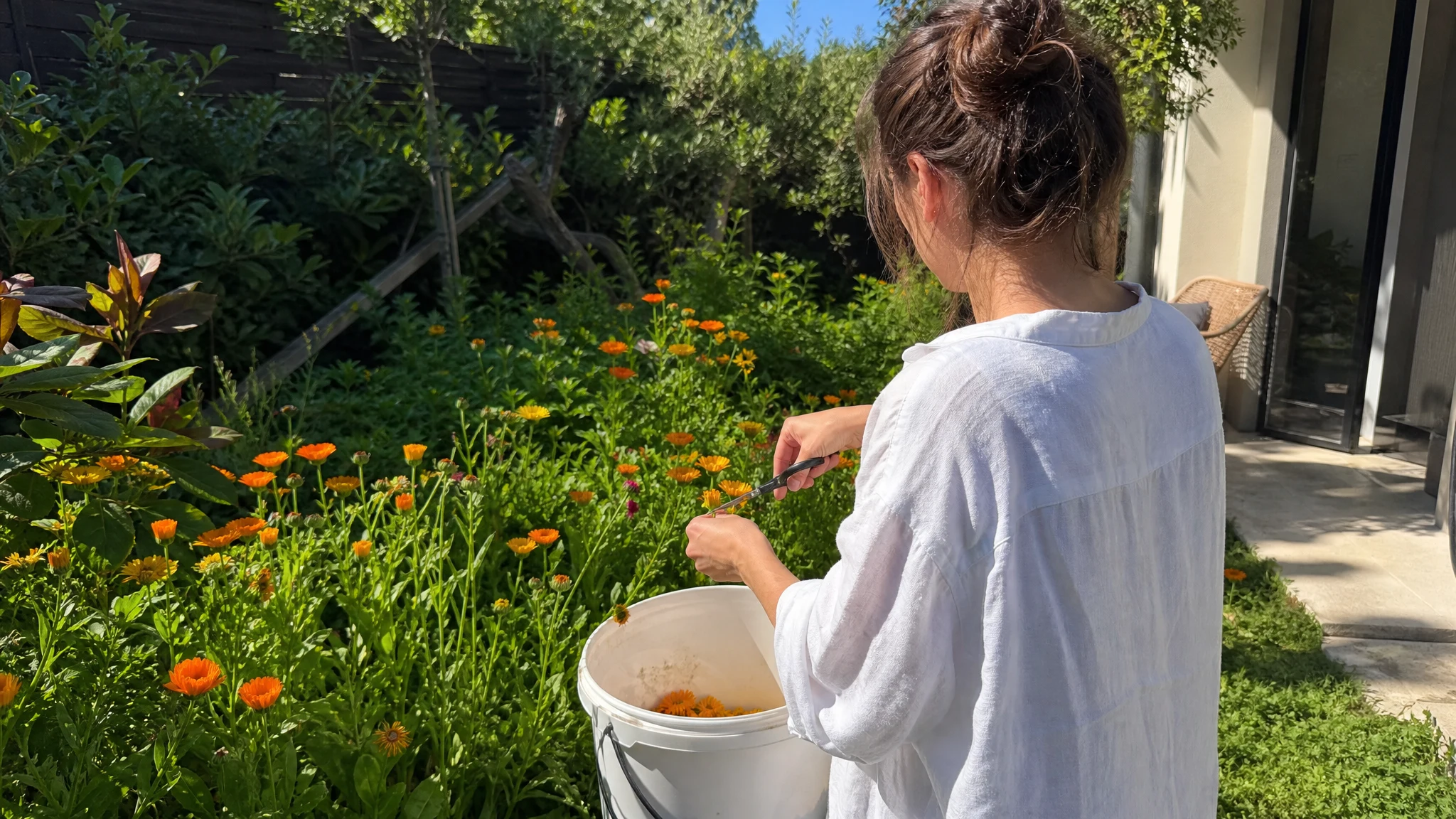
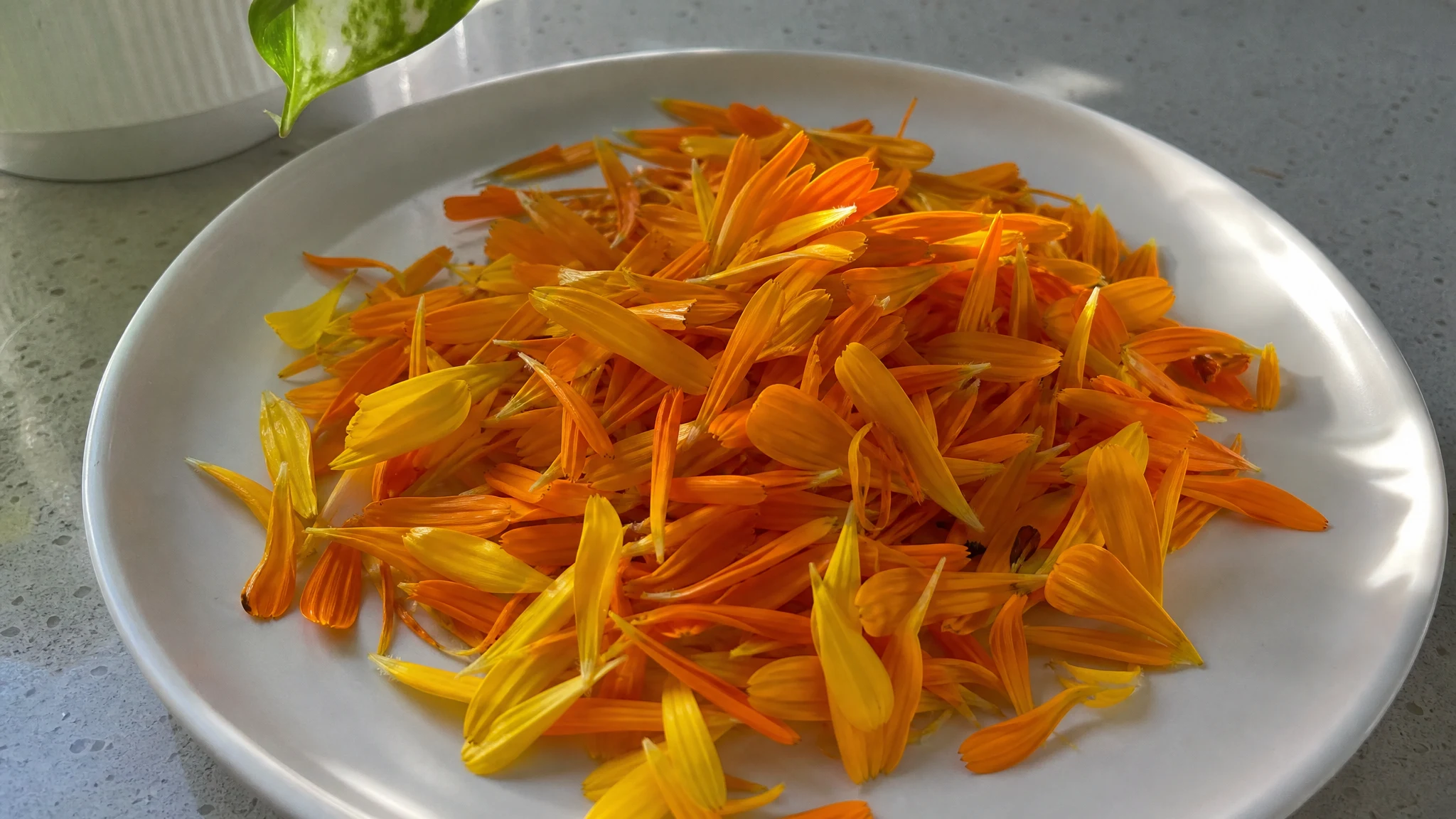
Growing Calendula for Oil: Sowing, Picking and Drying
Calendula is an easy plant to grow. The oil depends on picking open blooms again and again and drying them well. Here is the routine from sowing to jar.
Calendula Oil and Tattoos: Fresh Ink vs Healed Skin
Fresh ink follows your artist's instructions. Once a tattoo has settled, calendula oil can be a small optional extra. Here is how we tell the stages apart.
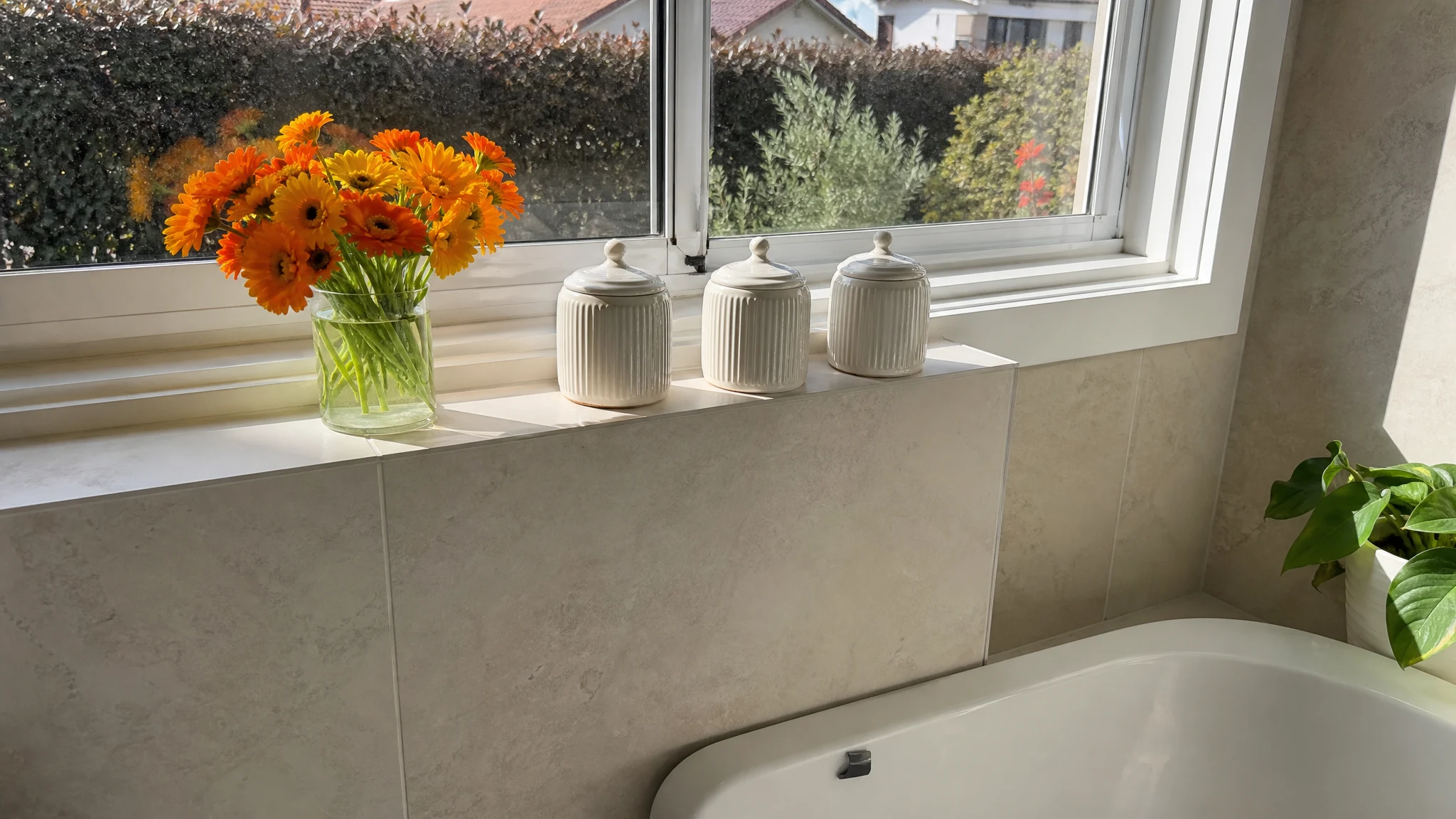
Calendula Oil for Skin: Where the Reputation Comes From
Calendula's good name rests on long use. What the studies did and did not test, what an infused oil does well, and how to try it with a patch test.

Calendula Oil for Massage: Glide, Feel and Fit
The massage does the work and the oil does the gliding. What an infused calendula oil offers a practice, from carrier questions to client screening.
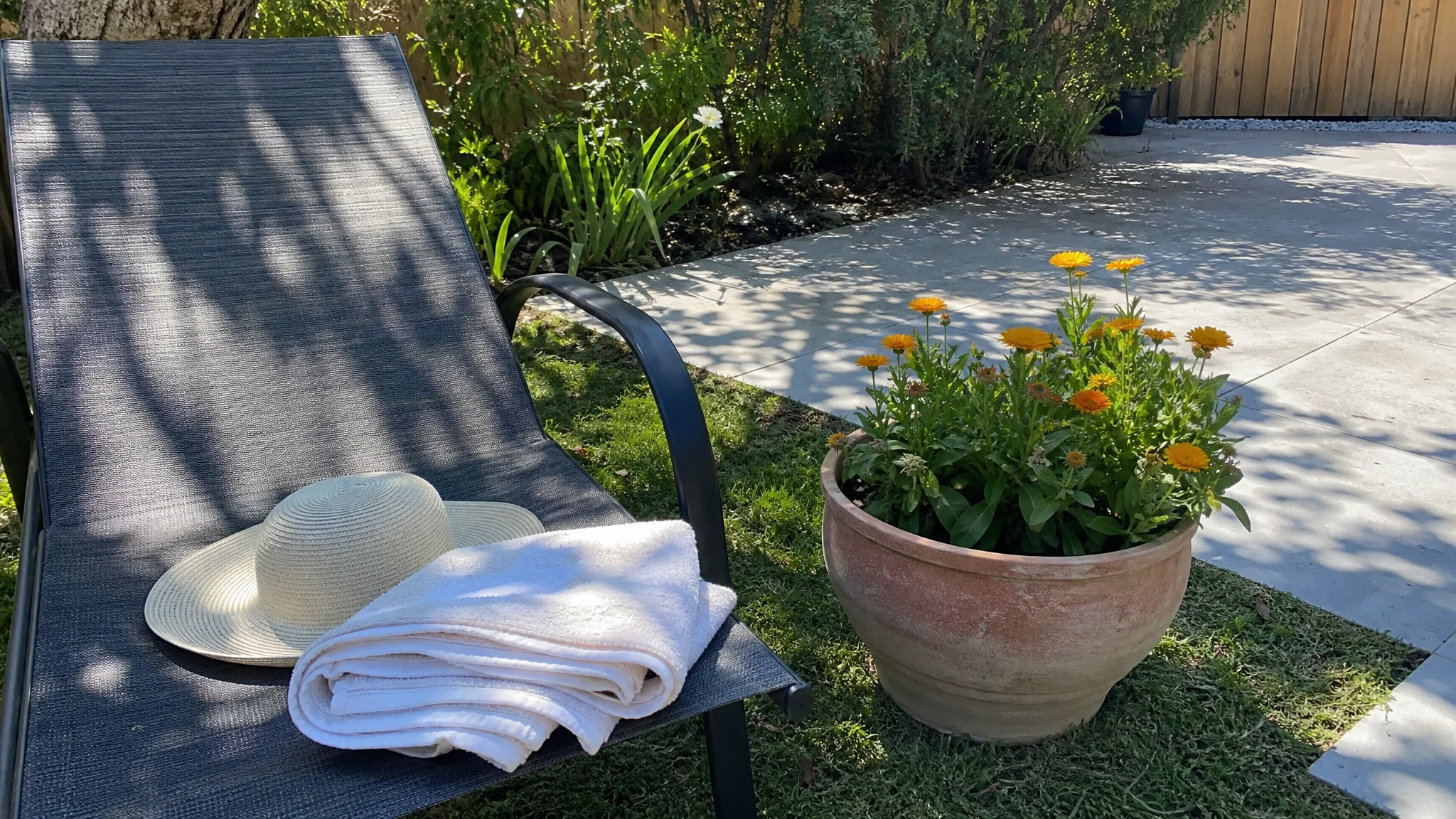
Calendula Oil After a Day in the Sun: What Comes First
After too much sun, the order matters. Dermatologist first steps, when a calendula oil makes sense for dry, tight skin, and a note on patch testing.
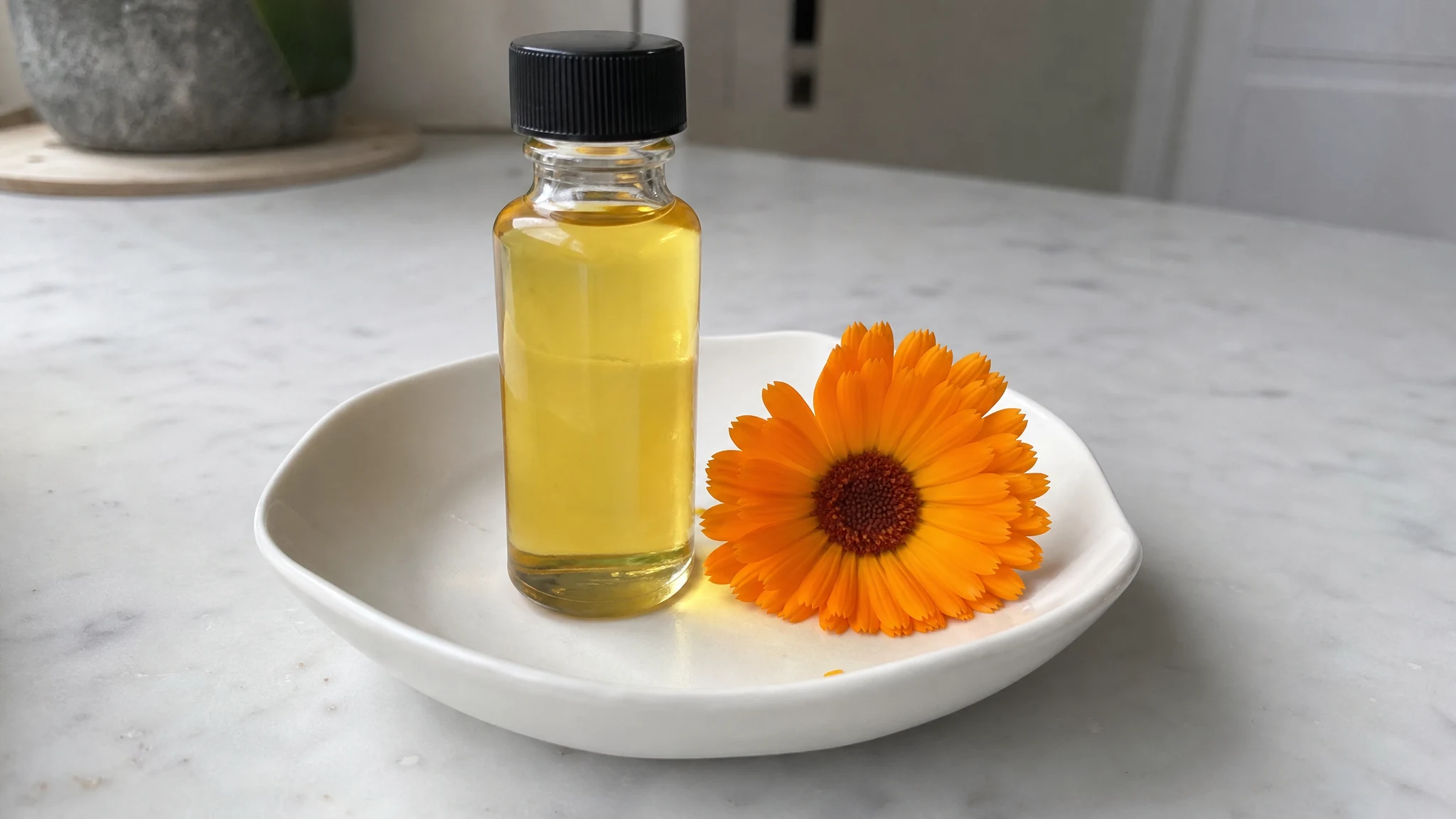
Homemade Calendula Lip Balm: Why the Wax Matters
The oil makes a lip balm soft, the wax makes it last. A starting ratio for a small calendula batch, what to leave out of the tin, and how to patch test.