Dry Heels: Where Calendula Oil Fits in Your Routine
Ask a dermatologist about cracked heels and the answer is not a bottle of oil. It is a short, sensible routine, and once you see it, you can decide for yourself where a calendula oil might sit alongside it. We make calendula oil, so we like the idea of a little oil on a tired pair of feet, but we would rather you start with what actually moves the needle.
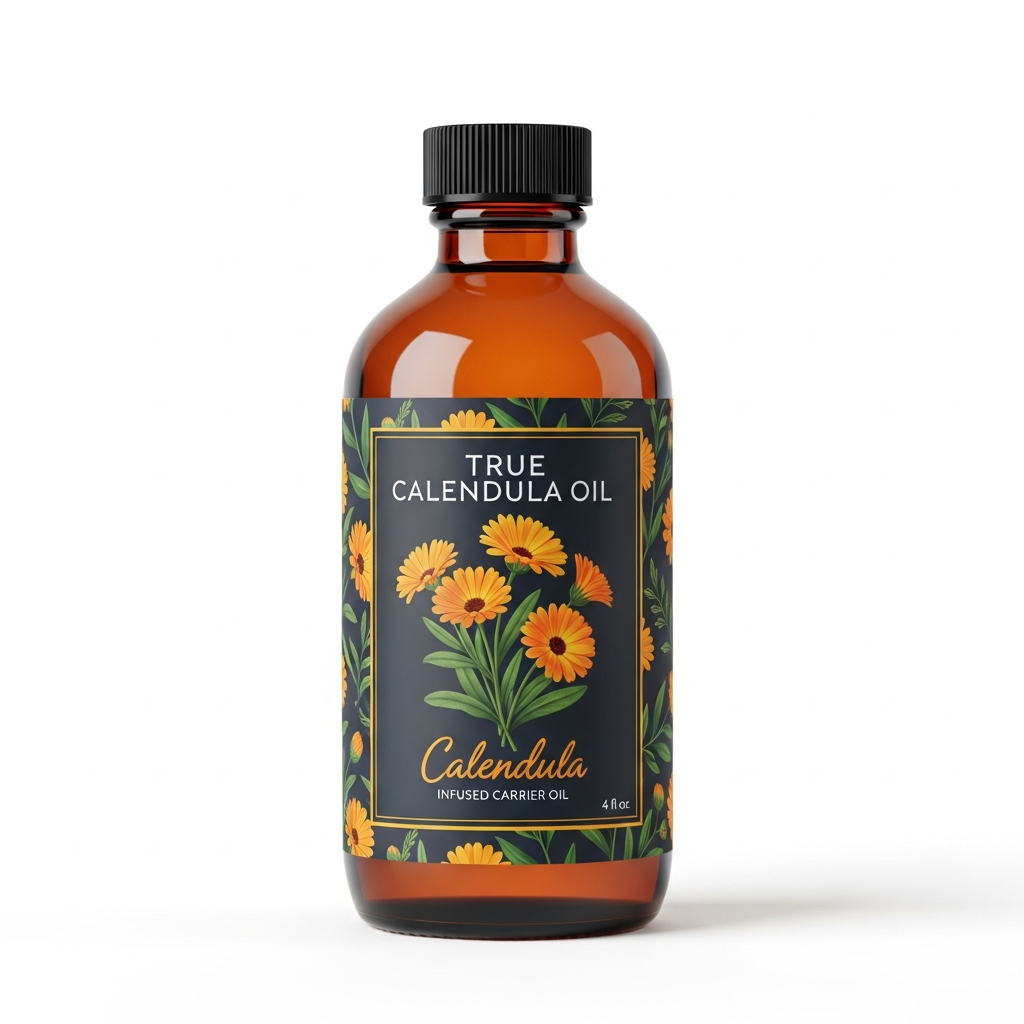
Calendula Oil
Our own small-batch calendula oil, in sizes from 0.5 oz to bulk.
From $13.99
Shop Calendula Oil →Dry cracked heels: AAD's six-step routine
The American Academy of Dermatology lays out its approach to dry, cracked heels in six plain steps (AAD). Keep baths and showers to five or ten minutes, because long soaks dry skin further. Use a gentle, fragrance-free cleanser. Moisturize within five minutes of bathing, using a cream that contains 10% to 25% urea, alpha hydroxy acid or salicylic acid. At bedtime, apply plain petroleum jelly and pull on socks. Cover cracks with a liquid bandage in the daytime, and wear shoes that fit, without open heels or worn-down soles.
Notice what leads that list: shorter showers and the right cream, not a botanical. That is useful to know before you shop. If heels are your main concern, a urea cream and petroleum jelly are the ingredients the AAD names, and an oil is a pleasant extra rather than a replacement.
Where can calendula oil sit in a heel routine?
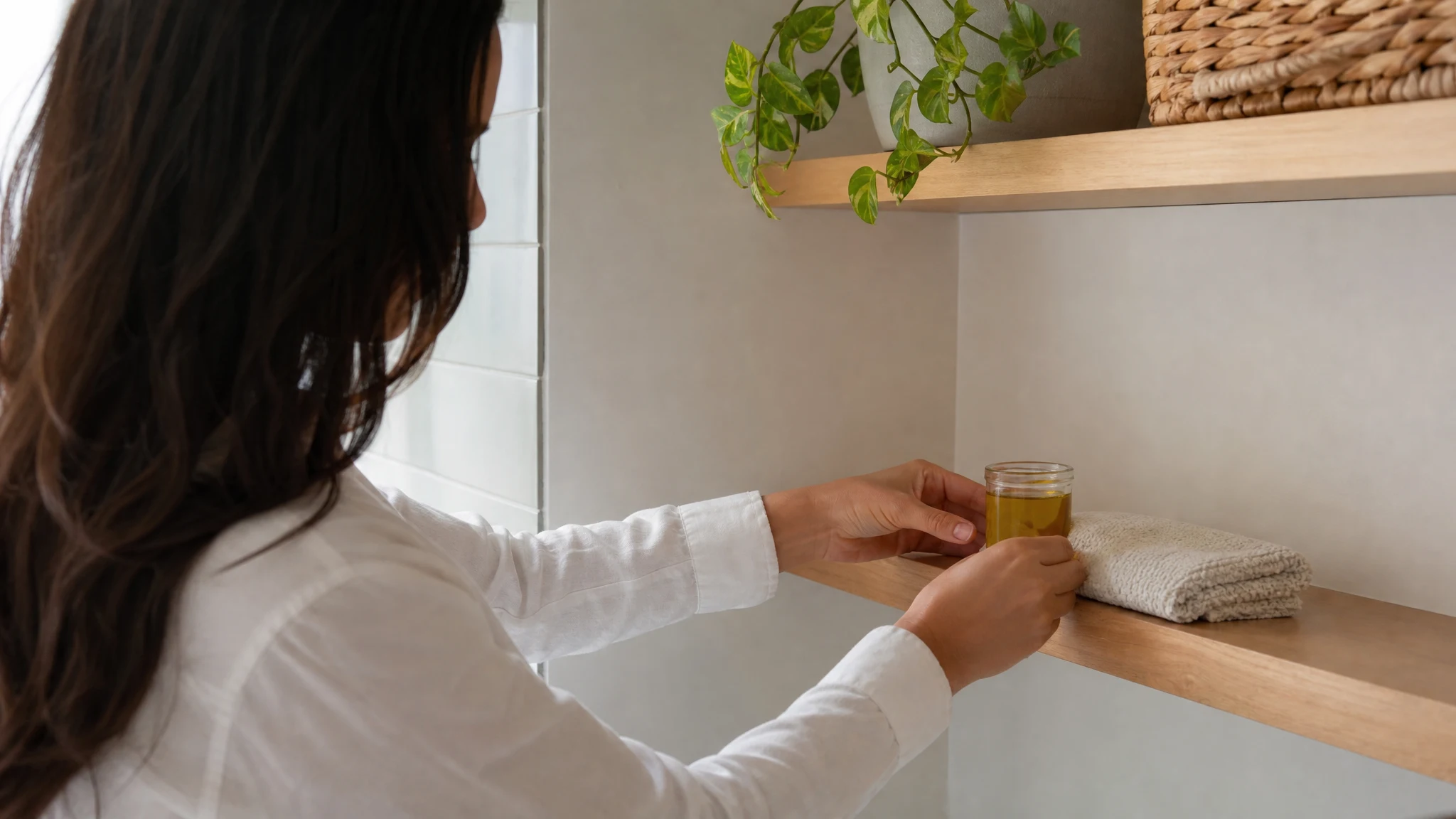
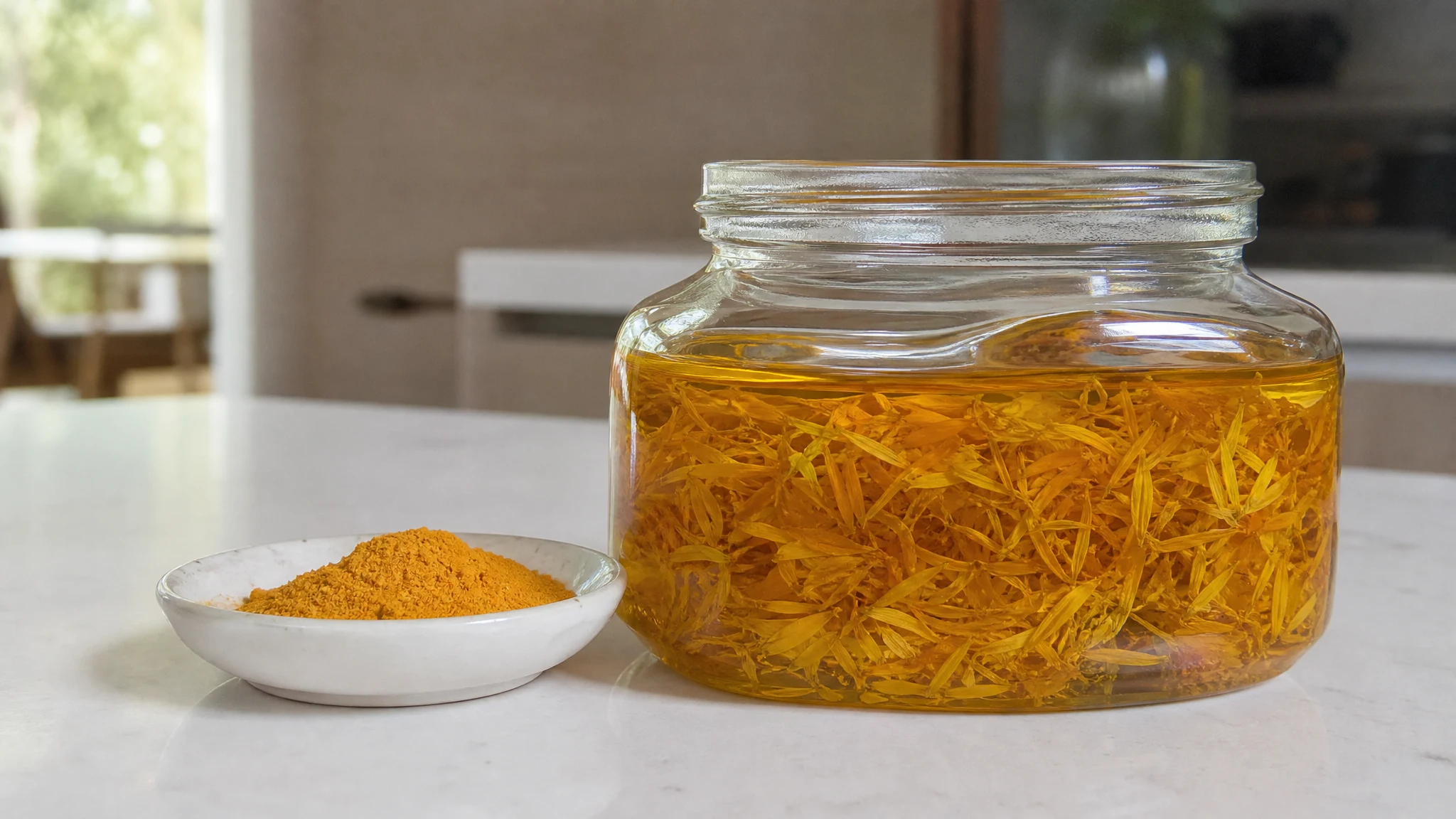
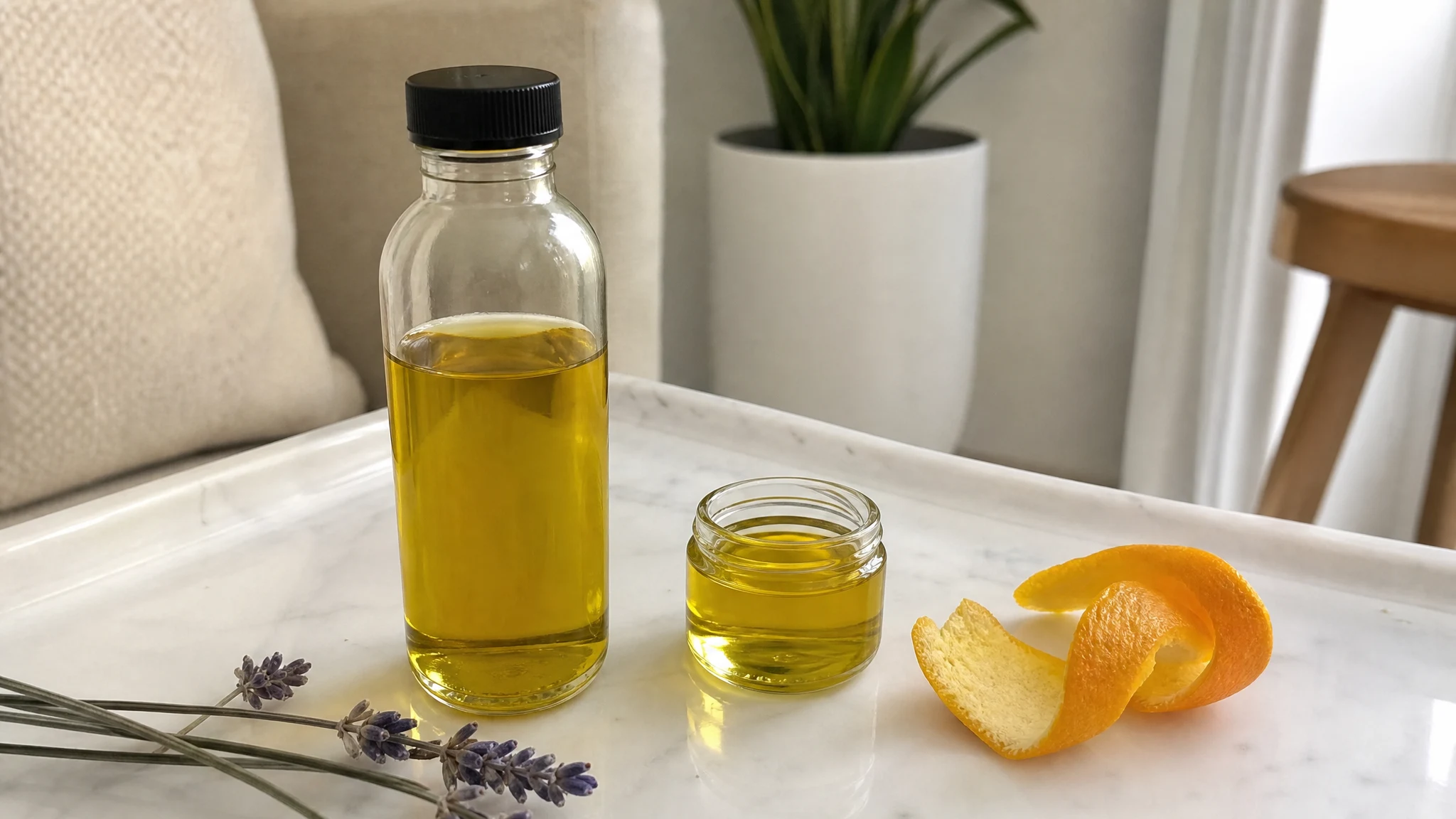
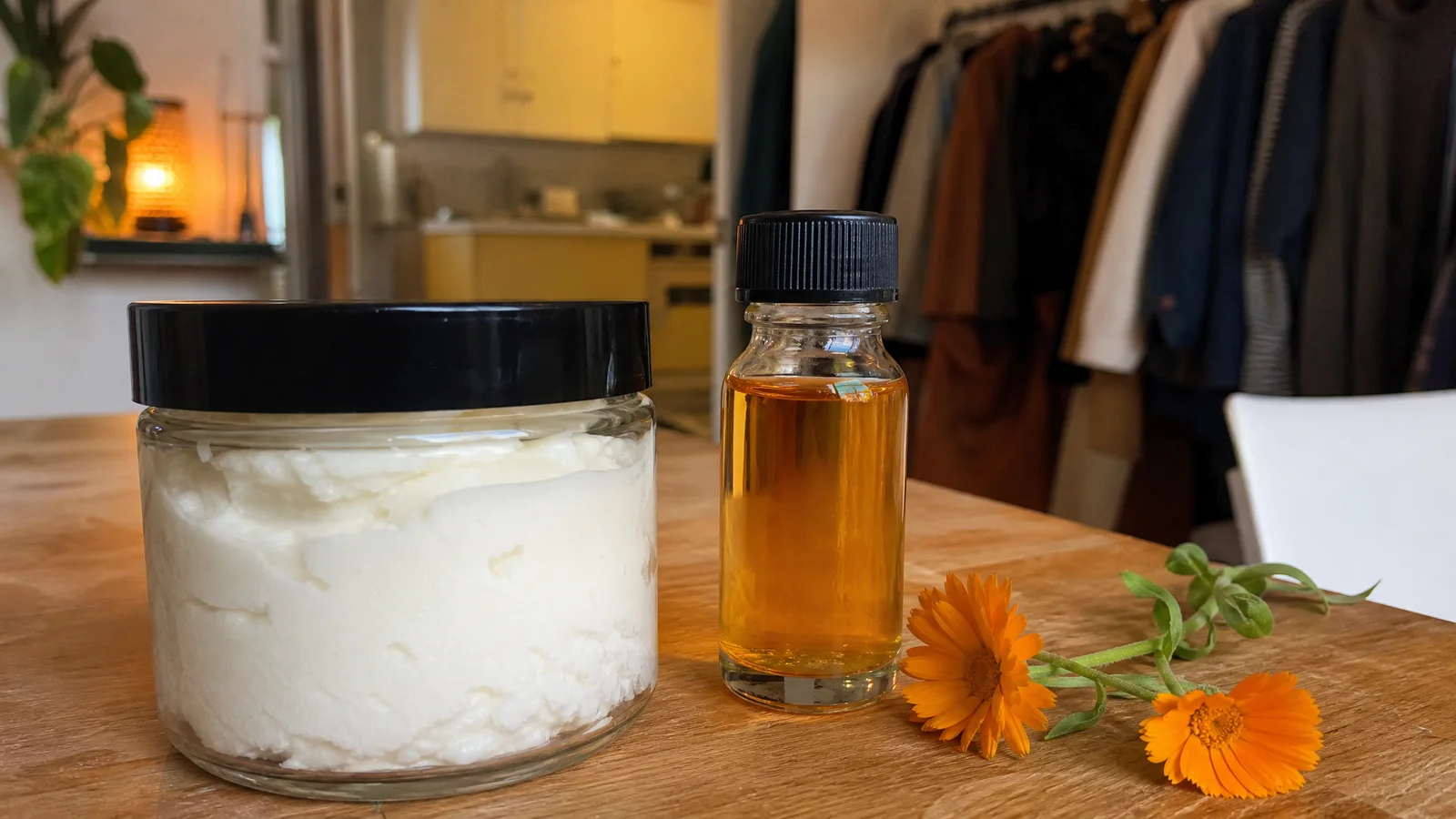
There are two natural slots. The first is the damp-skin moment right after a short shower, when a few drops smoothed over the heel help skin feel soft and moisturized. The second is bedtime, either in place of or beneath your usual night routine, with socks over the top. Calendula oil is an infused oil: we dry the flowers naturally, extract calendula on its own, and bring the extract into a carrier oil, with nothing else added, no preservatives, tocopherol or stabilizers. It is a soft, golden, gently herbal-smelling oil that spreads easily on dry feet.
We would be straightforward about what it is: a cosmetic oil for dry skin. No human study we know of has looked at calendula on heels, so we do not describe it as anything more than a comfortable moisturizer. The calendula research that exists involves wounds and ulcers under clinical care, which is a different situation from dry heels (we go through it in our article on calendula and wounds).
Because the oil carries only calendula and a carrier, it has no added fragrance beyond the flowers' own gentle aroma, which suits the AAD's fragrance-free spirit. If you want to know which carrier is in your bottle, email us the lot number at support@truecalendulaoil.com and we will send the batch paperwork.
How does calendula oil feel on feet?
Calendula oil is thin and glides on, so a few drops go a long way. Warm it between your palms first, then smooth it over the heel and the sides of the foot, working it in with your thumbs until the surface feels slick rather than wet. You will notice it takes a little while to sink in, which is why bedtime, with socks on, suits it so well.
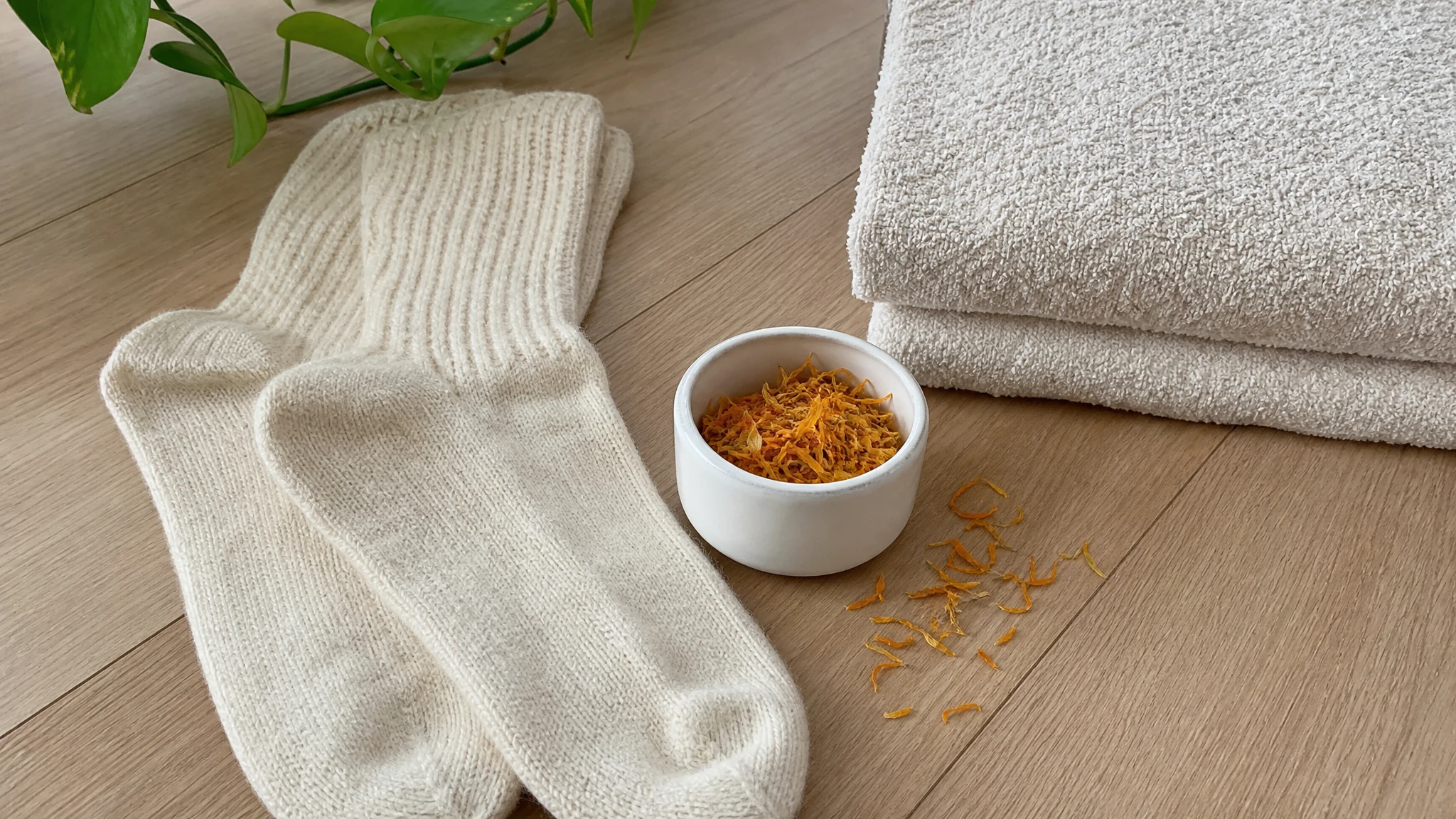
One practical thing to expect: an infused oil can leave a faint golden tint on fabric, so use old cotton socks and not your best pair. Expect the same from the edge of the sheets if your feet wander.
Evening foot ritual for dry heels
The best routines are the ones you actually do. Pick a time you already sit down, perhaps after your shower or while a program is on, and keep the bottle and a pair of socks where you will see them. Five quiet minutes with your feet up, a drop or two of golden oil and a warm pair of socks is a pleasant habit in its own right.
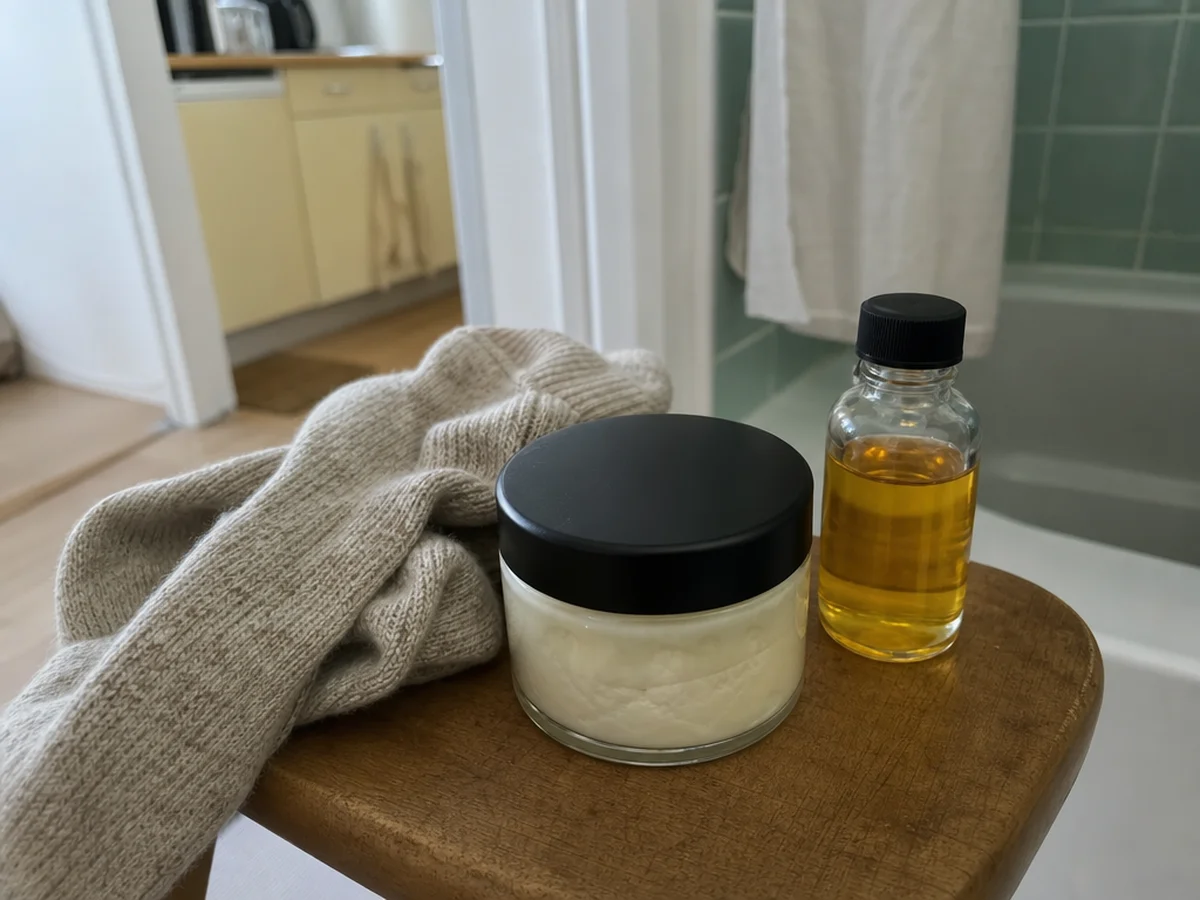
Practical habits for oily feet: socks and slippery floors
- Mind the floor. Oily feet on a tiled bathroom floor are slippery. Sit down to apply it, put socks on right away, and wipe your soles.
- Keep it on intact skin. Skip any crack that is deep, bleeding or painful. Those are for a clinician.
- Go lightly. A little spreads a long way, and the socks do part of the work.
Patch testing calendula oil on heels
Calendula is in the daisy family (Asteraceae), and the European herbal monograph lists hypersensitivity to Asteraceae plants as a contraindication, noting that skin sensitization has been reported (European Union herbal monograph on Calendula officinalis L., flos). Cracked skin is a poor place to discover a reaction, so try a small amount on healthy skin first, following the steps in our patch test guide. If you notice redness, burning or a rash, stop and contact a healthcare provider, which is the FDA's advice for any cosmetic (Using Cosmetics Safely).
When should cracked heels see a professional?
The AAD notes that cracked heels are sometimes caused by a medical condition such as diabetes, and recommends seeing a board-certified dermatologist if heels are severe or do not improve after following its tips. If you have diabetes, poor circulation or reduced feeling in your feet, deep cracks deserve a visit to your doctor or a podiatrist before any home routine.
For everyone else, a short shower, a good cream, a pair of socks and a drop or two of golden oil make a pleasant evening. If you want more on how we think about calendula for dry skin in general, our dry skin article picks up from here, and our storage notes will keep the bottle in good shape between uses.
Calendula Oil
Nature's Golden Botanical, bottled: small-batch calendula oil in sizes from 0.5 oz to bulk.
From $13.99
Shop Calendula Oil →Sources & Further Reading
- American Academy of Dermatology, "How to care for dry, cracked heels." aad.org
- European Medicines Agency, "European Union herbal monograph on Calendula officinalis L., flos" (EMA/HMPC/437450/2017). ema.europa.eu
- US Food and Drug Administration, "Using Cosmetics Safely." fda.gov