Calendula Oil Face Serum: A Simple DIY Blend
A good facial oil does not need a long ingredient list. Sometimes the nicest "serum" is a short blend of oils you chose yourself, mixed in a small bottle and used up while it is fresh. Calendula oil makes a lovely base for that, because the calendula work is already done. Here is how we would put together a simple one, and the few rules that keep it pleasant to use.
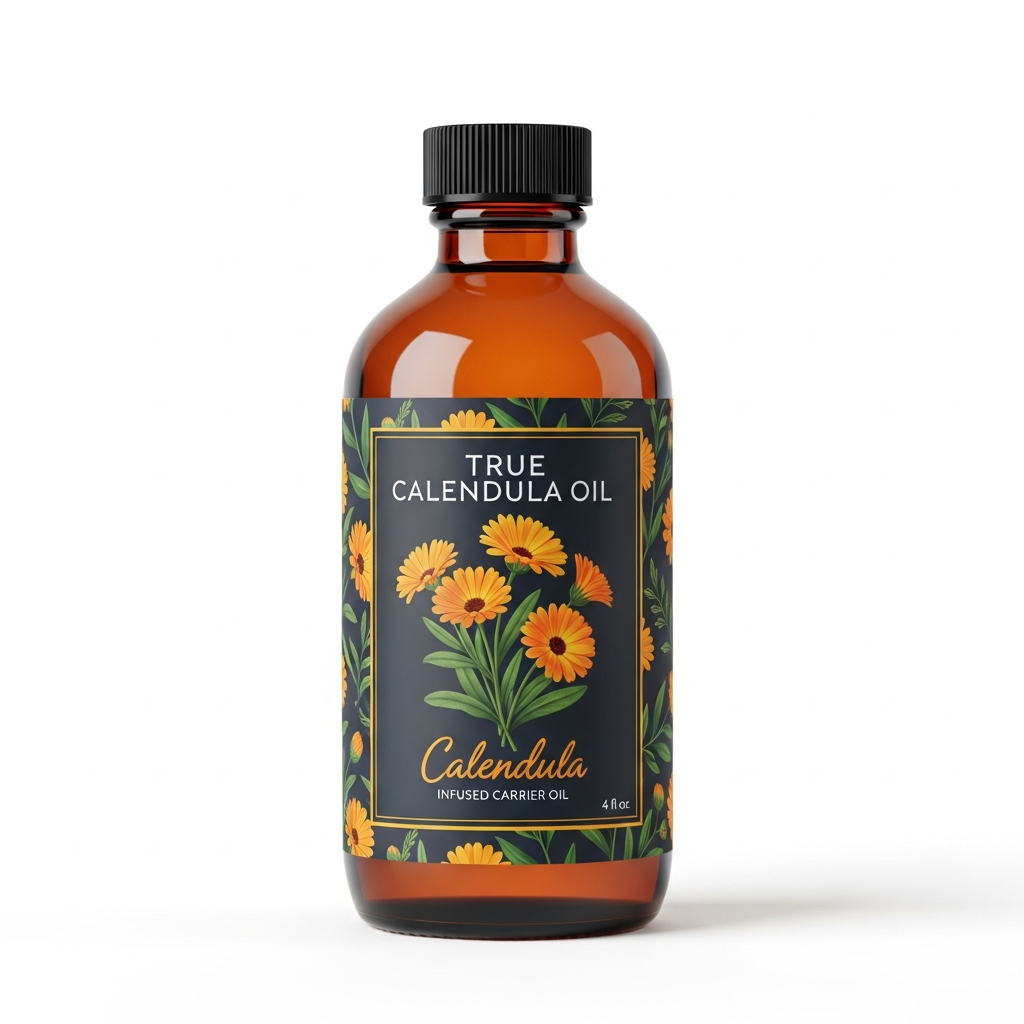
Calendula Oil
Our own small-batch calendula oil, in sizes from 0.5 oz to bulk.
From $13.99
Shop Calendula Oil →Why should a DIY calendula serum stay water-free?
The first rule is no water. Cosmetic scientists have long pointed out that the products that most need preservatives are the ones containing water, and that low-water-activity products need far less protection, because the only limit on microbial life is the availability of liquid water (Cosmetic preservation). So in this bottle there is no hydrosol, no aloe gel and no splash of tea. Oils only. If you want a water-based serum, that is a different project and needs a proper preservation system.
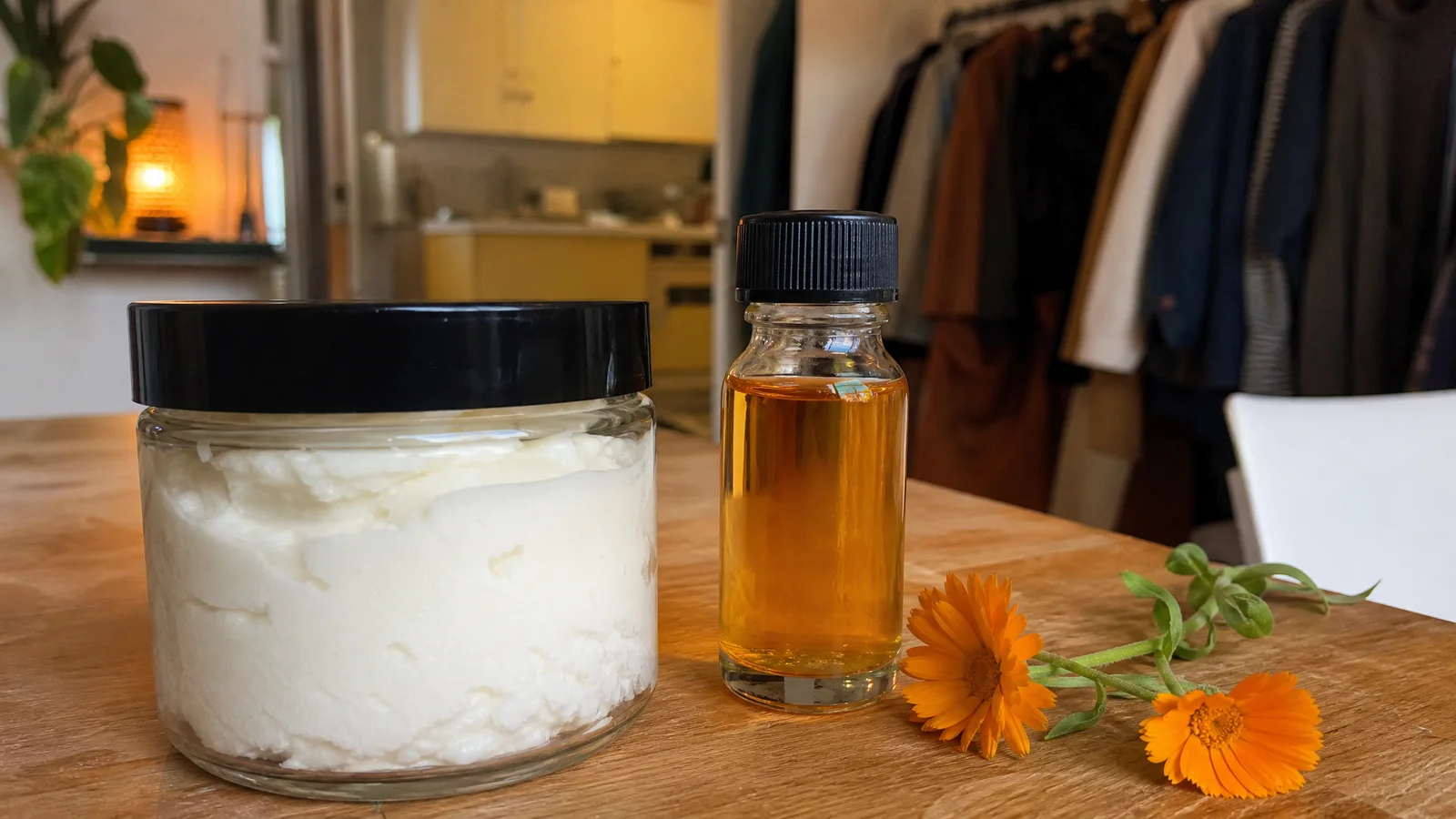
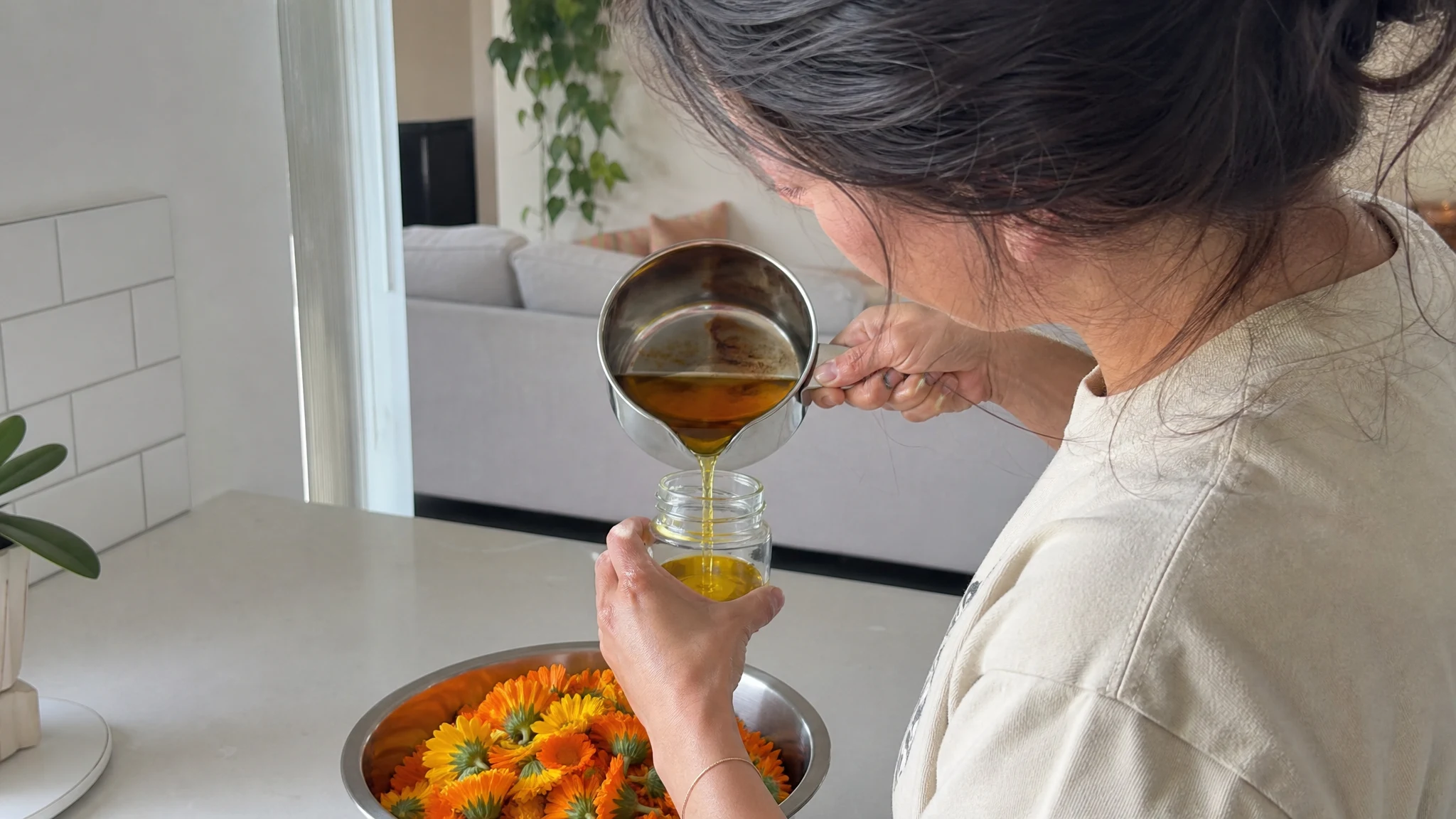
Our calendula oil is a whole-flower infusion in a carrier, and nothing else is added. It works beautifully on its own, so the simplest serum is just that, a few drops pressed onto slightly damp skin. Blending is for texture and personal preference.
Three simple ways to build a serum blend
These are suggestions based on how oils behave, not tested formulas. Each makes a 1 fl oz (30 mL) bottle.
- The plain version. 30 mL of calendula oil, in a dark glass bottle with a dropper. Fewest variables, and the easiest to trace if your skin ever objects.
- The lighter-feeling version. About 3 parts calendula oil to 1 part jojoba oil, which is roughly 22 mL and 8 mL (that is arithmetic: three quarters and one quarter of 30 mL). Jojoba is often described as a liquid wax rather than a true oil, because it is made up mostly of wax esters, which gives it a distinctive silky feel (A Comprehensive Review of Plant-Based Cosmetic Oils (Virgin Coconut Oil, Olive Oil, Argan Oil, and Jojoba Oil): Chemical and Biological Properties and Their Cosmeceutical Applications). In a lab comparison of four oils at high heat, jojoba had the longest induction period, a measure of resistance to oxidation (Oxidative Stability and Kinetics of Oxidation of Rosehip, Sunflower, Olive and Jojoba Oils). That test used temperatures far above a bathroom shelf, so read it as a ranking, not a shelf-life promise.
- The scented version. The plain or jojoba blend plus an essential oil, at a dilution you have worked out. The Tisserand Institute lists 0.5 to 1.2% for facial cosmetics and 0.2 to 1% for reaction-prone skin, and advises starting low (Dilution for essential oils). In 30 mL, 0.5% is 0.15 mL of essential oil. Measure by volume, because drop sizes vary. Our blending guide has the full arithmetic.
You can find jojoba oil and essential oils at a craft or supply shop or pharmacy. If you want to compare carriers first, our calendula versus jojoba and calendula versus rosehip notes will help.
How do you test a small batch of serum?
Start small. A 1 oz bottle means that if you decide the blend is not for you, you have not committed a lot, and our 0.5 oz, 1 oz and 2 oz bottles are handy for exactly this kind of trial. Label the bottle with the date and the proportions, because a blend you cannot repeat is a blend you cannot adjust.
Patch test the finished blend, not just the calendula. Calendula is a daisy-family plant, and the EU herbal monograph lists hypersensitivity to that family as a contraindication (European Union herbal monograph on Calendula officinalis L., flos). A week of twice-daily applications on the inner forearm is our suggestion, and the patch test guide explains why.
Color and feel of a calendula oil blend
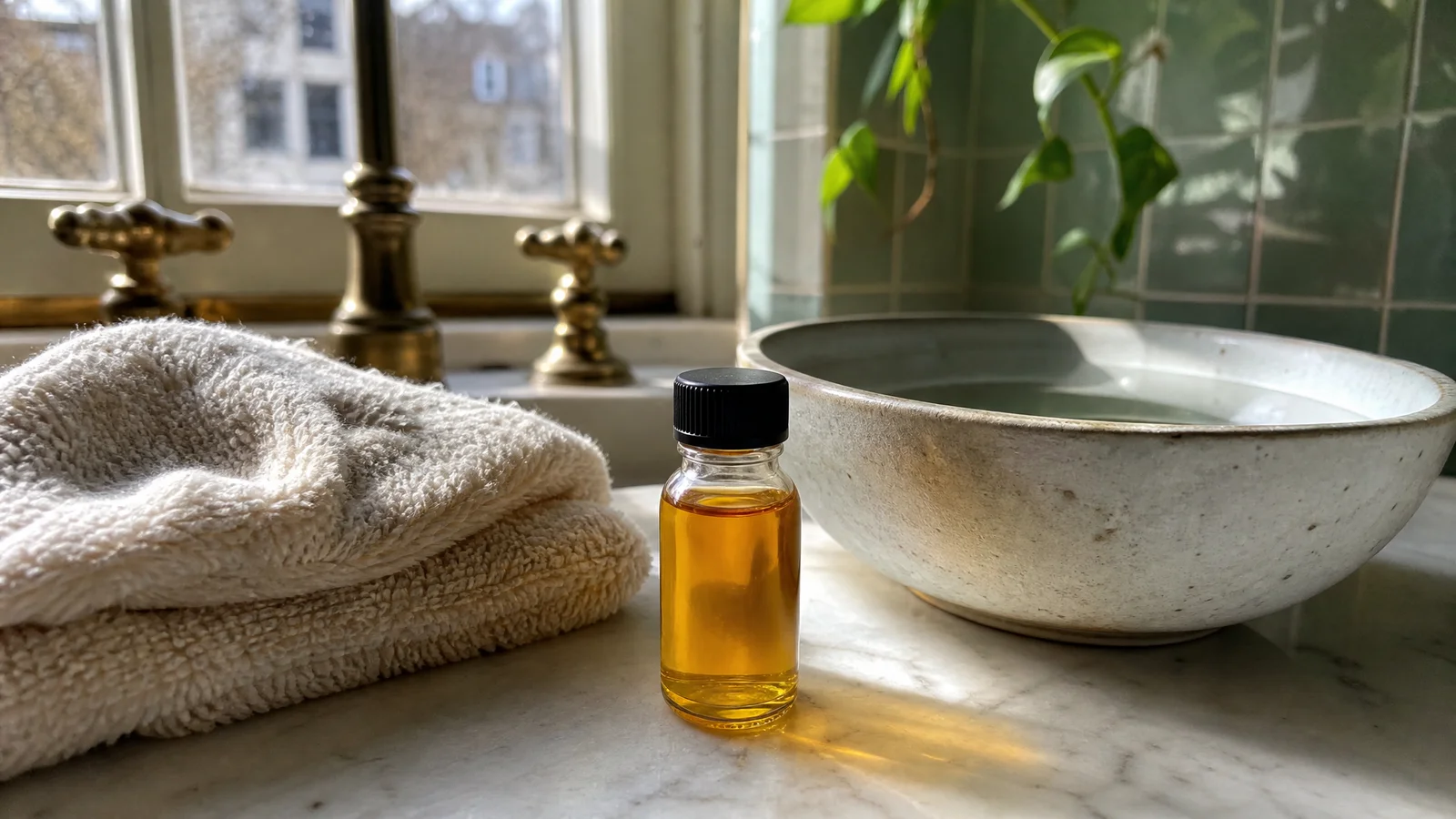
When you pour your first small batch, take a moment to look at it. The plain version is a clear, deep gold, and a blend with jojoba is a little paler and thinner. Shake or swirl it gently, then test a drop on the back of your hand. You will notice how quickly it spreads, whether it leaves a slick or sinks in, and how it smells. Those small observations are your guide to adjusting the blend next time.
Write down what you notice with the date. If the blend feels too rich for you, use less oil per application, or try a lighter ratio. Change one thing at a time, so you know which change made the difference.
Using and storing a DIY face serum
Two or three drops on damp skin in the evening is plenty for most faces, and you can add the morning if your skin stays comfortable. Warm the oil between your fingertips and press it in. The result is skin that feels soft and smooth, which is the honest promise of a good oil, and we leave bigger promises to others.
Keep the bottle capped, in a cool, dark place. Heat, light and oxygen are the main drivers of oil oxidation (Vegetable oil oxidation: Mechanisms, impacts on quality, and approaches to enhance shelf life), and dark glass helps with the light part. A pump or dropper also keeps fingers out of the oil. Our storage guide covers the details.
Few things are as satisfying as a bottle you blended yourself, a small batch used up before it gets old, and a routine short enough to keep.
Calendula Oil
Nature's Golden Botanical, bottled: small-batch calendula oil in sizes from 0.5 oz to bulk.
From $13.99
Shop Calendula Oil →Sources & Further Reading
- Cosmetic preservation (Brannan, Journal of the Society of Cosmetic Chemists, 1995)
- A Comprehensive Review of Plant-Based Cosmetic Oils (Virgin Coconut Oil, Olive Oil, Argan Oil, and Jojoba Oil): Chemical and Biological Properties and Their Cosmeceutical Applications (Abdalla et al., 2024)
- Oxidative Stability and Kinetics of Oxidation of Rosehip, Sunflower, Olive and Jojoba Oils (Fagoaga et al., 2026)
- Dilution for essential oils (Tisserand Institute)
- European Union herbal monograph on Calendula officinalis L., flos (EMA/HMPC/437450/2017)
- Vegetable oil oxidation: Mechanisms, impacts on quality, and approaches to enhance shelf life (Gharby et al., 2025)