Calendula Oil vs Extract: Which Base Fits Your Project?
Walk through the ingredient lists of a few calendula products and you will meet the word "extract" again and again. It sounds like one thing, but it is really a family of preparations, and what matters when you choose is the base the flower was extracted into. Oil, alcohol, glycerin and CO2 each carry different parts of the plant, and each suits a different kind of product. We make an infused oil, so we have a favorite, but we will tell you where an oil is the right tool and where it is not.
Calendula Oil
Our own small-batch calendula oil, in sizes from 0.5 oz to bulk.
From $13.99
Shop Calendula Oil →What does calendula extract actually mean?
The EU herbal monograph for calendula flower is a handy map, because it lists the preparations used in traditional medicine. They include liquid extracts at 1:1 in 40 to 50% ethanol, a 1:5 tincture in 70 to 90% ethanol, a 1:10 liquid extract in fatty vegetable oil such as olive oil, and extracts in hardened fat or petroleum jelly (European Union herbal monograph on Calendula officinalis L., flos). The oil version is the closest relative of what we do. A label that says "Calendula officinalis flower extract" can describe any of them, so the word on its own does not tell you how much calendula there is or what it was extracted into.
It is worth adding a fifth: supercritical CO2 extraction, a more industrial method. In a laboratory study, researchers used a two-step CO2 process, adding ethanol or an ethanol and water mixture as a modifier, to pull out a triterpene-ester-rich fraction in the first step and a flavonoid-rich fraction in the second, and compared the results with ultrasound extraction (Exploring the Sequential-Selective Supercritical Fluid Extraction (S3FE) of Flavonoids and Esterified Triterpenoids from Calendula officinalis L. Flowers). The takeaway is that changing the solvent changes which parts of the flower you get.
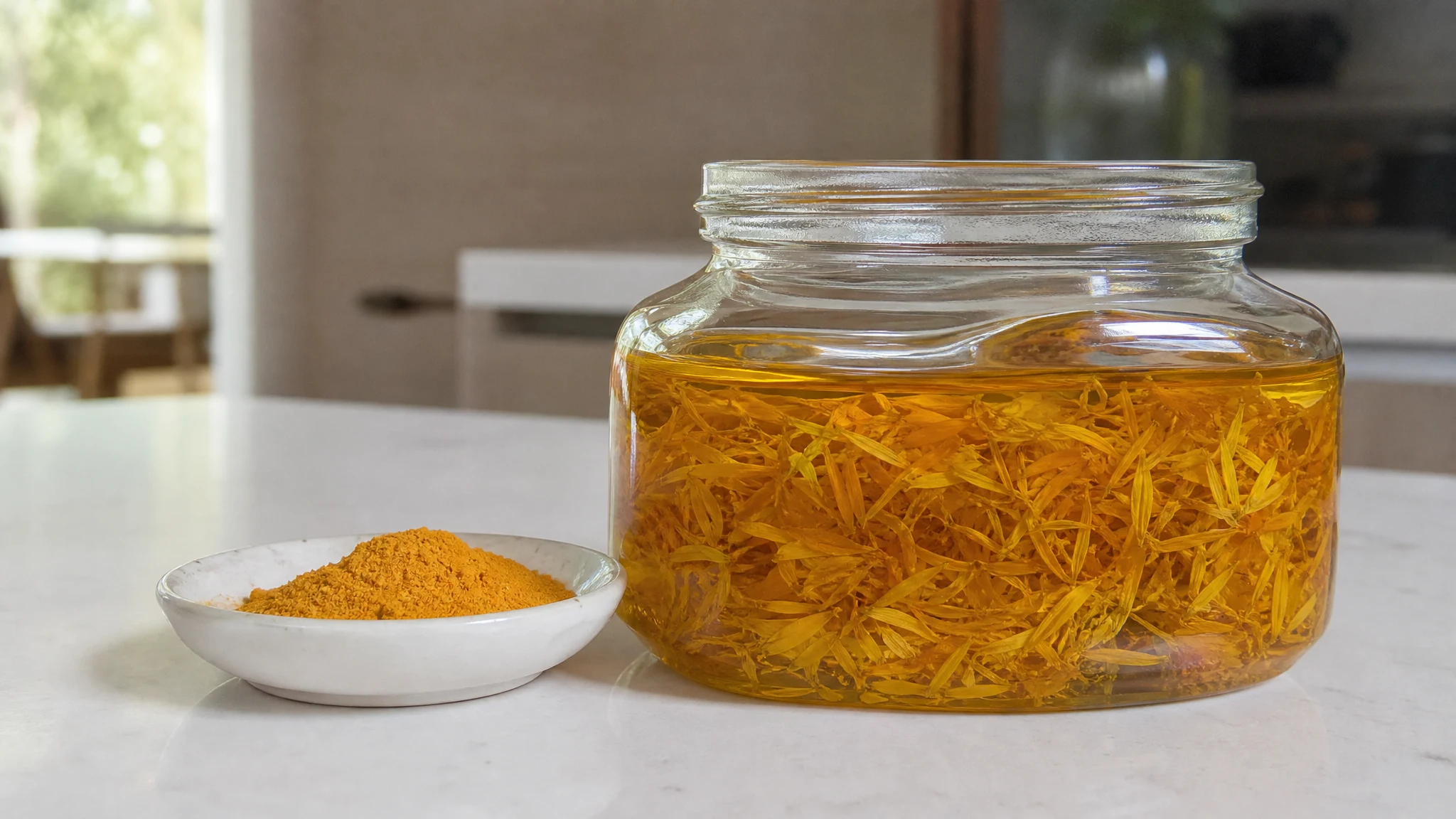
How calendula infused oil is made
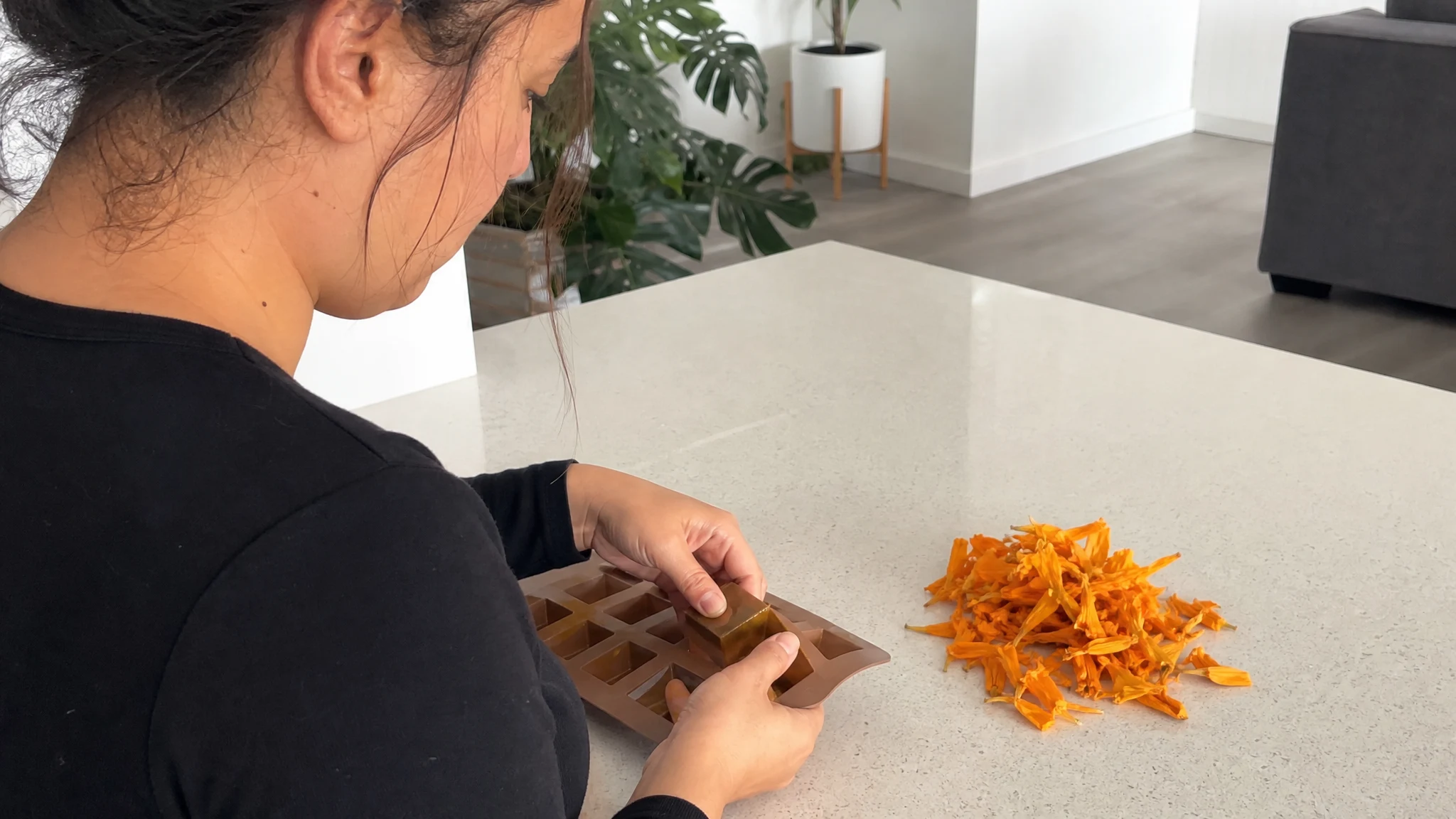
We buy dried calendula flowers, separate the petals by hand from sound, whole dried flower heads, and extract the calendula on its own. We then bring that extract into a carrier oil to make the finished oil. Nothing else is added: no synthetic preservatives, no added vitamin E, no stabilizers. The carrier is named on the batch paperwork, which we send when you email us the lot number from your bottle.
That is a fat-based extraction, so it suits fat-based products. Reasoning from the chemistry, oil-loving compounds travel naturally into an oil, while compounds that prefer water are better served by a water-based or glycerin-based extract. We have not seen a study that measures what an infused oil carries across, so we describe this as the logic of the method, not a measured result.
Matching calendula oil or extract to your project
A quick way to decide is to start from what you are making.
- An oil-based product such as a body oil, balm, lip salve or massage oil. An infused oil drops in easily, because it is already an oil. It needs no extra preservative system for the same reason that it contains no water, a point cosmetic scientists make plainly: products with low water activity need far less protection than water-based ones (Cosmetic preservation).
- A water-based product such as a toner, mist or lotion. An oil will not dissolve in water, so a water or glycerin extract is a better partner, and water-based formulas need a proper preservation system.
- A skin oil you want to use on its own. Our oil is made for exactly this. A few drops after cleansing leave skin feeling soft and smooth.
If you are formulating, our bulk guide suggests testing with a 4 oz or 8 oz bottle first for compatibility and stability, then a 16 oz bottle for a first small production run. Our extraction methods article compares the methods in more depth.
Formulating at home: define the finished product first
If you make things at home, the easiest way to avoid frustration is to decide on the finished product first and the ingredient second. Write down what you are making, whether it has water in it, and how long you want it to last on a shelf. Those three answers will usually point you to oil, glycerin or another base before you spend anything.
It also helps to start small. We suggest making a single small jar of anything new, labeling it with the date and what is in it, and living with it for a few weeks before scaling up. A jar you can finish teaches you more than a bucket you cannot.
Do calendula studies apply to infused oil?
When a page says calendula has been "studied", look at the preparation used. A 2025 double-blind study of 20 healthy volunteers, for example, compared an emollient cream with and without 1% supercritical CO2 extract of calendula, and found higher skin hydration at the calendula site than at the control and placebo sites on day 4 (Double-blind randomised controlled trial of an emollient cream with and without 1 % supercritical CO2 extract of Calendula officinalis in contact dermatitis). That is an interesting result for a cream, tested on irritated forearm skin. It is a different product from an infused oil, so we mention it as part of the picture of what extracts can look like rather than as a statement about our bottle.
The same applies the other way around. Most of the research on calendula uses creams, ointments and extracts, so it is sensible to ask what a claim is actually based on. Our buying guide lists what to ask any supplier, and infused oil versus essential oil covers the distilled cousin.
Color and texture of calendula oil in the bottle
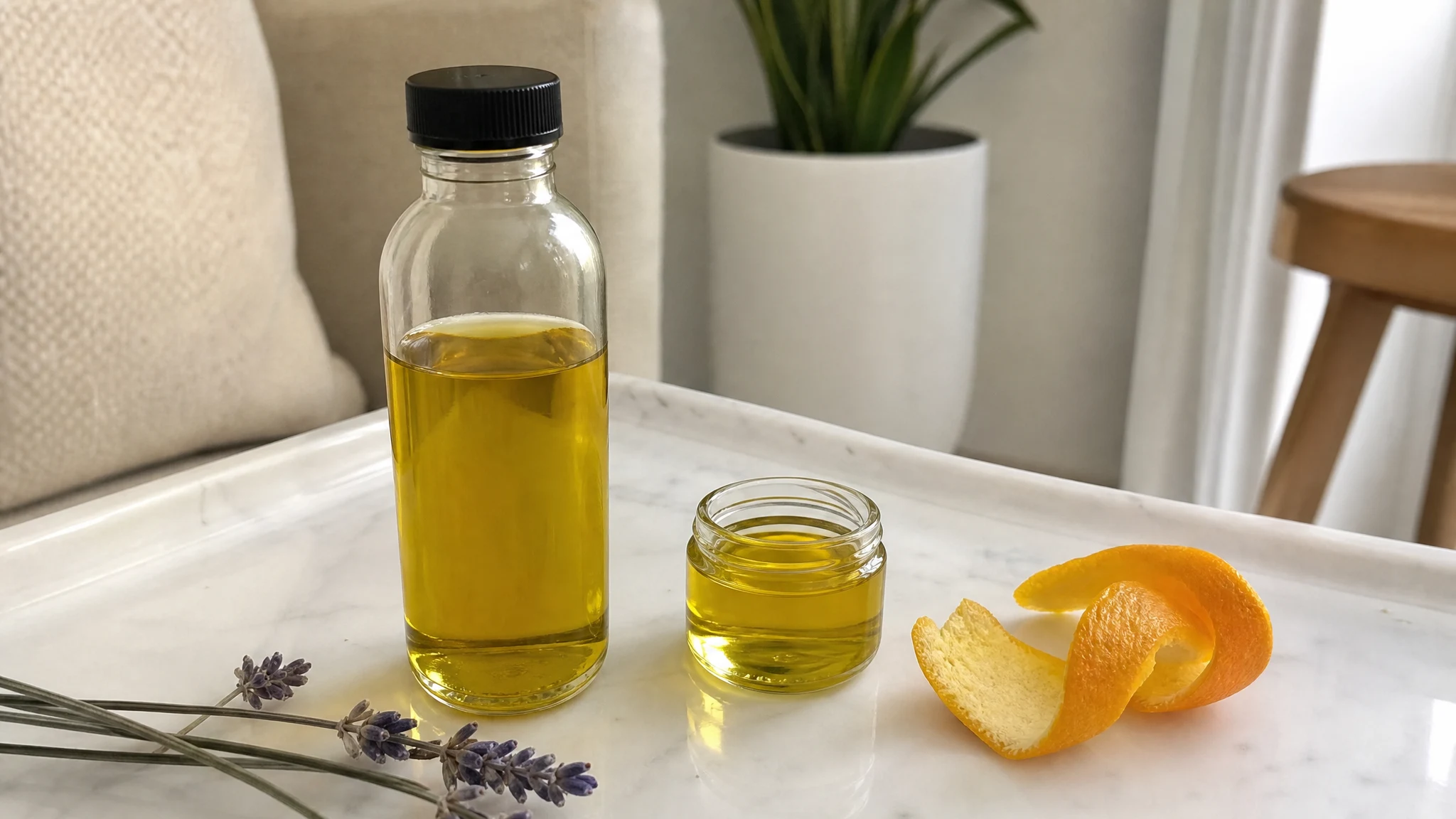
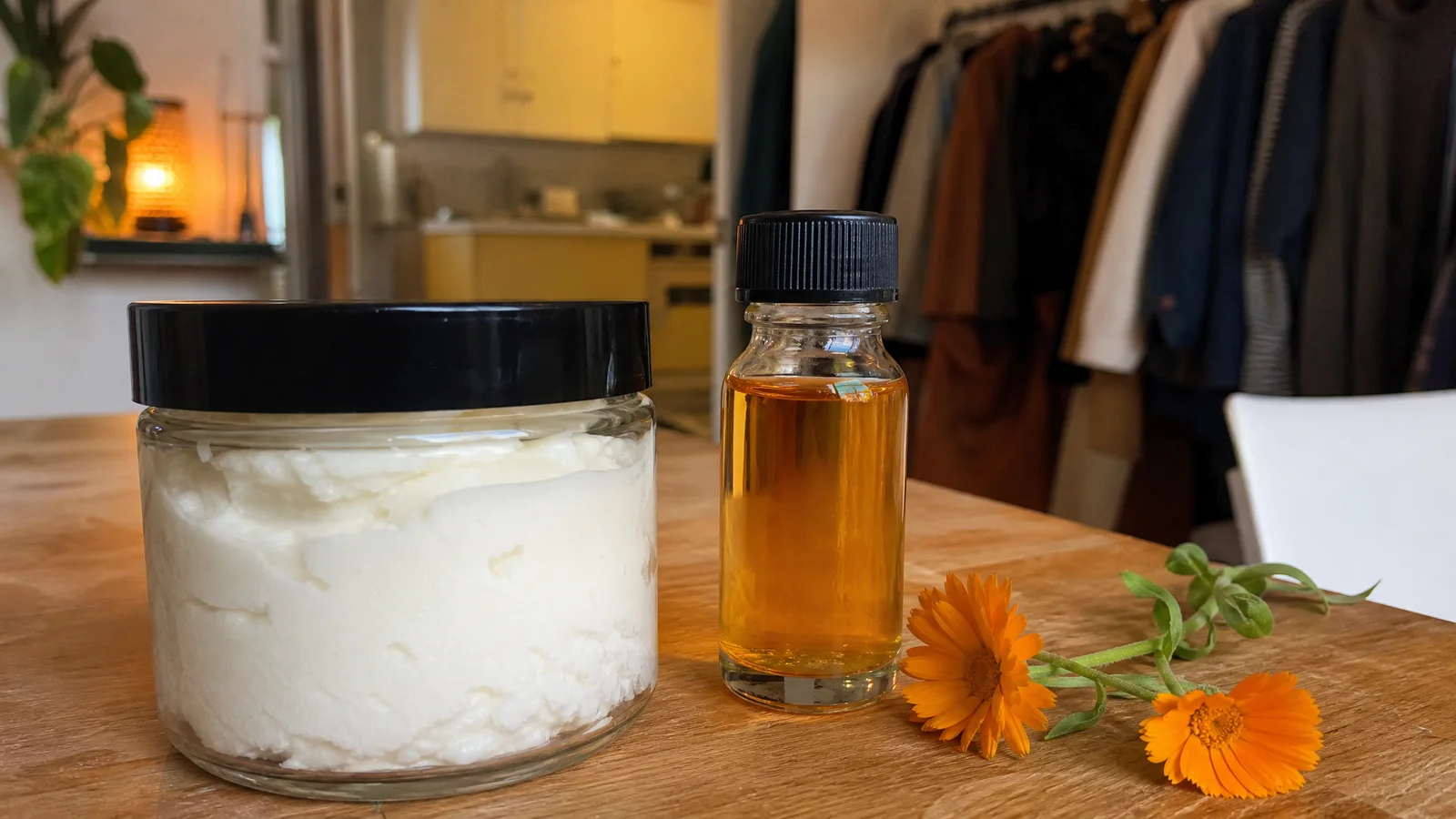
Open a bottle of our oil and the first thing you see is the color: a warm, golden tone that comes from the flowers. A simple oil like this behaves the way an oil should. It pours slowly, spreads easily between your fingers and leaves a soft film. If you are used to water-based extracts, that is a very different experience, and it is part of why we like an oil for body care and balms.
So the short version is this. Choose the base that matches the product you are making, and choose an oil when oil is what the recipe wants. The flower is the same; the vehicle decides the job.
Calendula Oil
Nature's Golden Botanical, bottled: small-batch calendula oil in sizes from 0.5 oz to bulk.
From $13.99
Shop Calendula Oil →Sources & Further Reading
- European Union herbal monograph on Calendula officinalis L., flos (EMA/HMPC/437450/2017)
- Exploring the Sequential-Selective Supercritical Fluid Extraction (S3FE) of Flavonoids and Esterified Triterpenoids from Calendula officinalis L. Flowers (Atwi-Ghaddar et al., 2023)
- Cosmetic preservation (Brannan, Journal of the Society of Cosmetic Chemists, 1995)
- Double-blind randomised controlled trial of an emollient cream with and without 1 % supercritical CO2 extract of Calendula officinalis in contact dermatitis (Crnčević et al., 2025)