Calendula Oil Hair Mask: Why the Carrier Matters Most
Ask a hairdresser which oil makes the best pre-shampoo treatment and you will hear opinions; ask a lab and you will get a more interesting answer. When researchers compared oils head to head on hair, the result depended far less on any botanical than on the oil it was dissolved in. That is good to know before you pour a calendula infusion over your ends.
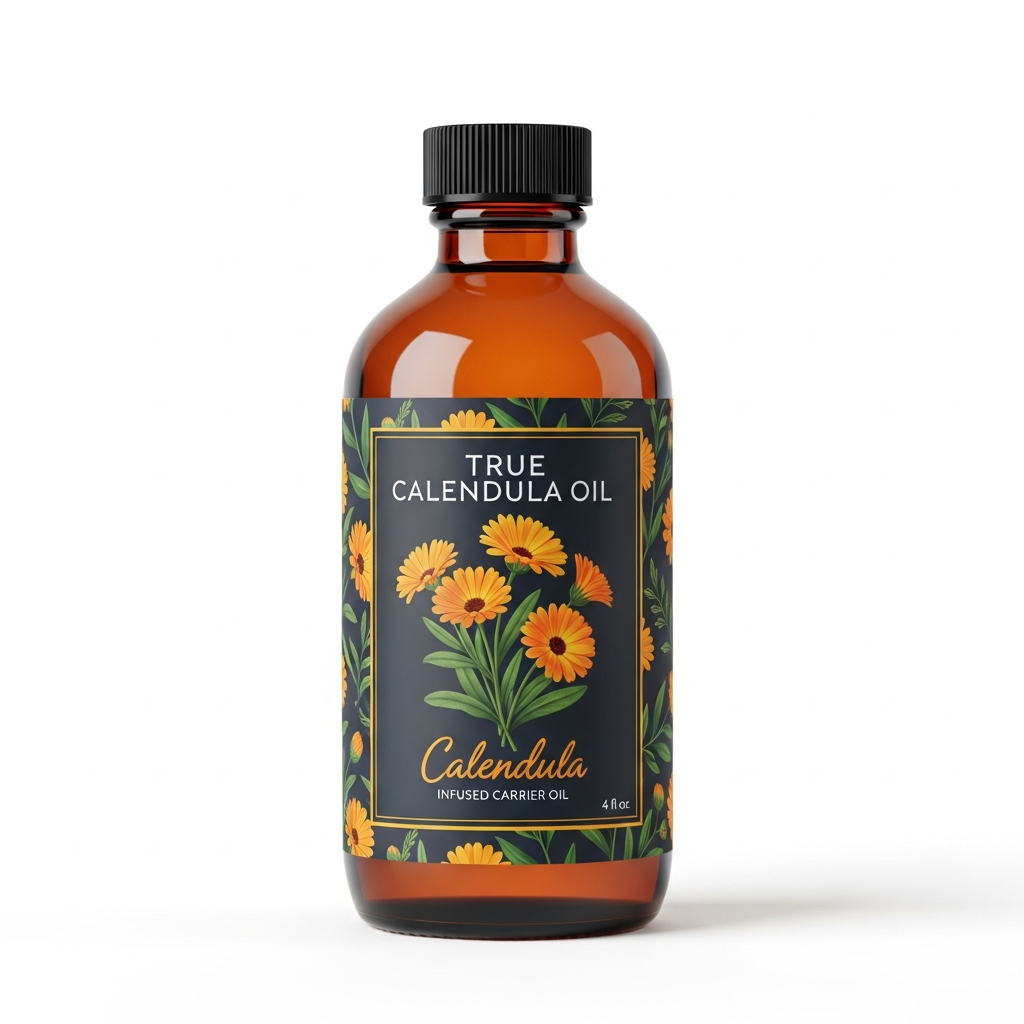
Calendula Oil
Our own small-batch calendula oil, in sizes from 0.5 oz to bulk.
From $13.99
Shop Calendula Oil →Hair oil study: mineral, sunflower and coconut oils
In a well-known laboratory comparison, Rele and Mohile tested mineral oil, sunflower oil and coconut oil as pre-wash and post-wash treatments on undamaged and damaged hair. Coconut oil was the only one of the three that remarkably reduced protein loss from the hair, for both hair types, while sunflower and mineral oil did not help at all (Effect of mineral oil, sunflower oil, and coconut oil on prevention of hair damage). The authors linked the difference to composition: coconut oil is built from lauric acid, a small, straight-chain fatty acid, and that shape seems to suit the hair shaft.
The study did not test calendula, and it measured hair in the lab, so it is a clue and not a promise. But it points to a practical takeaway. A calendula infusion is flower extract brought into a carrier oil, which means most of what lands on your hair is the carrier. If you want to read a bottle the way that study does, look at the carrier first. For our oil, ask us for the carrier on the batch paperwork and you will have what you need.
Hair habits that wear strands down
The American Academy of Dermatology lists everyday habits that wear hair down: heat from blow dryers and irons, coloring or relaxing stacked close together, tight styles such as ponytails, buns and cornrows, and brushing hair while it is wet (10 hair care habits that can damage your hair). Its companion advice is easy to live with: wrap wet hair in a towel or t-shirt instead of rubbing, detangle with a wide-tooth comb, and put conditioner on the ends if your hair is fine or straight (Tips for healthy hair).
A mask pairs nicely with those habits. It works best as a finishing touch on a gentle routine, so if your hair has had a rough season, the easiest win is spacing out the heat and the chemical services.
Calendula oil pre-shampoo treatment with one ingredient
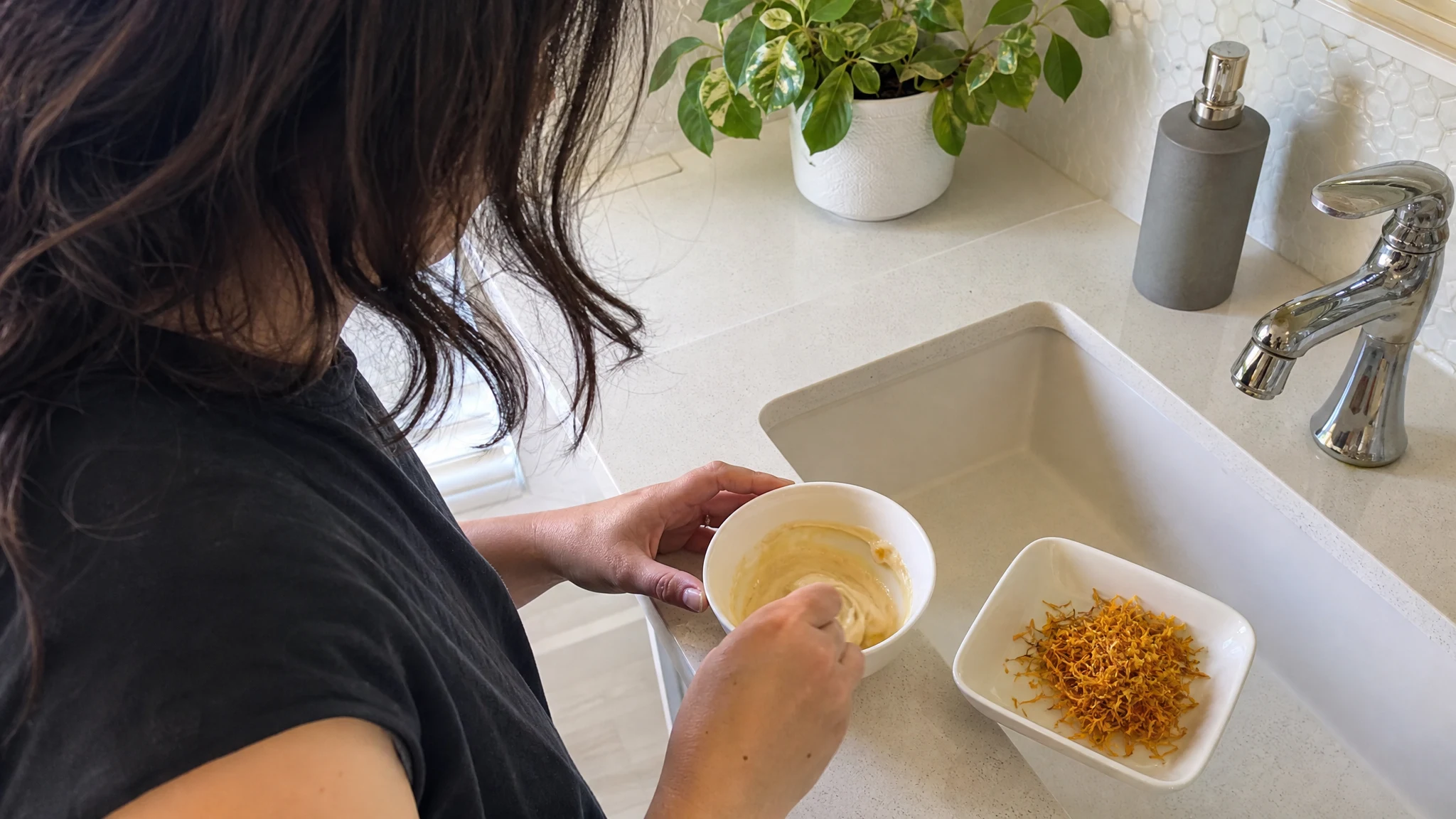
Here is a single-ingredient version, built from the guidance above. It is meant to leave hair feeling soft and smooth, and nothing more is claimed for it.
- Patch test first. Calendula is in the daisy family, and the EU herbal monograph lists hypersensitivity to Asteraceae plants as a contraindication. Our patch test guide shows how to do it.
- Start small, on the ends. Warm a few drops between your palms and smooth them over the lower half of your hair, keeping oil off the roots. That follows the AAD's conditioner advice for fine hair, and it keeps the treatment easy to rinse out.
- Apply before shampooing. Rele and Mohile tested both pre-wash and post-wash use. Pre-wash is simplest because your shampoo takes care of any extra.
- Leave it on while you do something else, then shampoo. There is no published contact time for calendula, so go by how your hair feels. If it feels coated, use less next time.
- Keep it away from your eyes. If your scalp itches or stings, rinse and stop.
How should calendula oil feel and smell?
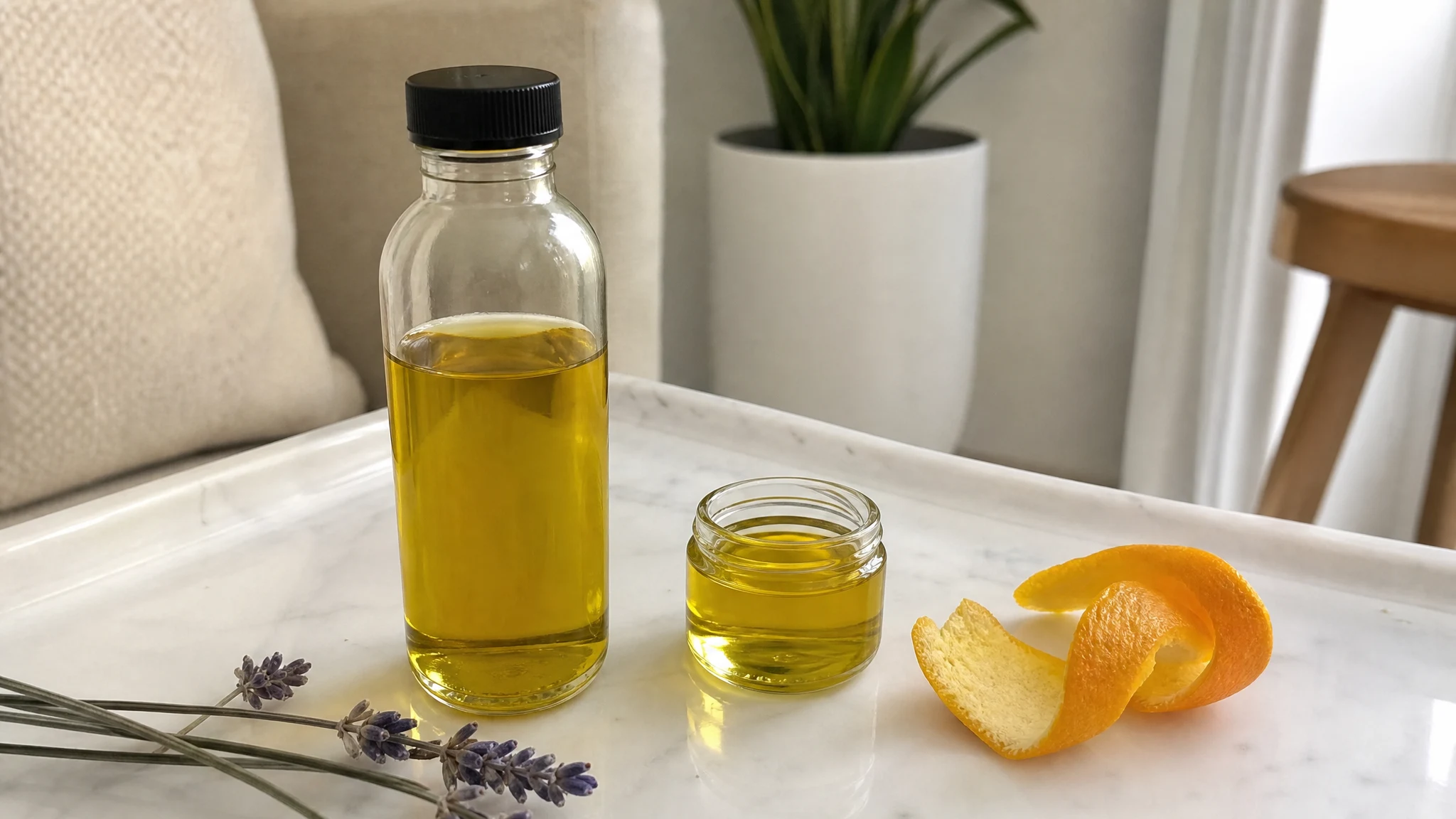
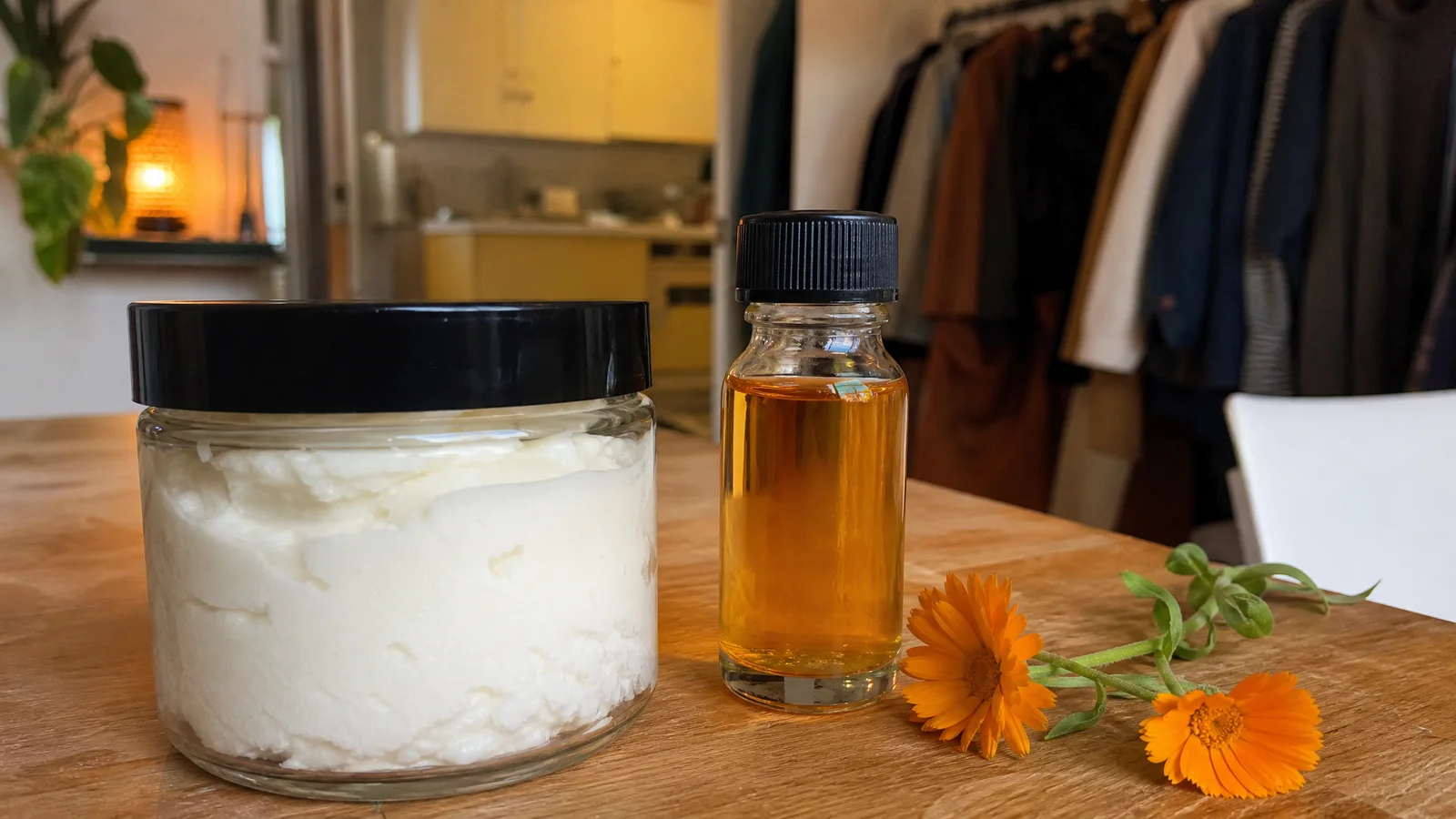
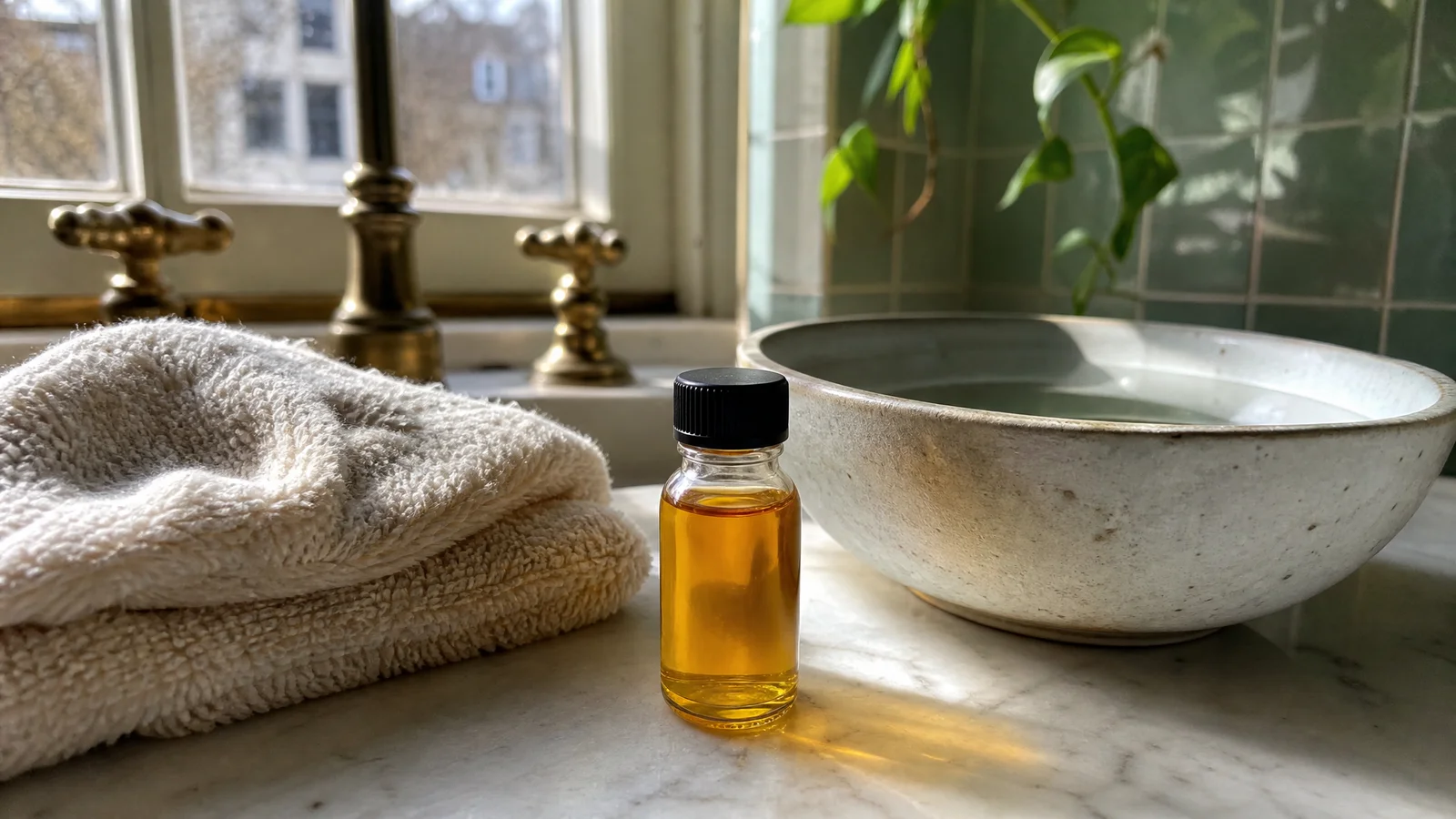
Before you start, open the bottle and look at the oil. It is golden, a little glossy, and the aroma is gentle and plant-like rather than perfumed. That is worth noticing, because a single-ingredient treatment should smell like what it is and nothing else.
When you smooth it on, you will notice that hair does not take oil evenly. The ends, which are the oldest part of your hair, soak it up quickly, while the lengths nearer your head can look glossy after just a few drops. Our recommendation is to start with fewer drops than seems right, work through with your fingers, and add one drop at a time only if the ends still feel dry. If your hair looks weighed down, you used more than it wanted, and next time you will know. Fine hair usually wants the smallest amount; thick or coily hair often takes a little more.
Pick a wash day when you are not rushed, and put a towel you do not mind staining over your shoulders. Calendula oil is golden-orange, so an old t-shirt and a dark towel are the sensible uniform.
Can egg or yogurt join a calendula oil mask?
Many mask recipes stir in egg, yogurt, honey or banana. Those bring water with them, and water changes the shelf life. A classic review of cosmetic preservation explains that the cosmetics that most need preservatives are the ones that contain water (Cosmetic preservation). So treat any mix with fresh food as a one-time blend: make it, use it, rinse it out and discard what is left. Our calendula oil has no added preservatives, which suits an oil-only treatment well.
Daisy-family allergy and scalp problems: skip the mask
If you react to ragweed, chamomile or other daisy-family plants, skip this one. If your scalp is itchy, flaking or sore, see a dermatologist, because oil will not tell you what is going on. The EU monograph also says safety during pregnancy and breastfeeding has not been established and does not recommend use then, so ask your OB/GYN or midwife first (European Union herbal monograph on Calendula officinalis L., flos). We make a cosmetic oil for external use, and that is the only use we describe here.
If you are curious about calendula and hair more broadly, our overview of calendula oil and hair goes through what people say. For now, remember the quiet lesson of that coconut oil study: the carrier is half the recipe, so know yours.
If you try it, keep it simple, keep notes on how much you used, and let your hair tell you whether the routine is worth repeating.
Calendula Oil
Nature's Golden Botanical, bottled: small-batch calendula oil in sizes from 0.5 oz to bulk.
From $13.99
Shop Calendula Oil →Sources & Further Reading
- Rele AS, Mohile RB, 2003. Effect of mineral oil, sunflower oil, and coconut oil on prevention of hair damage. J Cosmet Sci. PMID 12715094
- American Academy of Dermatology. 10 hair care habits that can damage your hair. aad.org
- American Academy of Dermatology. Tips for healthy hair. aad.org
- Brannan DK, 1995. Cosmetic preservation. J Soc Cosmet Chem 46:199-220. library.scconline.org
- European Medicines Agency, HMPC. European Union herbal monograph on Calendula officinalis L., flos. ema.europa.eu