Make Calendula Oil at Home: A Step-by-Step Recipe
There is something deeply satisfying about watching a jar of dried calendula petals slowly turn a plain oil golden. You do not need much to try it: dried flowers, a good oil, a kitchen scale and a clean glass jar. The one rule we would hold firmly is to start with dried flowers. It is the same reason we make our own oil from dried flowers, and it is the difference between an oil that keeps and one that does not.
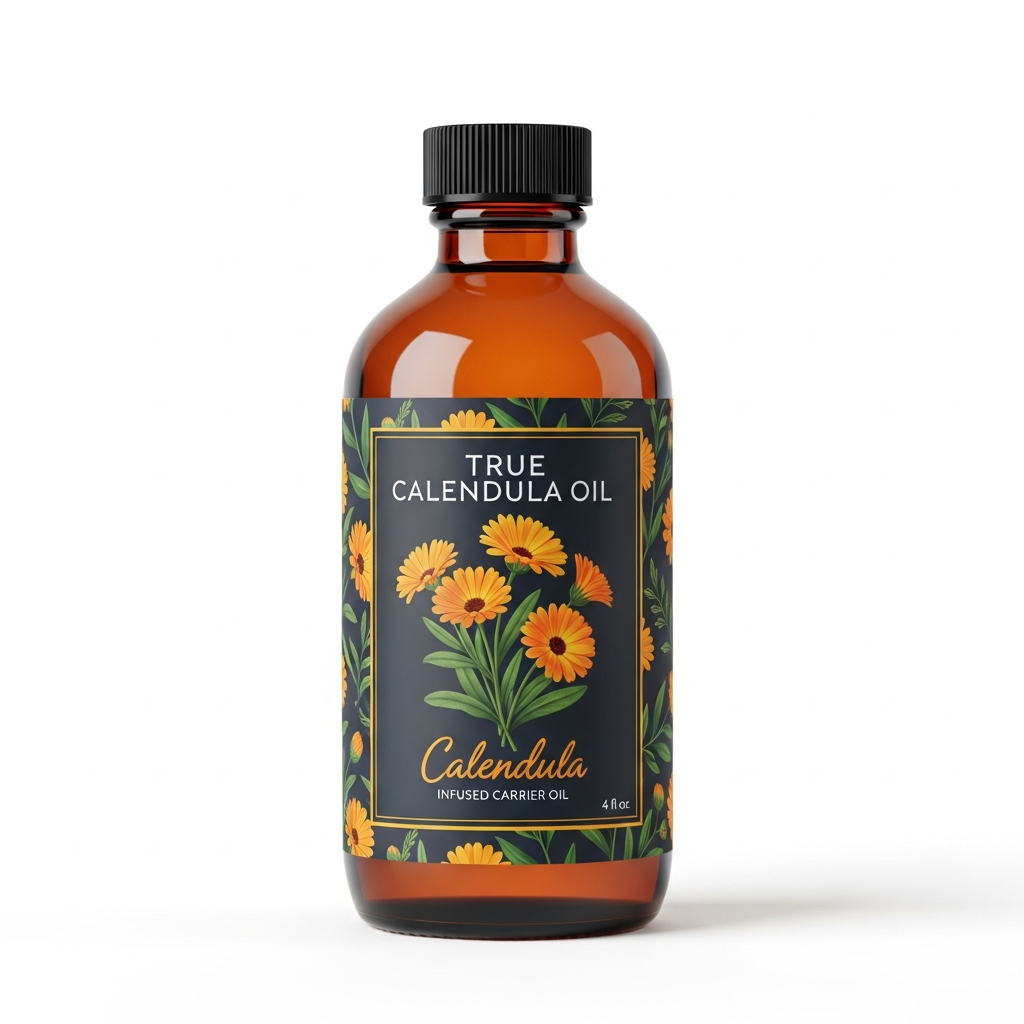
Calendula Oil
Our own small-batch calendula oil, in sizes from 0.5 oz to bulk.
From $13.99
Shop Calendula Oil →Why should calendula flowers be dried?
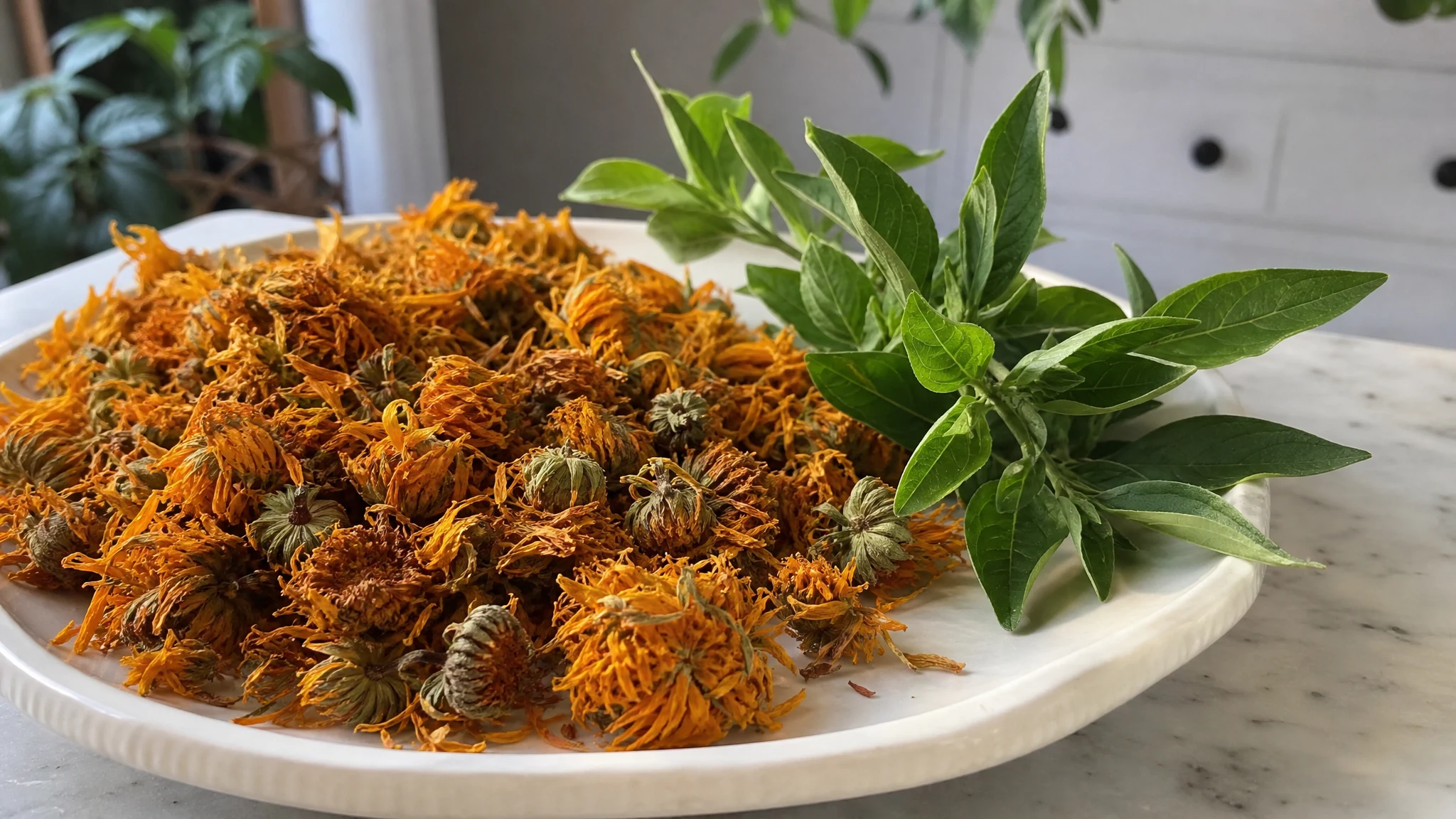
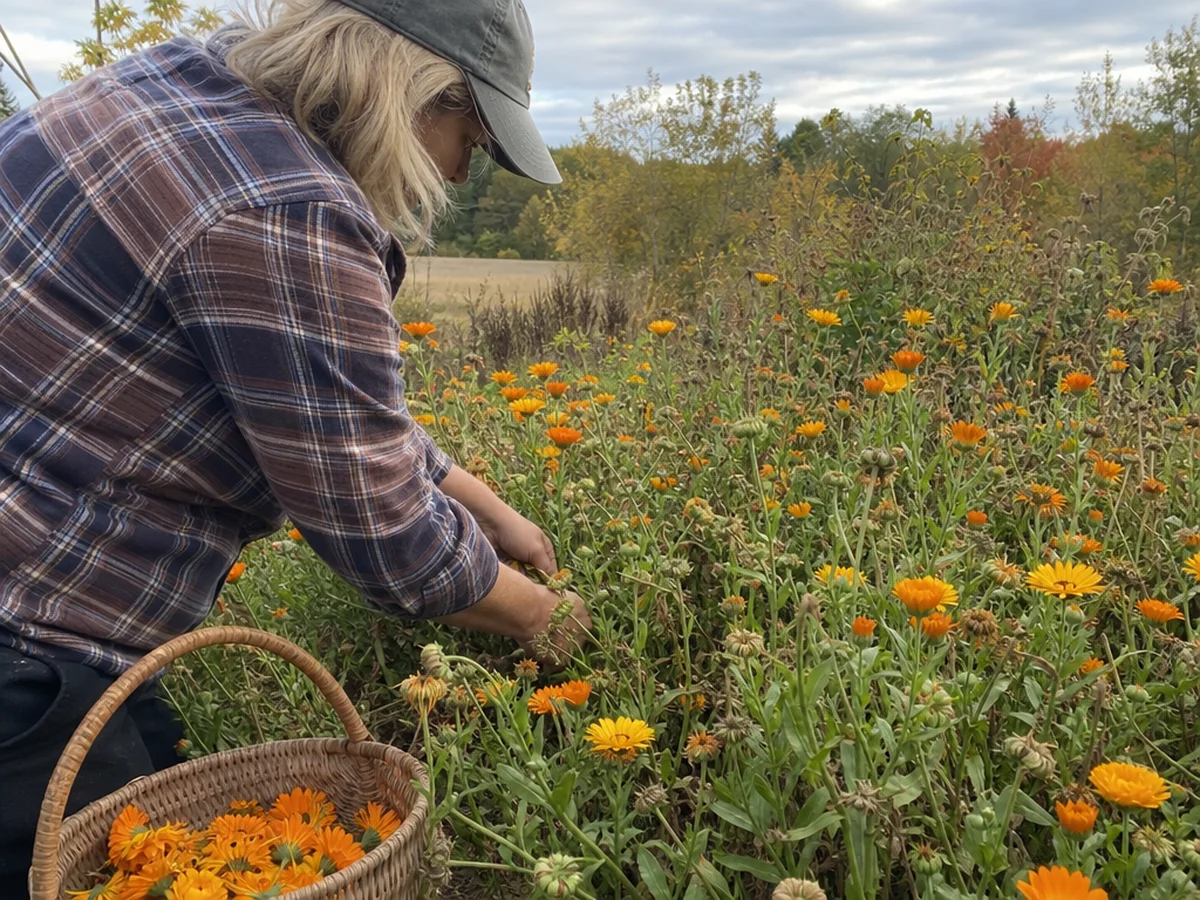
Extension guidance on homemade infused oils is clear. The University of Maine's bulletin says that using dried herbs is the safest way to make infused oils, because dried material lacks the moisture bacteria need to grow, while fresh plant material most likely carries Clostridium botulinum spores and enough water to let them thrive. That bulletin is written about food oils, so applying it to a skin oil is our own reasoning, but it is a cautious step that costs nothing. Buy dried flowers, or dry your own first with our guide to drying calendula flowers. If you grow your own, our growing and harvesting article covers the picking.
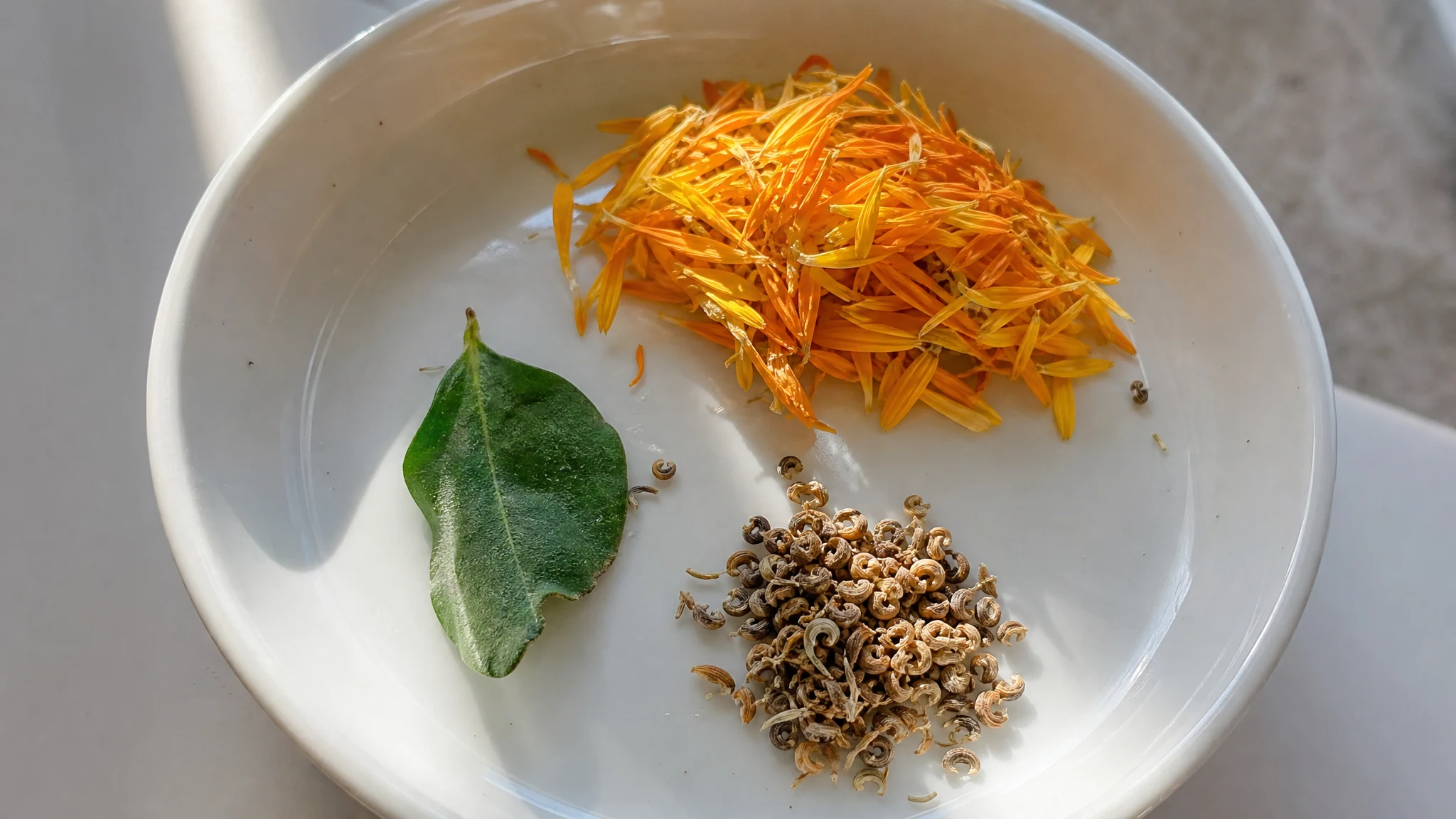
Weighing dried petals for a 1:10 infusion
Dried petals are light and bulky, so a jar filled by eye can hold wildly different amounts of flower. A scale solves that. The EU herbal monograph for calendula flower describes the oil preparation as a 1:10 extract, one part flower to ten parts fatty vegetable oil by weight, with olive oil as its example. Here is the arithmetic: 20 g of dried flowers goes with 200 g of oil. That is a useful starting point, and a deeper color simply calls for more flower, which is a matter of preference.
Which carrier oil suits homemade calendula oil?
Most of what ends up in the bottle is the carrier, so the carrier deserves a thoughtful choice. Olive oil is the one the monograph names, and it is easy to find at any grocery store. Oils differ in how readily they go rancid, and the review literature on vegetable oil oxidation points to light and high temperatures as the main drivers. For an oil you will keep for months, a stable, fresh oil from a recently opened bottle is a sound base. A grocery store or craft supplier will have what you need.
Infusion steps: clean jar, submerge petals, wait
- Prepare the jar. Wash and fully dry a clean glass jar and lid. University of Maine recommends sanitizing containers and letting them air-dry completely before use.
- Combine. Add the weighed dried flowers, then pour in the oil until every petal is submerged. Keeping every petal under the surface keeps the infusion tidy.
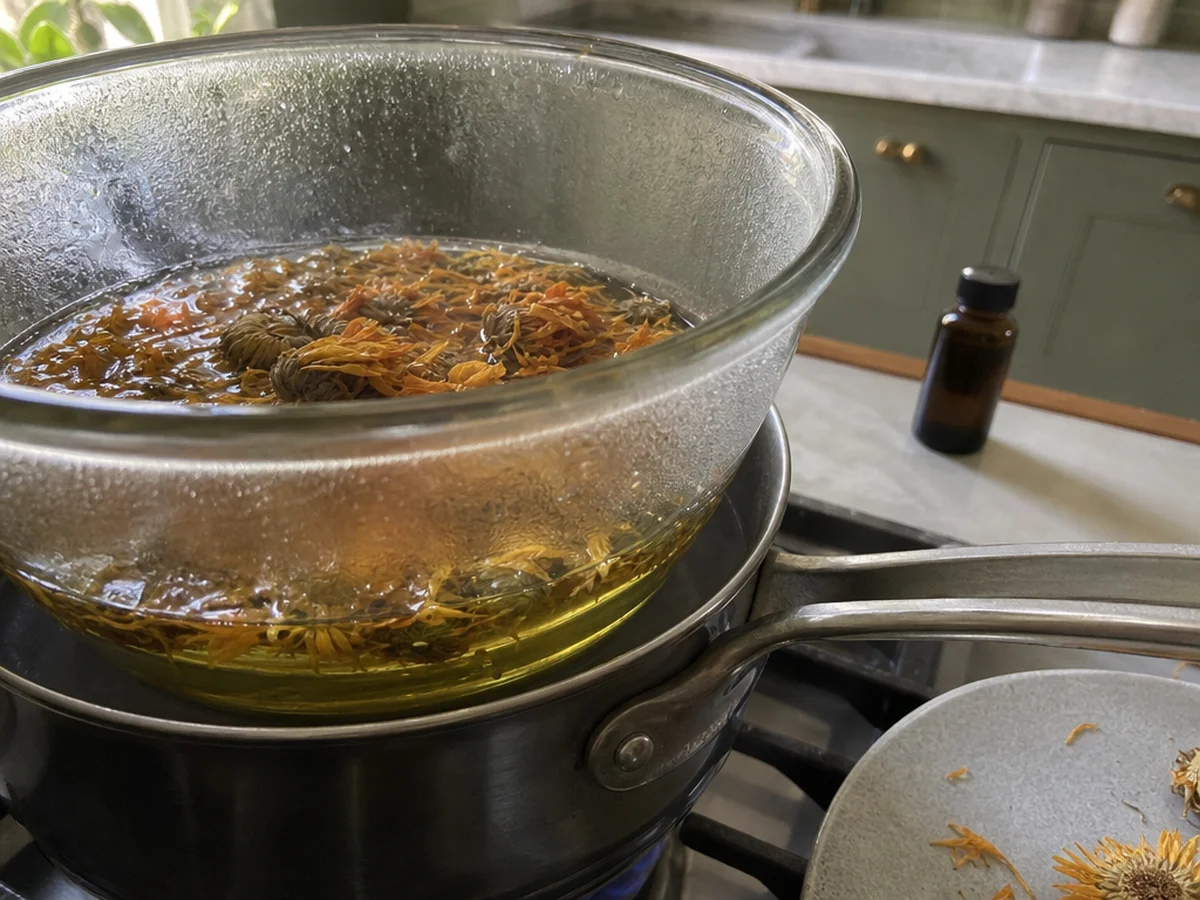
- Warm gently, or steep patiently. University of Maine's food-oil method heats the oil to 180°F, pours it over the dried material, and lets it cool at room temperature. A slower alternative is to keep the capped jar somewhere warm but out of direct sun and shake it each day for a few weeks. Choosing between the two is a trade of speed for gentleness, and either is reasonable. Keeping light and heat modest protects the oil.
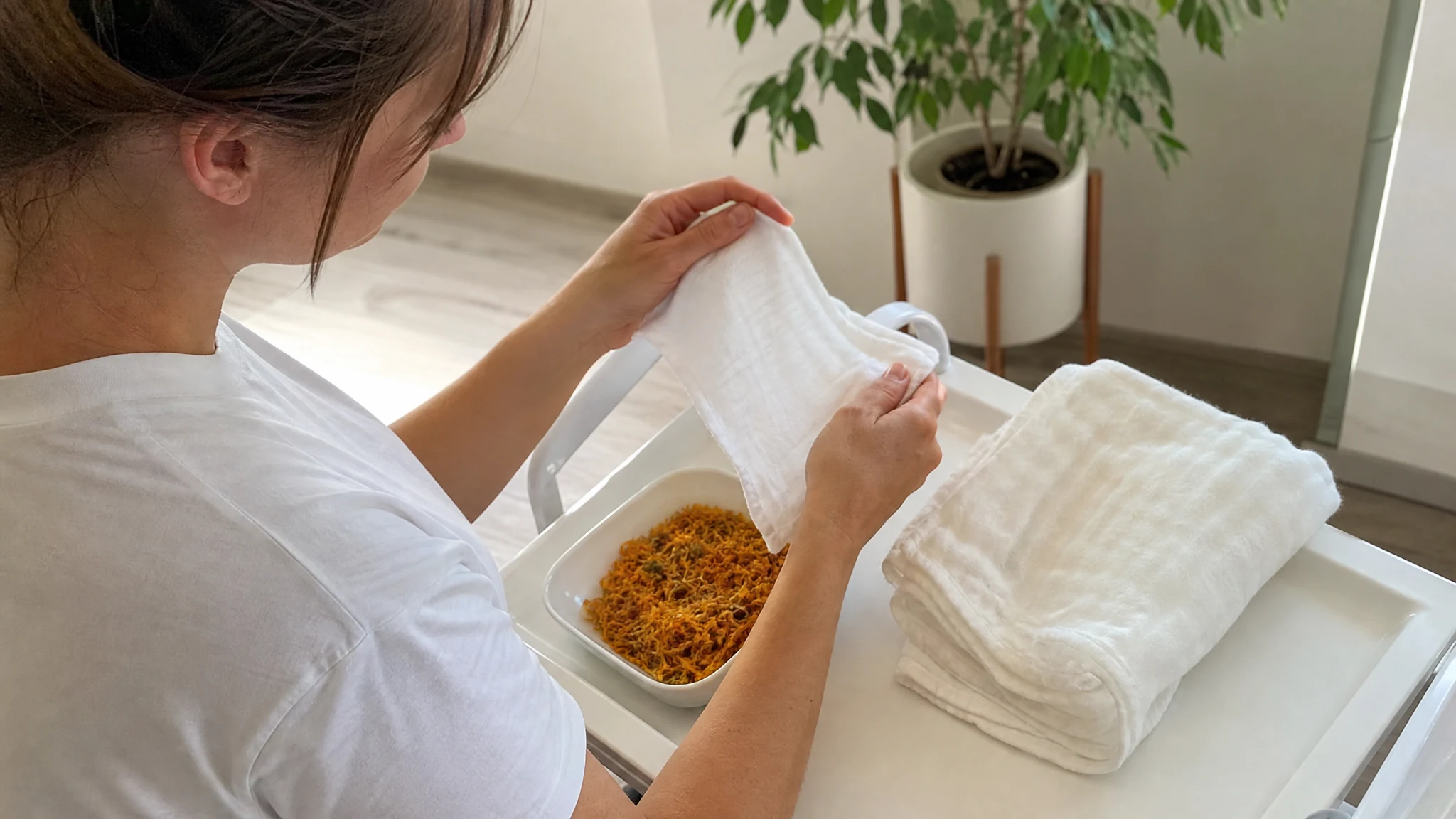
- Strain. Pour through a fine cloth or coffee filter and let the oil settle before bottling.
- Label. Write the date on the bottle. University of Maine advises discarding homemade infused oil after three months, and we would follow that for a skin oil too.
Practical jar tips: wide mouth, clean spoon
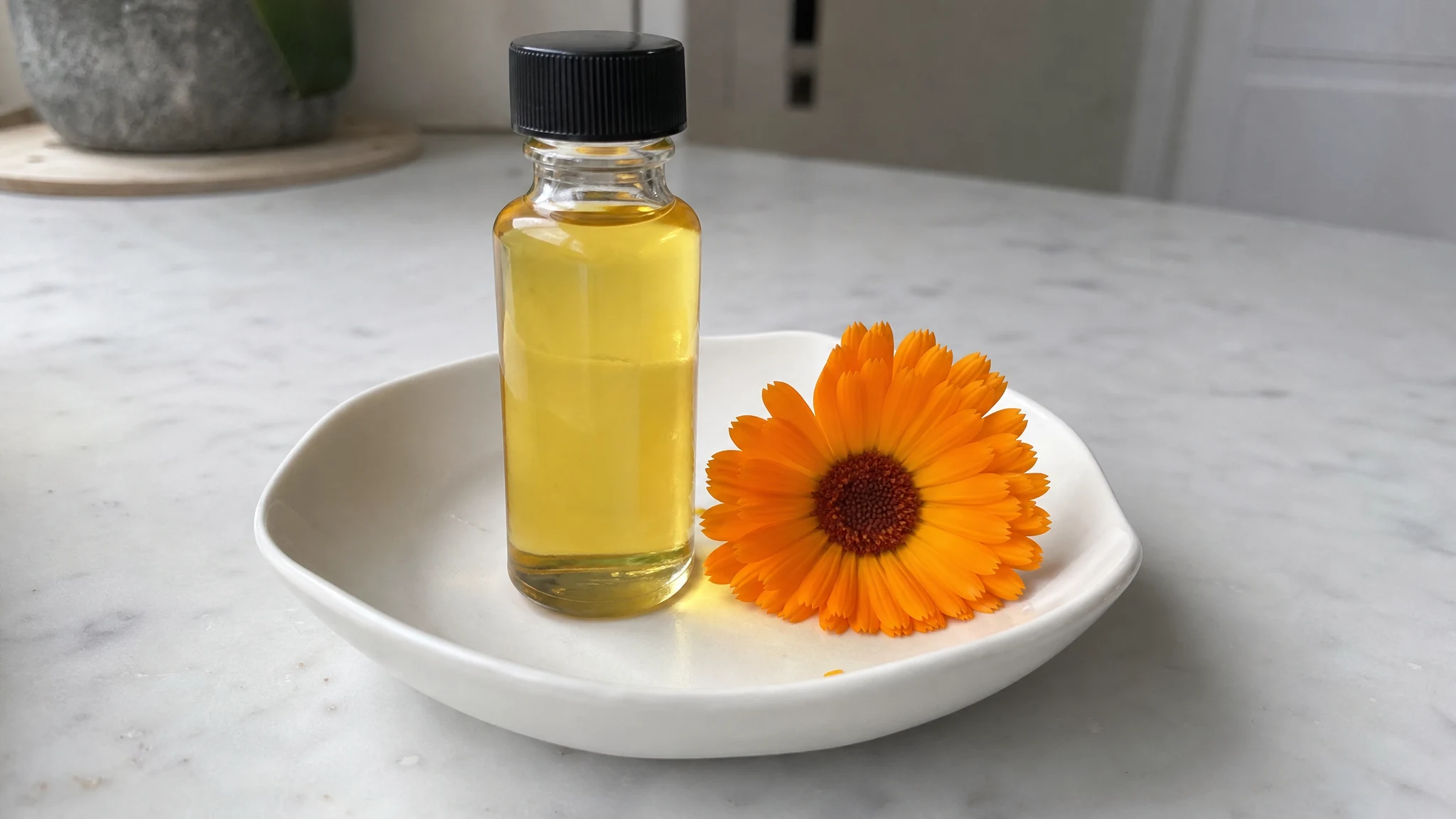
A few small choices make the project smoother. Use a wide-mouth jar, so you can get a spoon in to push the petals under the surface and scoop them out afterward. Stir with a clean, dry spoon, and wipe any petal that clings above the oil line back down. Over the first few days you will notice the oil take on a deeper golden color, which is the satisfying part of the whole process.
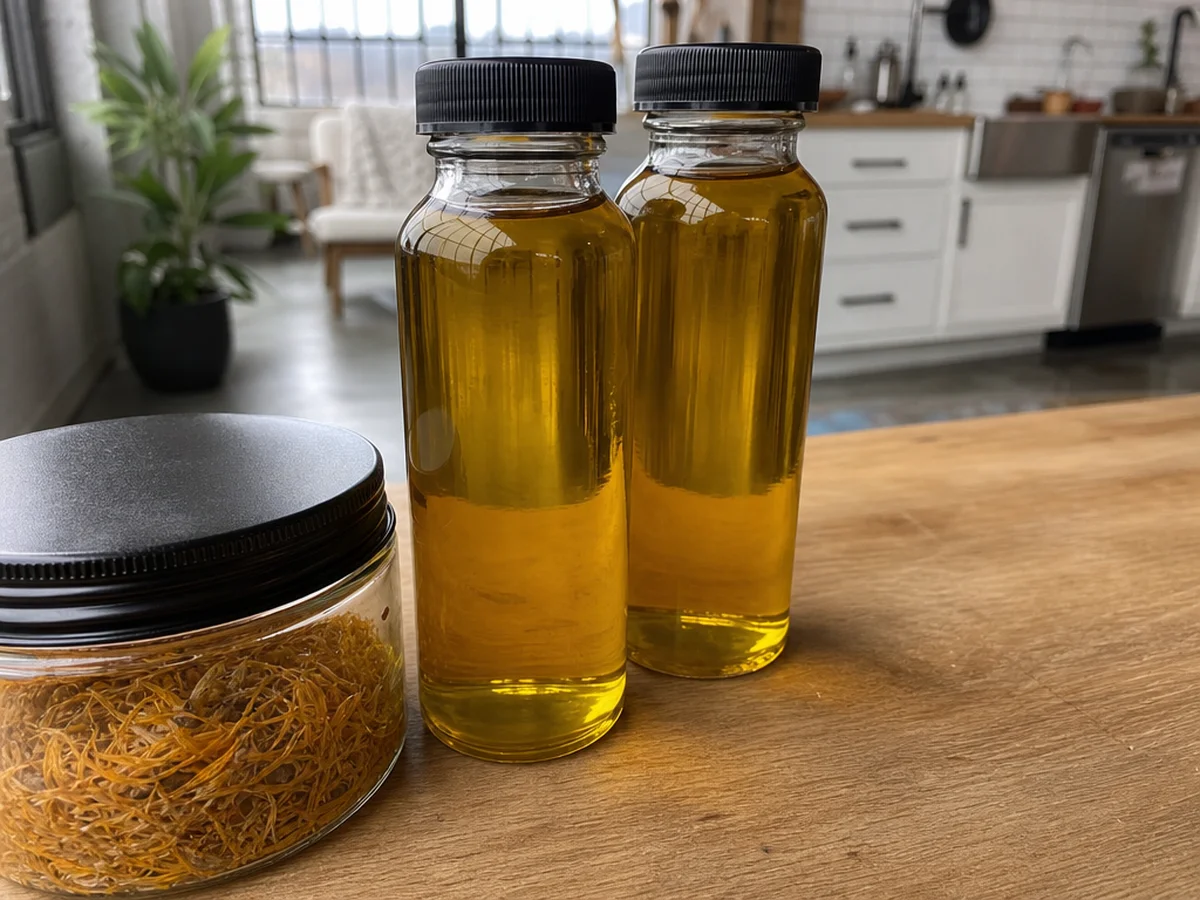
When you strain, go gently. Let the oil drip through the cloth for a while before you press, and tip the last drops from the jar. If a little cloudiness or sediment collects at the bottom of the bottle, leave it behind when you pour from the top, and keep the jar tidy by wiping the rim.
How do you check finished calendula oil?
Look at the finished oil. It should be clear and golden, with no cloudiness, water droplets or mold. Any sign of moisture means the batch should go in the bin. Store the bottle somewhere cool and dark, where it has the best chance of staying fresh for those three months. Our storage guide explains more.
Homemade versus bought calendula oil compared
A jar on your counter is a lovely project, and it comes with no batch testing. Ours does: every batch goes to independent third-party labs for physical assays, chemical assays and contaminant screening, bottles are dated and lot-numbered, and nothing is added to the oil. We buy dried flowers, extract the calendula on its own, and bring that extract into a carrier oil. The carrier is named on the batch paperwork, available when you email the lot number to support@truecalendulaoil.com. If you want to see how the approaches compare, our article on extraction methods goes through them.
Calendula officinalis allergy: who should check first
Calendula is a daisy-family plant. The EU monograph lists hypersensitivity to Asteraceae as a contraindication, notes that skin sensitization has been reported, and says safety in pregnancy and breastfeeding has not been established. Whether the oil is homemade or bought, patch test a small area first (our patch test guide shows one way) and stop if anything flares. For babies, pregnancy or a skin condition that persists, a pediatrician, OB/GYN, midwife or dermatologist is the right person to ask.
Once your first jar is strained and labeled, you will have the pleasure of an oil whose every step you saw. Make a small batch, write the date on it, and enjoy the golden color.
Calendula Oil
Nature's Golden Botanical, bottled: small-batch calendula oil in sizes from 0.5 oz to bulk.
From $13.99
Shop Calendula Oil →Sources & Further Reading
- University of Maine Cooperative Extension. Bulletin #4385, Safe Homemade Flavored and Infused Oils.
- EMA/HMPC, 2018. European Union herbal monograph on Calendula officinalis L., flos.
- Gharby S et al., 2025. Vegetable oil oxidation: Mechanisms, impacts on quality, and approaches to enhance shelf life. Food Chem X.