Growing Calendula for Oil: Sowing, Picking and Drying
Anyone who has grown calendula knows how generous it is: sow it in spring, and it keeps sending up golden-orange blooms until the weather turns. If you want those blooms to become an oil, the plant is the easy part. The craft is in the picking, which happens again and again, and in drying the flowers before they have any chance to spoil.
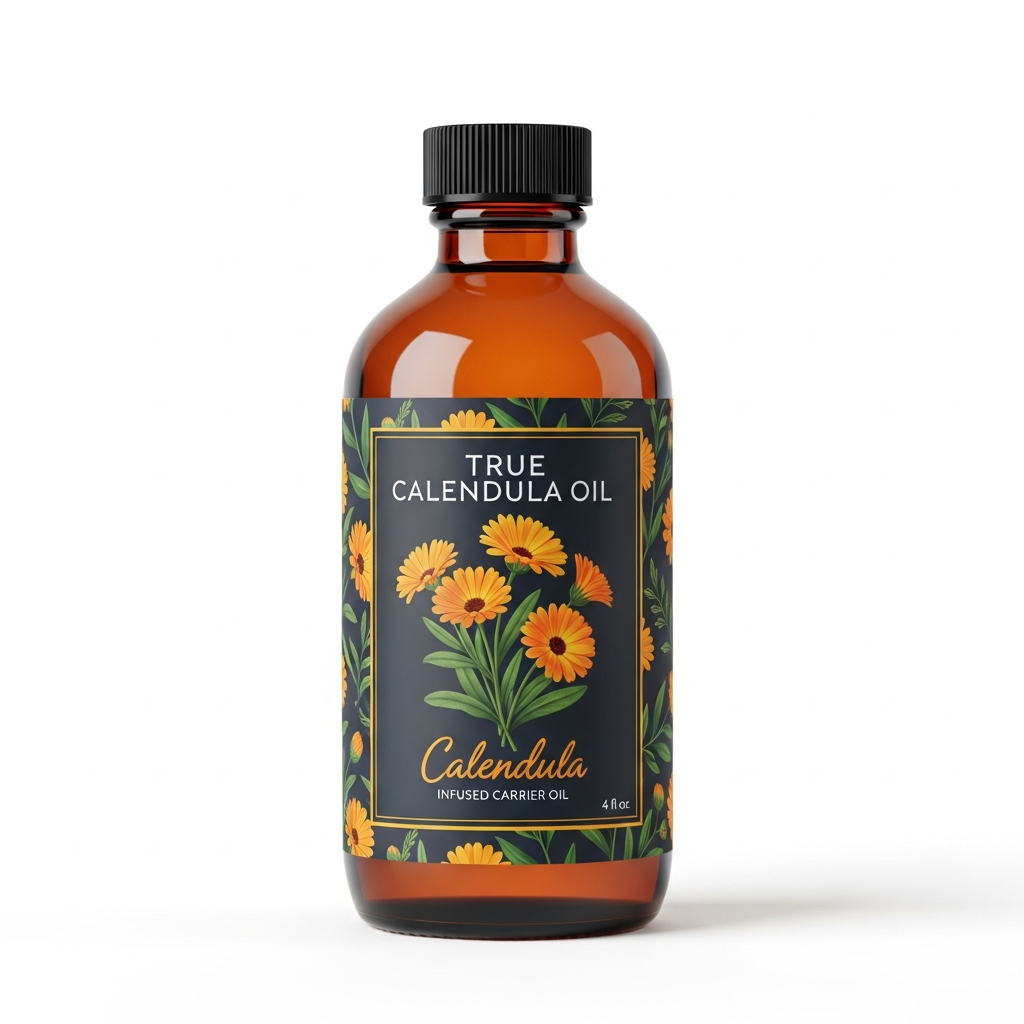
Calendula Oil
Our own small-batch calendula oil, in sizes from 0.5 oz to bulk.
From $13.99
Shop Calendula Oil →Starting calendula seeds: cool-season annual basics
Calendula is a cool-season annual in the daisy family, native to Europe and the Mediterranean, according to the University of Florida's extension service. Utah State University Extension gives a simple recipe. Sow seed about a quarter inch deep once the soil has warmed to around 60°F, and thin seedlings to 8 to 12 inches apart. Give the plants full sun to part shade, fertile and well-drained soil with a pH between 6 and 7, and roughly an inch to an inch and a half of water a week in midsummer.
The plant likes it cool. USU notes it prefers temperatures under 85°F, often stops blooming in extreme heat, and survives down to about 25°F. In mild-winter regions that makes calendula a plant of fall, winter and spring more than high summer. Sowing a second batch a few weeks after the first is a common gardener's trick for stretching the season, though that is general practice rather than something the extension sheets measure.
Why pick whole calendula flower heads for oil?
This is where growing for oil differs from growing for color. USU's advice is to pick the complete flower head at full bloom, and to keep picking: blooms can be harvested many times in a season, and plants re-bloom about two weeks later. Removing spent flowers encourages more of them. A plant you visit every few days will give you far more flowers than one you harvest once.
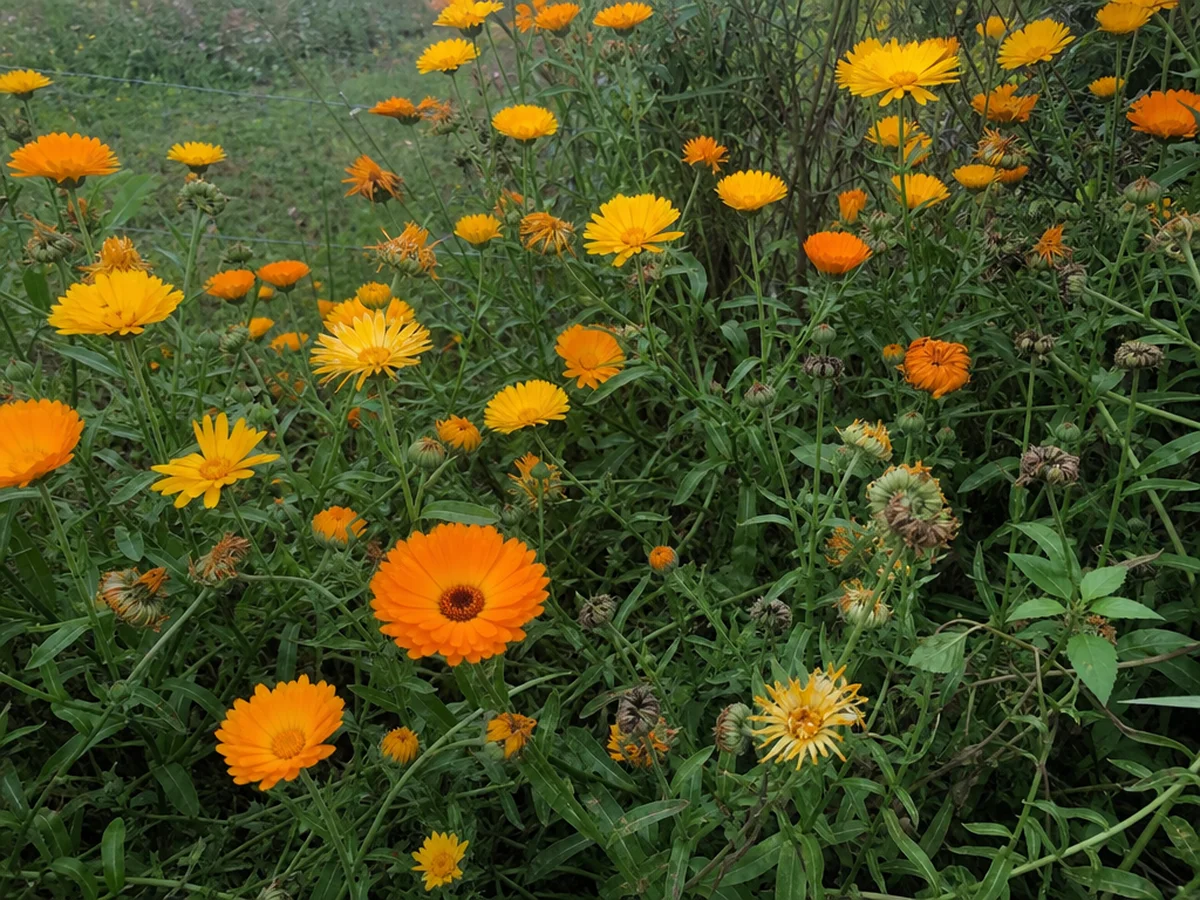
For the size of the plot, USU offers a handy yardstick: a 60-foot row produces about a pound of dried flower heads. Reasoning from that, a few pots will give you a small jar's worth, while a short garden row can supply a household for a good while. Our guide to growing calendula in pots covers the small end of that scale.
Does calendula variety change infused oil color?
If you want a deeply colored oil, flower color is worth choosing for. A Romanian study that measured four varieties by HPLC found total carotenoids ranged from about 48 mg per 100 g of fresh flowers in a yellow-orange type to 276 mg in a dark orange double-flowered one. Within a single flower, the petals carried most of the pigment: in one variety, 103.8 mg per 100 g in the petals against 8 mg in the tubular center florets. These are fresh-flower measurements, not oil measurements, so think of them as a pointer rather than a promise.
It is also why we work the way we do. We buy dried calendula flowers from family farms in Egypt, Hungary, the Balkans and Turkey, where they are organically grown without synthetic pesticides or fertilizers, and dried naturally by traditional methods, with no industrial heat or forced air. When we make our oil, we infuse petals separated by hand from sound, whole dried flower heads, not broken florets. The same discipline works in a home garden: pick sound heads, set aside anything bruised or damaged, and the finished oil will thank you.
Morning picking routine for calendula flowers
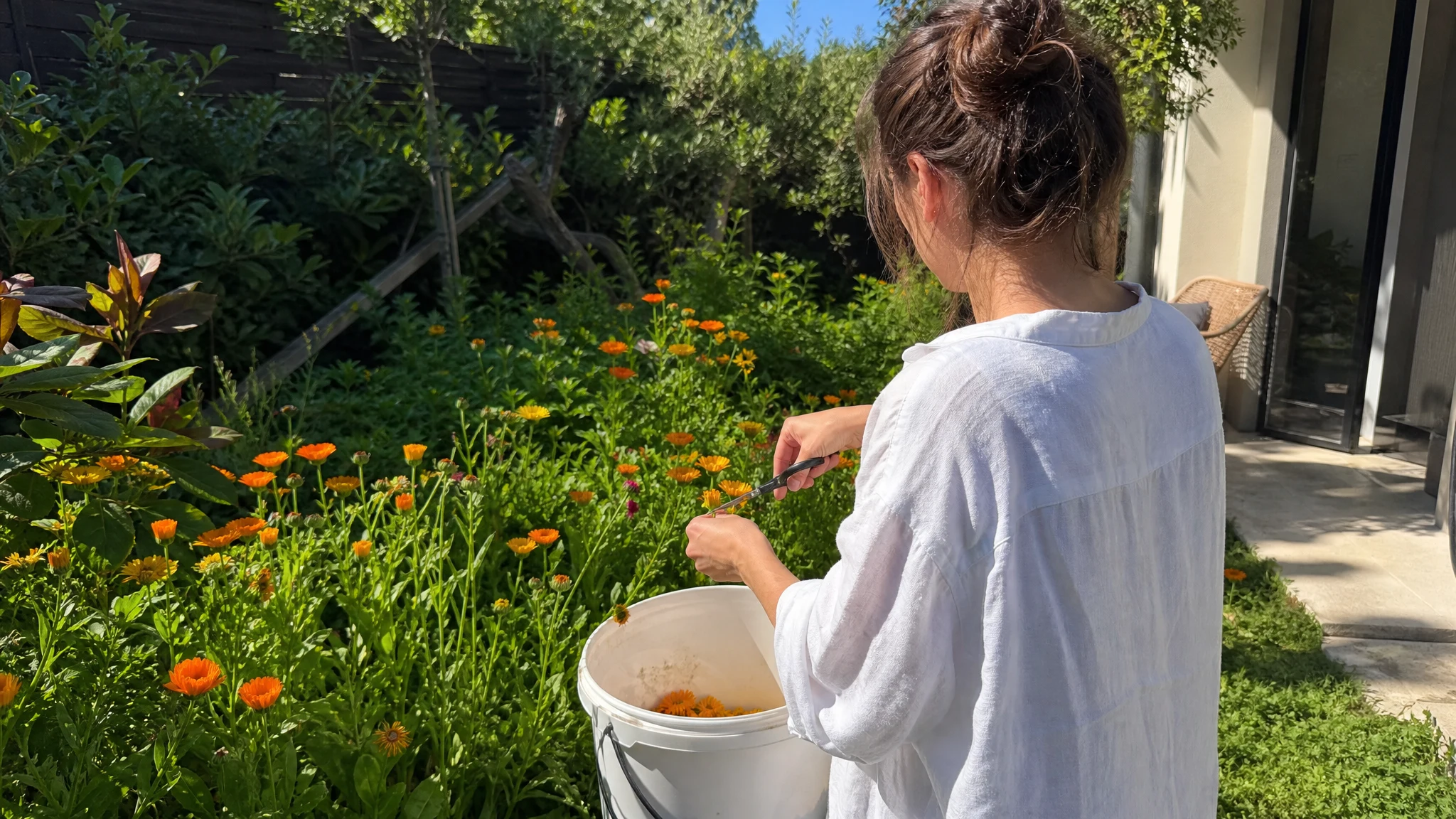
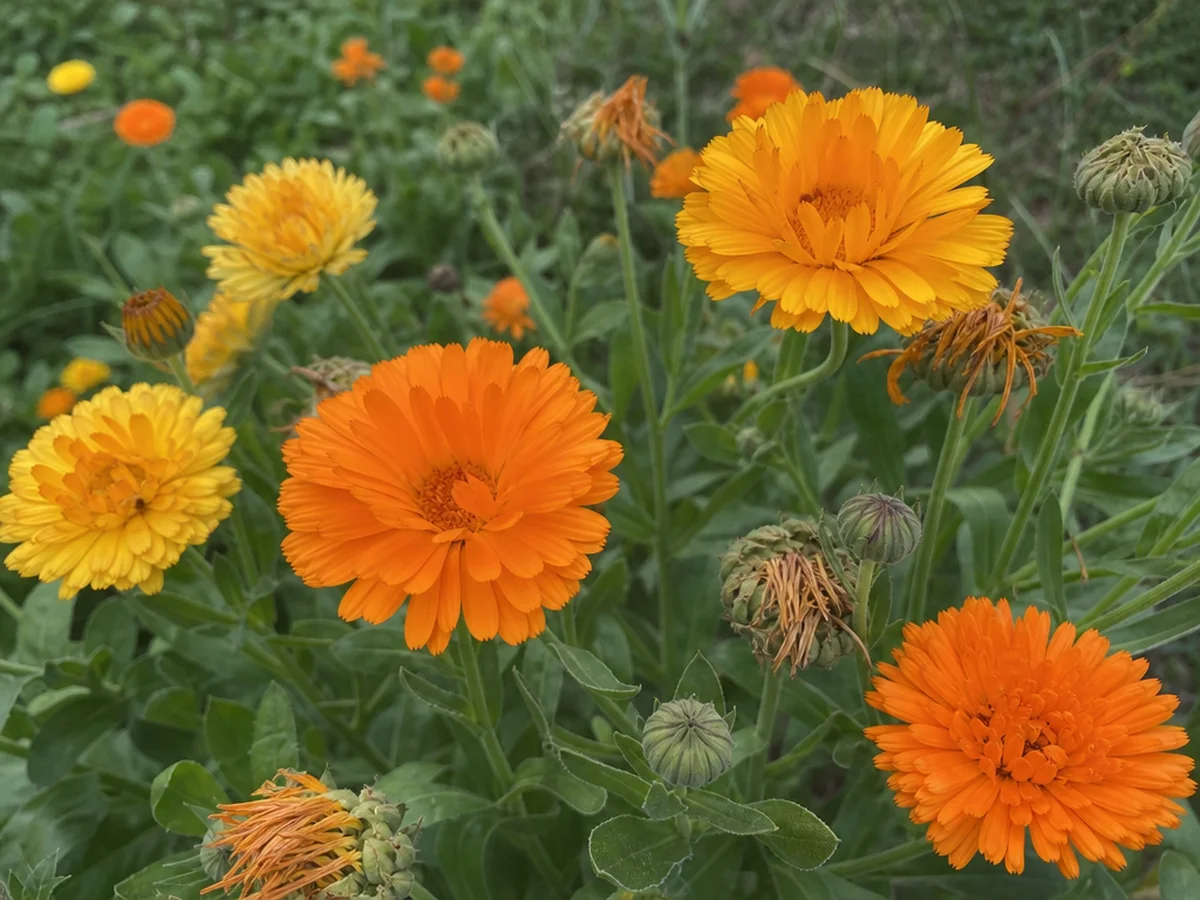
The simplest routine is also the best one. Go out on a dry morning, once any dew has burned off, with a pair of snips and a shallow basket. Choose fully open flowers, cut just beneath the head, and lay them in the basket without piling them deep, so the heads are not crushed. Aim for every couple of days in peak season, and you will find the plant rewards you with more buds each time.
A small recommendation from us: if you are just starting, begin with a packet of seed and a single bed, and add more only when you find you are keeping up. Too many plants means flowers going past their best before you get to them, and a modest patch that you visit often is better than a big one you neglect.
Drying Calendula officinalis blooms in 1 to 5 days
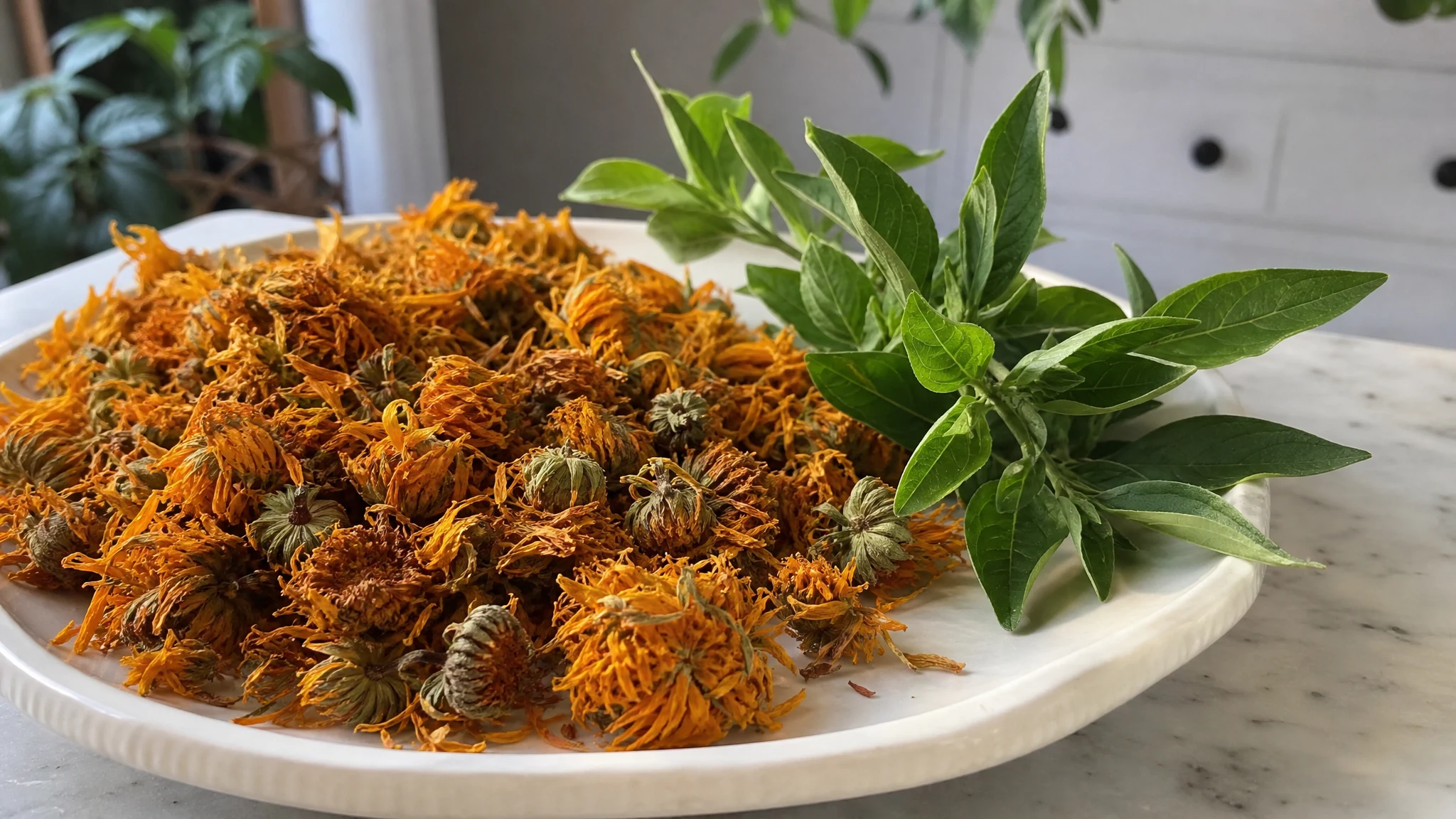
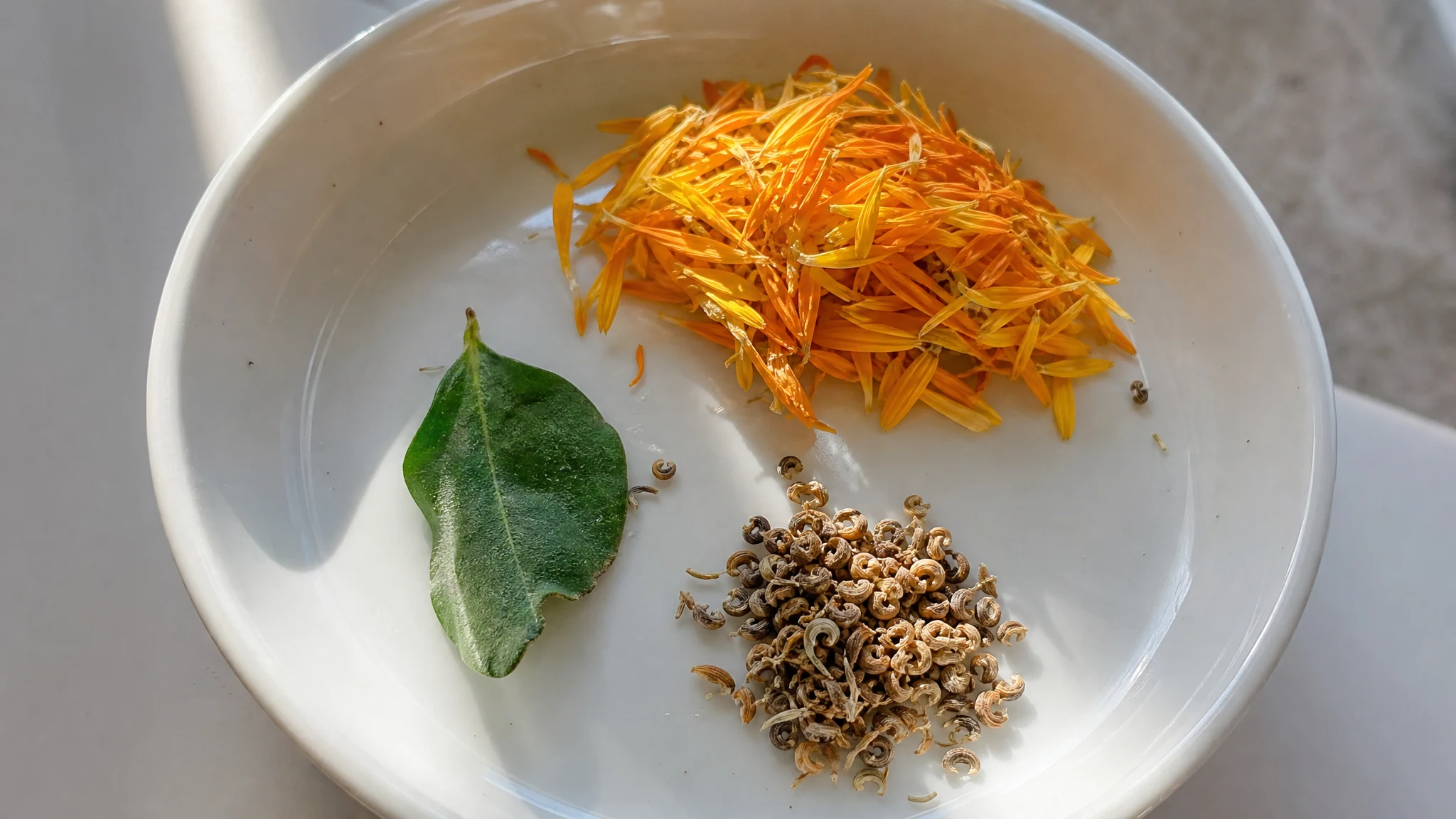
USU says to dry blooms in a well-ventilated area away from sunlight, and that they should dry in 1 to 5 days; a food dehydrator can also work. Once they are brittle, store them in a moisture-tight container somewhere cool and dark. Dry flowers are the reason an infused oil keeps, because water is what spoils an oil. Our guide to drying calendula flowers goes through the steps, and when your jar of flowers is ready, making calendula oil at home picks up from there.
Handling calendula flowers: daisy-family allergy caution
Calendula shares a family with ragweed, chamomile, chrysanthemum and daisies. The EU herbal monograph lists hypersensitivity to Asteraceae plants as a contraindication and notes that skin sensitization has been reported. If you react to those plants, check with an allergist before spending an afternoon deadheading, and try any finished oil on a small patch of skin first. A bit of garden care helps, too: since the flowers end up in an oil that goes on skin, it makes sense to keep sprays off the heads you plan to harvest. That is reasoning on our part, not a measured result.
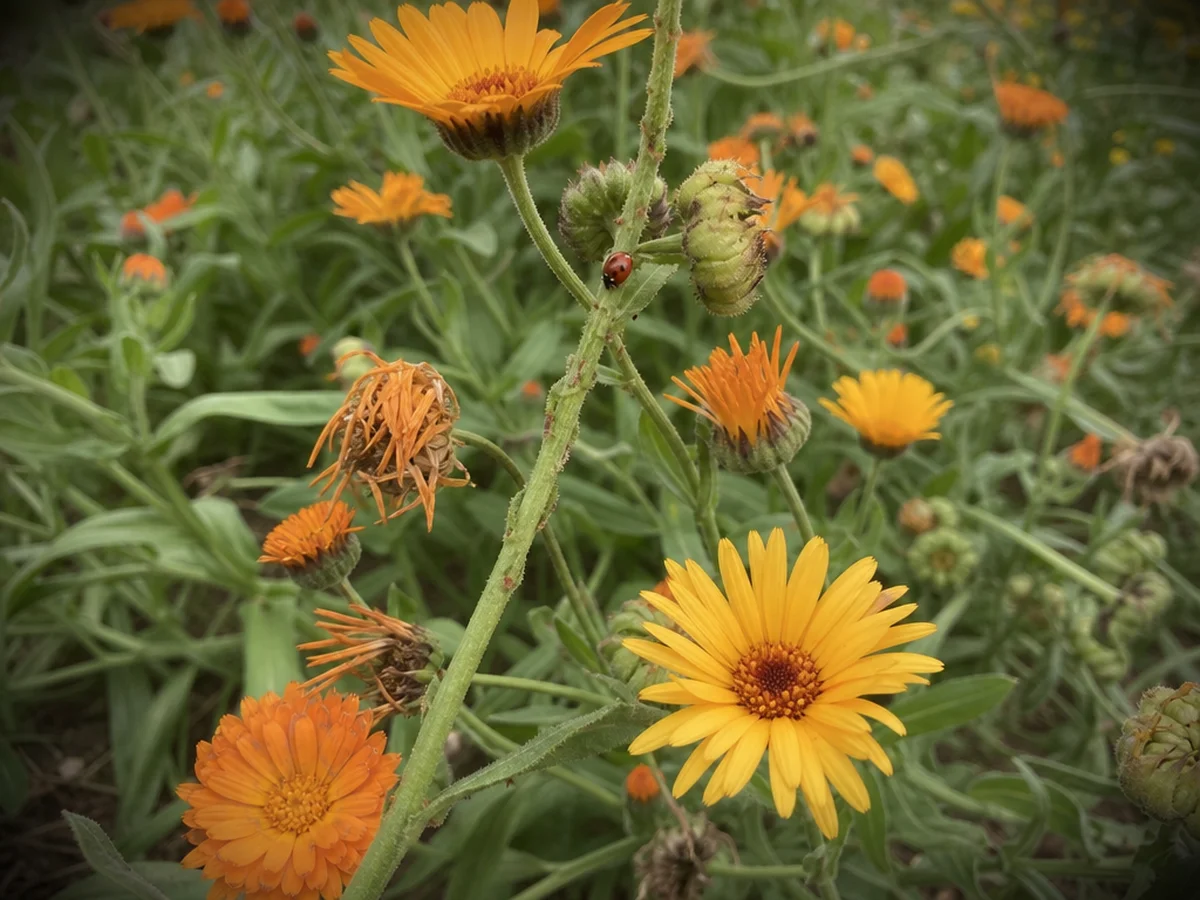
Few garden projects pay back as quickly as calendula. Plant it, pick it often, dry it well, and you will have a basket of sunny flowers that go a long way, whether they end up in an infusion jar or simply brighten a windowsill.
Calendula Oil
Nature's Golden Botanical, bottled: small-batch calendula oil in sizes from 0.5 oz to bulk.
From $13.99
Shop Calendula Oil →Sources & Further Reading
- Braithwaite L, Drost D, 2020. Utah State University Extension. How to Grow Calendula in Your Garden.
- Graves K et al. UF/IFAS Extension. Calendula officinalis: Calendula, Pot Marigold (FPS87).
- Pintea A et al., 2003. HPLC analysis of carotenoids in four varieties of Calendula officinalis L. flowers. Acta Biologica Szegediensis.
- EMA/HMPC, 2018. European Union herbal monograph on Calendula officinalis L., flos.