What Is Calendula Oil? Infused, Essential and Seed Oils
Ask three people what "calendula oil" is and you may get three different answers. That is because the name is used for three quite different things, and knowing which one you are holding changes how you shop, how you store it and what you can reasonably expect. Ours is an infused oil, and here is what that means.
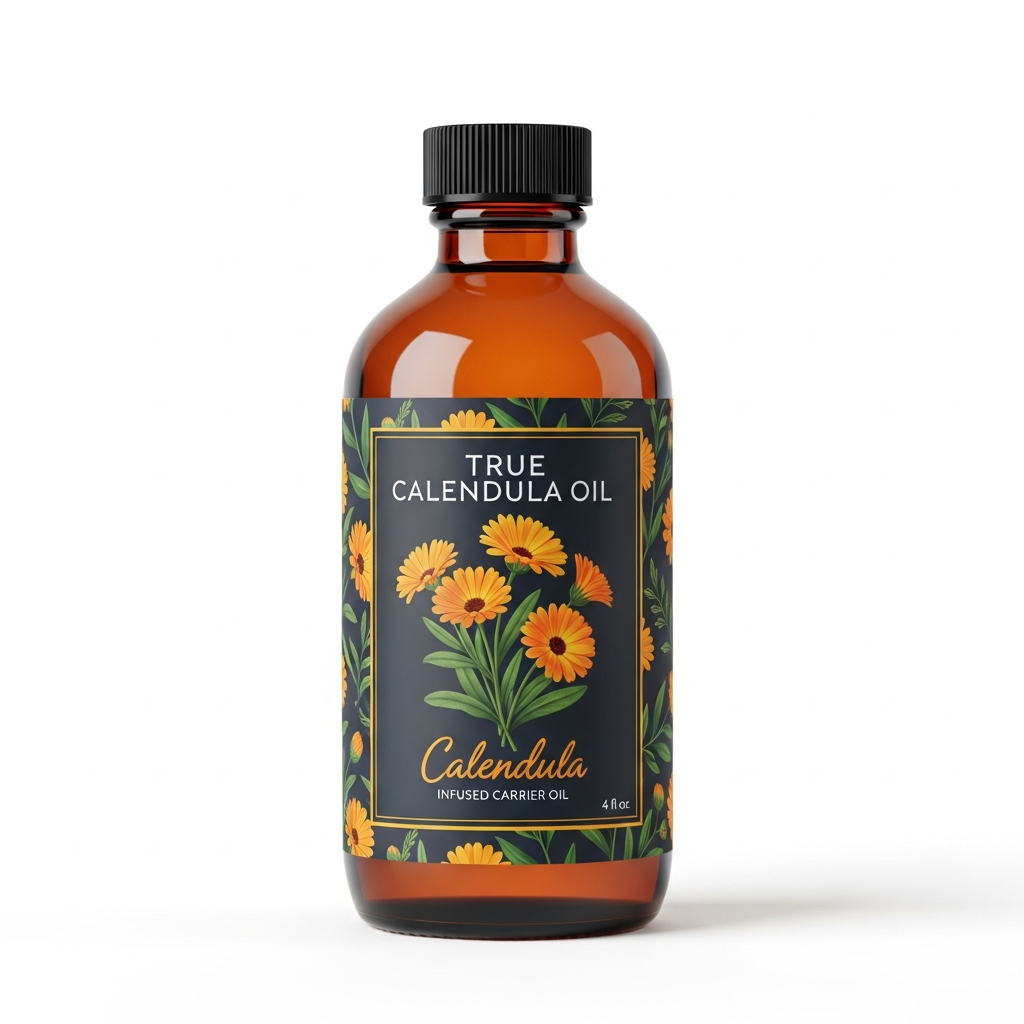
Calendula Oil
Our own small-batch calendula oil, in sizes from 0.5 oz to bulk.
From $13.99
Shop Calendula Oil →Calendula infused oil versus essential and seed oils
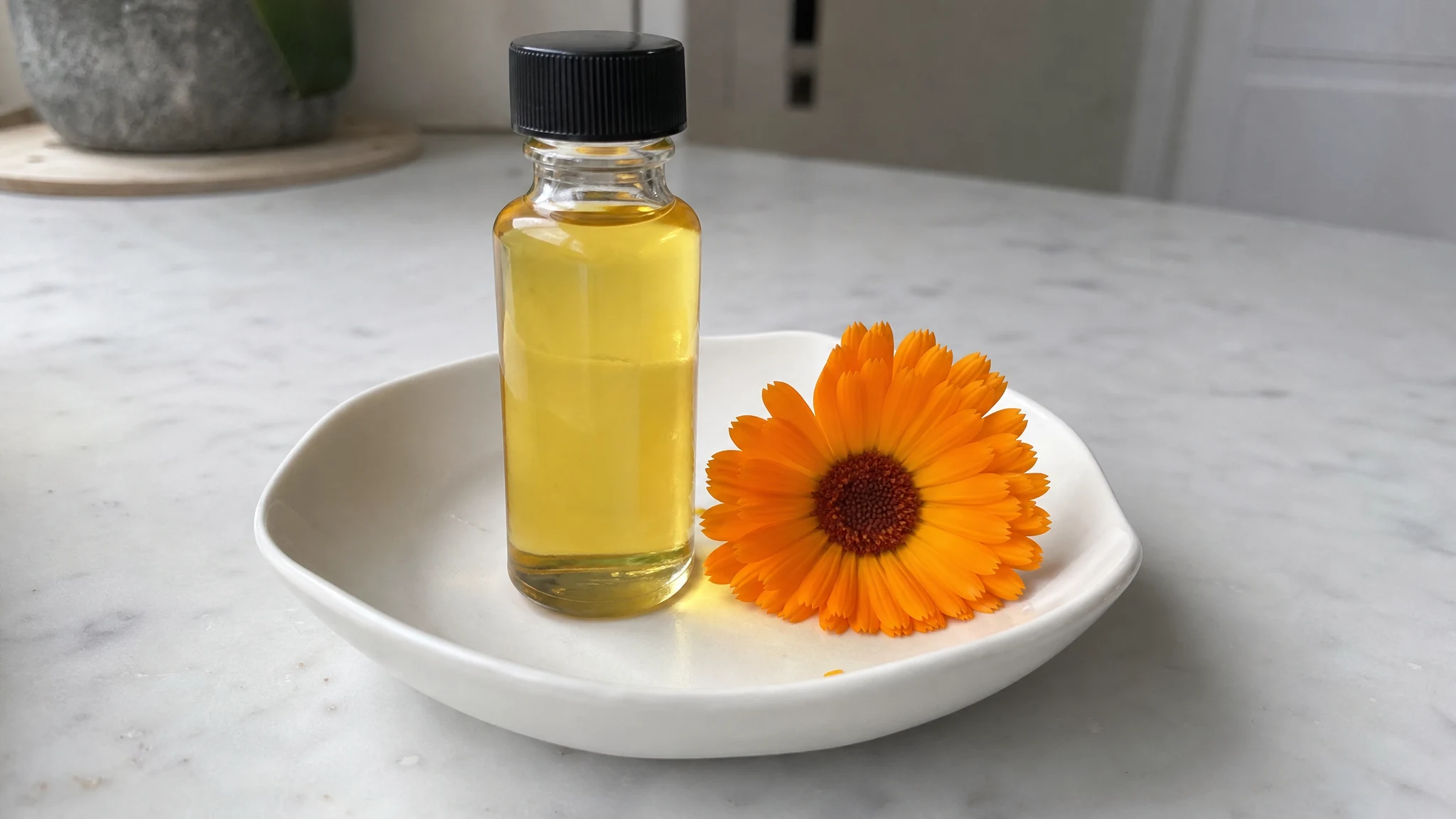
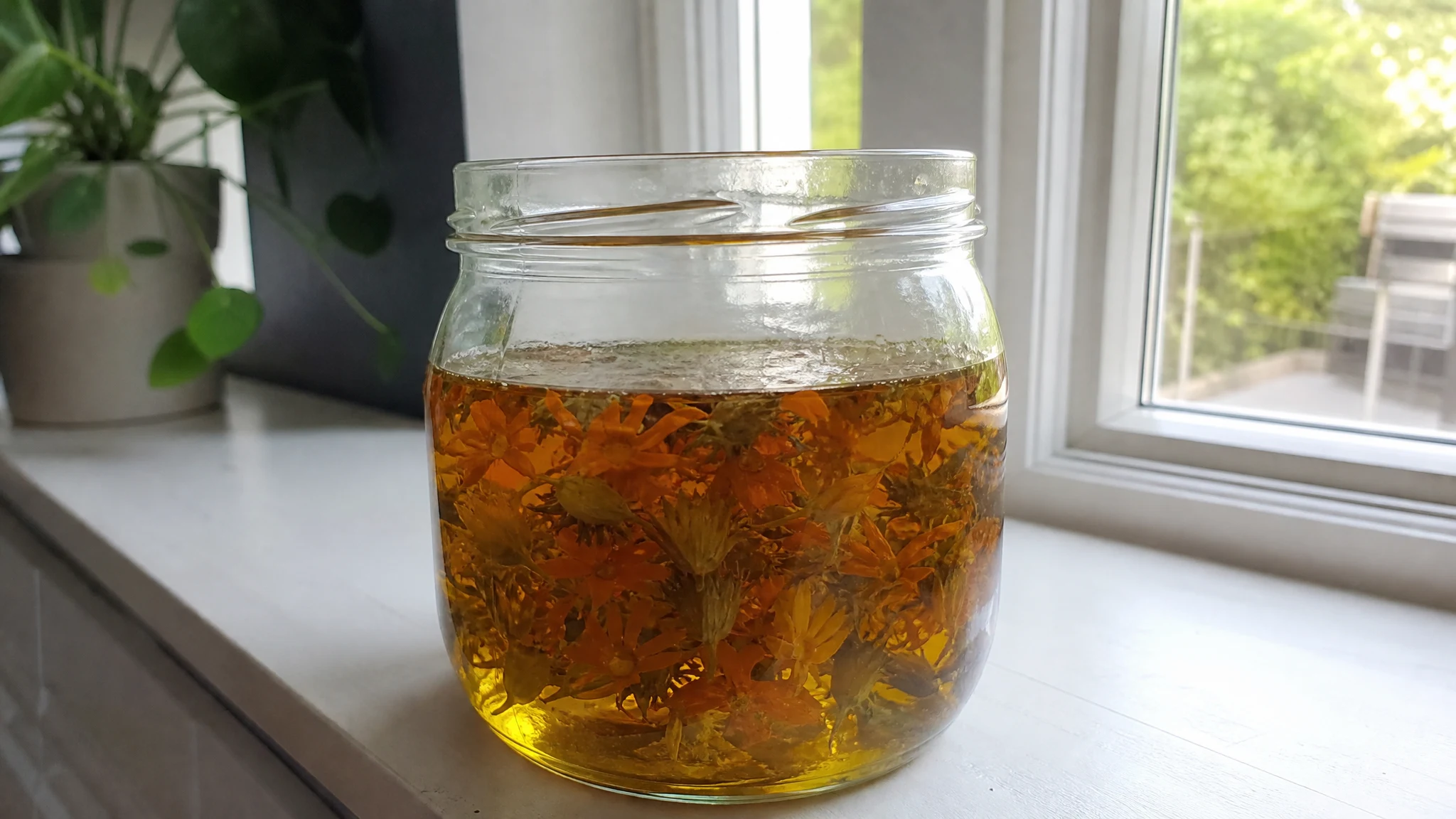
An essential oil is distilled from plant material and captures the volatile, aromatic part. A seed oil is pressed from seeds. An infused oil is made by steeping plant material, in our case dried calendula flowers, in a carrier oil so that some of the flower's color and fat-soluble compounds move into the oil. That last one is what we make, and it is the same style of preparation the EU herbal monograph describes for calendula: a 1:10 extract of the flower in a fatty vegetable oil, with olive oil as the example.
The seed oil deserves a special mention, because it is where a lot of confusion starts. Calendula seed oil is a real material and a remarkable one: in a study of eleven seed genotypes, calendic acid made up between about 51 and 58 percent of the fatty acids. But that comes from seeds, not petals, and it describes a different oil from the one in our bottle. Our fatty acid article and our comparison of infused and essential oil take each of those apart.
How is calendula oil made from dried flowers?
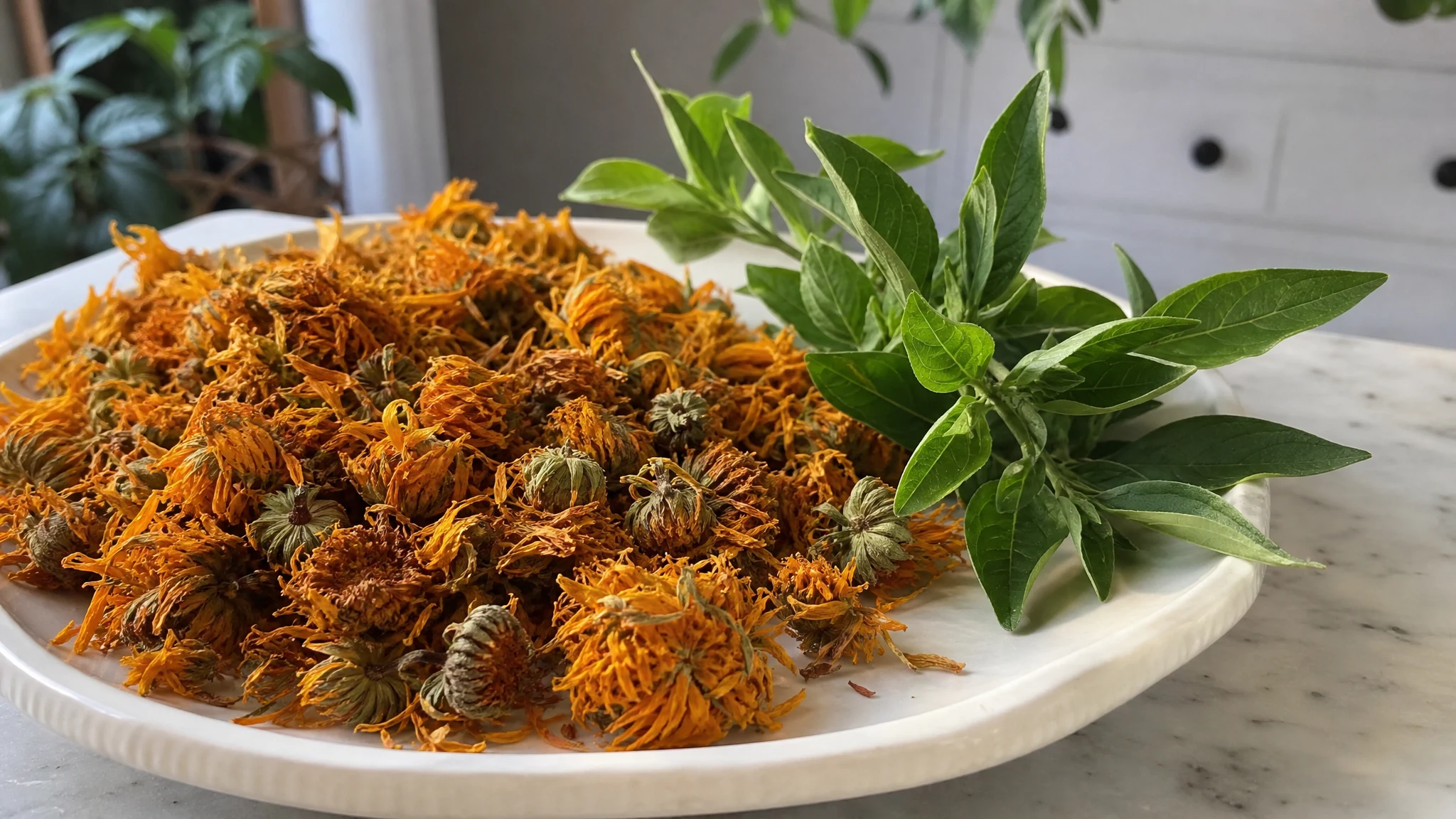
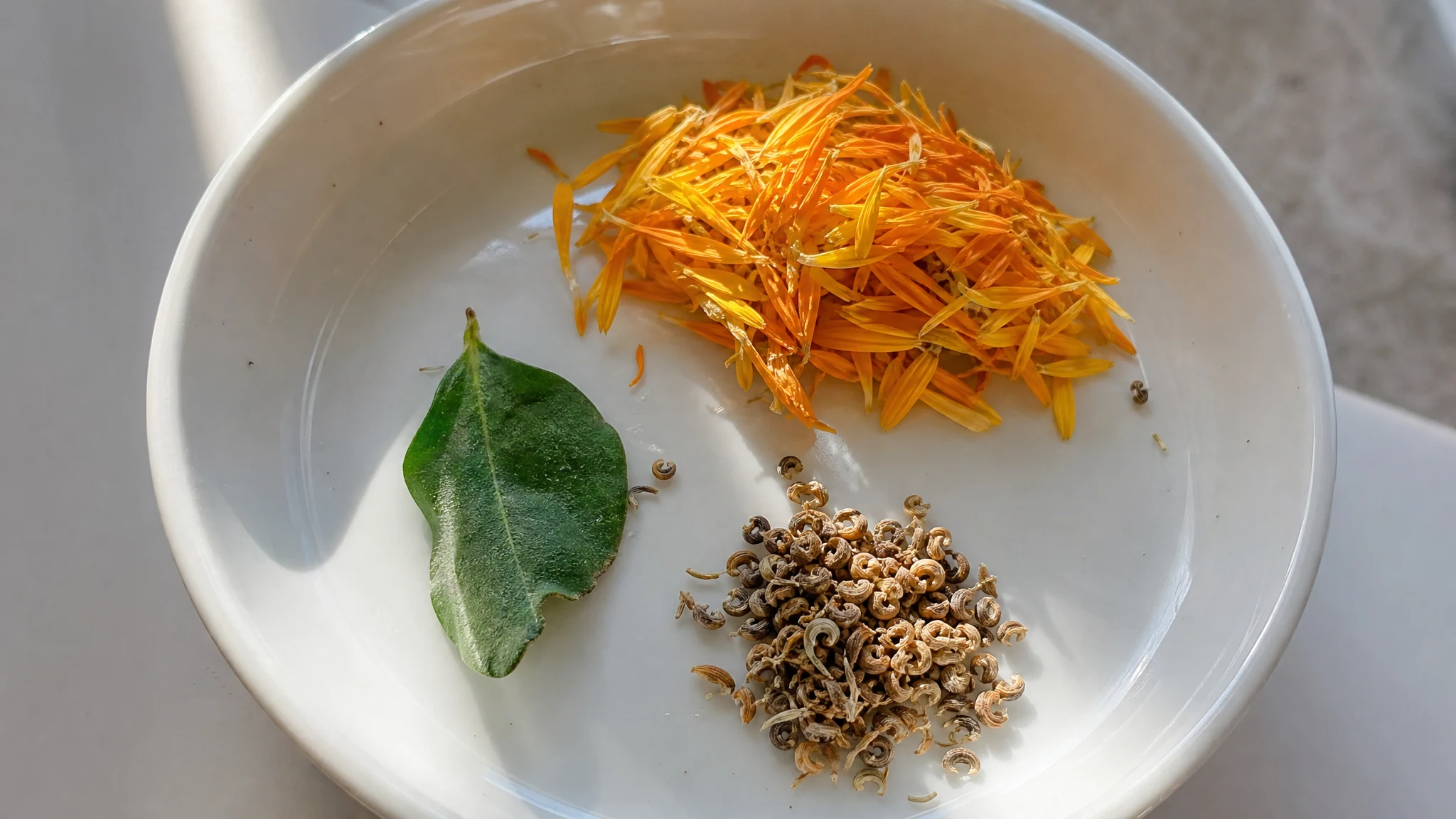
We buy dried flowers, not finished oil, and the rest happens in-house from dried flower to sealed bottle. The flowers are Calendula officinalis, organically grown on family farms in Egypt, Hungary, the Balkans and Turkey, and dried naturally by traditional methods. We separate petals by hand from sound, whole dried flower heads, then extract the calendula on its own before bringing that extract into a carrier oil. Nothing else is added: no synthetic preservatives, no tocopherol and no stabilizers. The carrier is named on the batch paperwork.
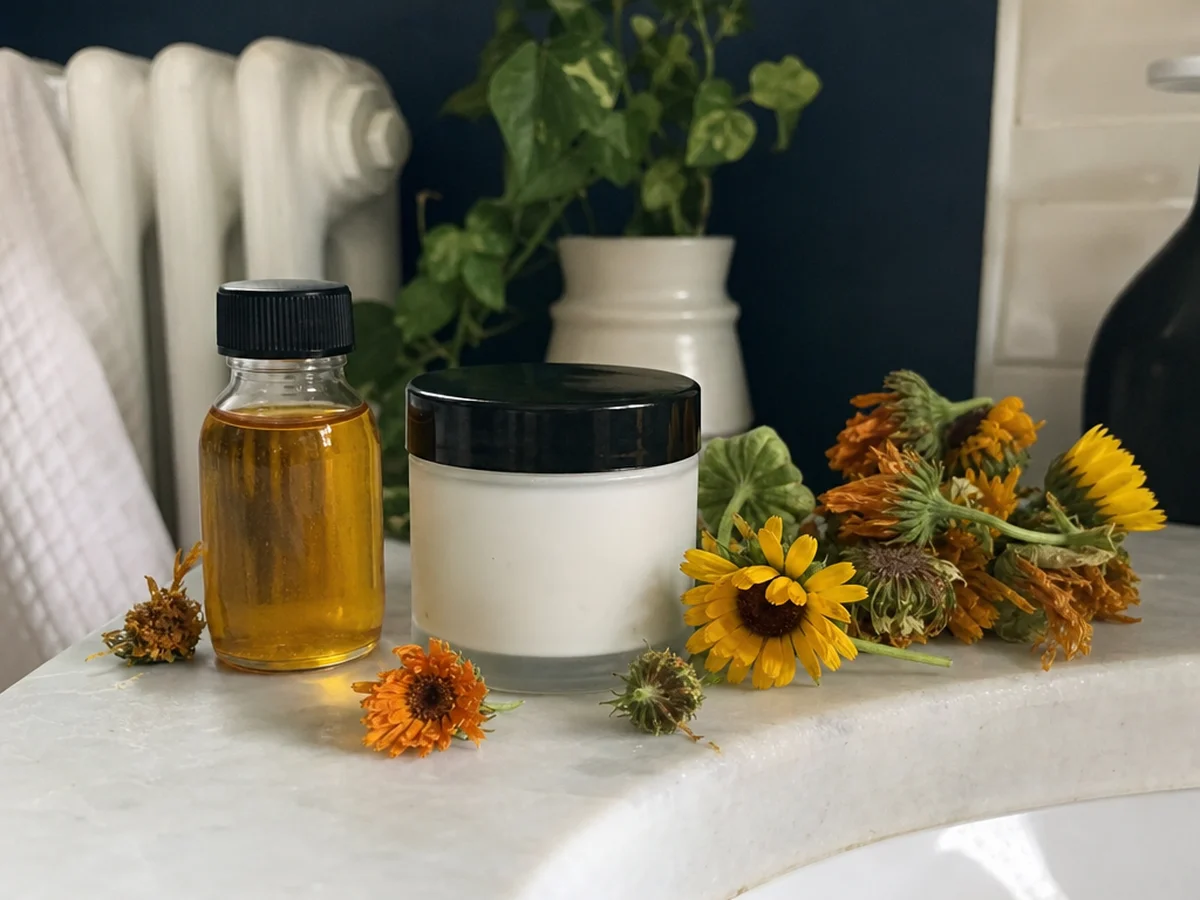
The color is the part you see first. Calendula's gold comes largely from carotenoids, and those are concentrated in the petals; one study of four varieties found totals ranging from about 48 to 276 mg per 100 g of fresh flowers depending on variety. That is the reason we infuse petals. Color is not a quality test by itself, though, and the paperwork is where the real answers live.
What does research say about calendula oil?
This is the part where we like to be straight with you. European regulators classify calendula flower preparations as traditional herbal medicinal products, a status that rests on long-standing use, since the clinical studies reviewed had design problems that prevented firm conclusions. Most of the published clinical work used ointments, creams and extracts, not infused oils, so it cannot be read as results for an oil. We sell a cosmetic oil for external use, and we make no medical claims for it. For any skin condition, a dermatologist is the right person to ask.
What the research on cosmetic use does say is narrower and plainer. In its safety assessment, the Cosmetic Ingredient Review Expert Panel concluded that calendula-derived cosmetic ingredients, including the flower oil, are safe in cosmetics at the practices of use and concentrations it reviewed, and noted that they may be mild eye irritants. So keep it away from the eyes.
Daisy-family allergy checks before using calendula oil
Calendula is in the daisy family (Asteraceae), alongside chamomile, arnica, chrysanthemum and ragweed. The EU monograph lists hypersensitivity to Asteraceae as a contraindication and notes that skin sensitization has been reported, frequency unknown. In one Austrian series of 443 people tested for dermatitis, about 2 percent (9 people) reacted to a marigold patch test; those were clinic patients, so it is not a rate for everyone. Patch test first (our patch test guide shows how) and stop if you react. The monograph does not recommend skin use under age 6 or during pregnancy and lactation because adequate data are lacking; that is an absence of data, not a documented harm, and a good question for a pediatrician, OB/GYN or midwife.
First-day sensory check: color, spread and aroma
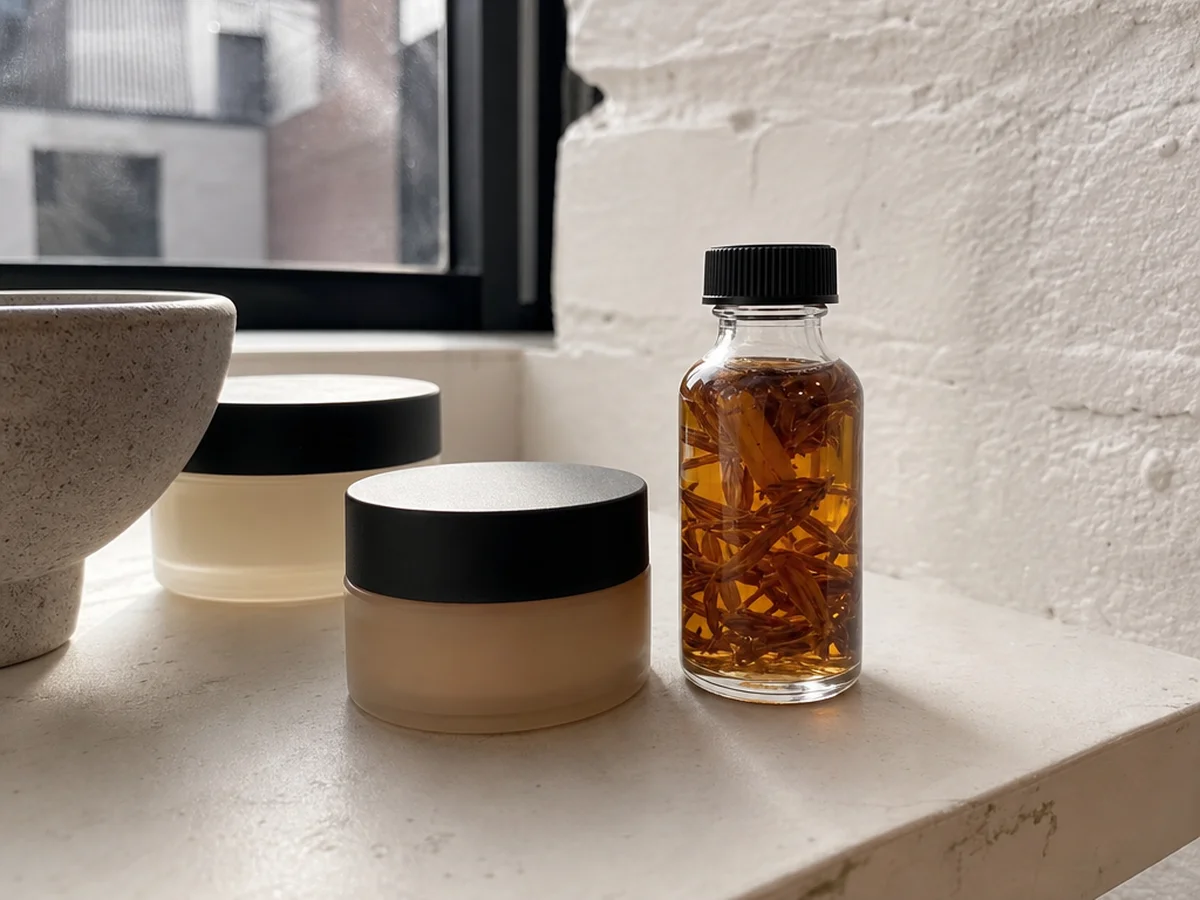
When the bottle arrives, give it a proper look. Hold it up to the light and notice the color. Put a drop on your fingertip and rub it with your thumb: how fast does it spread, and does it leave a film or sink into a soft finish? Open the bottle and notice how it smells. Write one or two words on the label or in a note. A few weeks on, if anything seems different, you will have something real to compare against.
Our recommendation to anyone new to infused oils is to begin with a small bottle, whoever makes it. You learn more about your own skin from a few weeks of steady use than from any amount of reading.
Reading a bottle label: carrier, batch and date
Ask for three things: the carrier, the batch paperwork and the date. Every bottle we sell is dated and lot-numbered, every batch goes to independent third-party labs for physical assays, chemical assays and contaminant screening, and a Certificate of Analysis PDF is linked on our shop page. Email the lot number to support@truecalendulaoil.com for batch documentation. Our buying guide goes through the checks in more detail, and our storage article covers keeping an oil fresh.
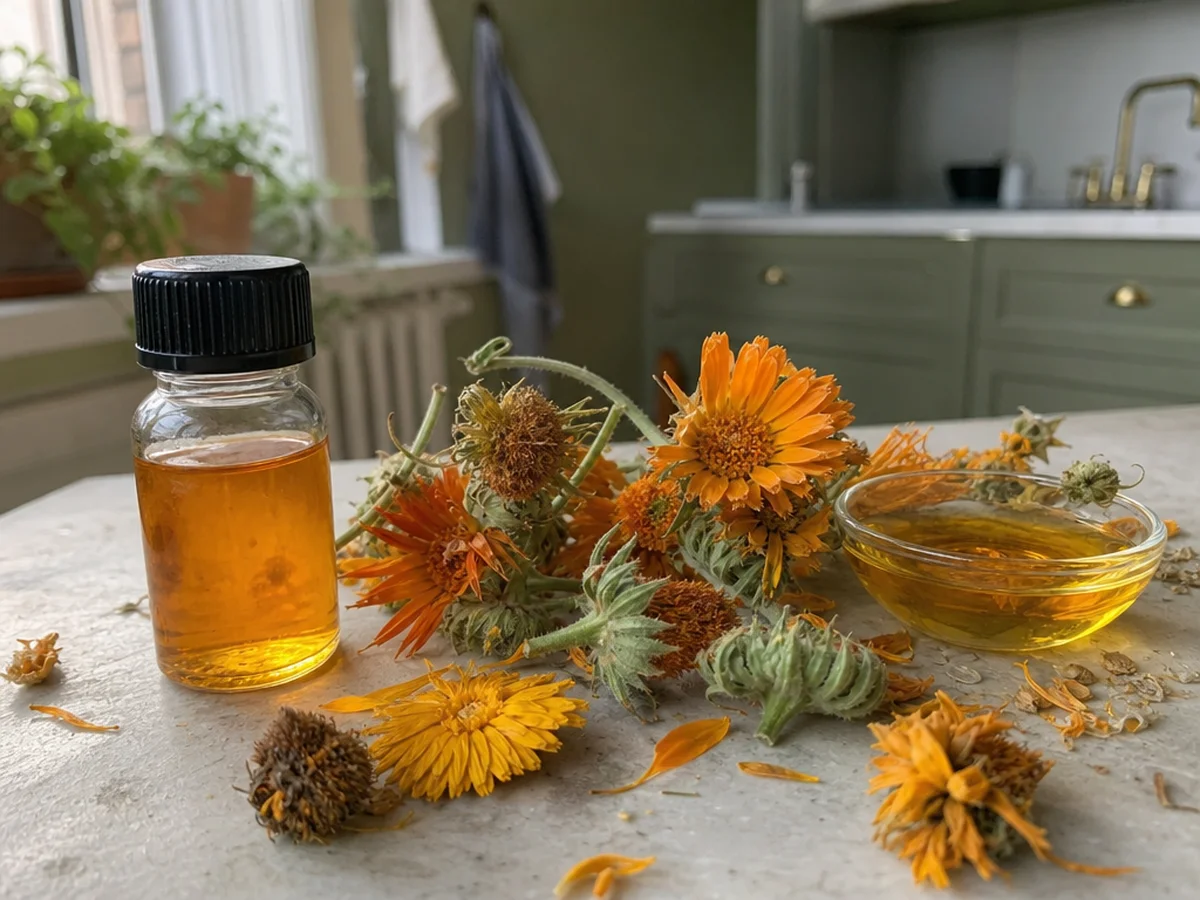
Bottles come in sizes from 0.5 oz up to bulk on the same shop page, and if you are formulating, we suggest a 4 oz or 8 oz bottle for compatibility testing before you scale. Our Sunmeadow Blend article shows one simple way to use it.
Once you know it is an infused oil, the rest follows naturally: a golden color from the petals, a gentle character from the carrier, and a bottle that is only as good as its paperwork.
Calendula Oil
Nature's Golden Botanical, bottled: small-batch calendula oil in sizes from 0.5 oz to bulk.
From $13.99
Shop Calendula Oil →Sources & Further Reading
- EMA/HMPC, 2018. European Union herbal monograph on Calendula officinalis L., flos.
- European Medicines Agency. Calendulae flos - herbal medicinal product.
- Andersen FA et al., 2010. Final report of the Cosmetic Ingredient Review Expert Panel amended safety assessment of Calendula officinalis-derived cosmetic ingredients. Int J Toxicol.
- Dulf FV et al., 2013. Fatty acid composition of lipids in pot marigold (Calendula officinalis L.) seed genotypes. Chem Cent J.
- Pintea A et al., 2003. HPLC analysis of carotenoids in four varieties of Calendula officinalis L. flowers. Acta Biologica Szegediensis.
- Reider N et al., 2001. The seamy side of natural medicines: contact sensitization to arnica (Arnica montana L.) and marigold (Calendula officinalis L.). Contact Dermatitis.