Calendula History: From Garland Flower to Herbal
Calendula's history is a better story than the one usually told. It is not a tale of pharaohs and ancient healers. It is the tale of a flower that opens with the sun and closes at dusk, which made the Romans name it after the calendar, the Greeks give it a tragic love story, and herbal writers take a surprisingly long time to notice it. That is the version we find most appealing, because the dates behind it hold up.
Calendula Oil
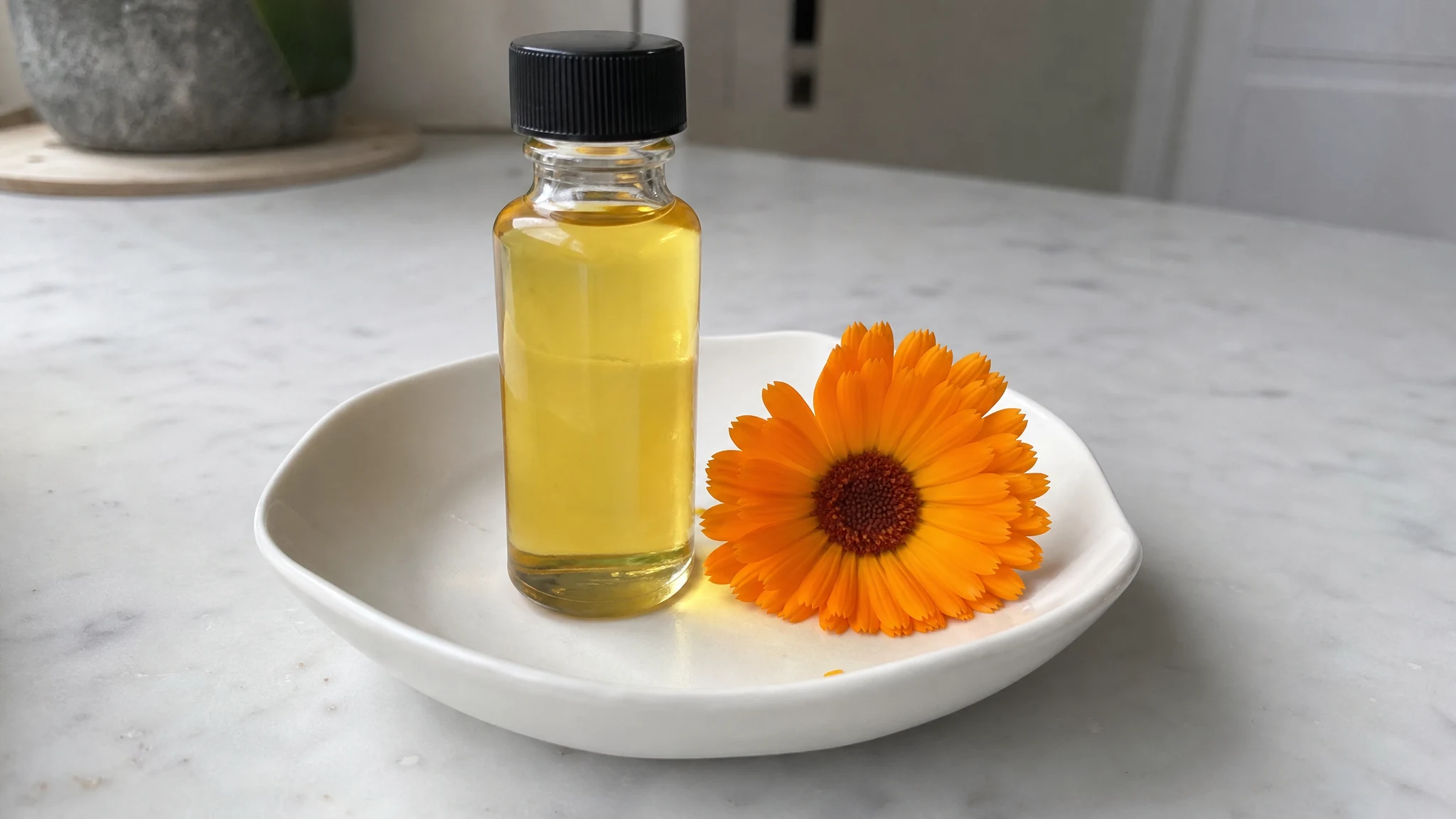
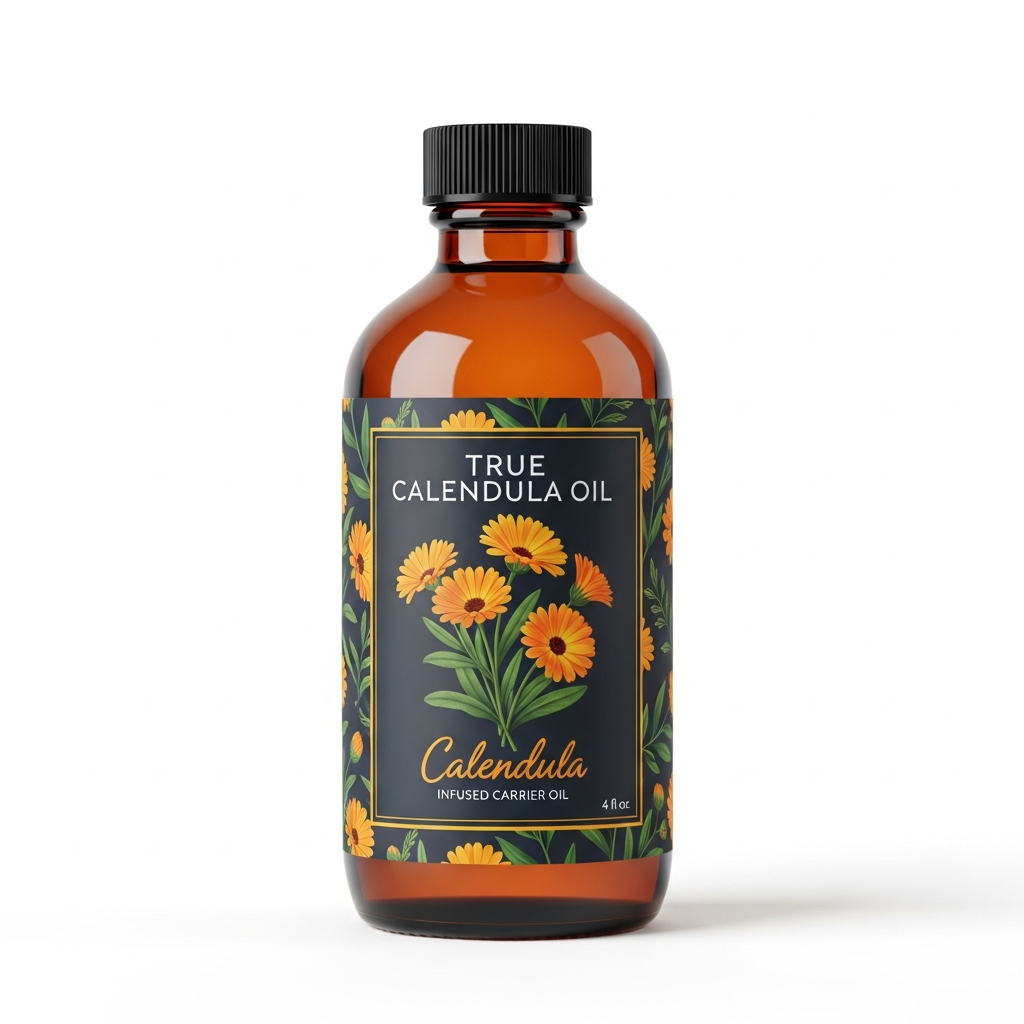
Our own small-batch calendula oil, in sizes from 0.5 oz to bulk.
From $13.99
Shop Calendula Oil →Why is calendula named after the calendar?
The genus name Calendula comes from the Latin Kalendae, the first day of the month. The usual explanation is that the plant was believed to bloom at the start of every month, which made it a natural calendar. The historians Alain Touwaide and Emanuela Appetiti, writing for the American Herbal Products Association, argue for a deeper reading: that Kalendae originally meant only the first day of the year, which links the flower to Janus, the two-faced god of beginnings and endings. Either way, the name is about time, and it fits a cool-season annual, native to Europe and the Mediterranean, whose blooms open in daylight and close in the evening. Botanists call that photonastic movement, and it earned the flower another title, the Bride of the Sun.
The Greeks told it differently. In their world the marigold was caltha, and the myth had a girl who waited each dawn for the sun god Apollo and was transformed into the flower. Shakespeare was still playing with the image centuries later when a character in The Winter's Tale speaks of "the marigold, that goes to bed wi' the sun."
If you ever grow calendula, you can watch the "Bride of the Sun" habit for yourself. On a bright morning the blooms are wide open and tilted toward the light, and by evening the petals fold in. It is easy to see why people who lived by the sun and the seasons felt this flower belonged to the calendar. Pot marigolds are also cheerful, forgiving plants, and they keep blooming into the cool of autumn, which may be part of why they were loved in gardens long before anyone wrote them into a herbal.
Marigold in antiquity: a garland plant, not medicine
Here is the surprise. According to the same essay, marigold was not a medicine for most of antiquity. Theophrastus, in the fourth to third century BCE, mentions it only as a small garland plant. Hippocratic physicians do not seem to have used it. Dioscorides, in the first century CE, gives a brief description and some uses, including external use on fresh wounds. Later, neither Galen nor Avicenna listed it among their therapeutic plants.
The flower appears in pharmacopoeial literature only in the late thirteenth or early fourteenth century, in the Tractatus de herbis. Leonhart Fuchs included it in his 1542 Historia Stirpium, and John Gerard's 1597 Herball finally gave it real attention, describing ten species of marigold in five dense pages. That is a long road from "ancient medicine," and the details are more interesting than a vague claim of antiquity.
A good rule of thumb, which we use ourselves, is to look for a date, a named document and a match between what the document says and what the claim says. A garland mention in Theophrastus is a lovely fact about a flower, but it is not a medical use. The late-medieval herbals and the modern regulatory texts pass the test cleanly.
There is something we like about this slower version of the story. It means the plant earned its place gradually, garden by garden and book by book, and not because of one legendary claim. When you read old herbals, notice how often a plant is praised for being pretty or hardy first. The practical uses came afterward, and the careful writers kept the two apart.
Infused calendula oil in the 2018 EU monograph
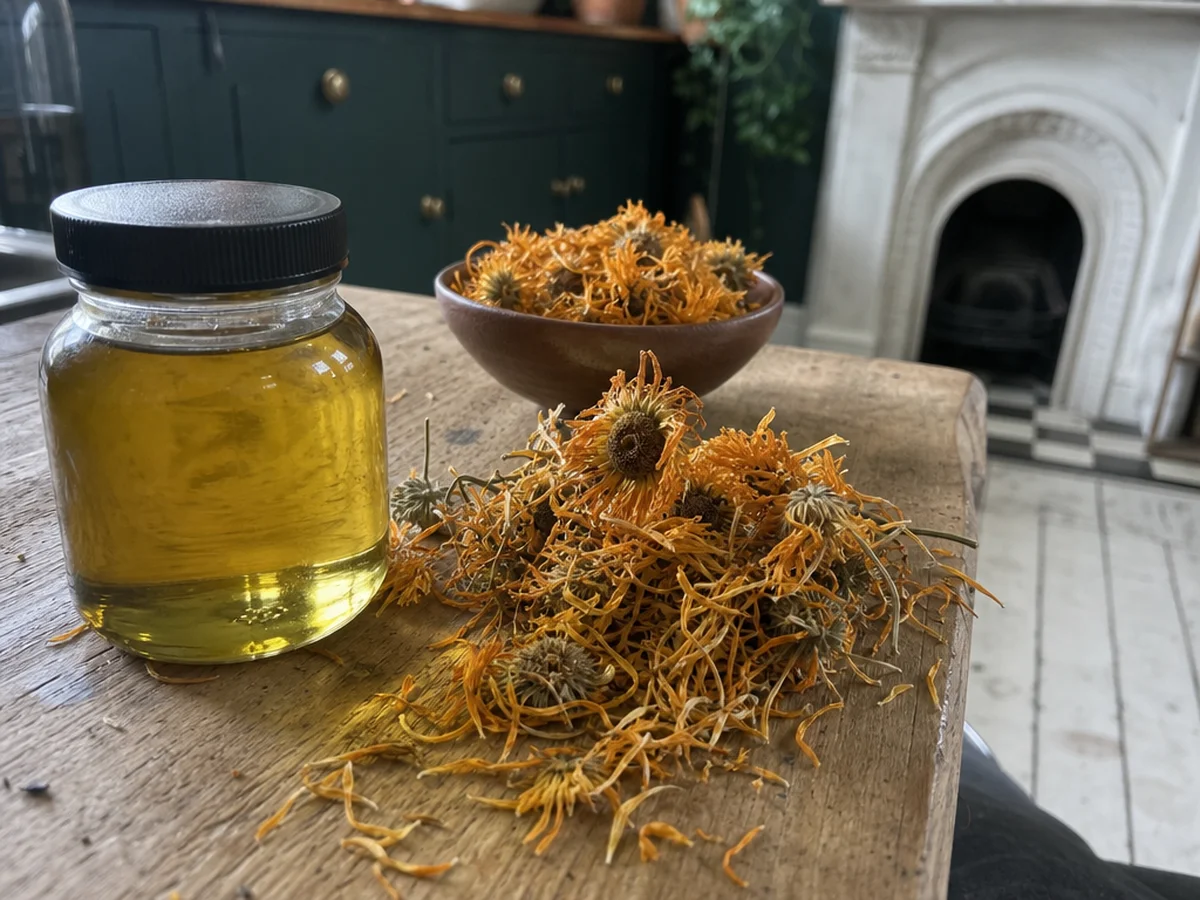
An infused oil is a very simple idea: plant material steeped in a fixed oil. What can be dated is when it was written into regulation. The EU herbal monograph for calendula flower, adopted in 2018, describes the oil preparation as a 1:10 extract in a fatty vegetable oil, such as olive oil, and classes calendula as a traditional herbal medicinal product. The European Medicines Agency's public summary explains that traditional-use status means at least 30 years of use, including at least 15 within the EU, and that it applies where clinical evidence is not sufficient to draw firm conclusions. The same summary notes that calendula flower medicines should not be used by anyone allergic to plants in the Asteraceae family and that skin sensitization has been reported, frequency unknown.
It also helps to put that in perspective: history is a reason to take a plant seriously, not proof that any particular oil will do anything. We sell a cosmetic oil for external use and make no medical claims for it. If any of the cautions above apply to you, a dermatologist, pediatrician or OB/GYN is the right person to ask, not a history page.
Calendula flowers from family farms in four regions
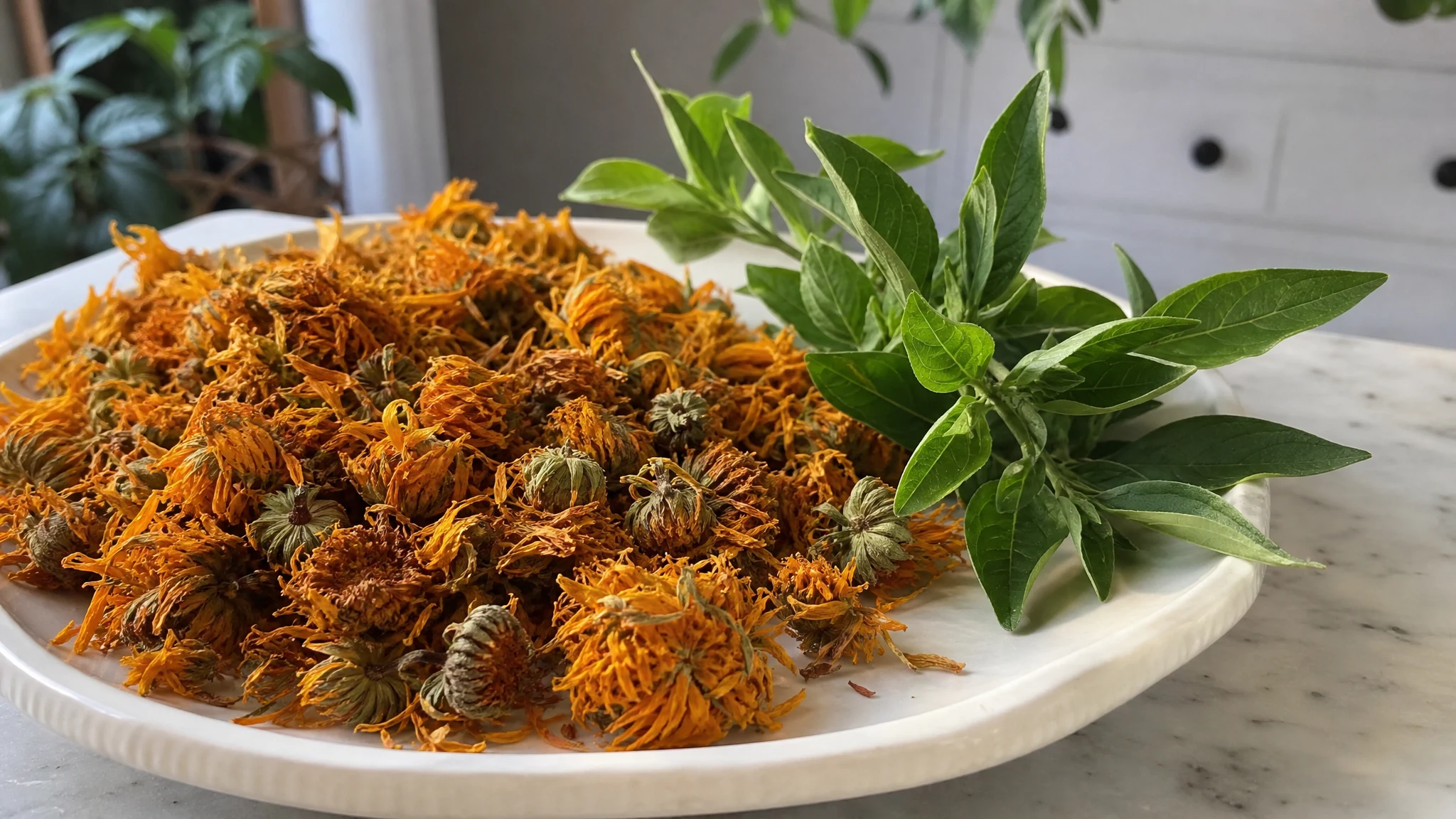
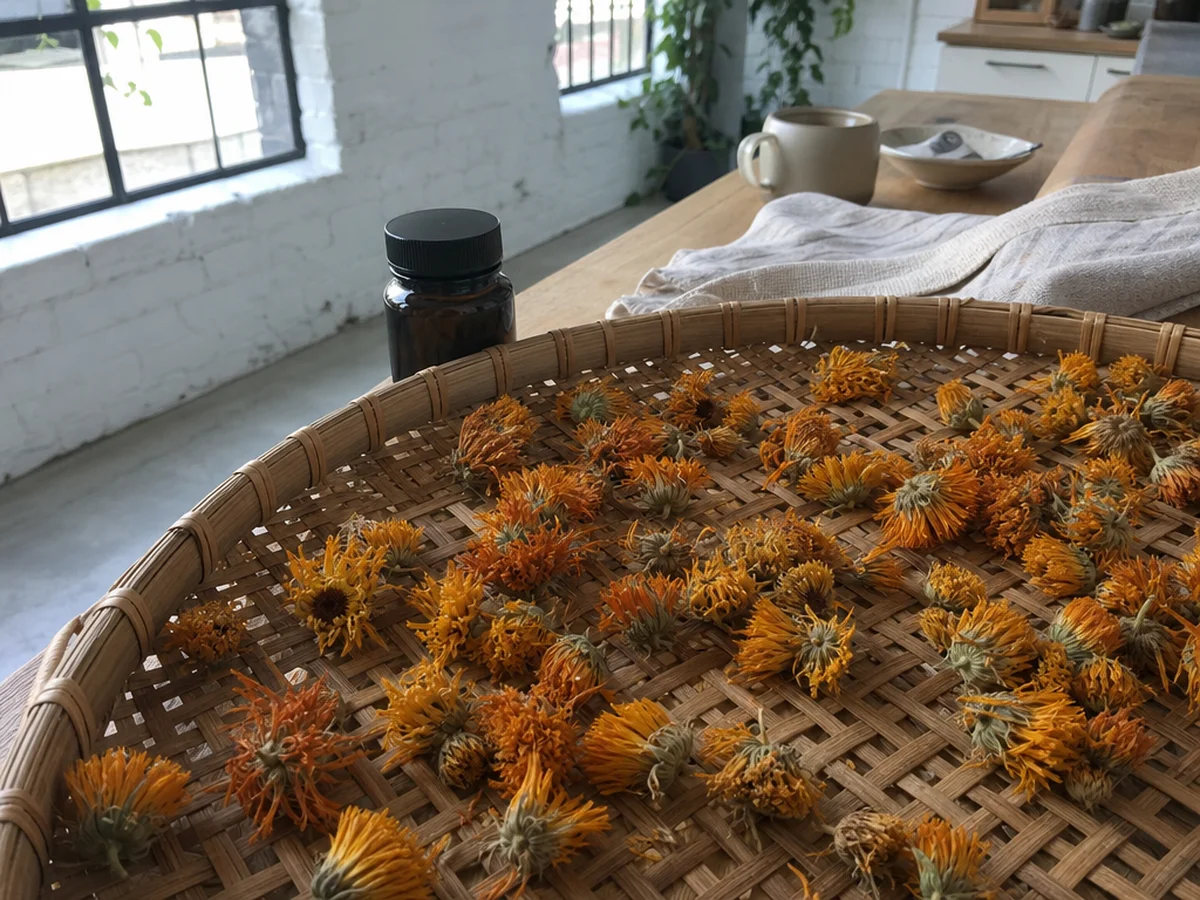
Our own story is a modest one, and we prefer to keep it honest. We buy dried calendula flowers from family farms in Egypt, Hungary, the Balkans and Turkey, working with the same growers for over a decade. The flowers are organically grown, and dried naturally by traditional methods, with no industrial heat or forced air. We infuse petals separated by hand from sound, whole dried flower heads, and make the oil in-house, dated and lot-numbered. We cannot trace a lineage back centuries, and we are not going to invent one. What we can do is show our work, and our guides to drying flowers and extraction methods carry that on. If you like the botany side, growing calendula for oil picks up where the history leaves off.
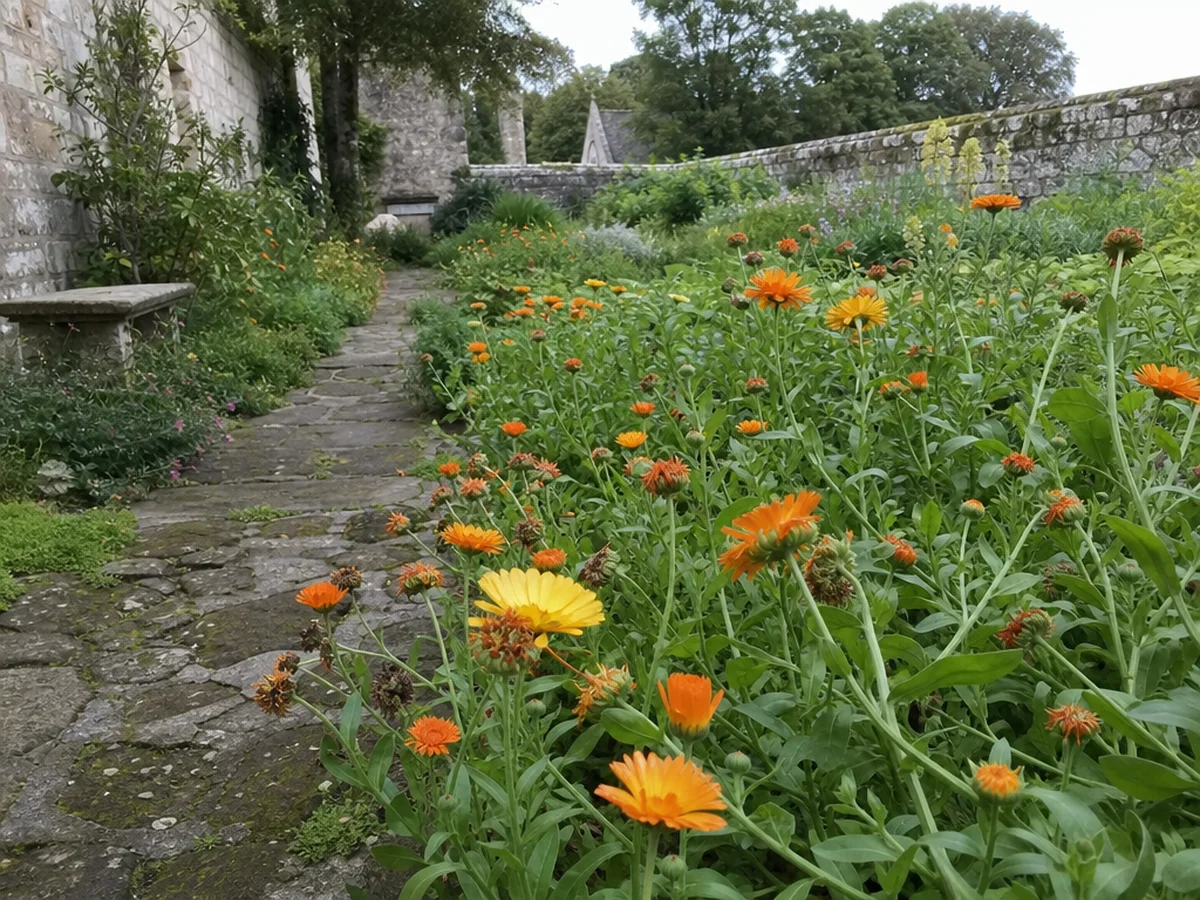
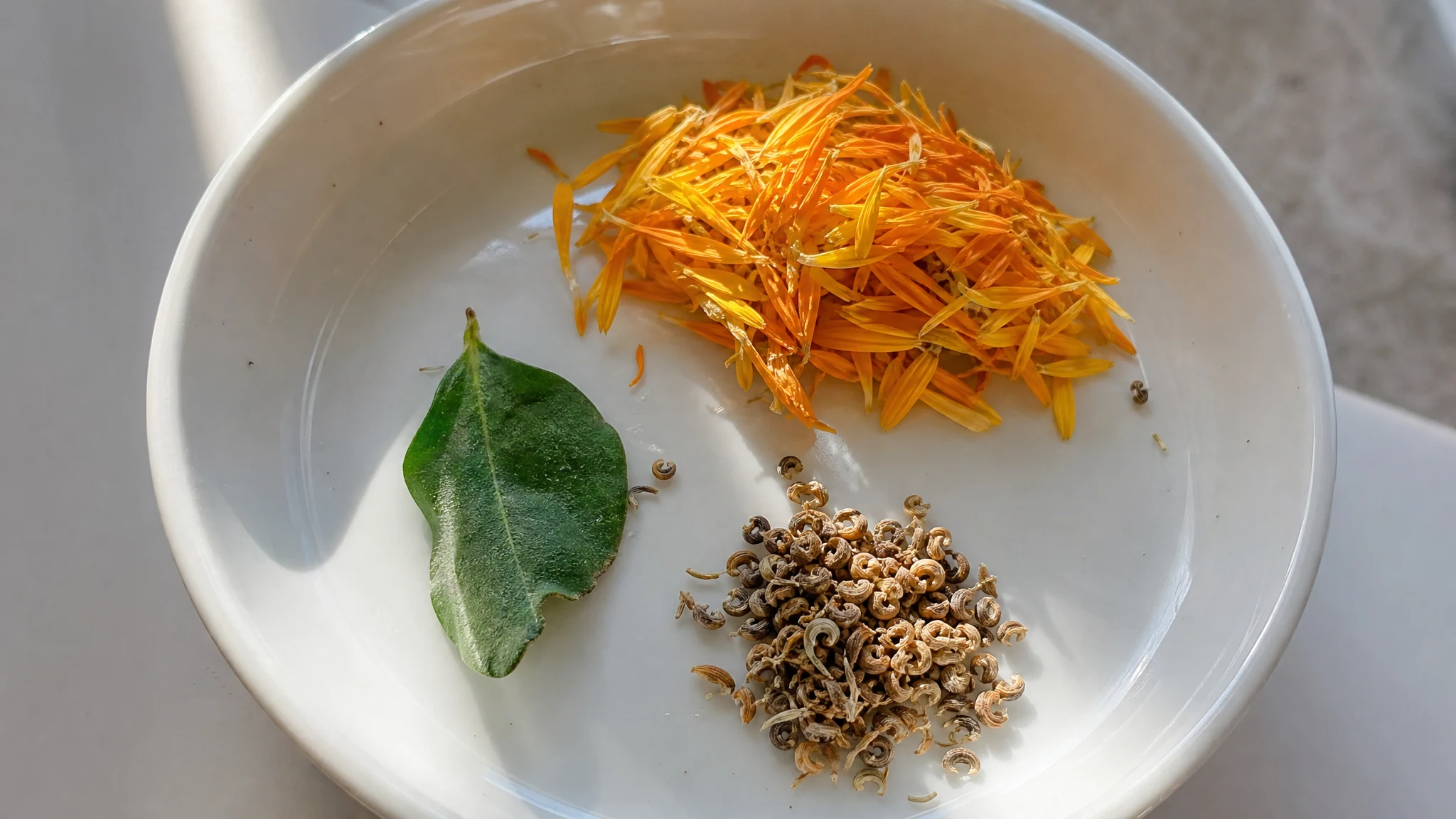
If you have a sunny windowsill or a pot on the step, a few seeds are enough to see it for yourself. Watching a bloom open in the morning and close by dusk is a good reminder that this is a flower people have been admiring for a very long time, long before it ended up in a bottle.
It is a pleasing thing to know that the flower on your windowsill opened with the sun for the Romans, too. The best history of a plant is the one you can still check.
Calendula Oil
Nature's Golden Botanical, bottled: small-batch calendula oil in sizes from 0.5 oz to bulk.
From $13.99
Shop Calendula Oil →Sources & Further Reading
- Touwaide A, Appetiti E, 2023. American Herbal Products Association. Herbs in History: Calendula.
- European Medicines Agency. Calendulae flos - herbal medicinal product.
- EMA/HMPC, 2018. European Union herbal monograph on Calendula officinalis L., flos.
- Graves K et al. UF/IFAS Extension. Calendula officinalis: Calendula, Pot Marigold (FPS87).