Calendula Oil and Tattoos: Fresh Ink vs Healed Skin
A tattoo is a long conversation between you, your artist and your skin, and it is natural to wonder whether a golden infused oil belongs in it. Our answer turns on one thing: how settled the tattoo is. A fresh one belongs to your artist's written instructions. A tattoo that has fully settled is a different story, and that is where calendula oil can be a pleasant, optional extra.
Calendula Oil
Our own small-batch calendula oil, in sizes from 0.5 oz to bulk.
From $13.99
Shop Calendula Oil →What AAD advises for caring for tattooed skin
The American Academy of Dermatology keeps its advice on tattooed skin short and practical. If the skin feels dry, it suggests a water-based lotion or cream. It says petroleum-based products such as petroleum jelly can cause ink to fade. And it names ultraviolet light as the other thing that fades some inks, which is why it recommends a broad-spectrum, water-resistant sunscreen with an SPF of 30 or more whenever a tattoo is in the sun.
Notice what the page leaves out: plant oils. It neither recommends them nor warns against them. We know of no research that tests infused oils on tattooed skin, so what follows is reasoning from that short list, not a study result.
Where does infused calendula oil fit on tattoos?
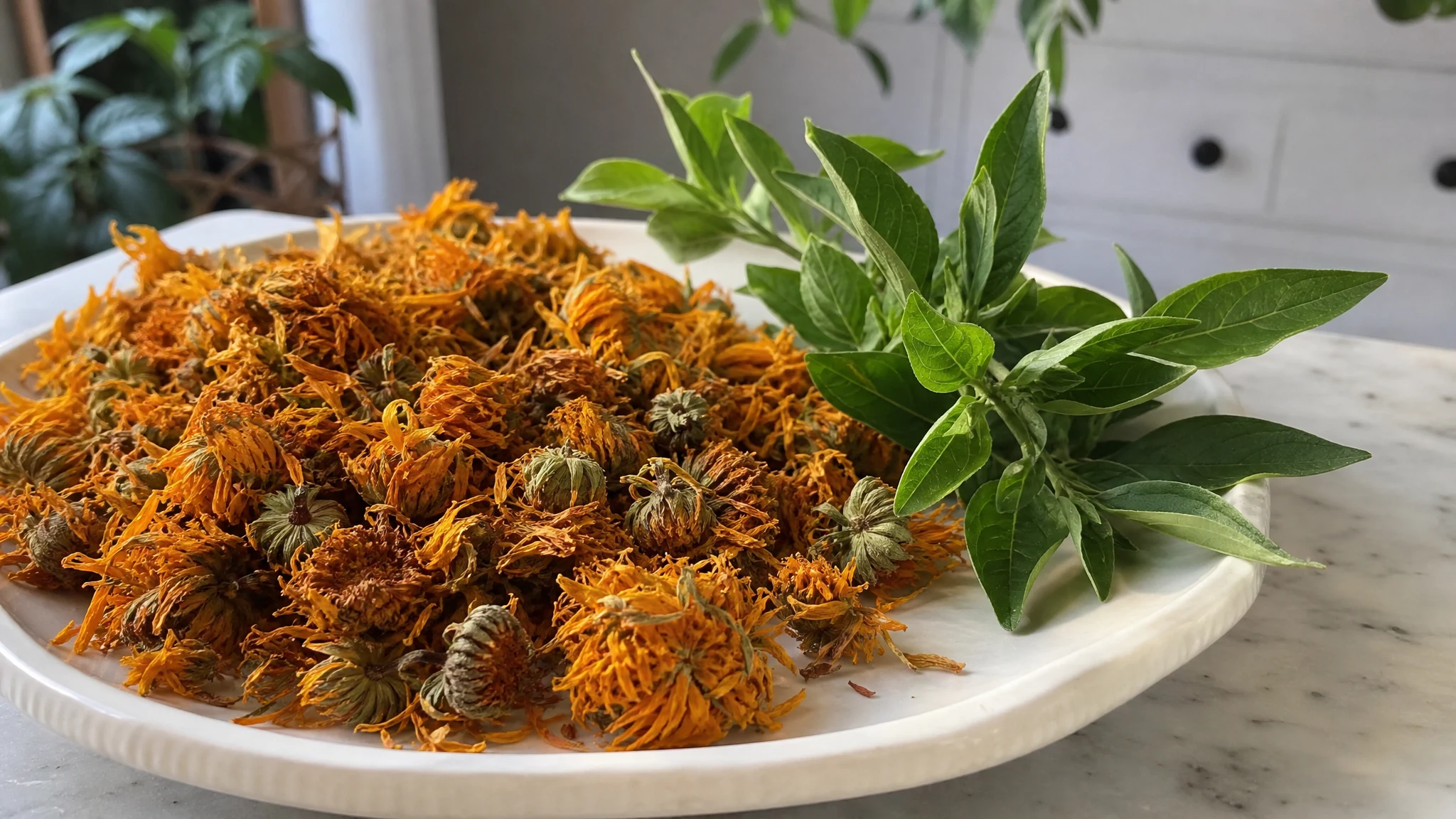
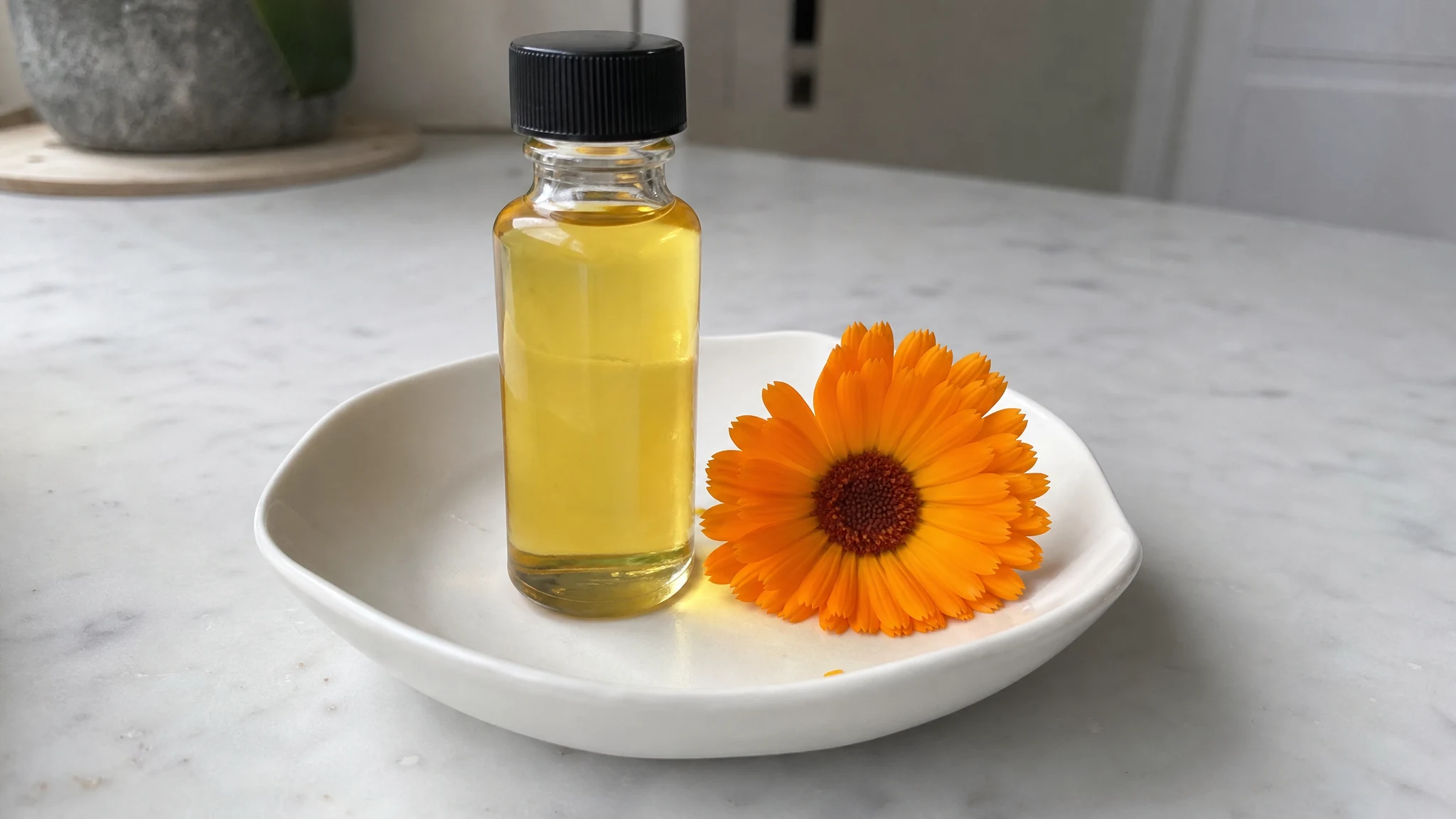
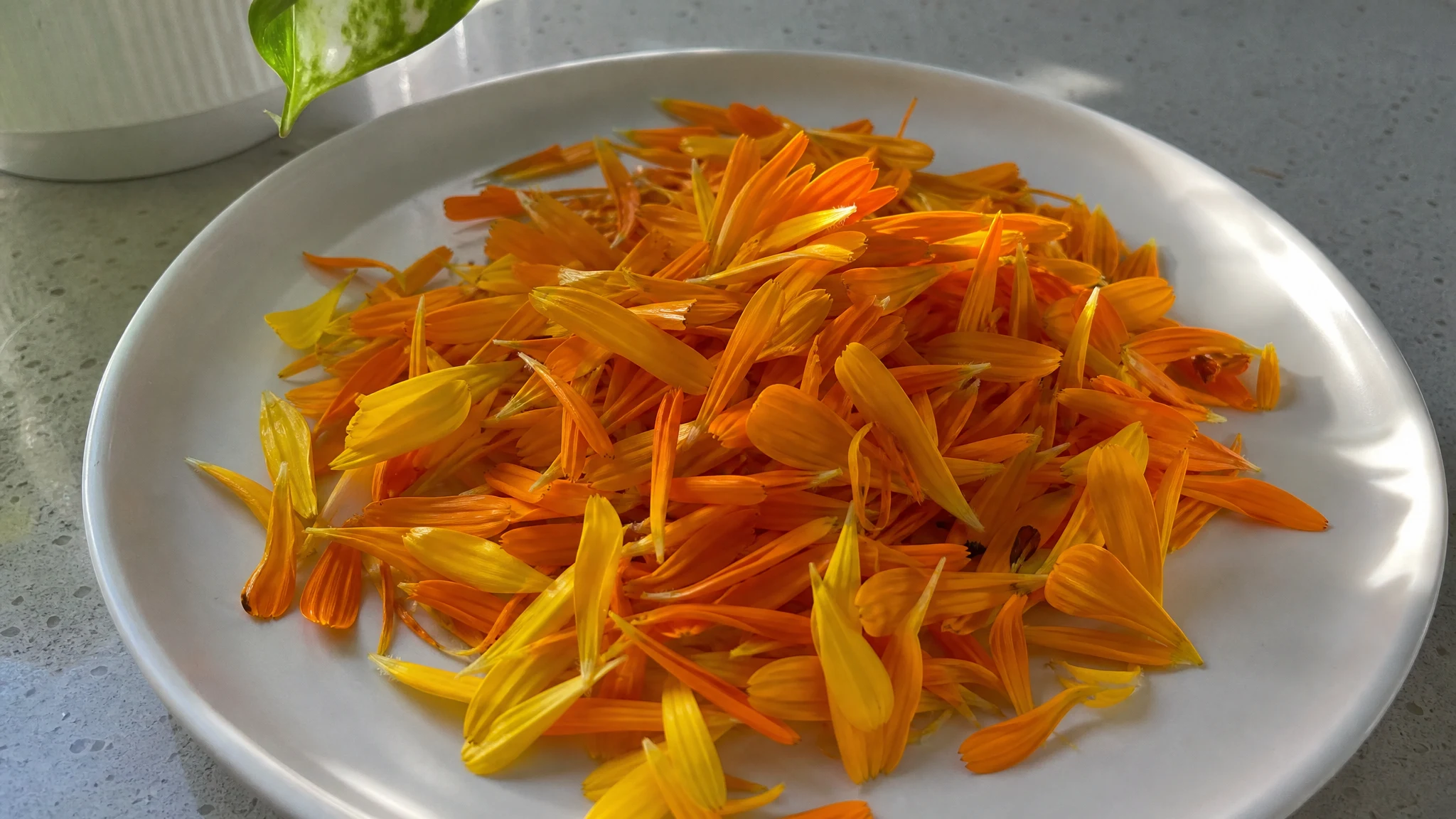
Our calendula oil is dried flowers extracted and brought into a carrier oil. It is not petroleum, and it is not a water-based lotion, so it sits outside both of the AAD's named categories. It also makes no promise about the sun, and we would never suggest it stands in for sunscreen on a tattoo that sees daylight. In practice that makes a water-based lotion the everyday choice with dermatology behind it, and an oil an addition some people enjoy on top of skin that no longer needs special care.
Fresh, healing and healed tattoo stages: three answers
A fresh tattoo
While the skin is open, weeping, scabbing or flaking, follow the aftercare your artist gave you. Your artist knows the ink and the technique used, and a new product at this stage makes it harder to tell what is causing what if the skin turns itchy or red. We would simply wait.
A settled tattoo
Once the skin has closed and feels normal again, a few drops of calendula oil can leave dry-feeling skin soft and smooth to the touch. Keep the amount small and let the lotion remain your default. Try the oil on a patch of untattooed skin first, the inner forearm for instance, and wait a day or two before using it more widely. That timing is our suggestion rather than a clinical protocol, and our patch test guide walks through one way to do it.
An old tattoo that changes
If a tattoo that has been quiet for years begins to itch, swell or look different, the AAD points to a board-certified dermatologist, and notes that reactions to ink can appear immediately or years later. That is a job for a professional, not a product swap.
Calendula oil ritual for a fully settled tattoo
If your artist has cleared you and the tattoo is long past the scabbing stage, a few drops of oil can become a pleasant small habit after a shower. Pat the skin until it is only slightly damp, warm a drop or two between your fingertips, and glide it over the design in one direction without rubbing hard. Then stop. Skin that looks glossy and slick has had too much, and a lighter touch tomorrow will feel better than a heavy coat today.
Take a moment to look at the tattoo in daylight as you do it. Knowing how your own ink usually looks and feels is the best way to notice when something changes, which is the moment to call your artist or a dermatologist.
Who should check first for daisy-family allergy?
Calendula belongs to the daisy family, Asteraceae. The EU herbal monograph lists hypersensitivity to Asteraceae plants as a contraindication and notes that skin sensitization has been reported, frequency unknown. In one Austrian series of 443 people tested for dermatitis, 9 (about 2 percent) reacted to a marigold patch test; those were clinic patients, so it is not a rate for the general public. If ragweed or chamomile gives you trouble, read our piece on calendula and ragweed allergy and talk with your doctor first. The same monograph does not recommend use during pregnancy or breastfeeding, or on children under 6, because adequate data are lacking, so those are questions for an OB/GYN, midwife or pediatrician.
What should you ask your tattoo artist first?
Artists have strong, practical opinions about aftercare, and they have earned them. Before you add anything new, we suggest asking two simple questions: is my tattoo healed enough for an oil at all, and is there anything in your own routine you want me to avoid? Bring the bottle if you like, so they can read the ingredients for themselves. A short list is easy to review, and ours is short.
Ingredient transparency: calendula flowers and carrier oil only
If your artist's rule is "no petroleum," it is fair to ask what is in any oil you bring home. Ours is calendula flowers and a carrier oil, with nothing else added: no synthetic preservatives, no added tocopherol and no stabilizers. Every bottle is dated and lot-numbered, and the carrier is listed on the batch paperwork. Email the lot number to support@truecalendulaoil.com and ask for it. Our notes for estheticians cover more of the questions worth putting to any oil supplier, and the storage guide explains how to keep an opened bottle fresh.
The short version: a good result starts with the aftercare you are handed, and a settled tattoo has room for small extras. Add one new thing at a time, patch test it, and let a dermatologist weigh in whenever your skin does something you did not expect.
Calendula Oil
Nature's Golden Botanical, bottled: small-batch calendula oil in sizes from 0.5 oz to bulk.
From $13.99
Shop Calendula Oil →Sources & Further Reading
- American Academy of Dermatology. Caring for tattooed skin.
- EMA/HMPC, 2018. European Union herbal monograph on Calendula officinalis L., flos.
- Reider N et al., 2001. The seamy side of natural medicines: contact sensitization to arnica (Arnica montana L.) and marigold (Calendula officinalis L.). Contact Dermatitis.