Calendula Oil for Skin: Where the Reputation Comes From
Calendula has been sitting in skin care for a very long time, long enough that most of us have met it in a hand cream, a baby balm or a garden-herb book before ever buying a bottle of oil. The interesting question is where that good reputation comes from, and what it tells you when you are standing in front of a bottle of infused oil.
Calendula Oil
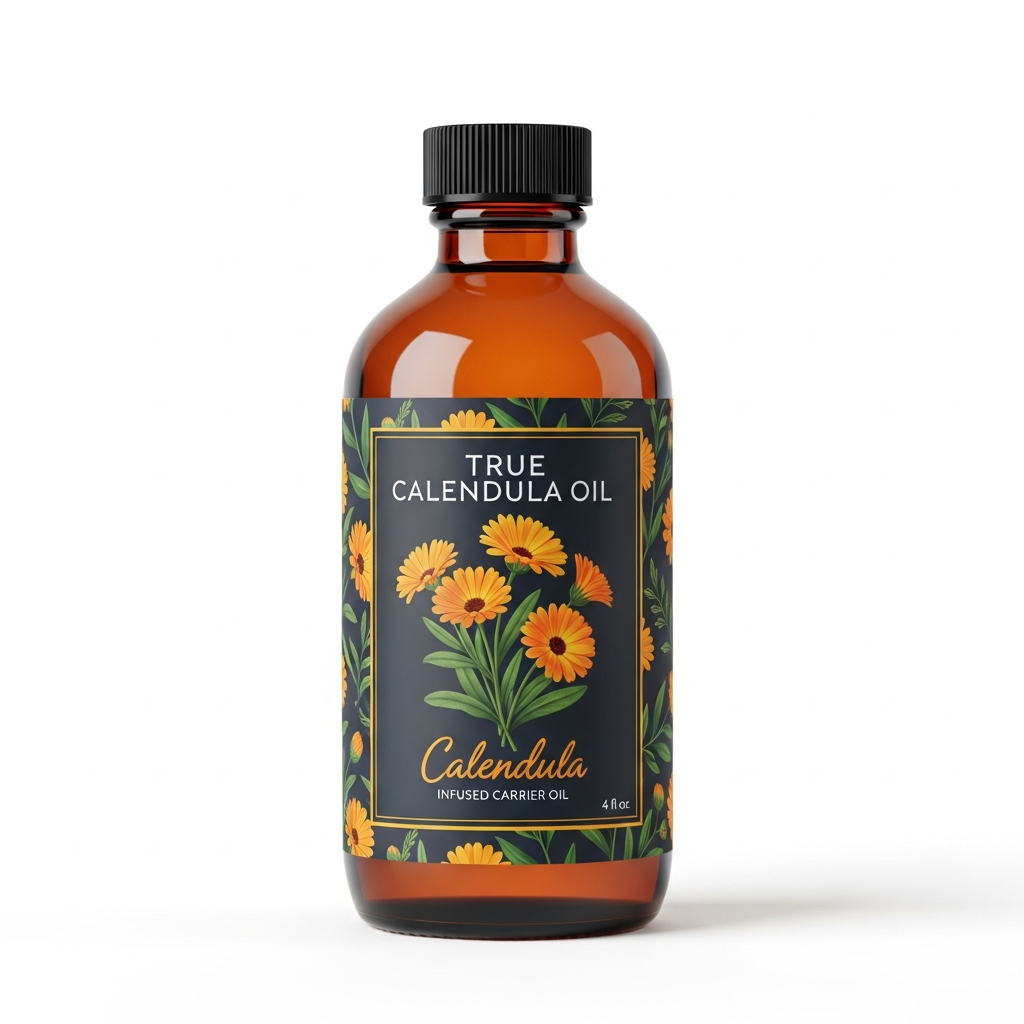
Our own small-batch calendula oil, in sizes from 0.5 oz to bulk.
From $13.99
Shop Calendula Oil →Traditional European use of calendula flower extracts
The clearest official statement comes from Europe. The European Medicines Agency's herbal committee accepts calendula flower preparations, including an extract in a fatty oil such as olive oil, as a traditional herbal use for minor skin irritation and minor wounds. The key word is traditional: the committee says that status rests on long-standing use, not on clinical trials. It is a respectful nod to centuries of kitchen-and-garden practice rather than a verdict from a laboratory.
The committee's assessment report adds some context that we find helpful. There are trials of calendula preparations on things like leg ulcers, burns and irritated skin, but most are small and have methodological weaknesses, so the evidence is not strong enough for a more formal approval. A 2019 systematic review of calendula extract and wound healing reached a similar place: 14 studies, half in animals and half in people, with encouraging early results in the lab and mixed results elsewhere, and a call for larger trials.
Why do ointment studies not fit infused oil?
Here is the editorial point we would most like you to take away. Nearly everything researchers have tested is a defined product: an ointment, a cream, a standardized extract. Our oil is something a little different, whole calendula flowers infused into a carrier oil. We extract calendula on its own, bring the extract into the carrier, and add nothing else. The two are related, and the EU even lists an oil extract among its accepted preparations, but a study of a pharmacy ointment is not a study of our bottle, and we would not want to stretch one into the other. We would rather you hear that from us.
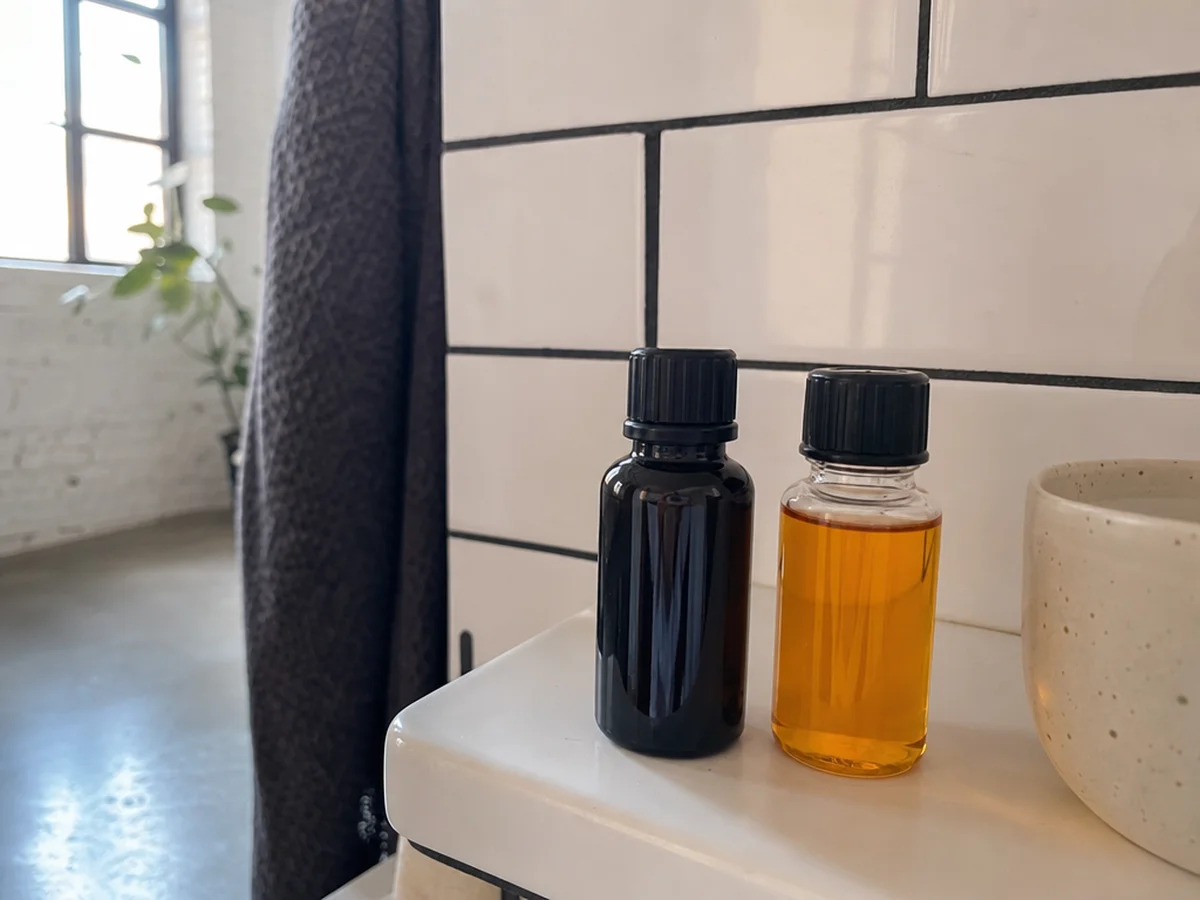
What we can say comfortably is what an oil does for skin in general: it moisturizes, it softens, and it leaves skin feeling smooth. That is the cosmetic job, and an infused oil does it well. The flower gives it its character and its long tradition, and the carrier gives it its feel.
Cosmetic Ingredient Review safety finding on calendula flower oil
On the cosmetic side, the independent Cosmetic Ingredient Review panel concluded in 2010 that calendula-derived cosmetic ingredients, a group that includes calendula flower oil, are safe for use in cosmetics in the practices of use and concentration it reviewed, while noting they may be mild eye irritants. So if you are using it on your face, keep it clear of your eyes.
Checking an oil's color, spread and finish by hand
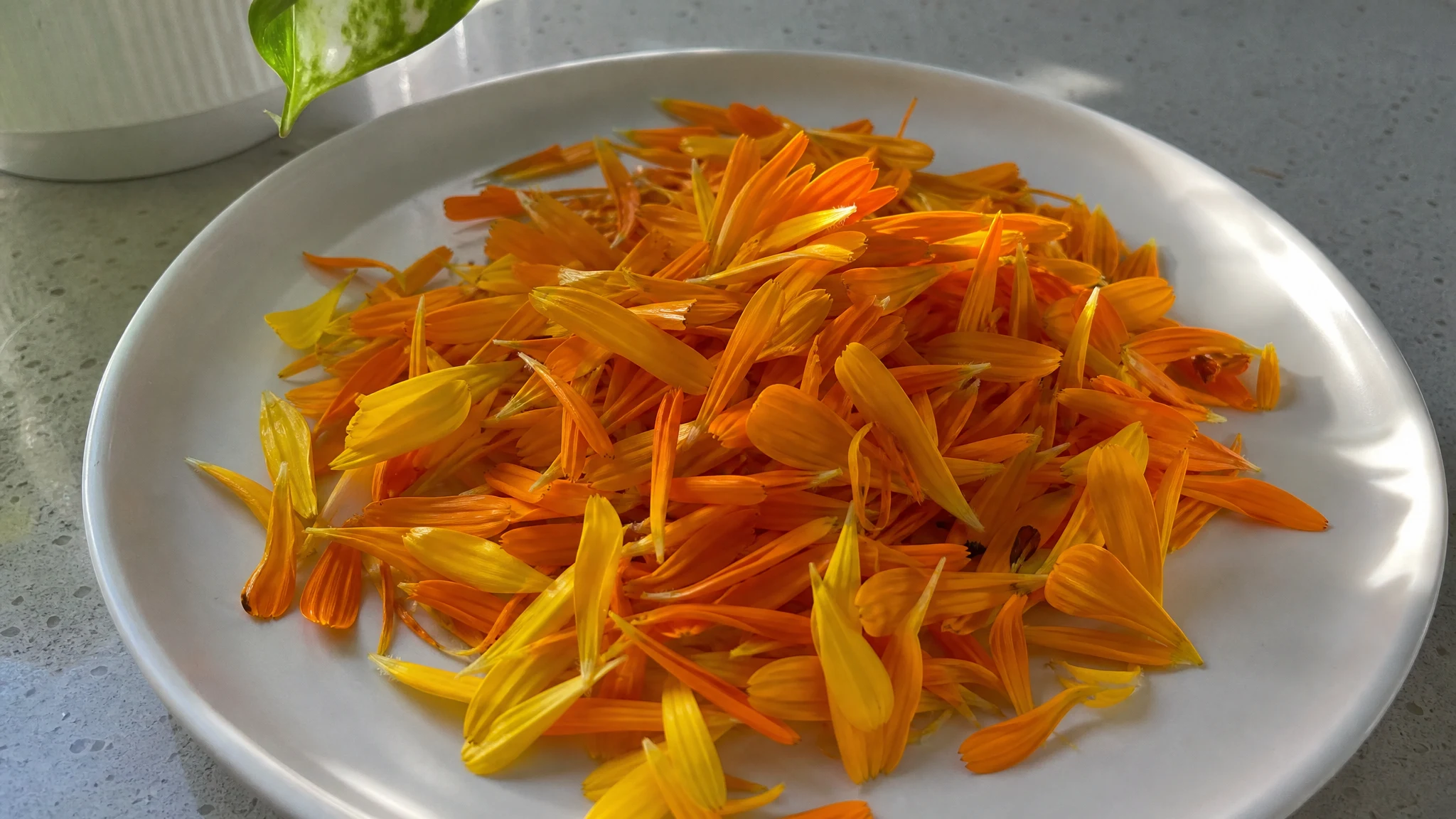
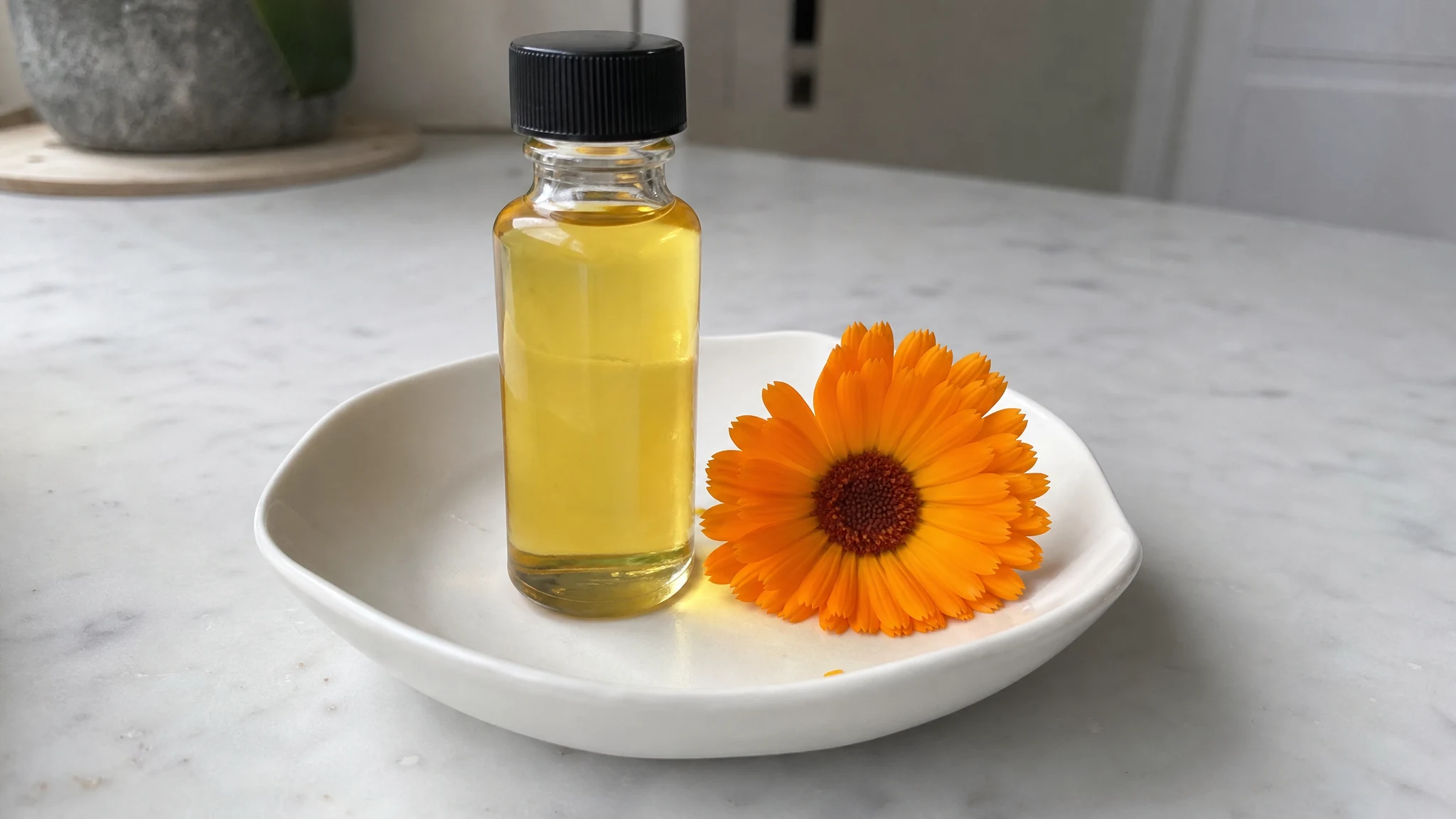
Before you put any oil on your face, try it on the back of your hand. Look at the color in daylight: the gold comes from the flower. Notice how it spreads and whether it leaves a glossy film or sinks in to a soft finish. This quick look tells you whether you like the feel, and that matters more than any reputation.

Our recommendation is to try it first somewhere low stakes, such as hands or elbows, and move to the face only when you know how it behaves.
How should you try calendula oil on dry skin?
This is our suggestion, built from the guidance above rather than a tested routine. After you wash, while skin is still slightly damp, press a few drops into the face, hands, elbows or anywhere that feels dry. A little goes a long way, and you can add more if you want. Use it as the one new thing in your routine for a couple of weeks before changing anything else, because then any change you notice belongs to it.
Because calendula belongs to the daisy family, Asteraceae, it is worth a patch test. The EU monograph lists a known allergy to daisy-family plants as a reason not to use it, and notes that skin sensitization has been reported. In an Austrian series of 443 people being patch-tested, 9 reacted to marigold. That group was being tested for suspected allergy, so it is not a rate for everyone, and it is simply a good reason for the extra step. Put a little on your inner forearm, wait a few days, and skip the oil if you react. Our patch test guide shows an easy way to do it.
The monograph also does not recommend skin use for children under 6, and says safety during pregnancy and breastfeeding has not been established, so ask a pediatrician, OB/GYN or midwife in those cases. If you have a rash that has not cleared, a wound, or anything painful, that is a conversation for a dermatologist, and an oil comes second. We have written about some of those topics separately, including acne, eczema and the wound studies.
Calendula officinalis sourcing: farms, growers and batches
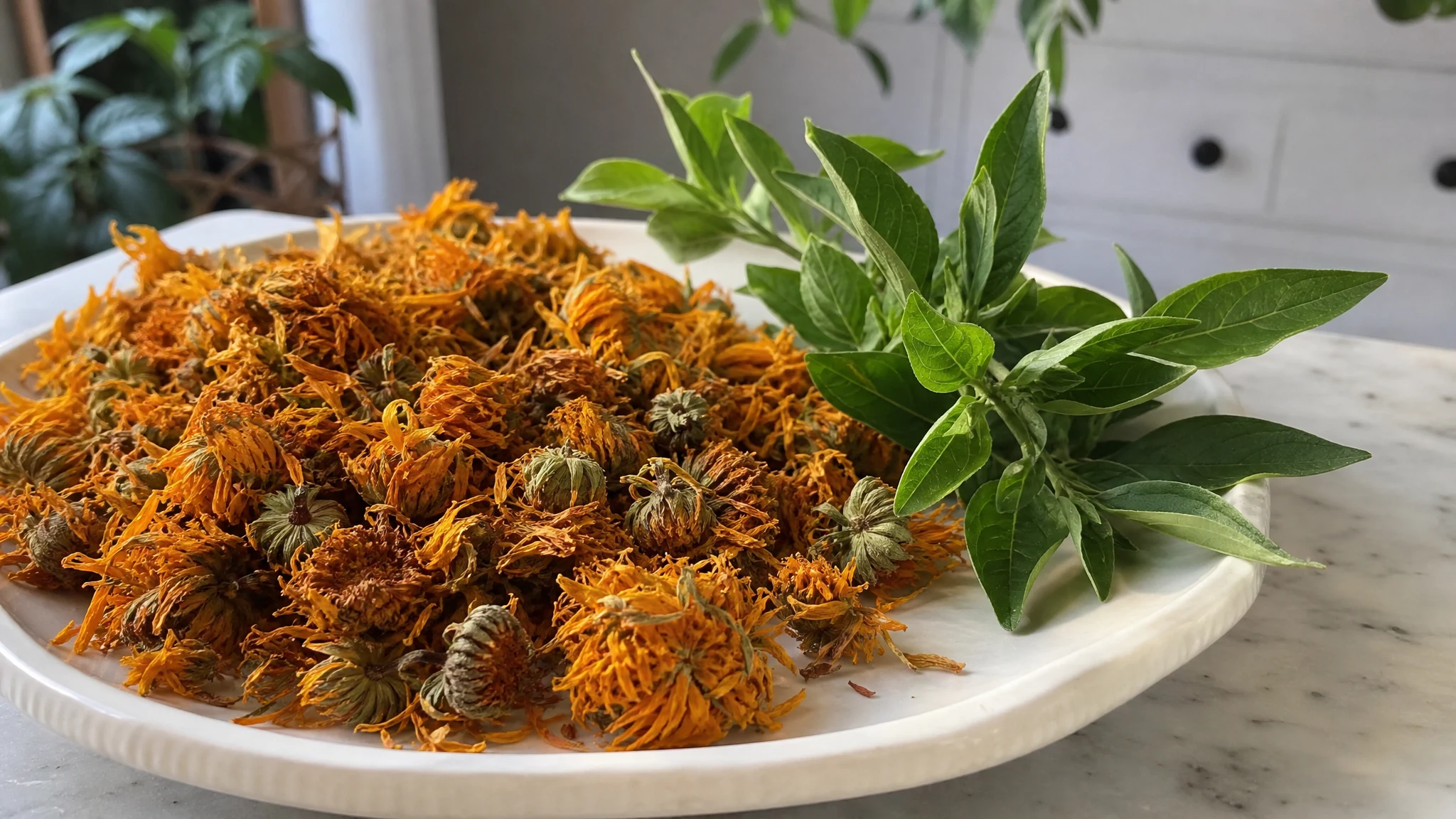
We can speak about the flower and the batch. Our calendula (Calendula officinalis) is organically grown on family farms in Egypt, Hungary, the Balkans and Turkey, and we have worked with the same growers for over a decade. We buy the flowers dried and make the oil in-house. Bottles are dated and lot-numbered, our batches are tested by independent third-party labs, and the paperwork is available if you email us the lot number through the contact page, including the carrier oil.
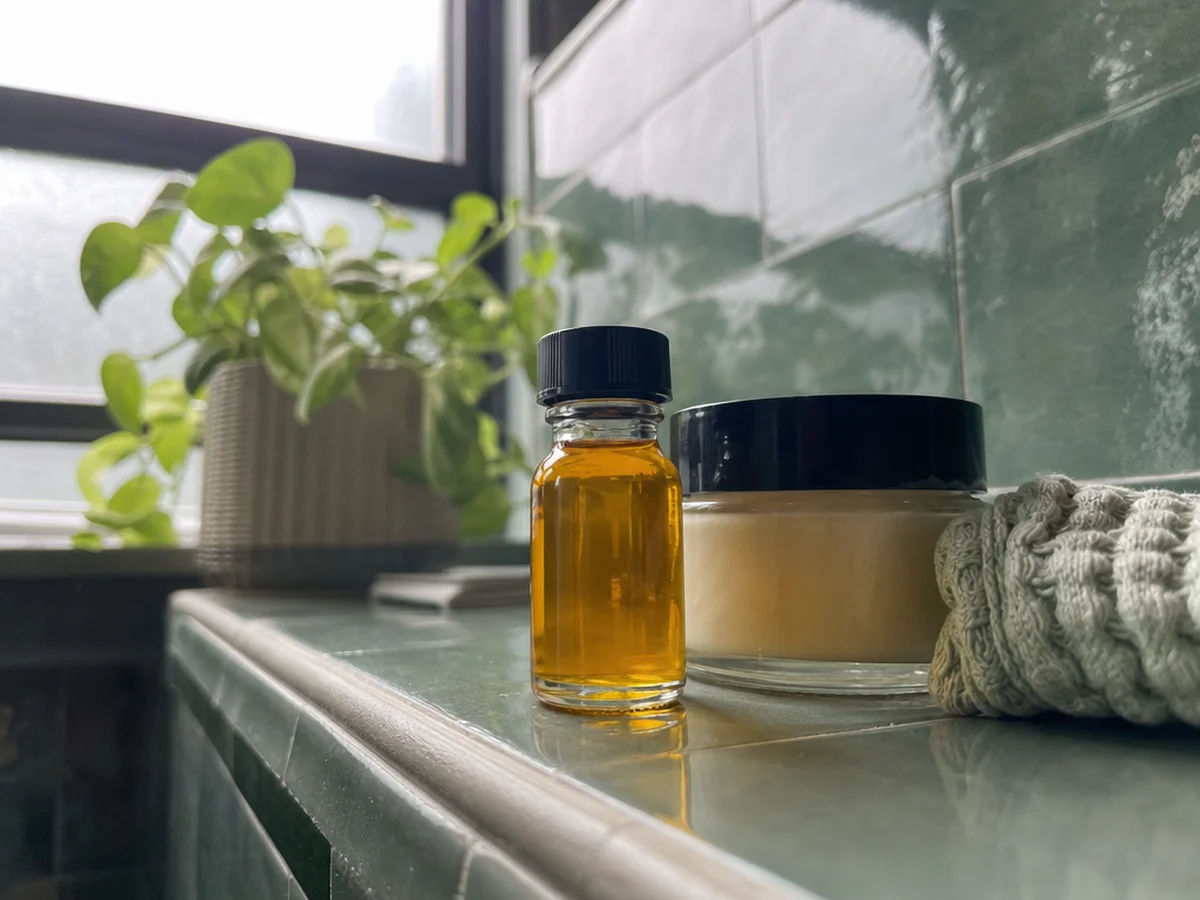
So the short version is a warm one: a long-loved flower, an oil that does an oil's job well, and a clear sense of what the studies do and do not say.
Calendula Oil
Nature's Golden Botanical, bottled: small-batch calendula oil in sizes from 0.5 oz to bulk.
From $13.99
Shop Calendula Oil →Sources & Further Reading
- European Medicines Agency, "European Union herbal monograph on Calendula officinalis L., flos" (EMA/HMPC/437450/2017). ema.europa.eu
- European Medicines Agency, "Assessment report on Calendula officinalis L., flos" (EMA/HMPC/603409/2017). ema.europa.eu
- Givol O et al., 2019. "A systematic review of Calendula officinalis extract for wound healing." Wound Repair and Regeneration. PubMed 31145533
- Andersen FA et al., 2010. "Final report of the Cosmetic Ingredient Review Expert Panel amended safety assessment of Calendula officinalis-derived cosmetic ingredients." International Journal of Toxicology. PubMed 21164072
- Reider N et al., 2001. "The seamy side of natural medicines: contact sensitization to arnica (Arnica montana L.) and marigold (Calendula officinalis L.)." Contact Dermatitis. PubMed 11722485