Buying Calendula Oil: 4 Questions to Ask Any Seller
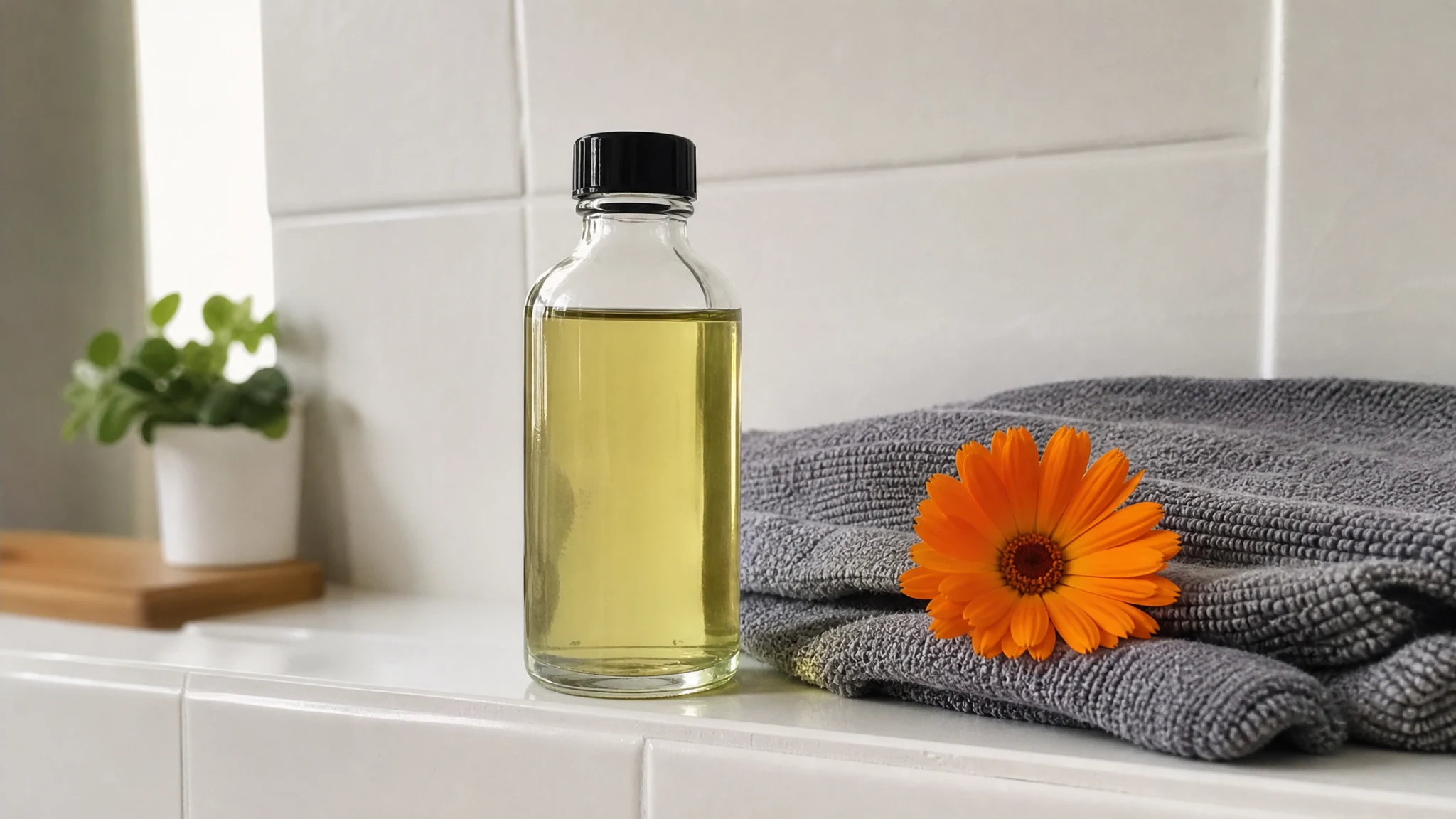
Pick up three bottles labeled calendula oil and you may be holding three quite different things. The color will be a warm gold or orange on all of them, and the front label will use words like "premium" or "natural." The details that tell you what you are buying sit elsewhere, and they come down to four plain questions we think are worth putting to any seller, us included.
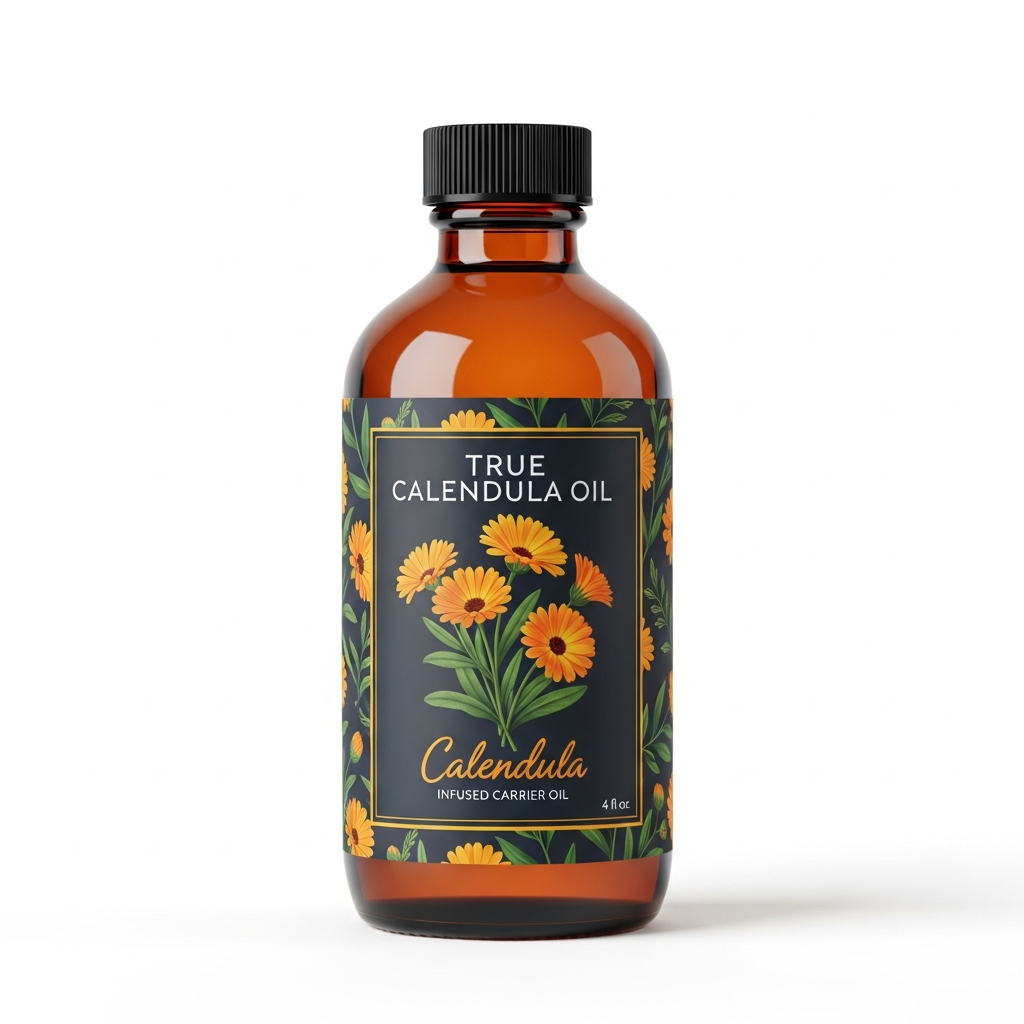
Calendula Oil
Our own small-batch calendula oil, in sizes from 0.5 oz to bulk.
From $13.99
Shop Calendula Oil →Is calendula oil infused or distilled?
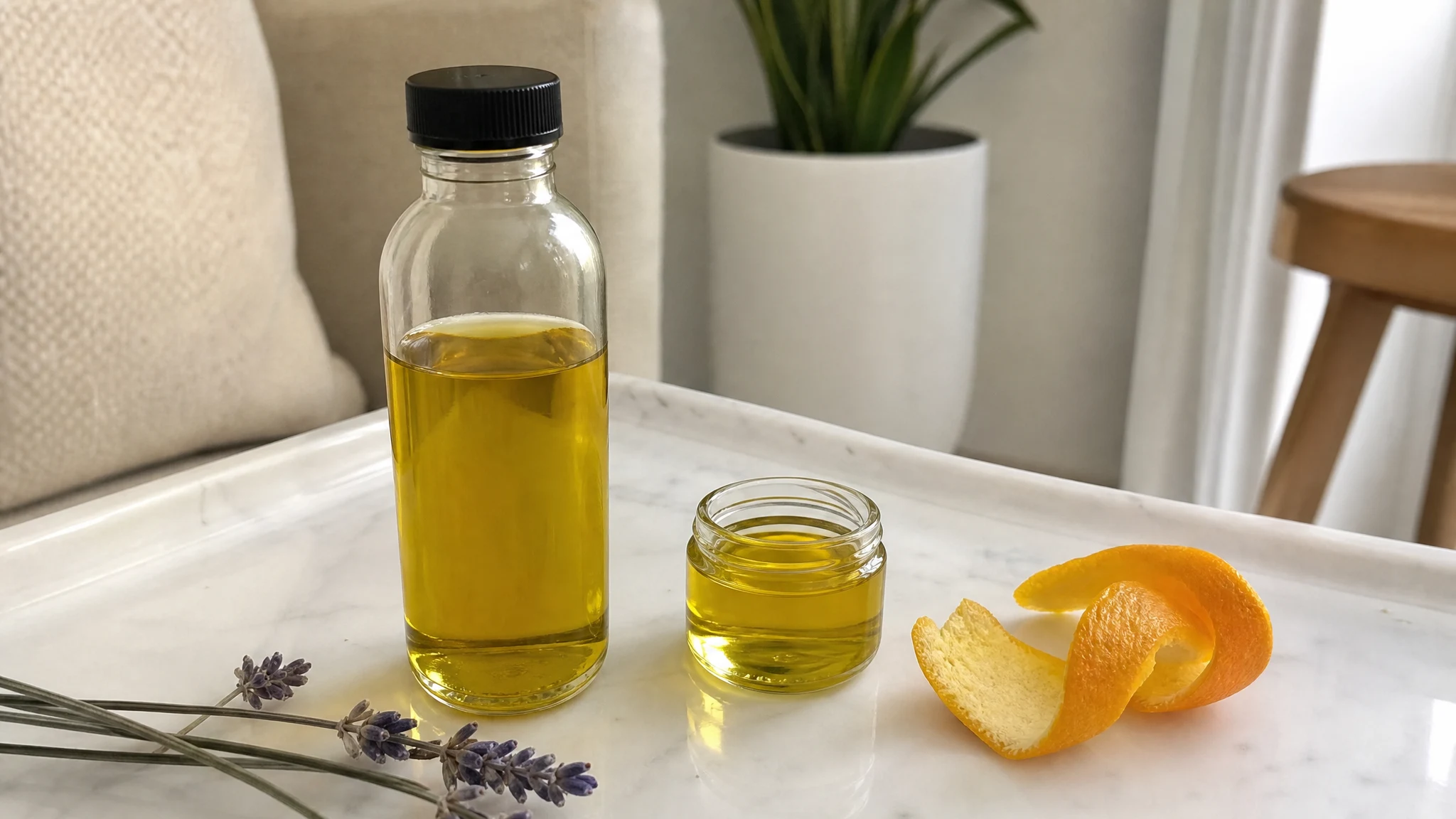
"Calendula oil" can describe a few materials. Ours is an infused oil: calendula flowers extracted, with that extract brought into a carrier oil. A distilled calendula essential oil is a different material altogether. In one laboratory comparison, hydrodistillation yielded about 0.9 grams of volatile oil from 100 grams of dried flowers, and that oil came out without the pigments that solvent extraction carried over. Calendula seed oil is another product again, pressed from seeds and not flowers. If you want to dig into how these differ, our infused versus essential oil article and our extraction methods article go into detail.
A good label names the plant (Calendula officinalis), the plant part, and the carrier. If it only says "calendula oil," it is fair to ask which of these you are getting.
Carrier oil and nut or seed allergies
Most of what is in the bottle is carrier, so the carrier decides how the oil feels on skin and who can comfortably use it. This matters most for anyone with a nut or seed allergy. The EU assessment report on calendula notes that peanut oil, which appears in older recipes, is not recommended as the extraction oil because of a higher chance of adverse reactions. A seller who tells you the carrier gives you the one fact an allergic person needs. Ours is named on the batch paperwork, and you can have it by emailing the lot number to support@truecalendulaoil.com.
Lot numbers and batch documentation for traceability
Our bottles are dated and lot-numbered, and we send batch documentation for the lot on your bottle on request. A Certificate of Analysis PDF is also linked on the shop page. Each batch goes to independent third-party labs for physical assays, chemical assays and contaminant screening. When you compare paperwork from different sellers, three questions do most of the work: who ran the tests, which tests were run, and does the document carry the lot number printed on your bottle.
Dried Calendula officinalis flowers: sourcing and oil making
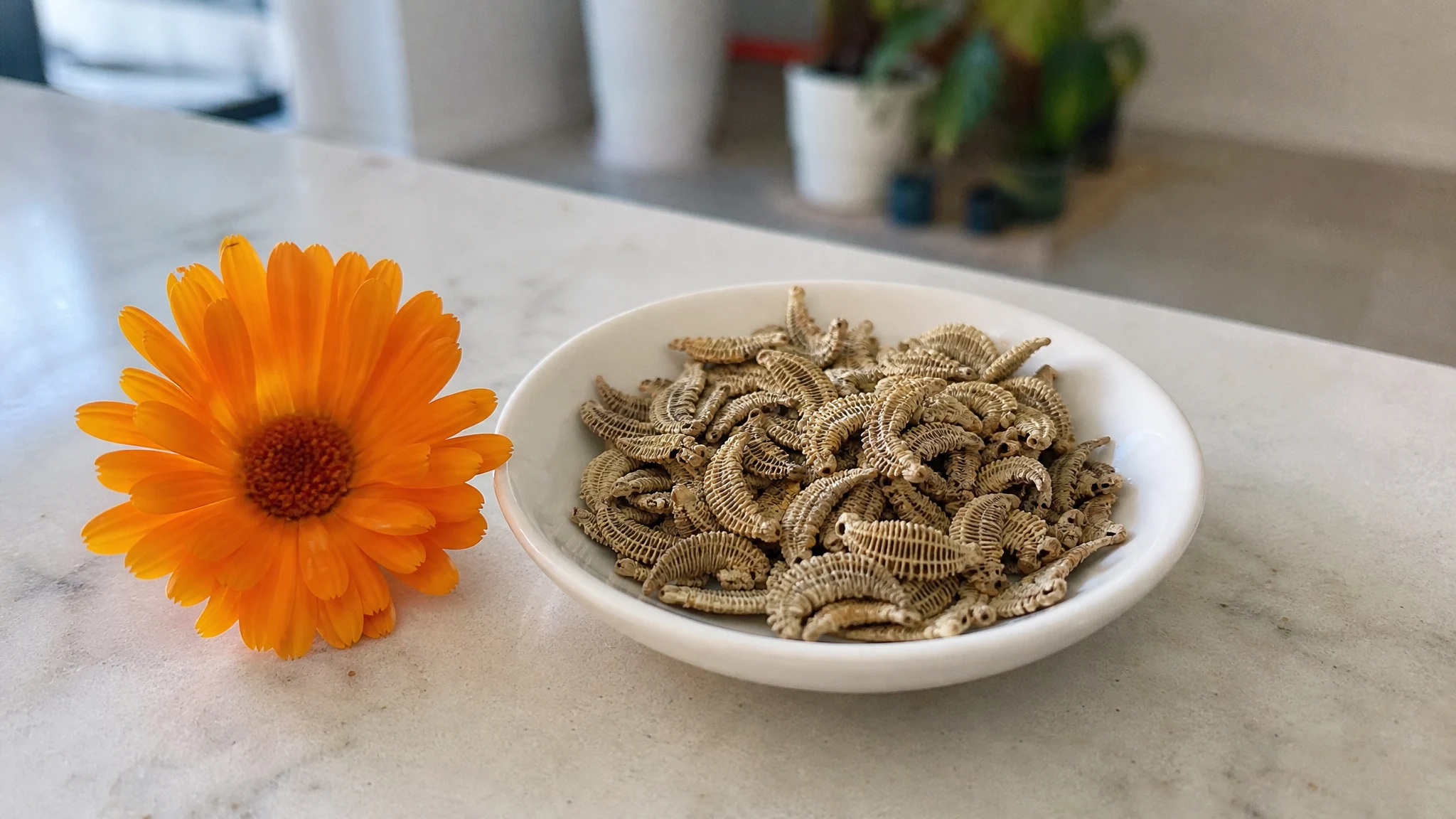
We buy dried flowers, not finished oil, and make the oil ourselves, from dried flower to sealed bottle. Our Calendula officinalis is grown organically on family farms in Egypt, Hungary, the Balkans and Turkey, and the flowers are dried naturally by traditional methods, without industrial heat or forced air. We separate petals by hand from sound, whole dried flower heads. The first stage extracts calendula on its own; the second brings that extract into the carrier oil. If a seller can tell you this much about their process, you know they are close to it.
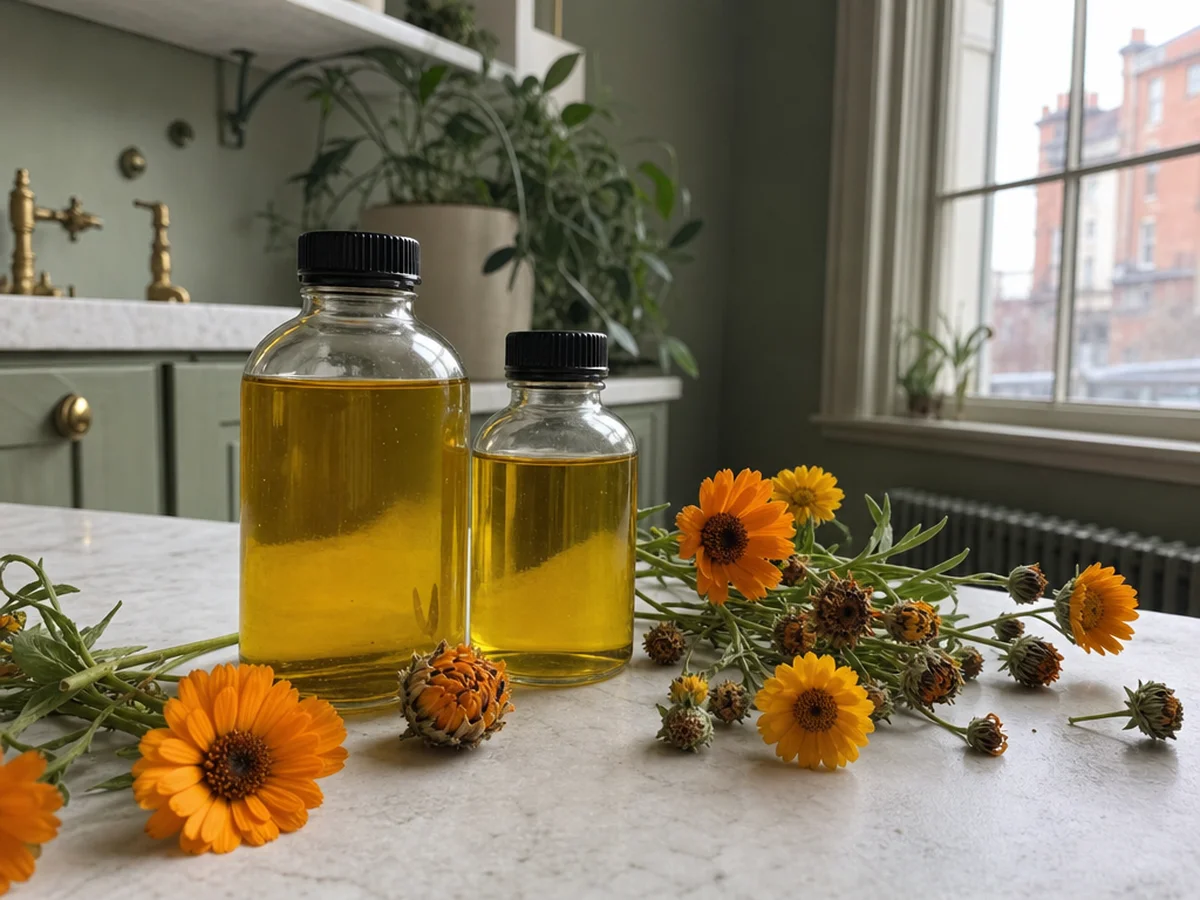
Drying matters for a practical reason. The University of Maine Cooperative Extension calls dried herbs the safest choice for home-infused oils, because fresh plant material carries moisture and botulism spores. Their bulletin is written for kitchen oils, so applying it to a cosmetic oil is our reasoning, but it is why we start from dried flowers.
When we talk about our own oil, this is the part we enjoy most, because the answers are all things we handle ourselves. We buy the flowers dry, we separate the petals by hand, and we keep the oil to a short ingredient list. A seller who works this way can usually answer every question here in a sentence or two, and that ease is itself a good sign.
Color and organic claims: weaker buying signals
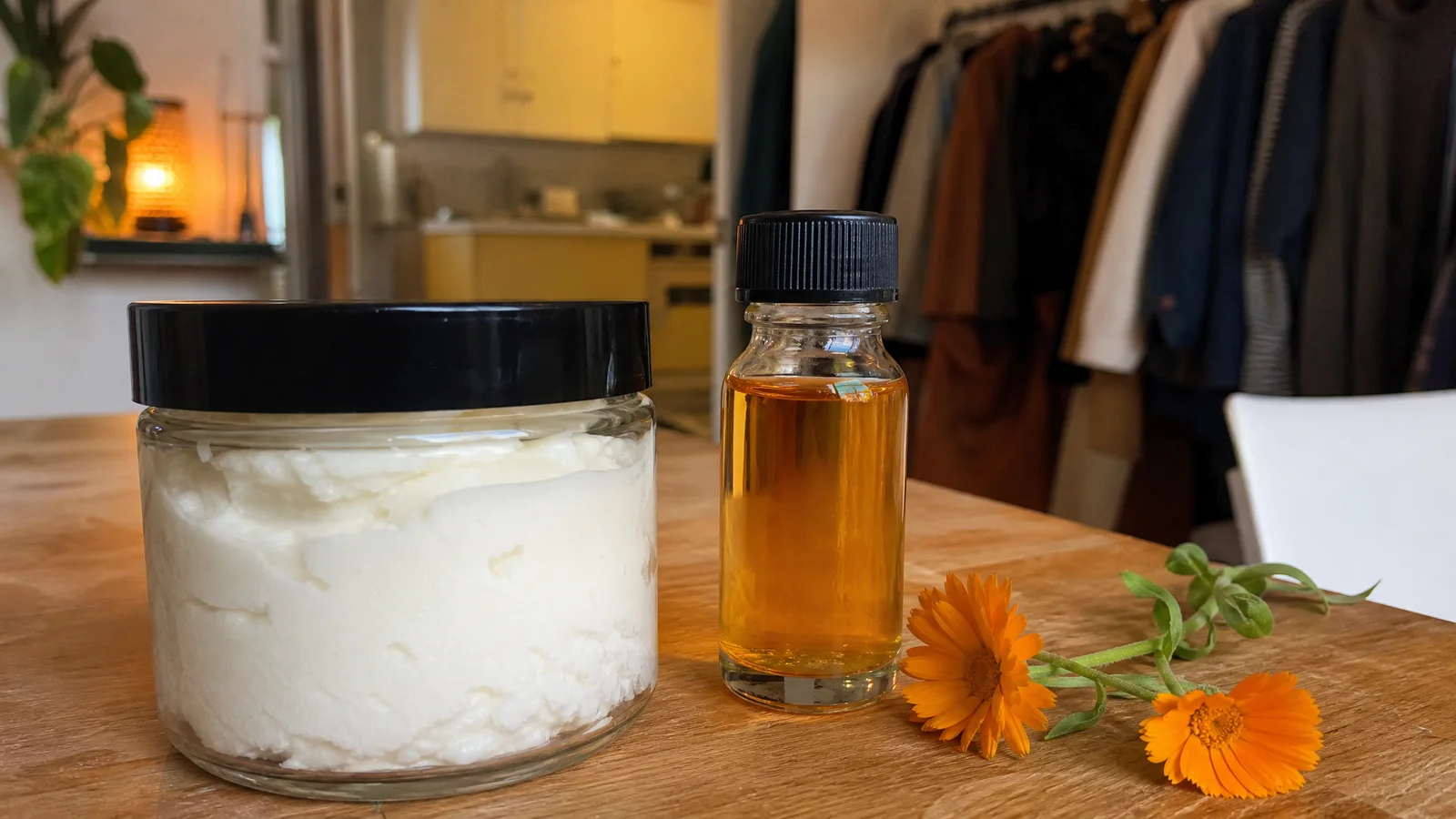
Color. Orange tells you the oil looks like calendula, and little else. The carrier contributes its own shade, and a bright color does not measure how much flower went in. Treat it as a quick check that an oil looks fresh.
The word "organic." FDA does not define or regulate "organic" for cosmetics, while USDA regulates the term for agricultural products under the National Organic Program. We say our flowers are organically grown, with no synthetic pesticides or fertilizers, and we describe it exactly that way. It is a good habit to read the same wording closely on any label.
Price per ounce. It compares fairly only when the flower-to-oil ratio is similar, and sellers use different ratios. The EU monograph lists a 1:10 oil extract as a traditional preparation, but a label rarely says what ratio was used. If it decides your purchase, ask.
Photos. A lovely photo of a marigold field tells you about the photographer. The bottle in your hand, with a date and a lot number printed on it, tells you far more. If you are shopping online, look for a label image that shows both.
How should calendula oil be stored at home?
We add nothing to our oil: no synthetic preservatives, no added tocopherol, no stabilizers. As with any plant oil, light, heat and air hasten rancidity, so keep the bottle closed, cool and out of direct light, and let the date on the label guide you. A sharp or sour smell is a sign to retire a bottle.
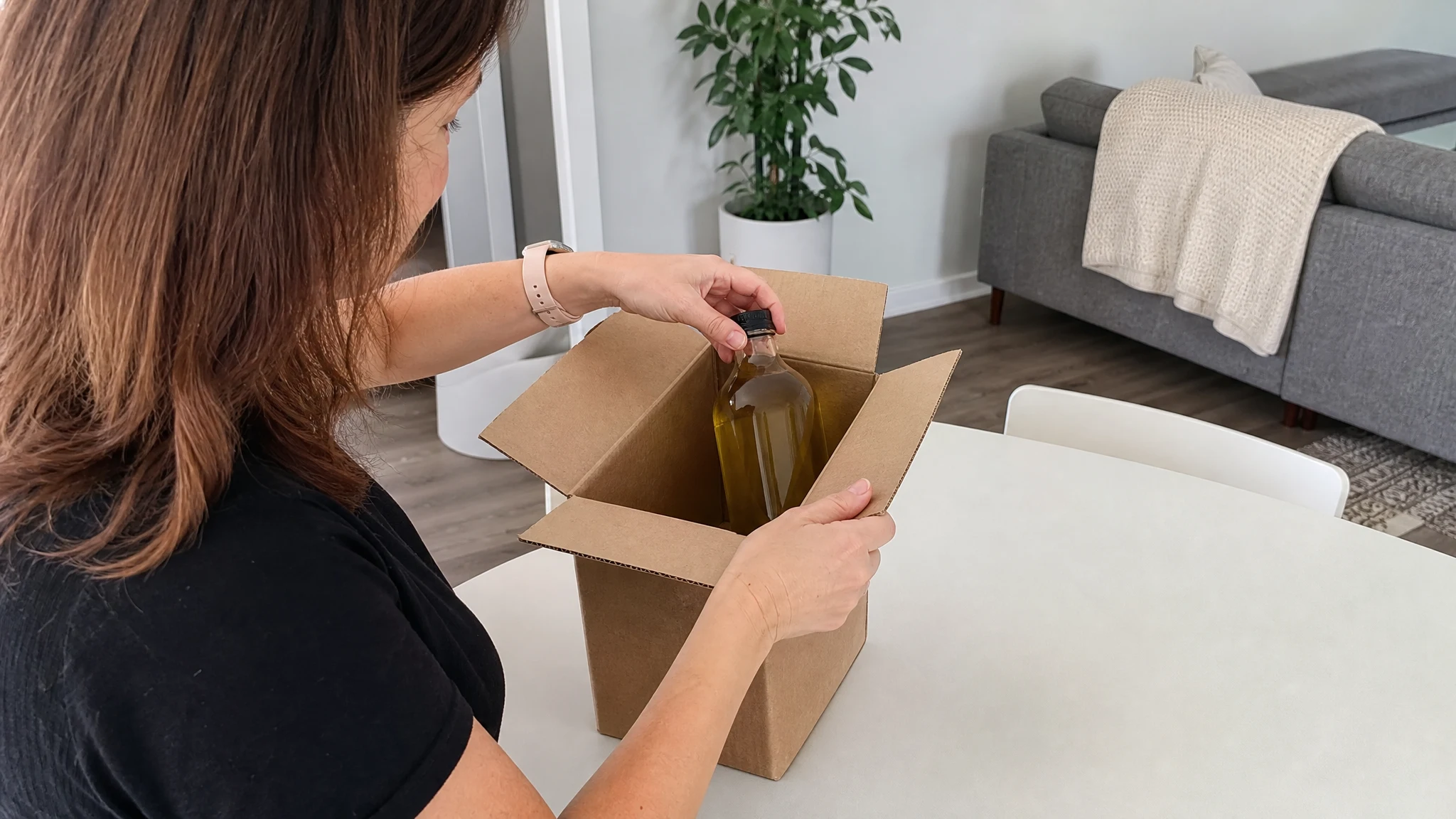
One practical tip: when your bottle arrives, write the date you opened it on the label in pencil or marker. It takes five seconds, and it saves you trying to remember months later whether this is a recent bottle or the one from last winter. Hold the bottle up to a window as well and look at the oil. A clear, even gold with no cloudiness or floating bits is what you want to see on day one, and it gives you something to compare against later.
Who should avoid calendula with daisy-family allergy?
Calendula is a daisy-family plant, and the EU monograph lists hypersensitivity to that family as a contraindication. In one Austrian patch-test series of 443 patients at a dermatology clinic, about 2% reacted to marigold, though clinic patients are not the general public. A short patch test before first use is the sensible habit, and our article on whether all calendula oil is the same continues the quality conversation. Our bulk guide is there for larger orders.
Whoever you buy from, the best sign is a seller who answers these four questions without hesitation.
Keep this list handy and it will serve you well, whichever label you end up reading.
Calendula Oil
Nature's Golden Botanical, bottled: small-batch calendula oil in sizes from 0.5 oz to bulk.
From $13.99
Shop Calendula Oil →Sources & Further Reading
- Chemical composition of scented extracts obtained from Calendula officinalis by three extraction methods (Salomé-Abarca et al., Botanical Sciences, 2015)
- Assessment report on Calendula officinalis L., flos (EMA/HMPC, 2018)
- European Union herbal monograph on Calendula officinalis L., flos (EMA/HMPC, 2018)
- Bulletin #4385, Safe Homemade Flavored and Infused Oils (University of Maine Cooperative Extension)
- Cosmetics, Body Care Products, and Personal Care Products (USDA Agricultural Marketing Service, National Organic Program)
- The seamy side of natural medicines: contact sensitization to arnica (Arnica montana L.) and marigold (Calendula officinalis L.) (Reider et al., Contact Dermatitis, 2001)