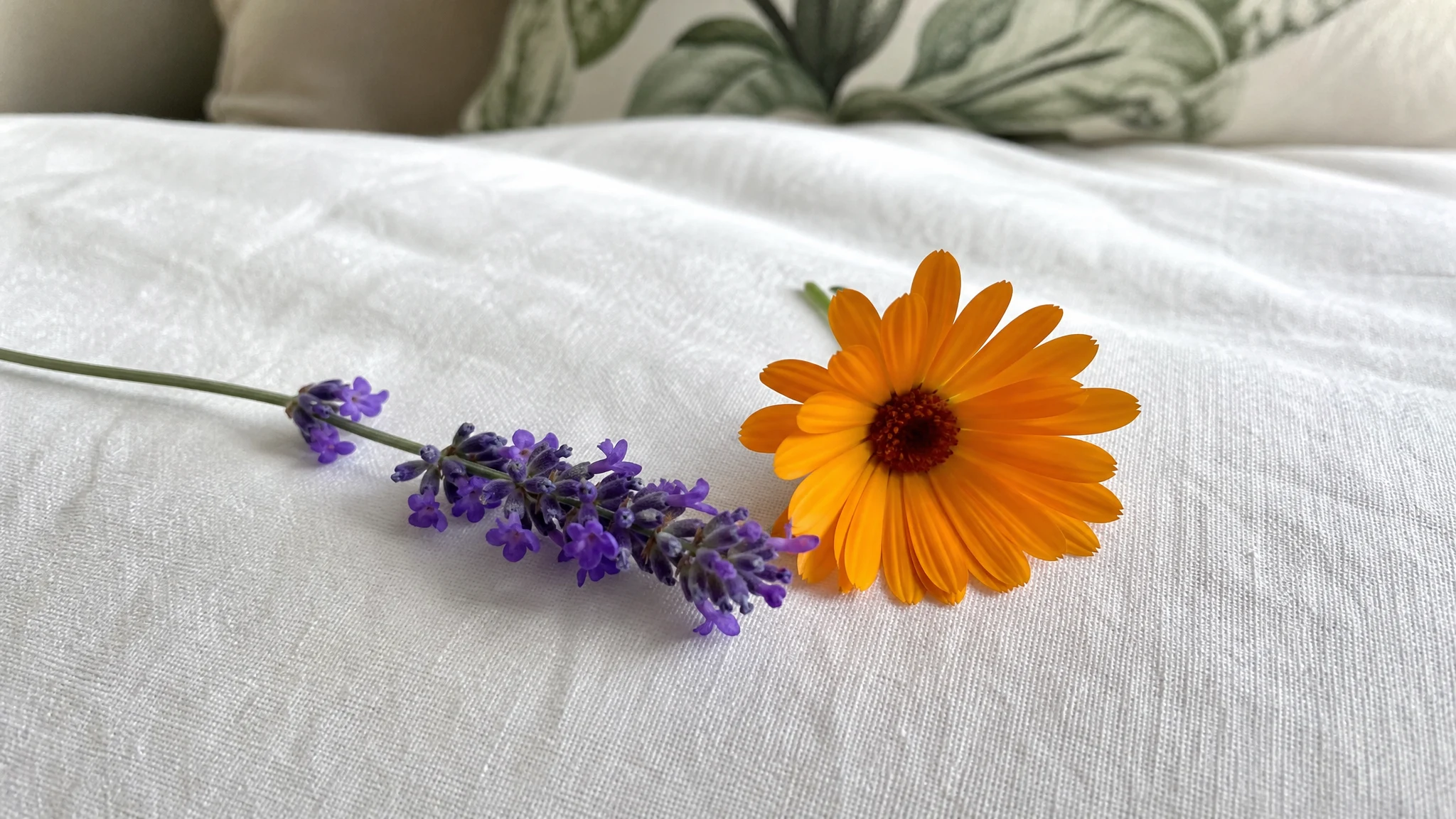
Lavender vs Calendula Oil: Which One Do You Need?
Lavender is a smell you can recognize from across the room. Calendula oil is nearly the opposite: a golden, quiet oil that is there to be a base, not to perfume anything. Putting them head to head is a bit like comparing a candle to a lamp, because they do different jobs, and the useful question is which job you have.
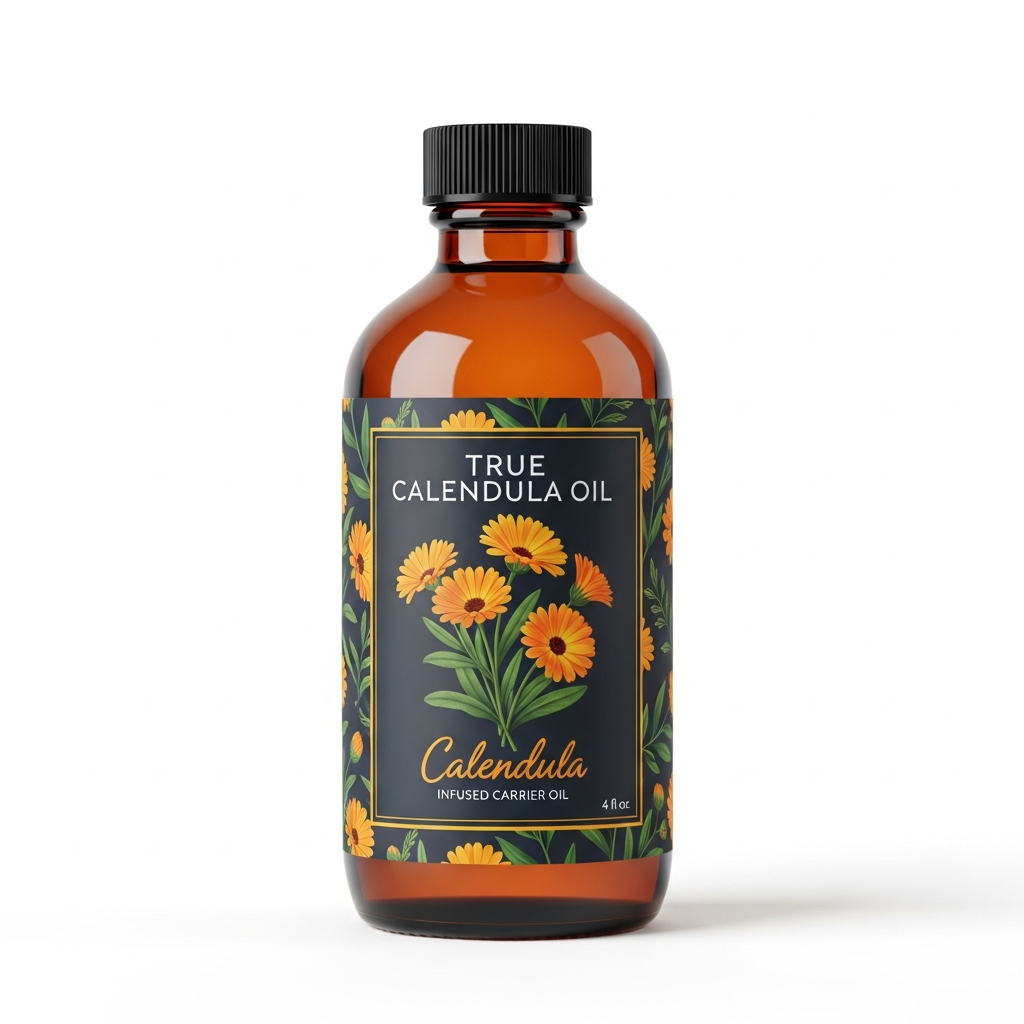
Calendula Oil
Our own small-batch calendula oil, in sizes from 0.5 oz to bulk.
From $13.99
Shop Calendula Oil →Lavender essential oil versus calendula infused oil
Lavender oil is usually an essential oil: a distilled, concentrated aromatic that is used by the drop. It also varies more than the label suggests. In a GC-MS analysis of thirteen new cultivars of Lavandula angustifolia, linalool made up anywhere from 11 to 47 percent of the oil, and linalyl acetate from 7 to 44 percent, so two bottles that both say lavender can smell quite different.
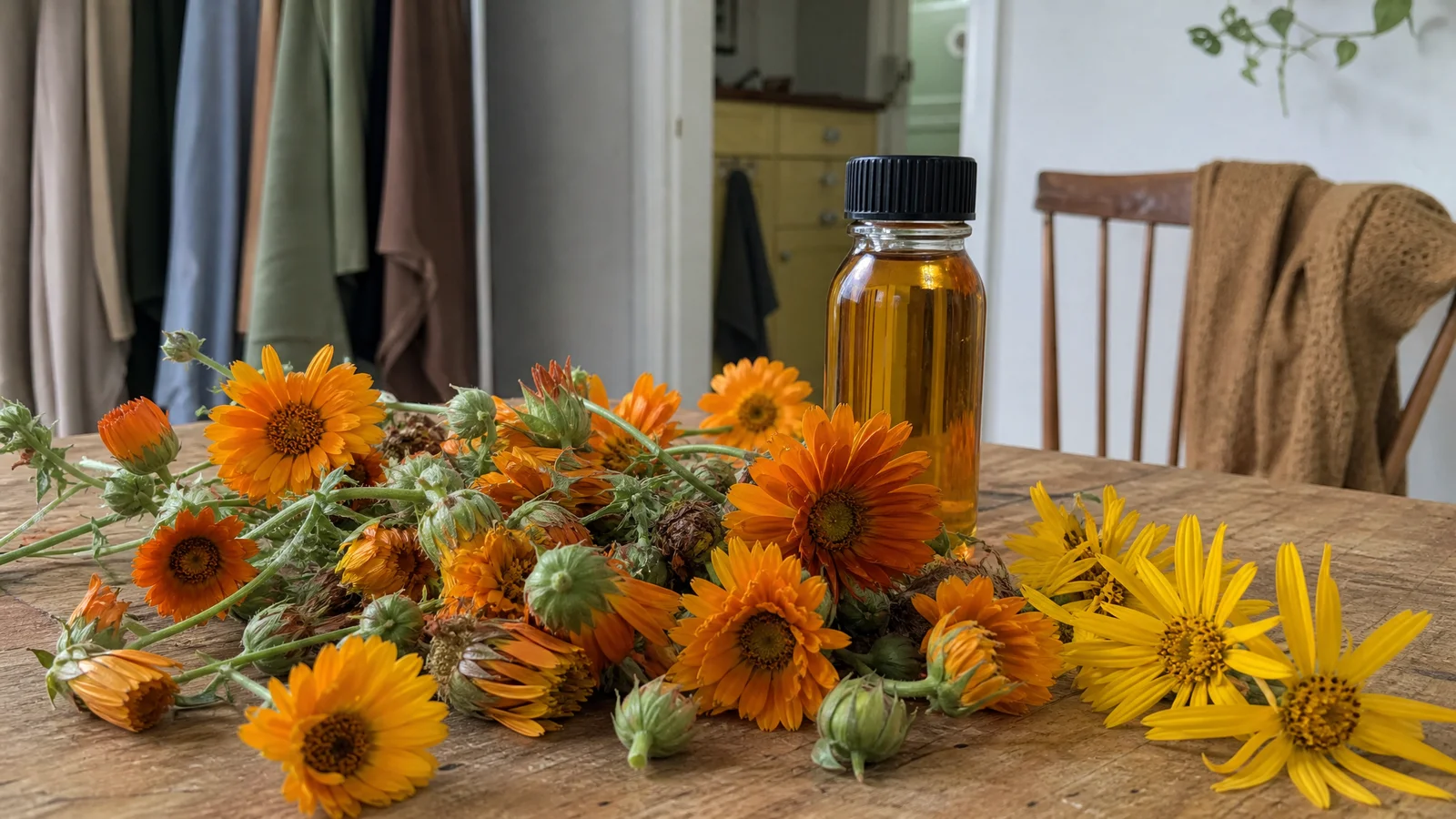
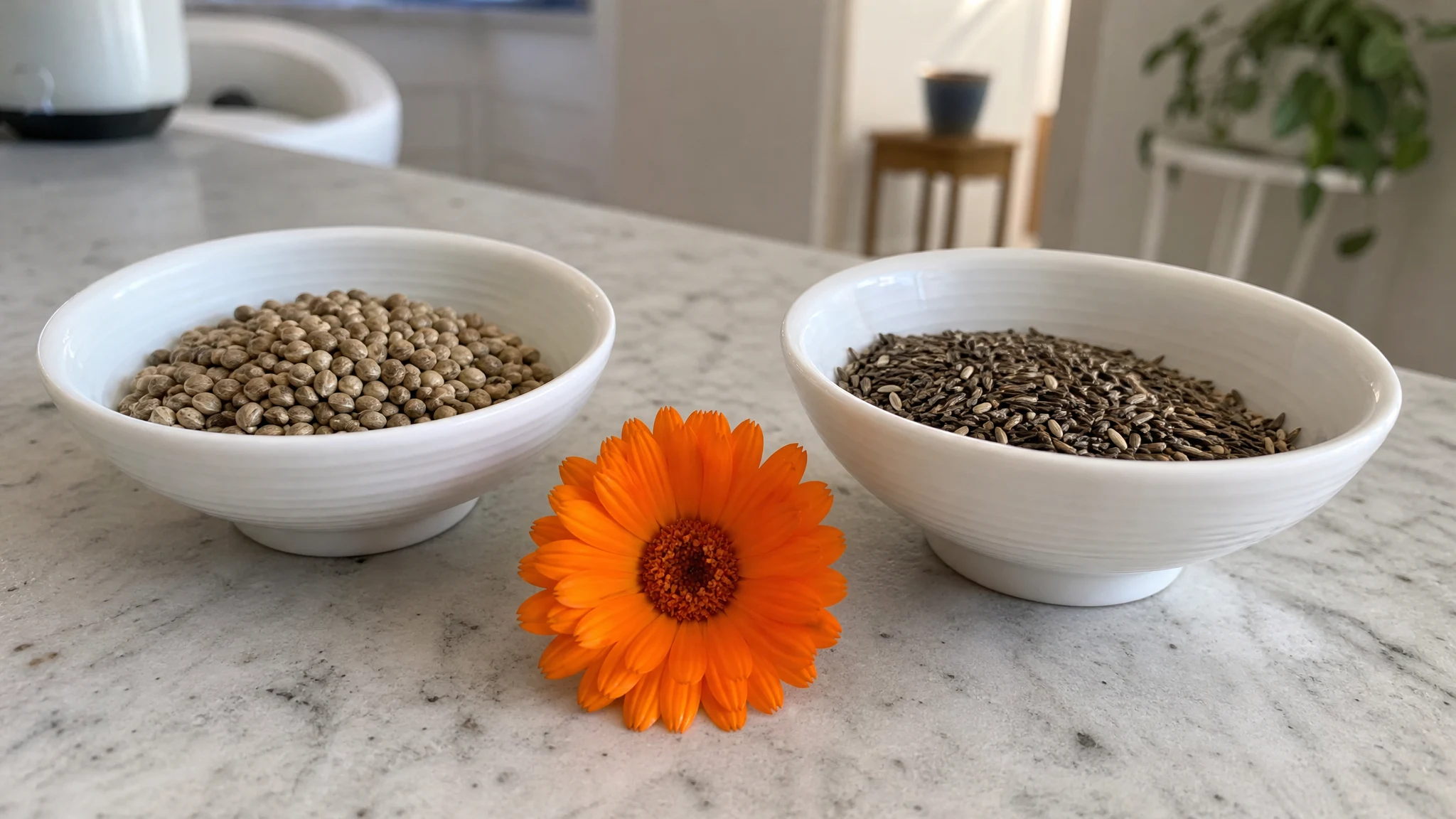
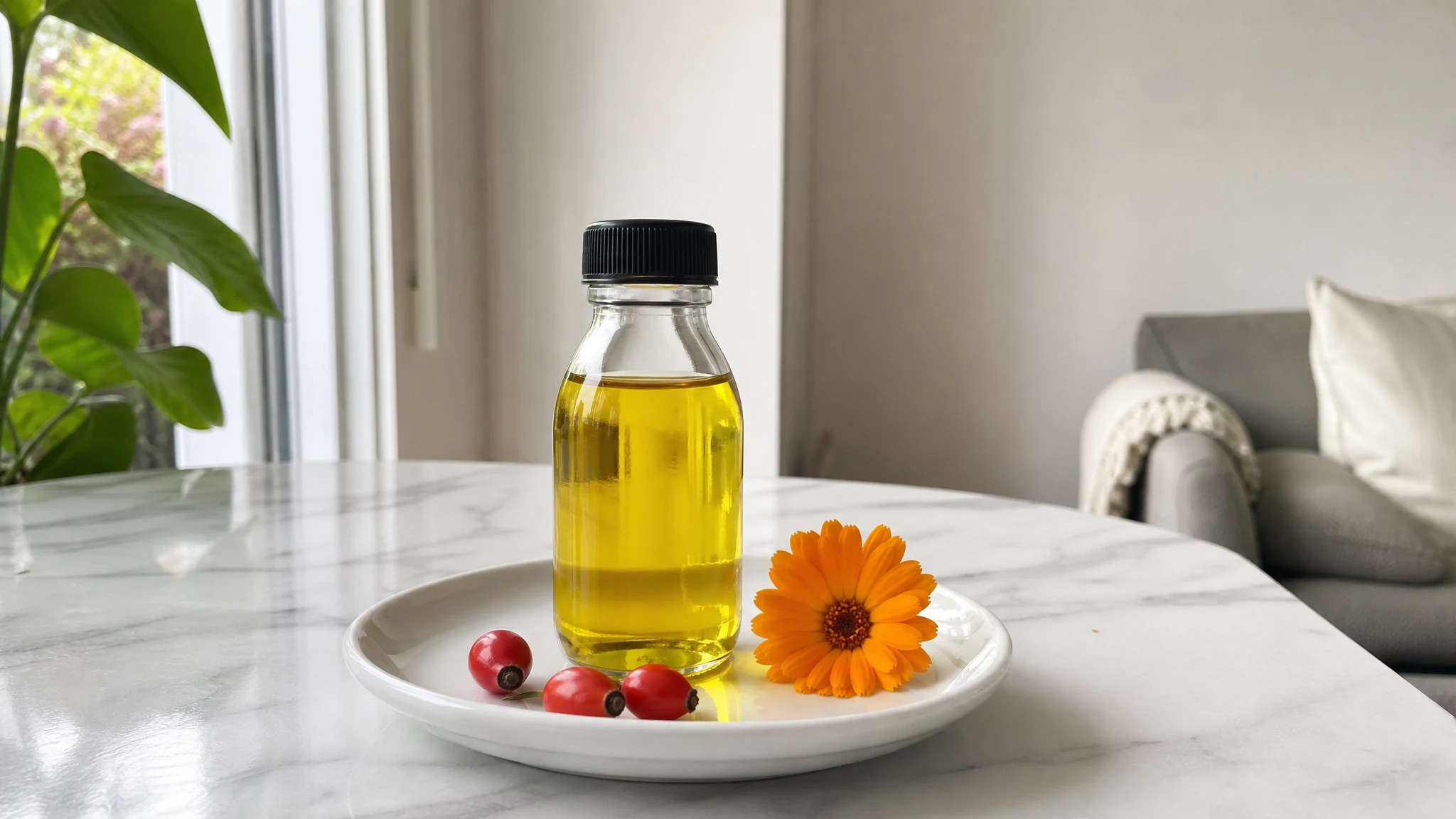
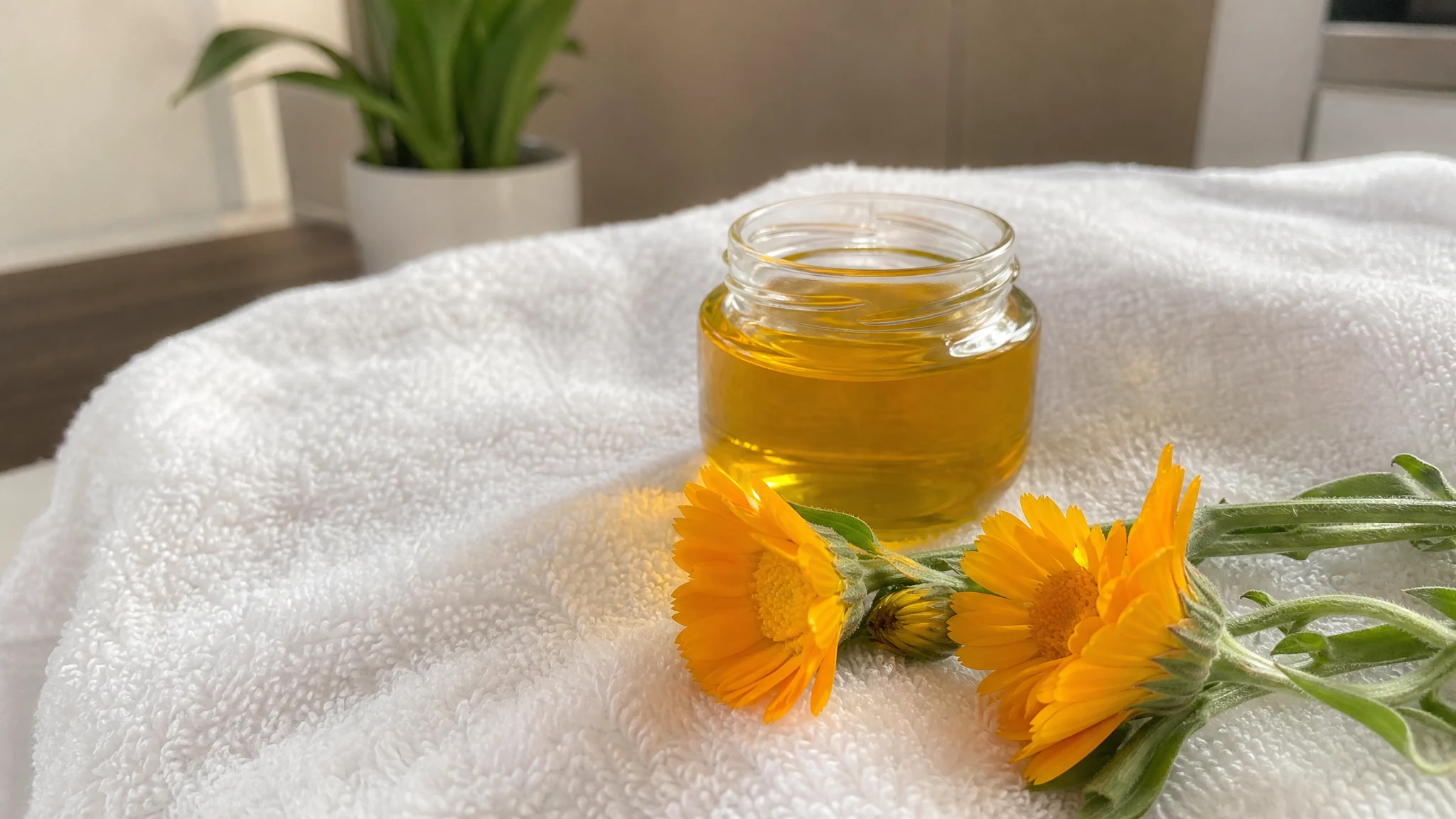
Our calendula oil is an infused oil. We extract calendula flowers on their own and bring the extract into a carrier oil, so most of the bottle by weight is the carrier. It is not distilled, it is not a fragrance, and nothing is added: no scent, no preservatives, no added tocopherol, no stabilizers. If you are shopping for aroma, lavender is the product you want. If you are shopping for a plain golden oil for skin, that is where ours fits. Our guide to infused oils versus essential oils goes deeper on the difference.
What is known about lavender aromatherapy and anxiety?
Lavender has the trials; calendula does not. A 2021 systematic review and meta-analysis of randomized trials found lavender aromatherapy was better than placebo or no treatment for anxiety, with a pooled effect size of about -0.72, and noted that trials on depression were scarce and effects on physiological measures were small and inconsistent. Those are studies of lavender aroma in specific settings, usually with different doses and groups, and they are not a promise about what any bottle will do for you at home. Medically speaking, anxiety and sleep problems belong with a doctor or pharmacist, and we sell an external cosmetic oil, so we will leave the rest of that conversation to them.
What we can say is that we know of no study connecting calendula with relaxation, so we make no claim of that kind. Calendula's recognized place in European herbal medicine is traditional use on the skin, and it is not about scent or mood.
Linalool oxidation and why lavender oil freshness matters
Linalool, one of lavender's main components, is a fragrance terpene that reacts with air. A laboratory patch-test study found the pure compounds were not irritating, but linalool and limonene were more irritating once they had oxidized. The practical reading, which is our reasoning from that study, is that a fresh, tightly capped bottle is the better buy, and an old bottle that has sat open is worth replacing.
Lavender and tea tree oils were also linked to breast enlargement in three prepubertal boys in a 2007 report that followed their use in topical products, and the authors concluded repeated exposure was probably responsible. Three cases cannot say how common this is, but it is a good reason to ask a pediatrician before using scented products on young children.
Calendula oil caution for daisy-family allergy
Calendula is a daisy-family (Asteraceae) plant. The European herbal monograph lists hypersensitivity to that family as a contraindication, does not recommend skin use under age 6, and says safety in pregnancy and breastfeeding has not been established. If you react to ragweed, chamomile or daisies, check with an allergist or dermatologist first, and patch test either oil before wider use. Our patch test page shows how.
Lavender and calendula: color, scent and texture
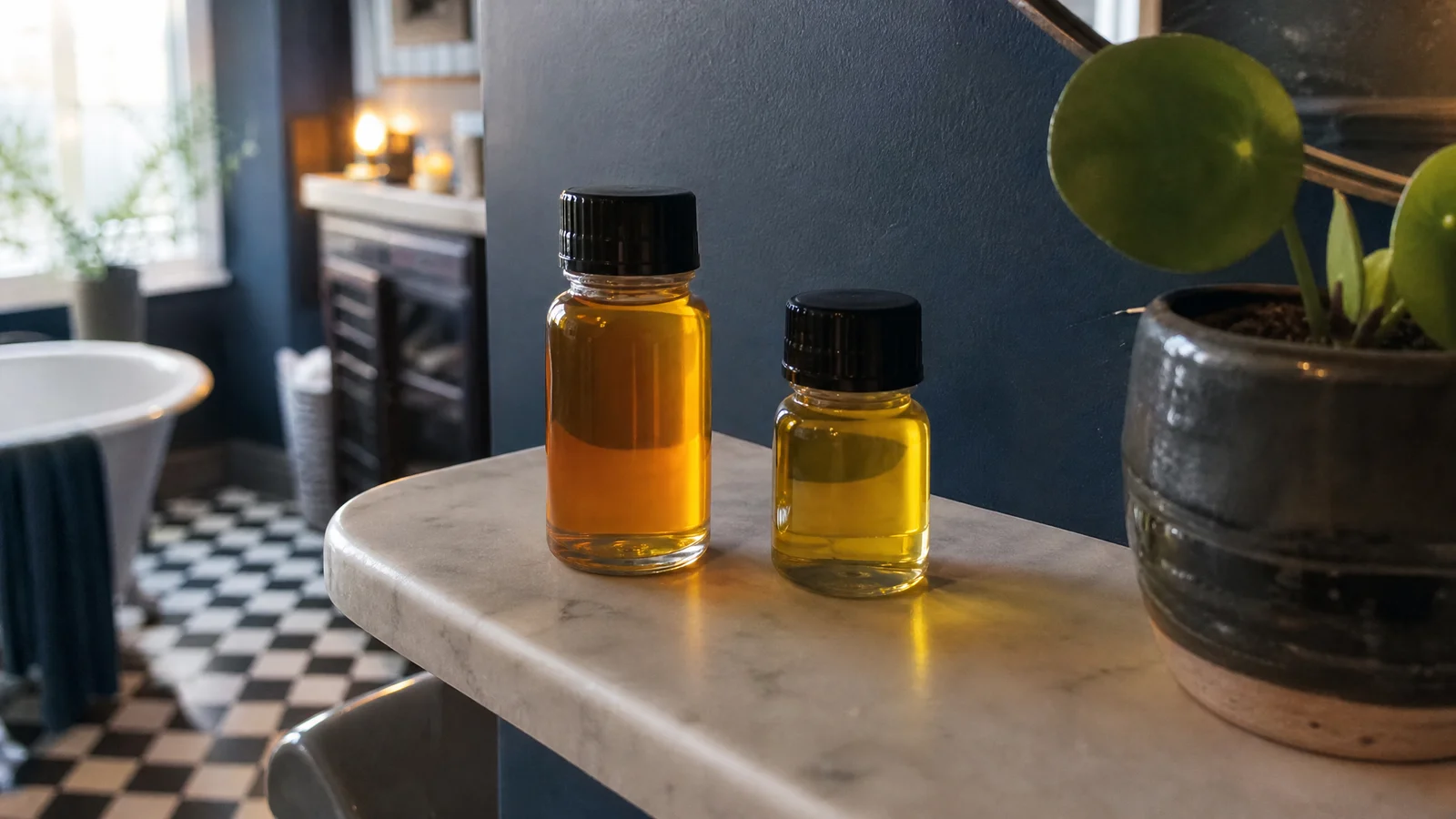
If you set the two bottles side by side, the differences are easy to spot. Lavender essential oil is nearly colorless, thin, and strongly aromatic, with a bright, floral, herbal scent that fills a room when you open the cap. Calendula oil is golden and softer, with a mellow, warm herbal note that you notice up close and not across the room.
They are handled differently, too. Lavender is a few drops at a time, always diluted. Calendula oil is more like any plant oil: a few drops or a small spoonful into your palm, and it spreads easily. When someone asks which is nicer, we say it depends on whether you want an aroma or a base, and plenty of people happily want both. If you are unsure, start with whichever you will actually reach for, and add the other later once you know your own preferences.
Try this at home: open each bottle in turn, hold it a hand's width from your nose, and decide which one you would be happy to smell every day. Your own nose is a perfectly good guide here.
Can you use lavender and calendula oil together?
A lot of people want the base and the scent, and that works nicely: calendula oil as the base, lavender as the finishing touch. Essential oils are used in very small proportions, and we would suggest checking a current IFRA or aromatherapy-safety source for the right level for your use, starting low and mixing small amounts you will use quickly. A blend of an air-sensitive aromatic with an oil that has no added antioxidant is best made fresh. Our essential oil blending guide and the Sunmeadow blend show how we think through the arithmetic.
If you want the base, we can send the batch documentation, including the carrier, when you email the lot number to support@truecalendulaoil.com. If you want the scent, lavender from a seller who names the species is the right choice.
Calendula Oil
Nature's Golden Botanical, bottled: small-batch calendula oil in sizes from 0.5 oz to bulk.
From $13.99
Shop Calendula Oil →Sources & Further Reading
- Chemical Composition of the Essential Oil of the New Cultivars of Lavandula angustifolia Mill. Bred in Ukraine (Pokajewicz et al., Molecules, 2021).
- Effects of Lavender on Anxiety, Depression, and Physiological Parameters: Systematic Review and Meta-Analysis (Kim et al., Asian Nursing Research, 2021).
- Air oxidation increases skin irritation from fragrance terpenes (Bråred Christensson et al., Contact Dermatitis, 2009).
- Prepubertal gynecomastia linked to lavender and tea tree oils (Henley et al., New England Journal of Medicine, 2007).
- European Union herbal monograph on Calendula officinalis L., flos (EMA/HMPC/437450/2017, 2018).