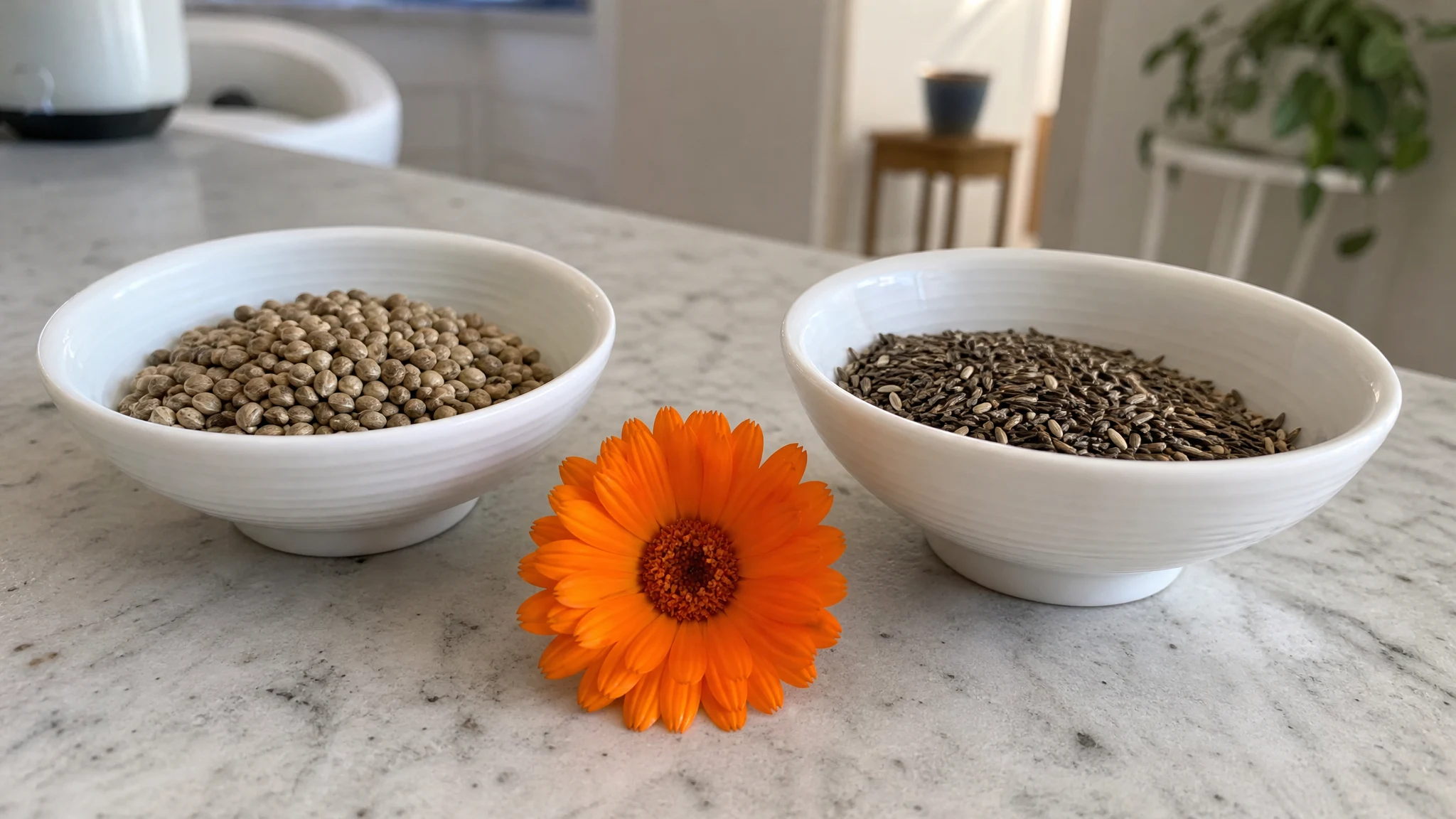
Hemp Seed Oil vs Calendula Oil: Seed or Flower?
Pick up a bottle of hemp seed oil and you are holding the pressed seeds of a plant, with a fatty-acid profile that comes straight from those seeds. Pick up our calendula oil and you are holding something built a different way: the golden flower, extracted, then brought into a carrier oil. They can sit side by side on a bathroom shelf, but they are not answering the same question.
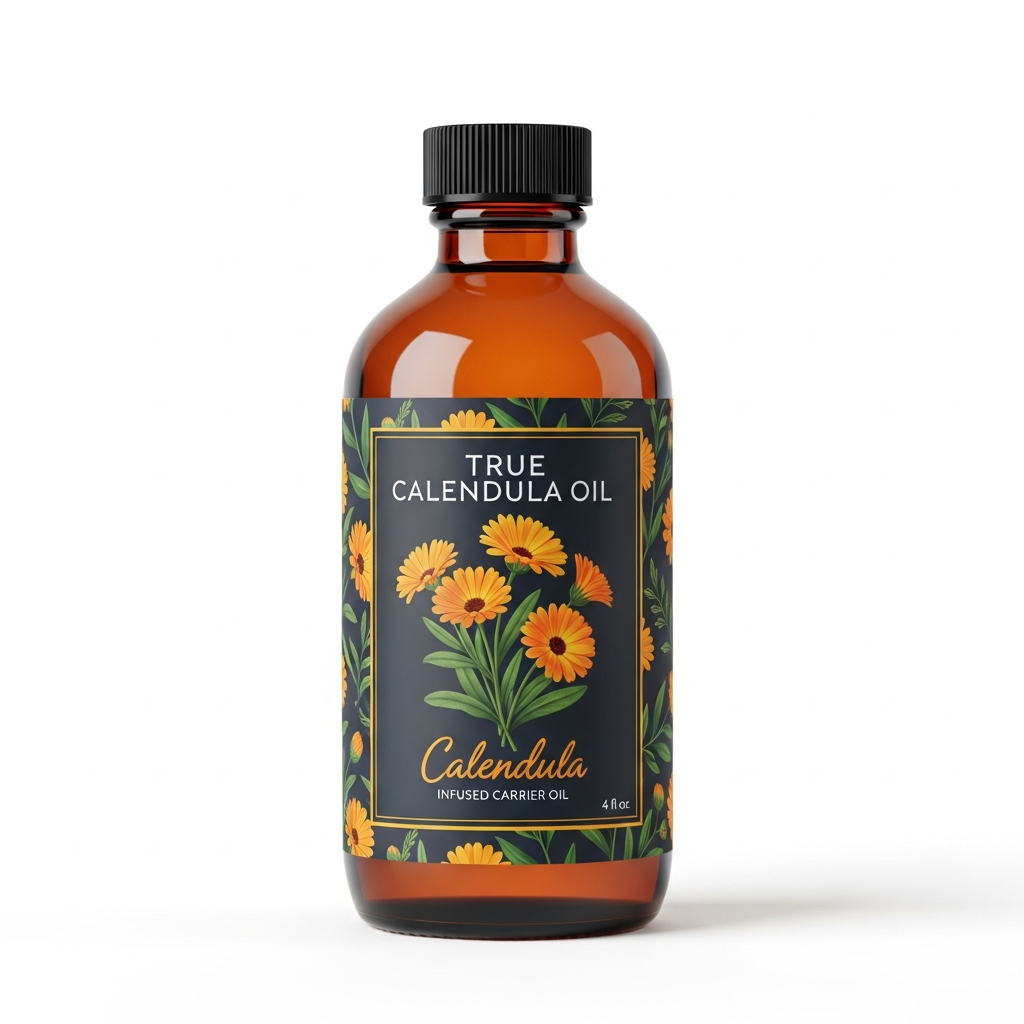
Calendula Oil
Our own small-batch calendula oil, in sizes from 0.5 oz to bulk.
From $13.99
Shop Calendula Oil →Pressed hemp seed oil versus infused calendula oil
Hemp seed oil is a fixed oil. The seeds are pressed, and what comes out is the oil of the seed. A study of cold-pressed hemp seed oils from three Romanian varieties found them dominated by linoleic acid (about half of the fatty acids) with 10 to 14 percent alpha-linolenic acid, which is a lot of the kind of fat that likes to react with air.
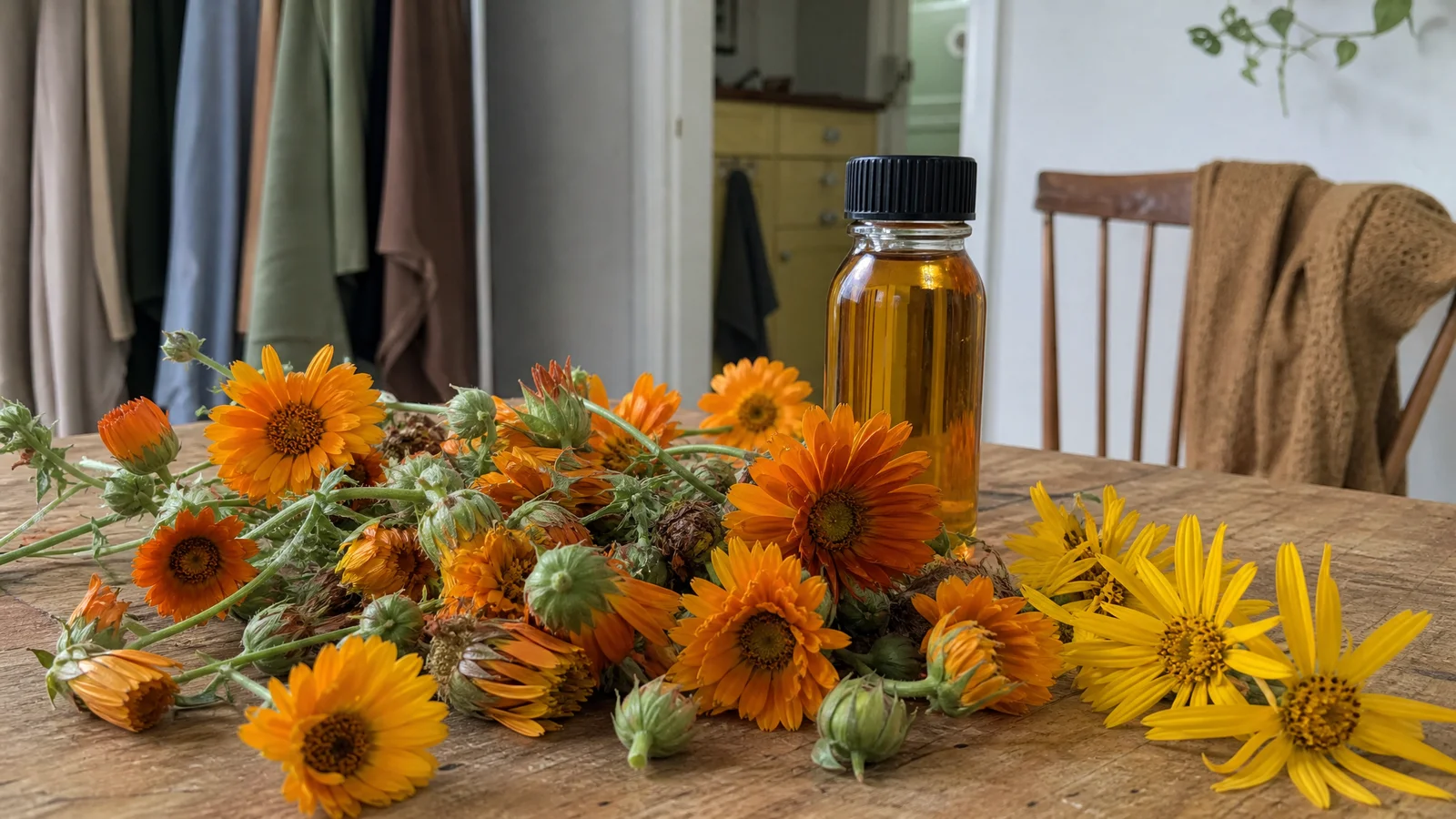
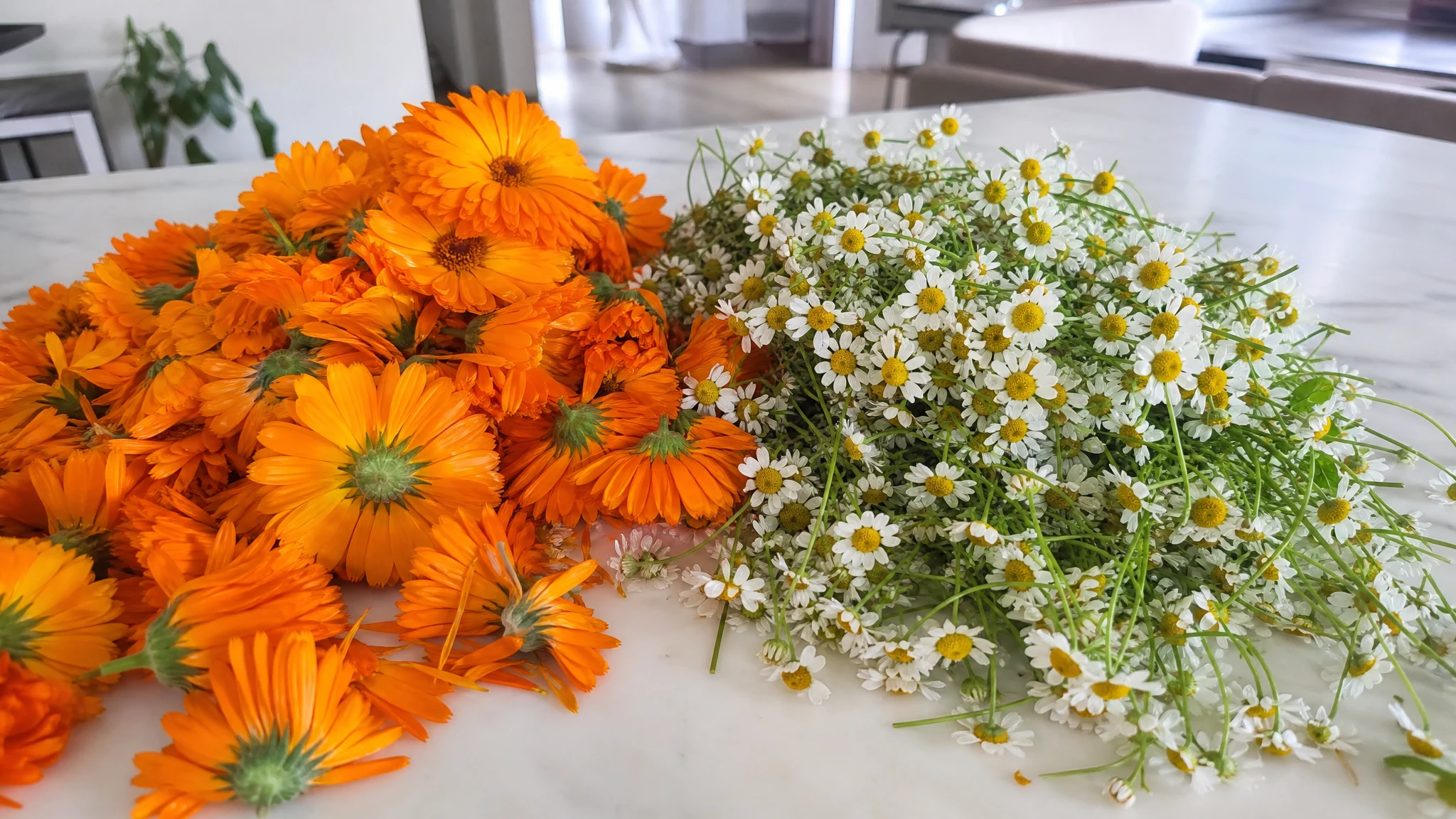
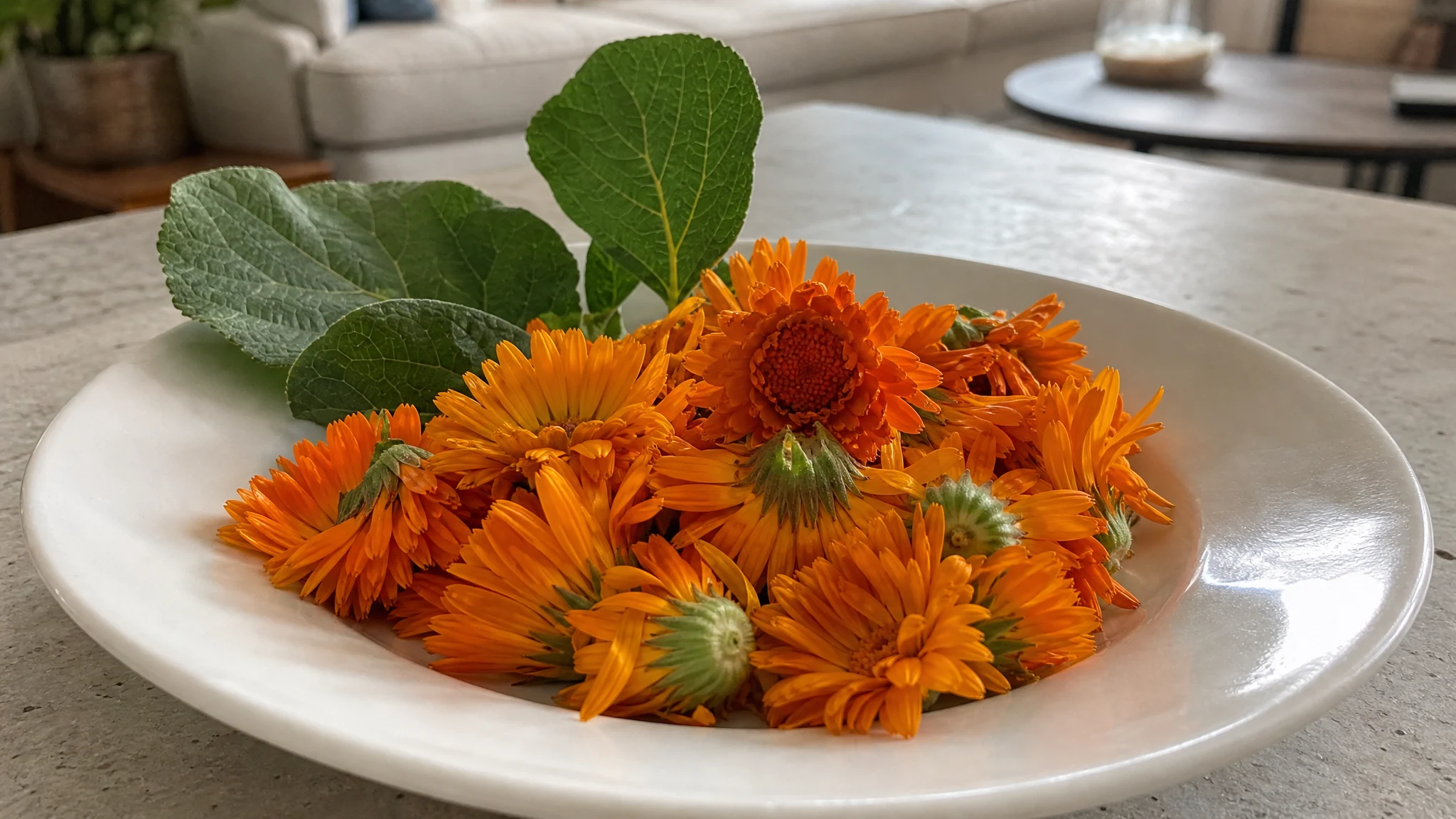
Our oil starts with the flower. We buy dried Calendula officinalis flowers from family farms, separate the petals by hand from sound, whole-dried flower heads, and extract calendula on its own, with nothing else in the extraction. That extract is then brought into a carrier oil to make the finished oil. Because it is a flower infusion, most of what is in the bottle by weight is the carrier, and the carrier is named on the batch paperwork. Email the lot number to support@truecalendulaoil.com and we will send it.
It helps to keep calendula's seeds out of the picture, too. Calendula does have a seed oil, and it is a remarkable one: in a study of eleven pot marigold genotypes, calendic acid made up 51 to 58 percent of the seed oil's fatty acids. That is a seed story. Our oil is made from petals, and has nothing to do with it.
Hemp seed oil versus extract and CBD
Hemp seed oil is a different ingredient from hemp extract or CBD products, even though the names overlap on shelves. If a label says hemp seed oil, it is the pressed seed oil. If you want something else, read for the extract name and not just the plant.
Which oil goes off faster: hemp seed or calendula?
The most practical thing to know about any oil is how fast it goes off, and that depends largely on its fatty acids. A critical review of vegetable oil oxidation describes light and heat as the things that push oils toward oxidation, and the more polyunsaturated an oil, the more it has to lose. Reasoning from that, a hemp seed oil, high in linoleic and alpha-linolenic acid, is one of the more perishable oils you can buy. Buy it in a small bottle, keep it capped, keep it cool and dark, and trust your nose: a sharp, paint-like or crayon-like smell means it has had its day.
Our oil follows the same physics, and we would rather say so than pretend otherwise. We add no preservatives, no added tocopherol and no stabilizers, so the character of our carrier governs how the oil keeps. Every bottle is dated and lot-numbered in glass, so you can always see how old yours is. Our storage guide walks through keeping any infused oil at its best, and a systematic review of cold-pressed oils covers what keeps them stable.
Pouring hemp seed oil next to infused oil
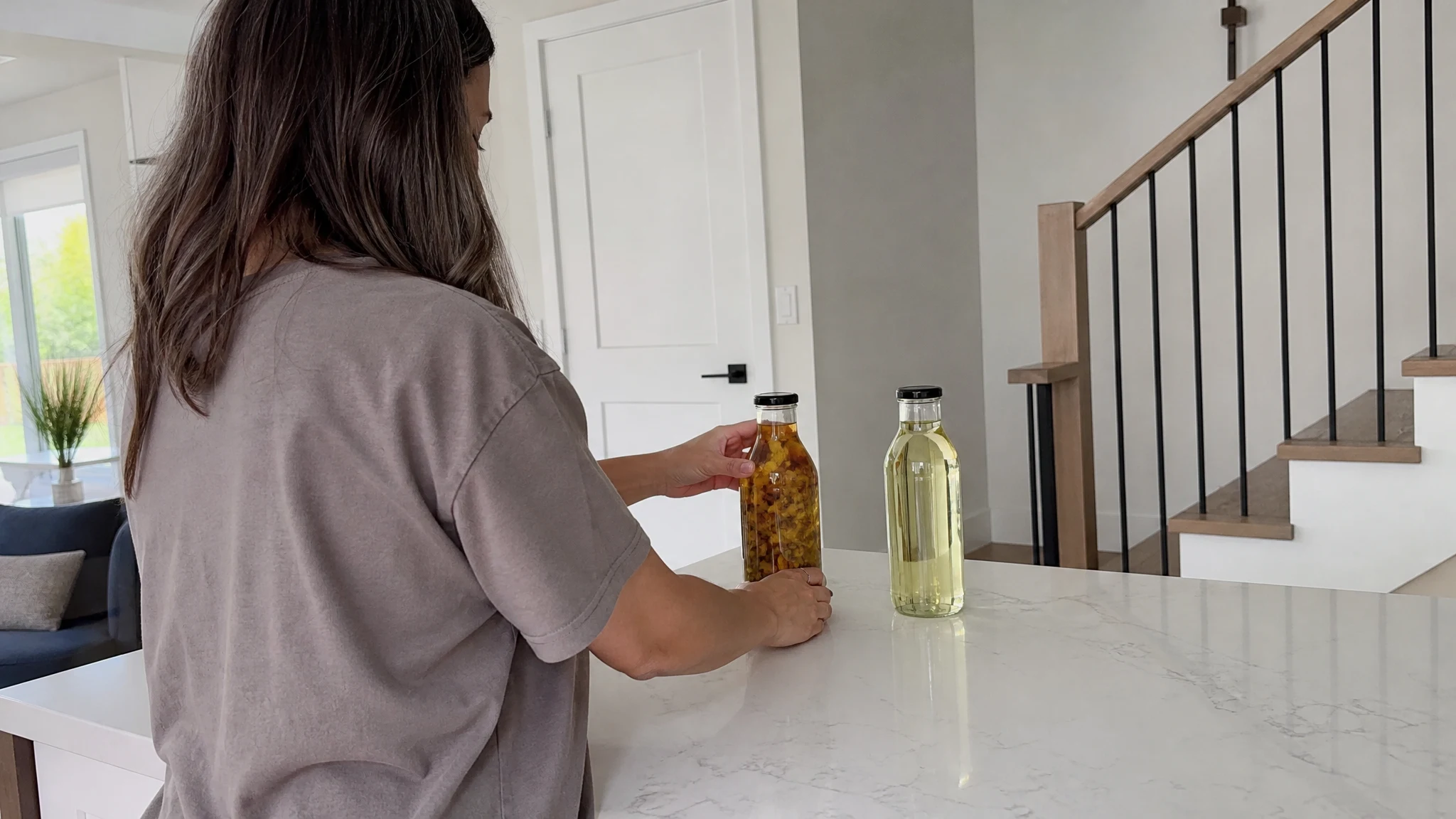
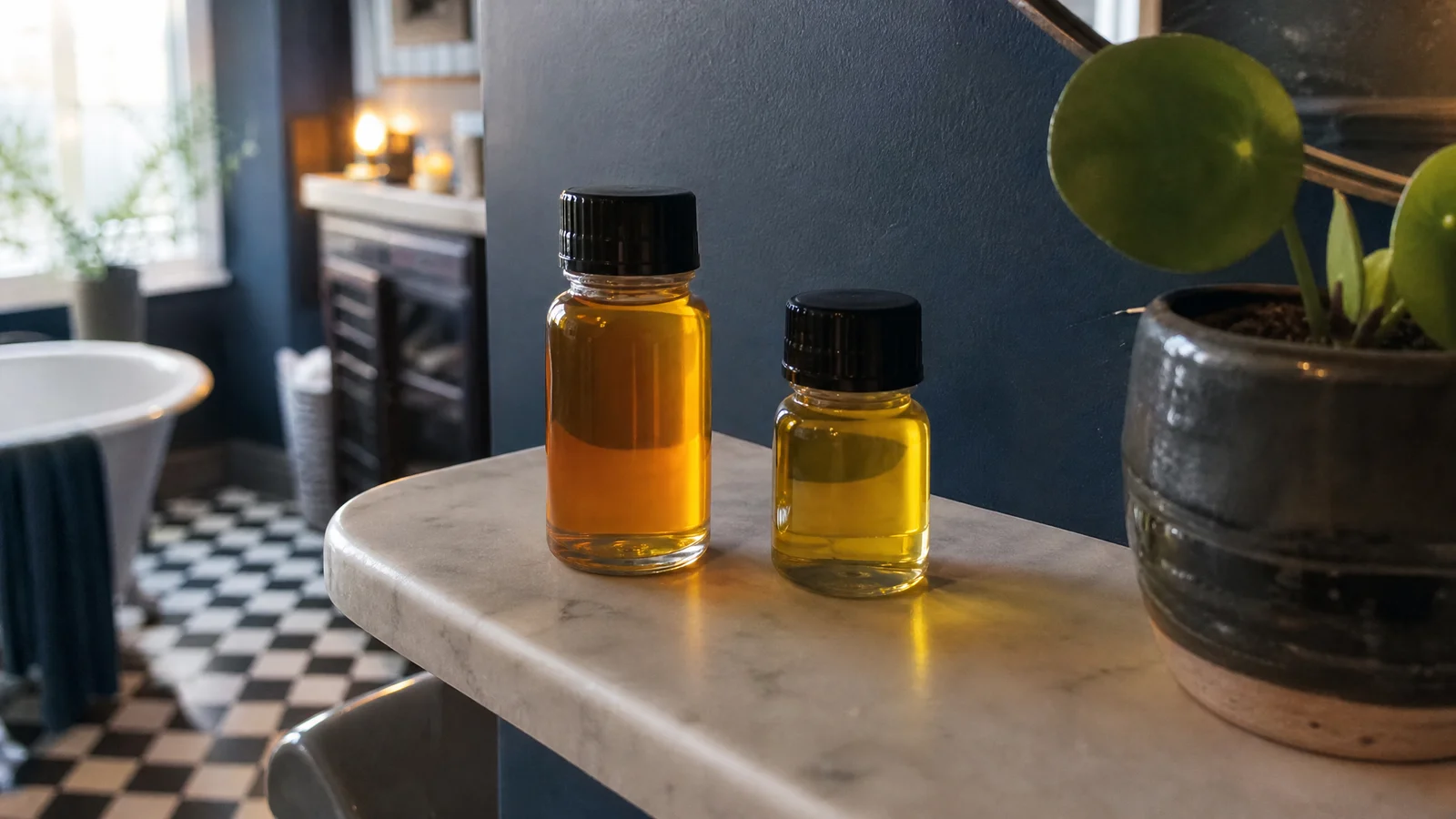
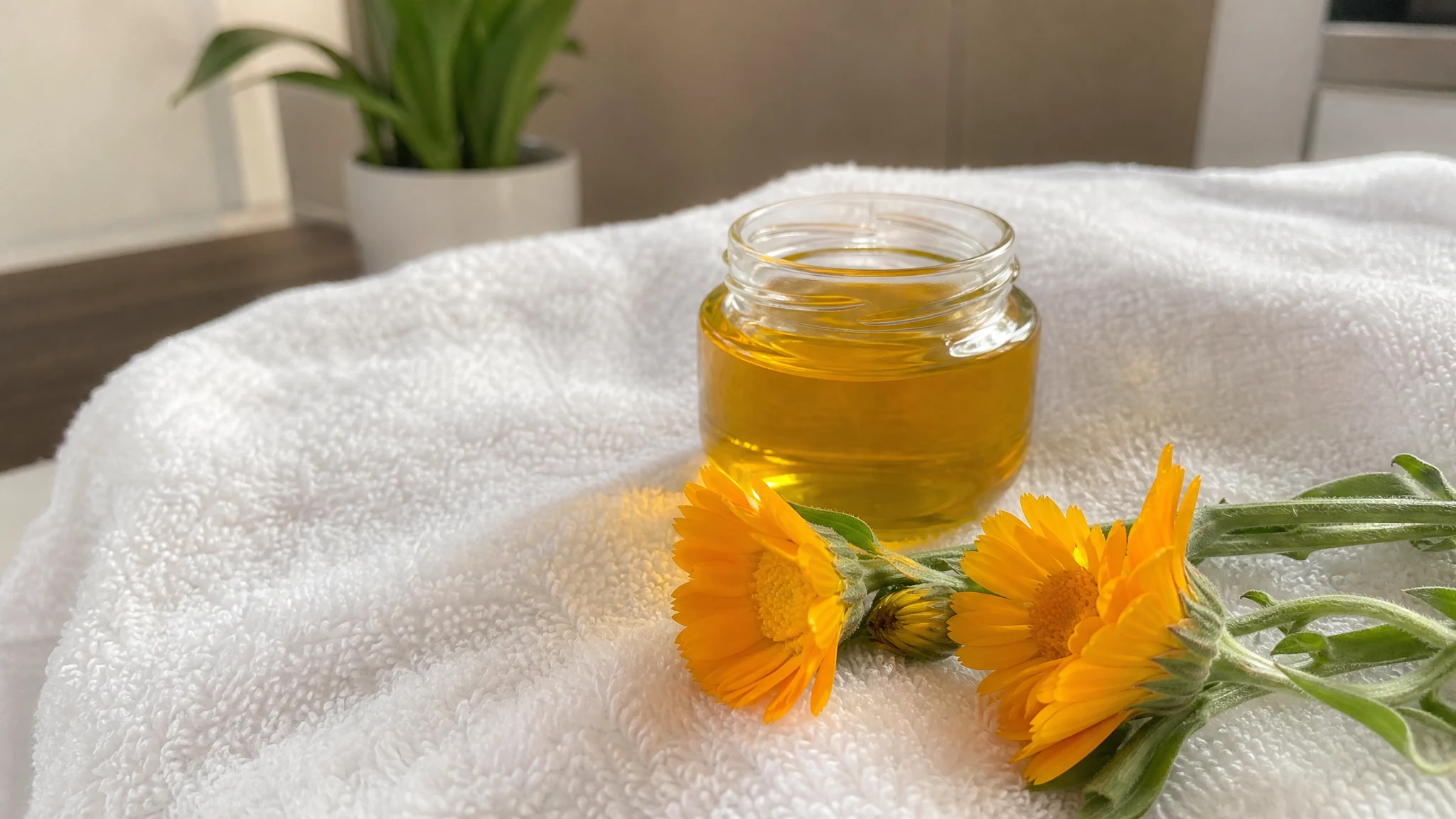
Put a drop of each on the back of your hand, and you will notice the difference even before you read a label. A seed oil usually looks pale and green-gold and feels thin. Calendula oil looks warmer and more golden, because the flower has colored the carrier. Spread each one and see which feels lighter to you. Texture is personal, and the one you enjoy using is the one you will actually use.
Give it a minute, too. Notice whether the oil settles into your skin or sits on top, whether your hands feel soft or slick, and whether you can still turn a page or grip a pen. These small practical things decide most people's favorite oil.
Should you choose hemp seed oil or calendula oil?
If you want a light seed oil and you will use it up within a few weeks of opening, hemp seed oil is a perfectly reasonable thing to buy from a grocery or natural-foods shop. We do not sell it, and we are not the place for it.
If what you want is calendula, the flower, in a plain oil with nothing added, that is what we make, and it comes with batch documentation: each batch is tested by independent third-party labs for physical and chemical assays and contaminants, and the paperwork is yours for the asking.
One thing applies to both. Calendula belongs to the Asteraceae (daisy) family, and the European herbal monograph lists hypersensitivity to that family as a contraindication and does not recommend skin use for children under 6. It also says safety in pregnancy and breastfeeding has not been established. If any of that describes you, speak with your doctor or pharmacist first, and in every case test a small patch of skin before using more. Our patch test walkthrough shows how.
If you are building a small collection of oils, we suggest buying small bottles of each and writing the date you opened them on the label. It makes the whole shelf easier to manage, and it takes the guesswork out of whether a bottle is still fresh.
If you enjoy comparing oils, our look at rosehip and calendula raises the same freshness question, and cold-pressed versus infused oils explains why the two methods give such different products.
The simplest way to say it: hemp seed oil is the seed, calendula oil is the flower, and the better one is whichever you actually want in the bottle.
Calendula Oil
Nature's Golden Botanical, bottled: small-batch calendula oil in sizes from 0.5 oz to bulk.
From $13.99
Shop Calendula Oil →Sources & Further Reading
- Chemical Profile, Bioactive Constituents and In Vitro Growth Stimulation Properties of Cold-Pressed Hemp Seed Oils from Romanian Varieties: In Vitro and In Silico Evaluation (Floares Oarga et al., Plants, 2025).
- Fatty acid composition of lipids in pot marigold (Calendula officinalis L.) seed genotypes (Dulf et al., Chemistry Central Journal, 2013).
- Vegetable oil oxidation: Mechanisms, impacts on quality, and approaches to enhance shelf life (Gharby et al., Food Chemistry X, 2025).
- Cold pressed oils: a systematic review on physicochemical properties, nutritional composition and pharmacological activities (Dash et al., Frontiers in Nutrition, 2026).
- European Union herbal monograph on Calendula officinalis L., flos (EMA/HMPC/437450/2017, 2018).