What Is Faradiol? Calendula's Best-Known Compound
Ask a plant chemist why calendula has such a long reputation and a single name tends to come up: faradiol. It is a triterpene, a type of plant compound, and it turns up again and again in the research on calendula flowers. It is a good story, and it comes with a bit of honest fine print about what it does and does not tell us about an oil.
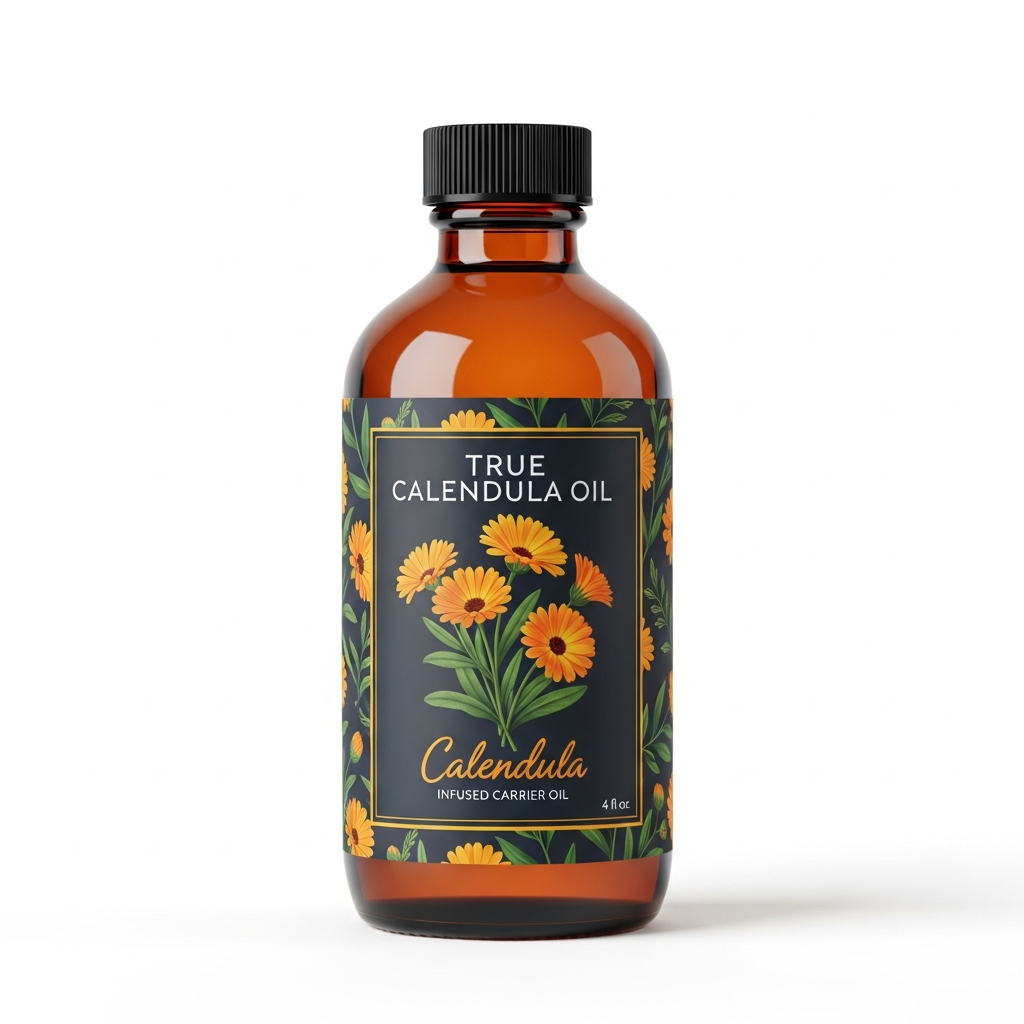
Calendula Oil
Our own small-batch calendula oil, in sizes from 0.5 oz to bulk.
From $13.99
Shop Calendula Oil →Where is faradiol found in the calendula plant?
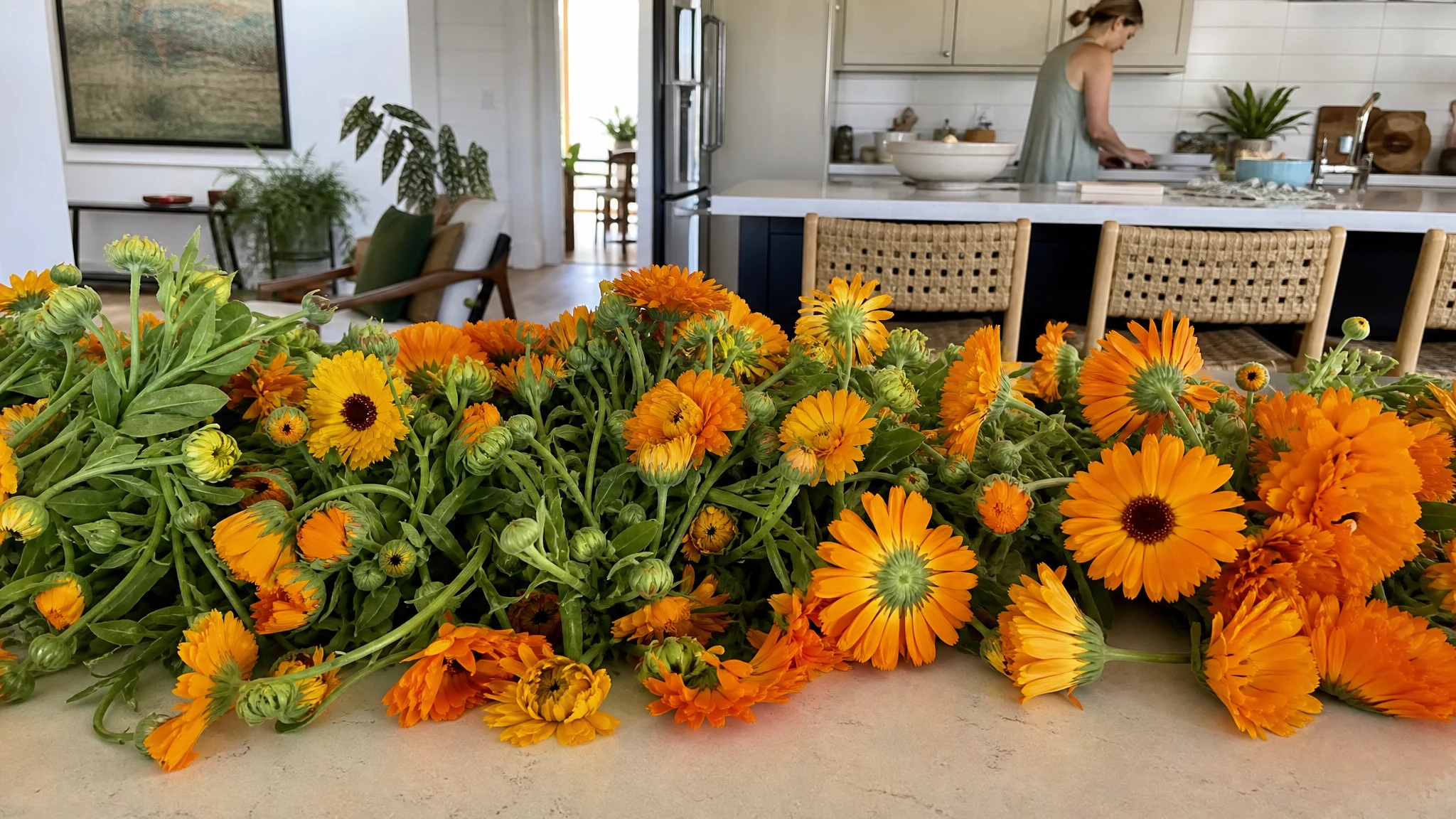
In the plant, faradiol mostly travels attached to fatty acids, as esters. A 2025 study in Nature Communications mapped where these compounds sit and found triterpene fatty acid esters only in floral tissue, none in leaves or roots, with about eight times more in the ray florets, the petals, than in the central disc florets. In the petals, faradiol myristate and faradiol palmitate were the most abundant, at 13.18 and 12.46 milligrams per gram of dry weight, and faradiol esters made up 77% of the total (Golubova et al., 2025). That is one cultivar grown in one set of conditions, so treat the numbers as a snapshot rather than a standard.
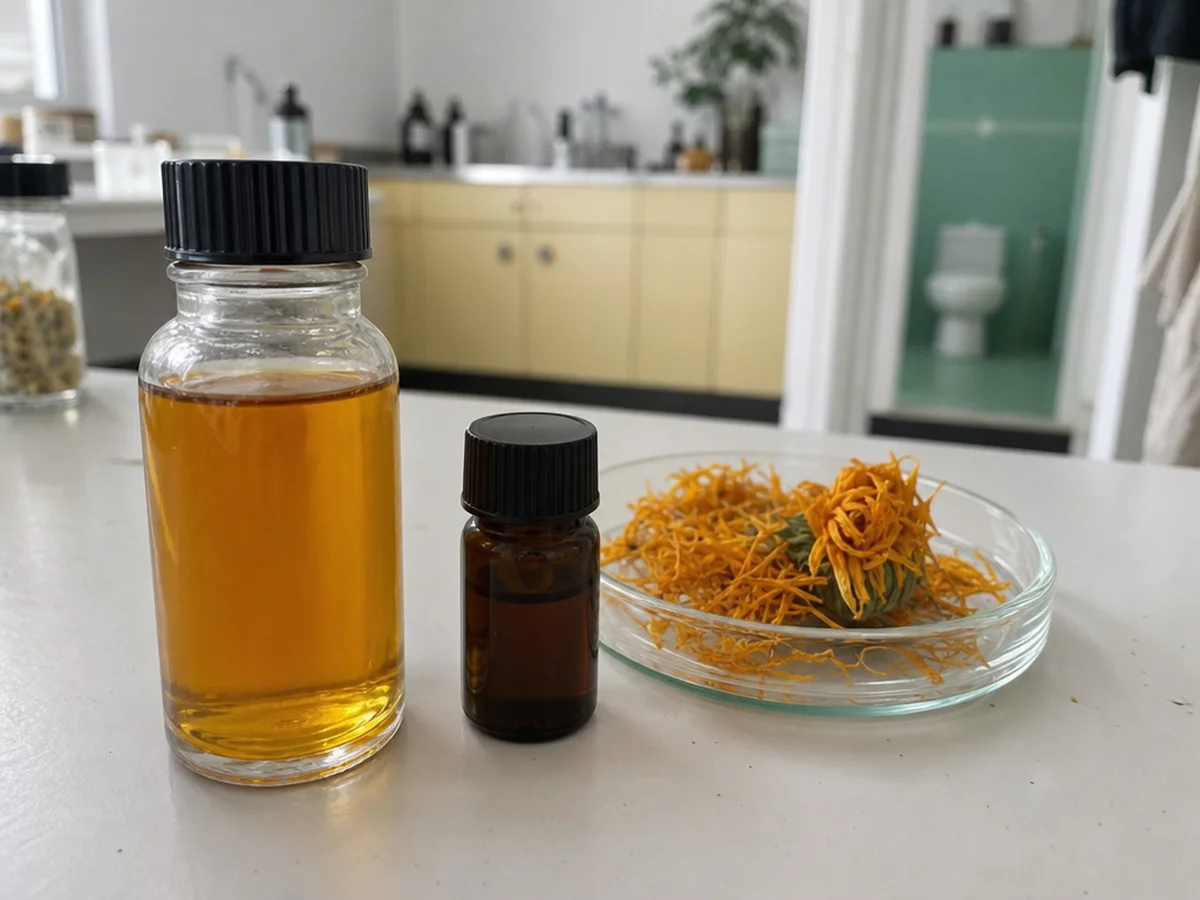
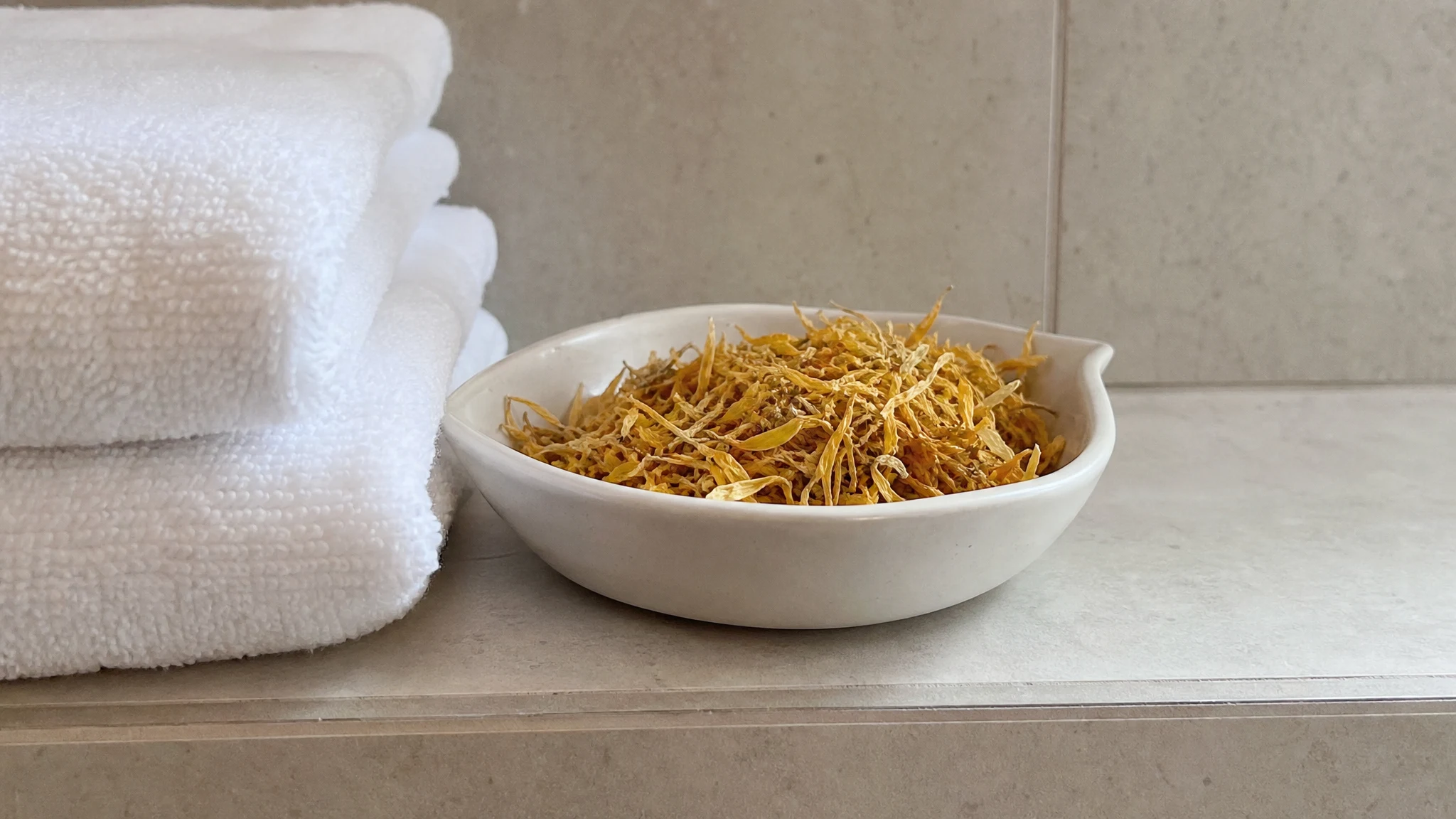
We like this finding because it lines up with how we work. We infuse petals that we separate by hand from sound, whole dried flower heads, rather than broken florets. Reasoning from the study, the petal is where the faradiol esters are concentrated, so it is a sensible part of the flower to care about. We do not state a faradiol content for our oil, and a flower figure should not be read as one.
Laboratory research on faradiol and calendula extracts
The researchers behind that paper describe the triterpenoids as key contributors to the anti-inflammatory activity of calendula flower extracts in laboratory tests, with an effect on the release of a signaling molecule called interleukin 6. Older studies point the same way. In a 1994 study, fractions of a calendula CO2 extract were tested topically in an inflammation bioassay, and the faradiol monoester stood out for how much of it the extract held; the activity of different extracts followed their faradiol content, and the authors suggested it as a quality marker for calendula preparations (Della Loggia et al., 1994). A 1997 paper isolated the two main faradiol esters and found that both reduced croton-oil-induced swelling in the mouse ear in a dose-dependent way, with nearly the same strength (Zitterl-Eglseer et al., 1997).
These are laboratory studies of isolated compounds or a CO2 extract. They tell us which parts of the flower are active in that kind of test, and they make faradiol a fascinating molecule. They do not describe what a petal-infused oil does on human skin, and we make no claim that ours does anything of the kind. It is a cosmetic oil.
Fresh calendula flower feel: tacky and resinous
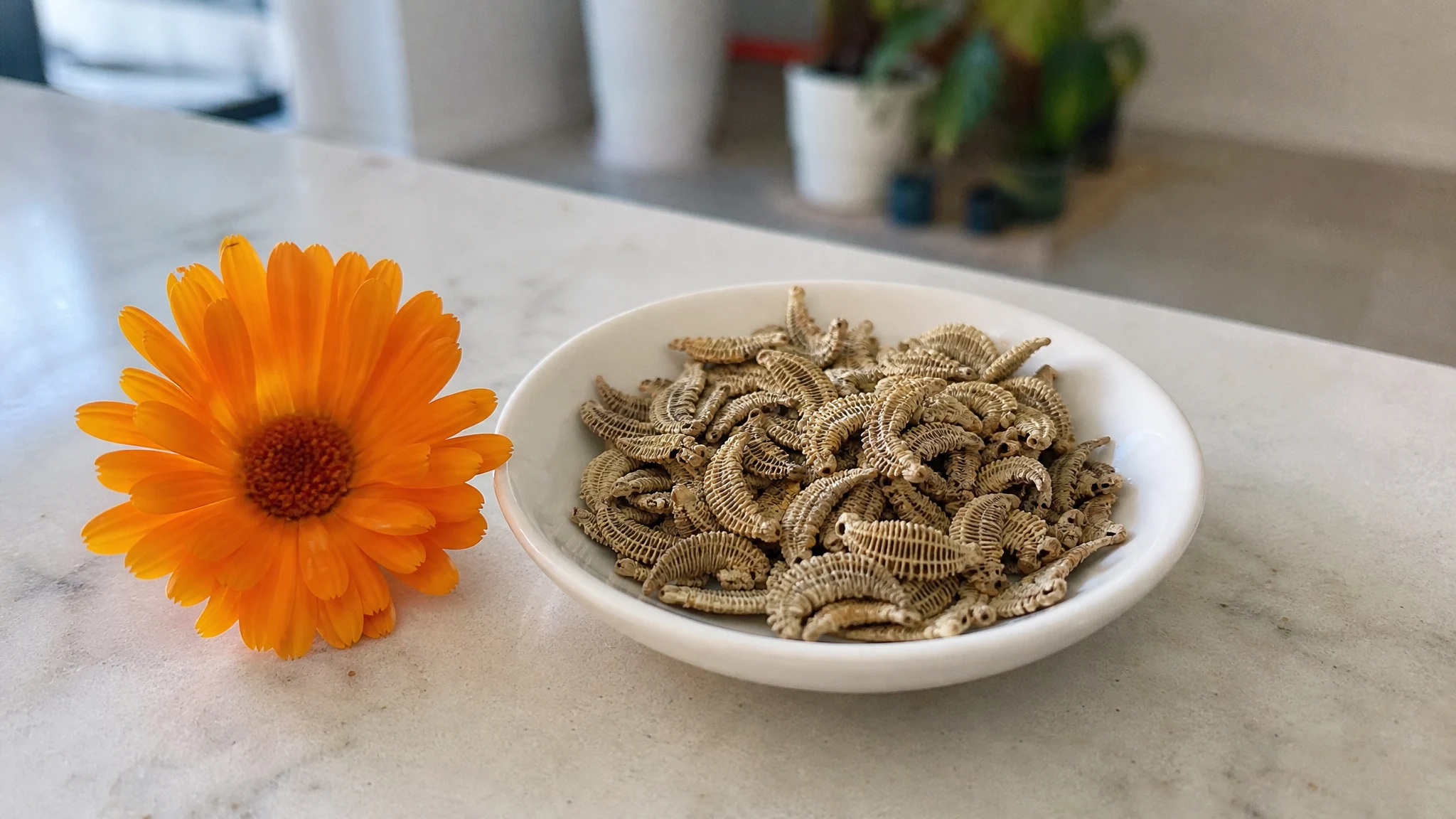
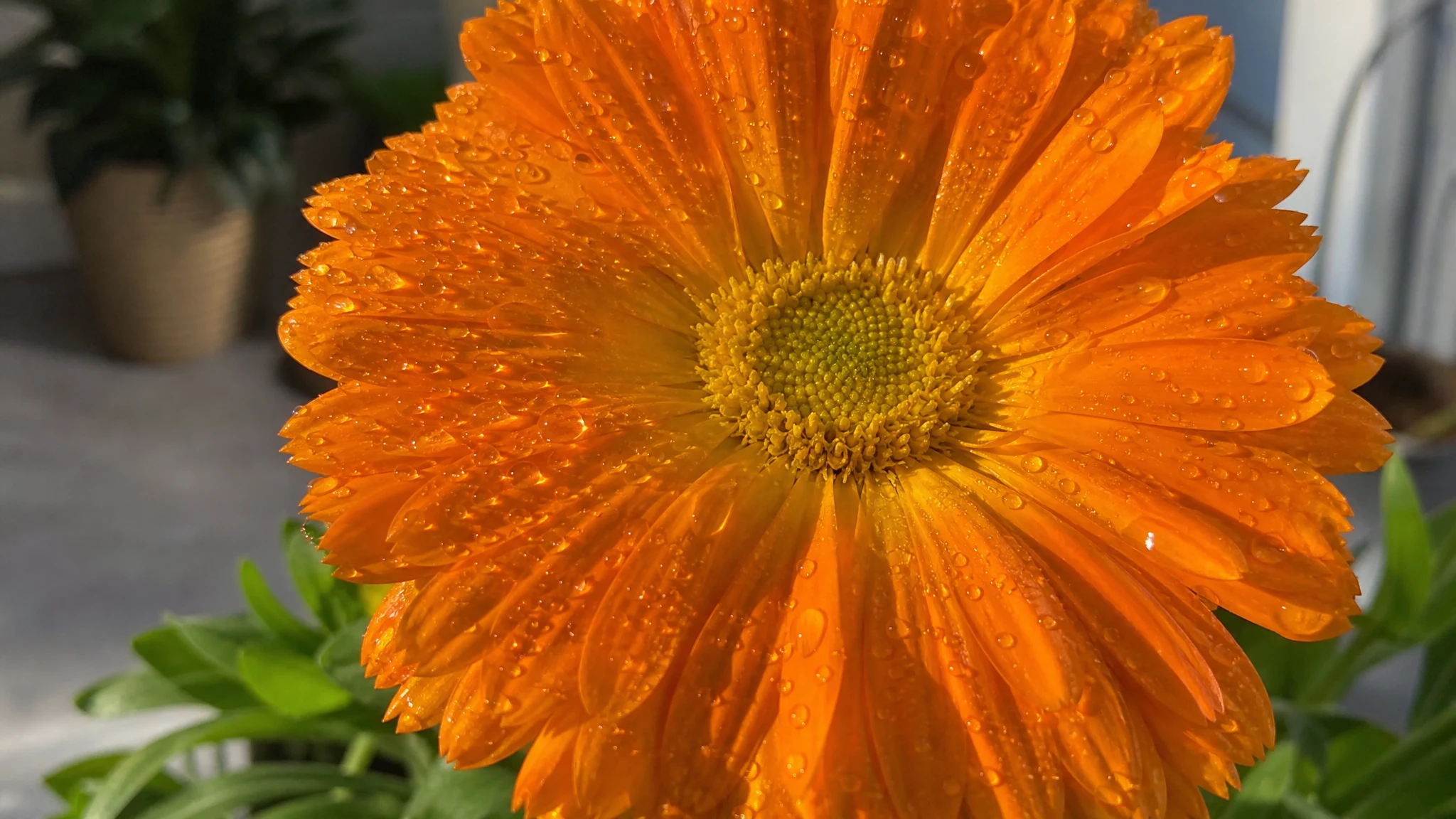
You do not need a laboratory to appreciate a calendula head. Pick one fresh and you will notice it feels a little tacky, and your fingers carry a faint resinous, herbal scent afterward. It is a small, tactile reminder that a plant is more than a color. We like to think about that when we handle the dried petals: each one has traveled a long way, and each one is the starting point of the oil.
That is part of why we enjoy this kind of story. Knowing a flower holds an interesting molecule is a lovely thing to share over a garden fence, and it deepens the pleasure of growing or handling the plant, even when it never changes how you choose a bottle.
Do compound names on labels matter?
A long chemical name on a label can sound impressive, and it is easy to feel you should be impressed. Our suggestion is to treat a compound name as a conversation starter and not as a purchase reason. It tells you something interesting about the flower. To learn something about the bottle, ask the plain questions: what is the carrier, what was tested, which lot is this?
Faradiol esters in calendula infused oil
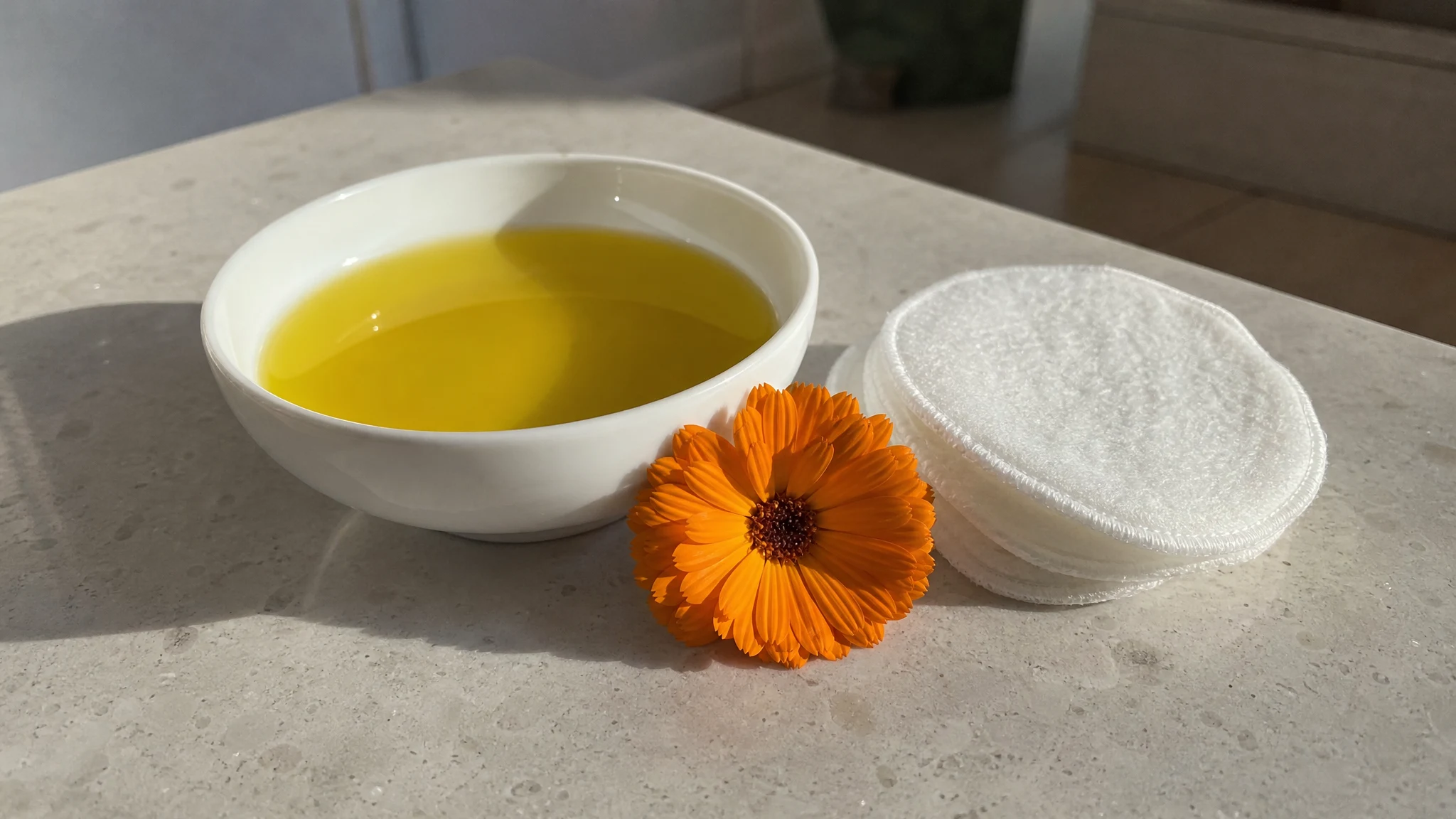
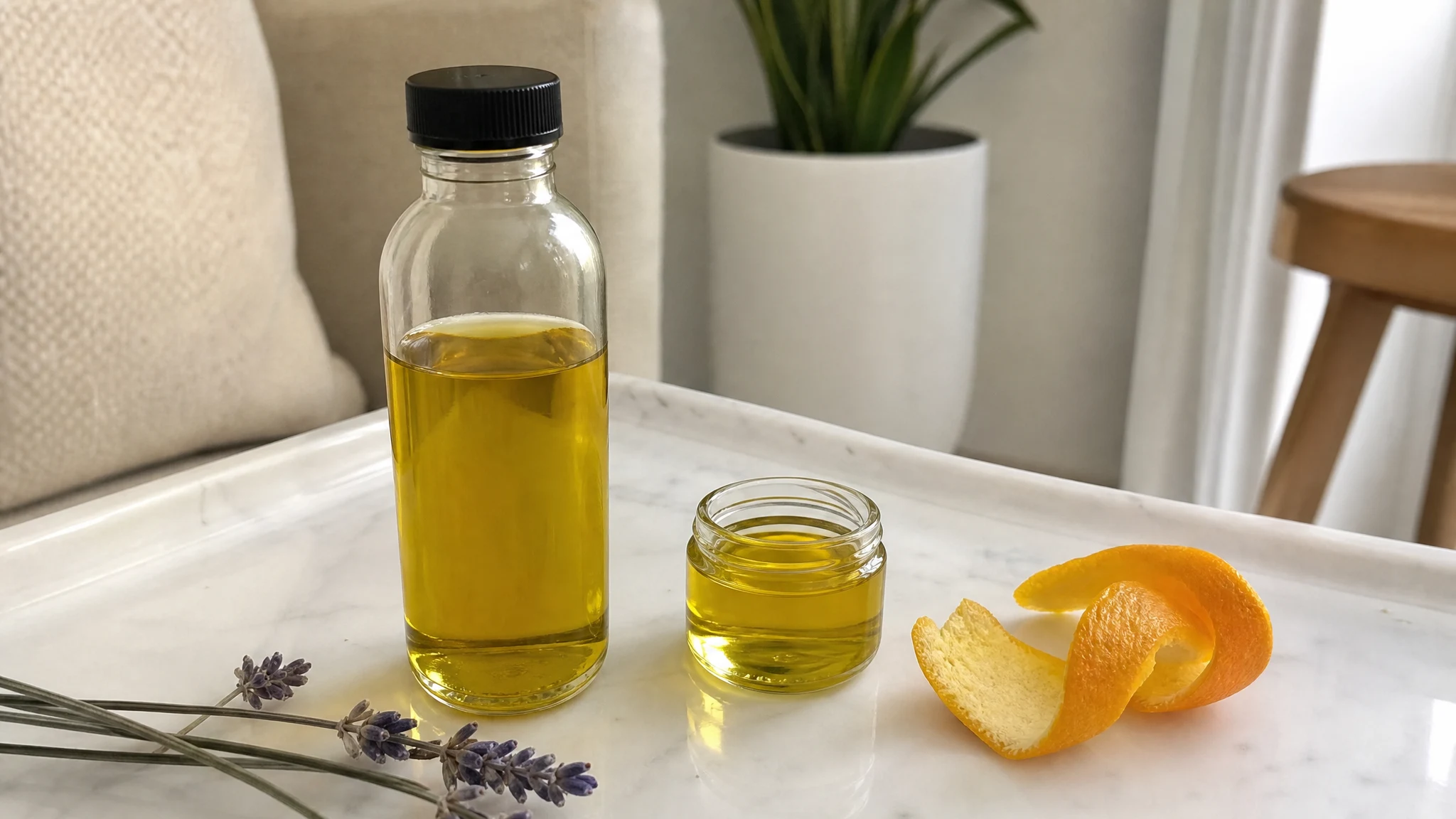
Faradiol esters are fat-soluble, so it is reasonable to expect some to move into an oil during infusion. That is our reasoning, not a measurement. A faradiol figure for a particular infused oil would take a lab assay on that oil, and a number copied from flower data would describe the flower. If a seller quotes one, a fair question is which method, which lot and which lab.
The documentation we keep for each batch covers physical and chemical assays and contaminant screening by independent labs, and you can request it by emailing the lot number to support@truecalendulaoil.com. If you are formulating and need a faradiol assay specifically, ask us in writing through our contact page before you order.
Standardized extract versus calendula oil for faradiol
If a defined faradiol content matters to you, you are describing a standardized extract, such as the CO2 extracts used in much of the research, and that is a different product from an infused oil. Our pieces on extraction methods and on choosing between oil and extract lay out the differences. If you react to chamomile, ragweed or other daisy-family plants, the plant family comes before any single compound, and our allergy article is the place to start.
For the rest of us, faradiol is simply one more reason the flower is worth a second look, and a reminder that a golden oil starts with a good petal.
Calendula Oil
Nature's Golden Botanical, bottled: small-batch calendula oil in sizes from 0.5 oz to bulk.
From $13.99
Shop Calendula Oil →Sources & Further Reading
- Golubova D et al., 2025. Biosynthesis and bioactivity of anti-inflammatory triterpenoids in Calendula officinalis. PMC12304140
- Della Loggia R et al., 1994. The role of triterpenoids in the topical anti-inflammatory activity of Calendula officinalis flowers. PubMed 7809203
- Zitterl-Eglseer K et al., 1997. Anti-oedematous activities of the main triterpendiol esters of marigold (Calendula officinalis L.). PubMed 9254116