Is Calendula Oil Edible? What to Know Before You Try
Calendula has a kitchen life as well as a skincare one. The golden-orange petals have long been scattered over rice, soups and salads for their color, so it is natural to wonder whether the oil we make from those same flowers is something you can eat. It is a fair question, and the honest answer is that the flower and our bottle are two different things.
Calendula Oil
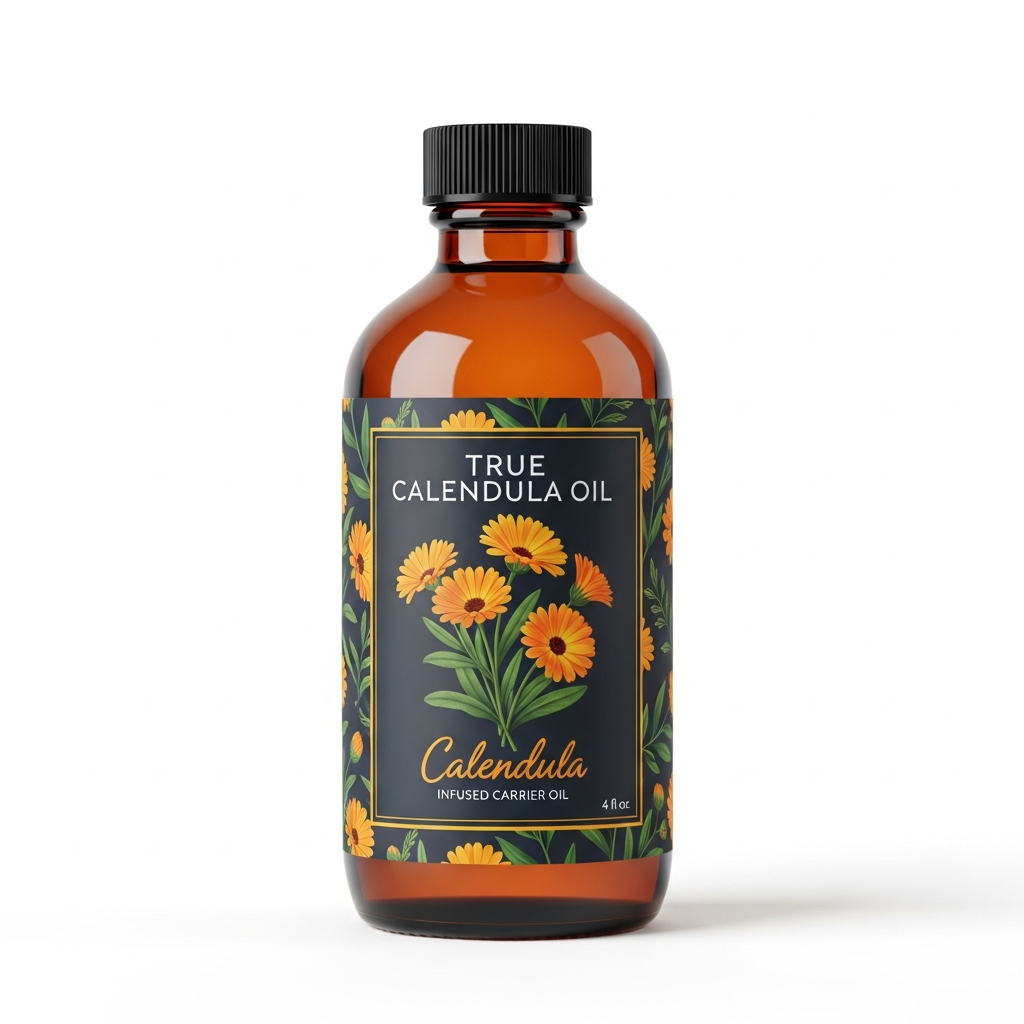
Our own small-batch calendula oil, in sizes from 0.5 oz to bulk.
From $13.99
Shop Calendula Oil →Are calendula petals recognized as food?
US food regulations list pot marigold, Calendula officinalis, among the spices and natural seasonings that are generally recognized as safe for their intended use (21 CFR 182.10). Memorial Sloan Kettering says much the same in plainer words: it is generally safe to use calendula in food and tea, while advising a word with your healthcare provider before taking calendula supplements, which are stronger than the herb you would cook with (Memorial Sloan Kettering, Calendula).
Both statements are about petals used as a seasoning or brewed as a tea. That is the part of the picture we love, and it is a good reason to grow a few plants and keep the dried petals in a jar. It is not a statement about a bottled infused oil.
Why is calendula oil made for skin only?
We make one product, a calendula oil, and we make it for skin. We buy dried flowers from family farms, separate the petals by hand from whole dried flower heads, extract the calendula on its own, and then bring that extract into a carrier oil. Nothing else goes in: no preservatives, no added vitamin E, no stabilizers. Every batch goes to independent third-party labs for physical and chemical assays and contaminant screening, and the bottles are dated and lot-numbered.
All of that paperwork is written with a skin oil in mind. A food or a supplement comes with an intended serving and a specification for eating it, and an infused skin oil comes with neither. So we recommend ours for the skin and leave the kitchen to the petals. If you would like to know which carrier oil is in the bottle you hold, email the lot number to support@truecalendulaoil.com and we will send you the batch paperwork.
If someone has swallowed a meaningful amount of any skin oil, or feels unwell afterwards, the right call is to a poison control center or a clinician, not to a search engine.
EU herbal monograph on swallowing calendula
The EU's herbal monograph on calendula flower is a good map of how the plant is actually used in traditional medicine, and it is almost entirely external. Its preparations are for the skin, plus a 2% solution of the herb for rinsing or gargling the mouth, which is a rinse rather than something you drink. It also says that safety in pregnancy and breastfeeding has not been established and that use is not recommended without sufficient data, and it lists allergy to the daisy family, Asteraceae, as a contraindication (European Union herbal monograph on Calendula officinalis L., flos). Memorial Sloan Kettering gives the same pregnancy and daisy-family advice for taking calendula by mouth.
Daisy-family allergy is the one that surprises people, because it reaches beyond calendula to ragweed, chamomile and chrysanthemum. Our ragweed article goes through it, and our pregnancy guide covers what to ask your midwife or OB/GYN.
Home-infused calendula oil: start with dried petals
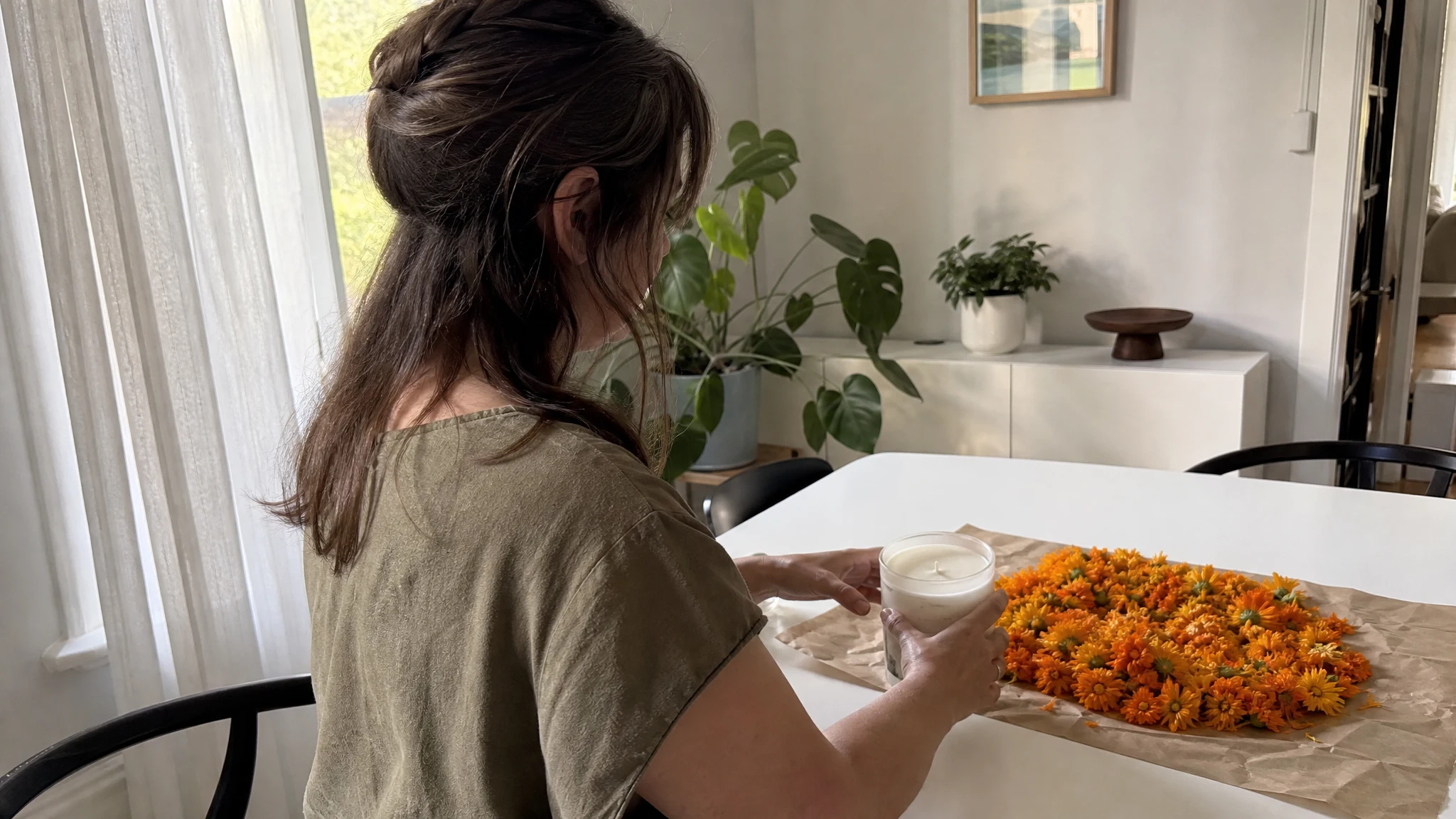
Plenty of people enjoy infusing oil at home, and there is a good rule worth knowing: start with dried plant material. The University of Maine Cooperative Extension calls dried herbs the safest way to make infused oils because dried material has no moisture for bacteria to grow in, and it advises labeling the jar with the date and discarding home-infused oil after three months. Oils made with fresh garlic, vegetables or herbs, it says, need to be tested and approved by a food processing authority (Bulletin #4385, Safe Homemade Flavored and Infused Oils).
That is the same instinct behind the way we work, starting from dried flowers. If a home infusion is your next project, our infusion guide walks through it, and our note on storing calendula oil covers keeping a bottle fresh.
Dried calendula petals in the kitchen
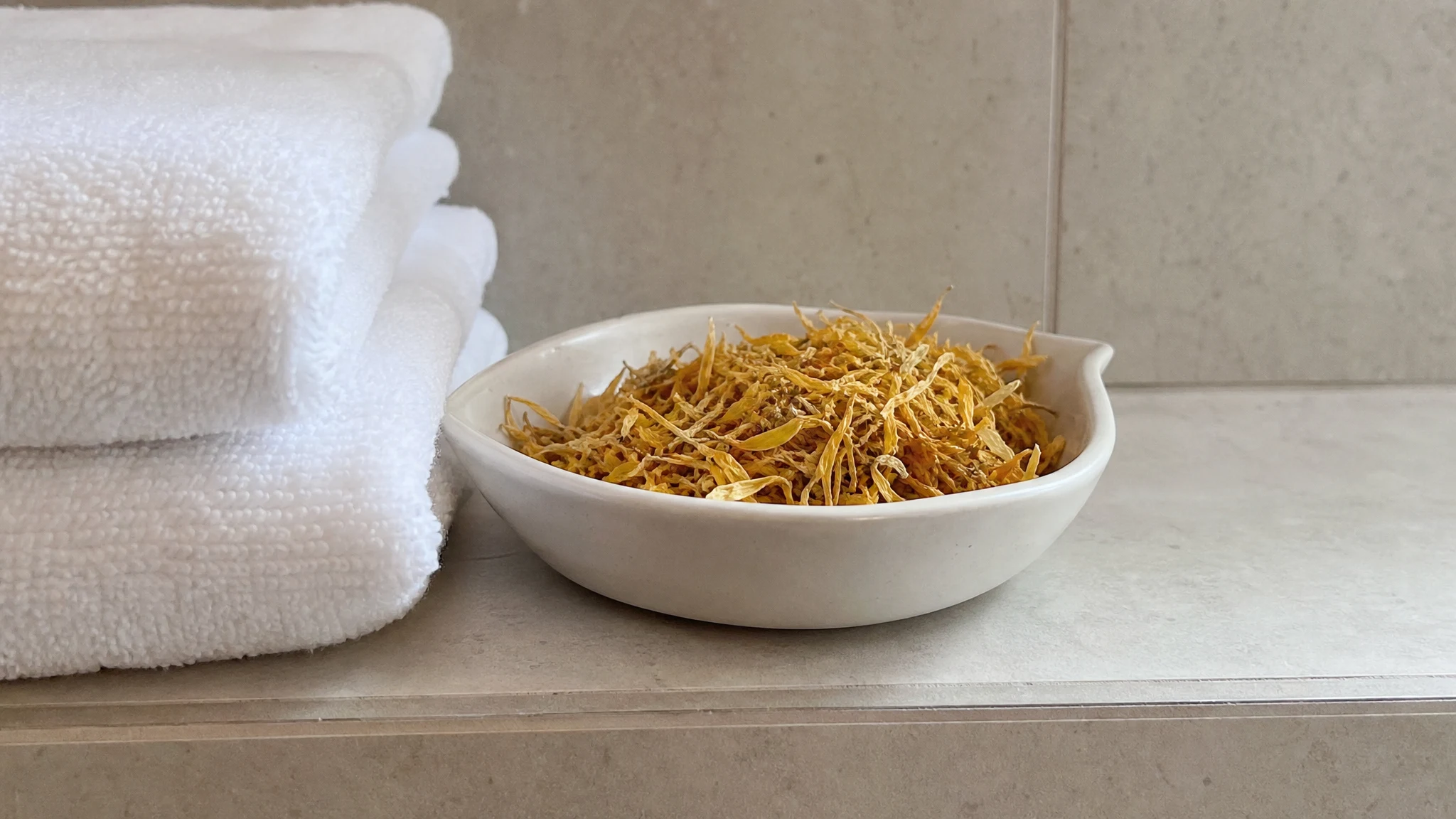
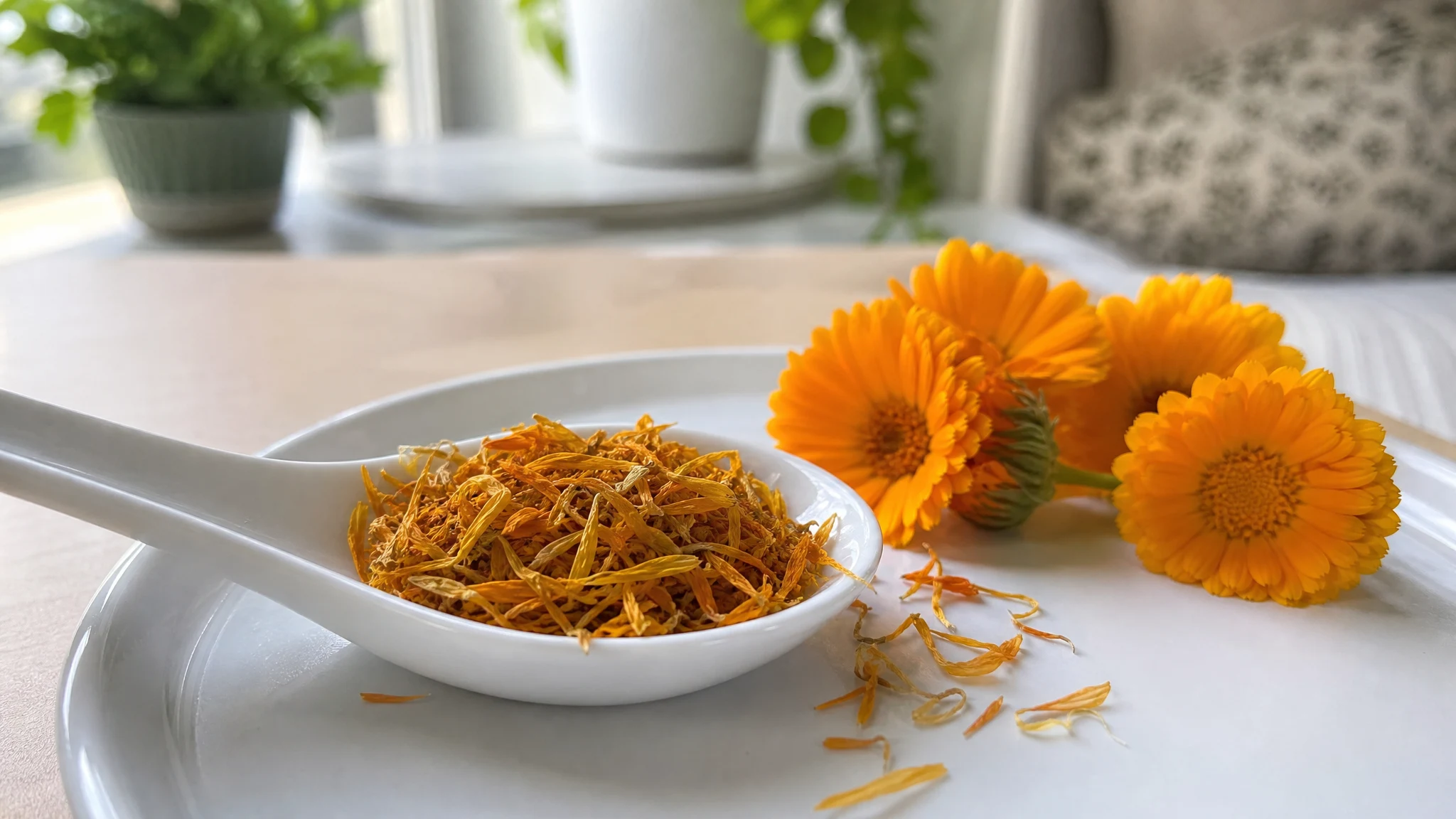
If the food side of calendula appeals to you, the pleasant way in is with the petals themselves. Look for dried petals sold as a food ingredient at a grocery, spice shop or herb supplier, or grow a few plants and dry your own. A pinch scattered over rice, soup, eggs or a green salad adds a flash of orange, and the flavor is mild, closer to color than to seasoning.
A small habit saves confusion: keep skin oils and cooking oils on separate shelves. A golden bottle in a kitchen cupboard looks a lot like something you might cook with, so we suggest a cupboard that is not the pantry, with the label facing out and the cap on tight. A bedroom drawer or a dresser works well.
Calendula oil for skin, petals for the kitchen
Think of calendula as a plant with two lives. In the kitchen it is a petal, a tea or a pinch of seasoning. On the skin it is an oil that leaves skin feeling soft and smooth. Keeping the two apart is the simplest rule we know, and it is the one we follow.
Calendula Oil
Nature's Golden Botanical, bottled: small-batch calendula oil in sizes from 0.5 oz to bulk.
From $13.99
Shop Calendula Oil →Sources & Further Reading
- 21 CFR 182.10 - Spices and other natural seasonings and flavorings (Legal Information Institute)
- Calendula (Memorial Sloan Kettering Cancer Center)
- European Union herbal monograph on Calendula officinalis L., flos (EMA/HMPC/437450/2017)
- Bulletin #4385, Safe Homemade Flavored and Infused Oils (University of Maine Cooperative Extension)