Calendula Oil and Breastfeeding: What to Know First
Calendula salve turns up in nearly every list of natural ideas for nursing mothers, so it is worth knowing what stands behind it. No trial has tested calendula on its own for sore nipples, and the European herbal medicines committee advises against calendula products during breastfeeding because the safety data are missing. We make a calendula infused oil for external cosmetic use, and for this particular question we would rather point you to the people who can look at the actual problem.
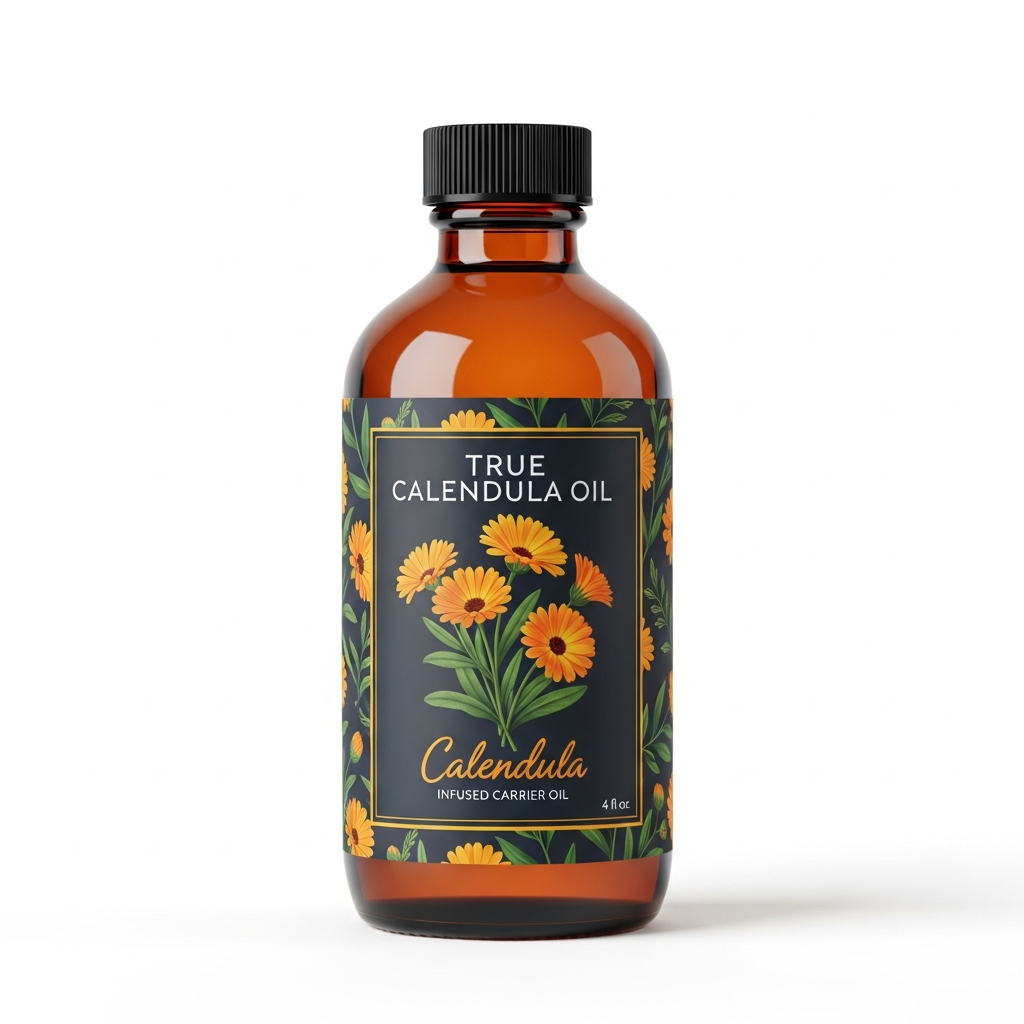
Calendula Oil
Our own small-batch calendula oil, in sizes from 0.5 oz to bulk.
From $13.99
Shop Calendula Oil →Sore nipples: common causes behind the pain
A salve sits on the surface, but nipple pain tends to start underneath. A clinic audit from the Breast Feeding Centre of Western Australia covered 1,177 consultations and found nipple pain was among the reasons for the visit in 36% of them. The cause named most often was positioning and attachment, followed by tongue tie, infection, flat or inverted nipples, mastitis and vasospasm. The advice that followed was just as varied: adjusting the latch, resting the nipples, nipple shields, treating the baby's tongue tie, antibiotics where needed.
That variety is the useful part. A calendula layer over a shallow latch or an infection does nothing about either one, and it can delay the conversation that would fix it. A lactation consultant, midwife or physician is the right first call, and your baby's pediatrician if feeding itself looks difficult.
If you are reading this because things hurt right now, the kindest thing we can say is that you are not doing something wrong by asking. Feeding a baby is hard work in the first weeks, and sore skin is one of the most common reasons parents reach out for help. Many hospitals and community groups have lactation support, and it is worth making the call sooner than later.
Do nipple ointment trials include calendula oil?
A Cochrane review pulled together four good-quality trials with 656 women and tested glycerine pads, lanolin, expressed breast milk and an all-purpose nipple ointment. None of them was calendula, and the reviewers found too little evidence to recommend any one product. One finding is reassuring in its own way: whatever the women used, nipple pain for most of them eased to a mild level within about seven to ten days after birth.
The calendula record is thin. The National Library of Medicine's LactMed database says calendula has been used on sore nipples while nursing, although little high-quality evidence supports it. The two studies it describes both paired calendula with another ingredient (Mimosa tenuiflora in one, echinacea in the other), so neither shows what calendula contributed by itself. LactMed also notes that allergic reactions, including cross-reactions with chrysanthemums, daisies and marigolds, occur rarely.
Why does the EU advise against calendula oil while nursing?
The EU herbal monograph for calendula flower says safety during pregnancy and lactation has not been established and, with too little data to go on, does not recommend use. Its assessment report adds that skin use in children under 6 is not recommended for the same reason. Read carefully, this is a gap in the data and not a finding of harm, and those documents are written for licensed herbal medicines. Still, it explains why a nursing parent will not find a recommendation to lean on.
Infant exposure: carrier oils and ingredient lists
Whatever goes on the nipple can end up in an infant's mouth, which makes the ingredient list matter more than usual. Two points follow from the sources and from plain reasoning:
- The carrier oil. Older literature describes calendula oil made in peanut oil. The EU assessment report advises against peanut oil as the extraction oil because of the higher chance of adverse reactions. Whatever you are considering, the carrier should be named on the label or paperwork. Ours is listed on the batch documentation; email the lot number to support@truecalendulaoil.com and we will send it.
- Daisy-family allergy. Calendula belongs to the same family as ragweed, chamomile and chrysanthemums, and the EU monograph lists hypersensitivity to that family as a contraindication. Our patch test article shows how to check a small area of skin first, and the ragweed article explains the family connection.
It can help to go into an appointment with a short list of questions written down: when the pain happens (at the latch, during the feed, between feeds), what the nipple looks like afterward, and what you have already tried. Bring any product you are thinking of using, including the bottle, so the professional can read the ingredient list for themselves. A clear picture saves time, and it helps the person looking at you find the real cause faster.
Postpartum and salve articles for further reading
Our pregnancy and postpartum article goes through the same sources from a wider angle. If you enjoy making salves in general, our salve article covers the beeswax method for everyday skin, and it is a general-purpose recipe, not one for nursing.
The simple takeaway is a kind one: sore nipples are common, they are usually solvable, and the quickest route is a skilled person looking at the latch. Calendula oil can wait for the dry elbows and hands it suits so well.
Calendula Oil
Nature's Golden Botanical, bottled: small-batch calendula oil in sizes from 0.5 oz to bulk.
From $13.99
Shop Calendula Oil →Sources & Further Reading
- Nipple Pain in Breastfeeding Mothers: Incidence, Causes and Treatments (Kent et al., Int J Environ Res Public Health, 2015)
- Interventions for treating painful nipples among breastfeeding women (Dennis et al., Cochrane Database Syst Rev, 2014)
- Calendula (Drugs and Lactation Database, LactMed, NICHD)
- European Union herbal monograph on Calendula officinalis L., flos (EMA/HMPC, 2018)
- Assessment report on Calendula officinalis L., flos (EMA/HMPC, 2018)