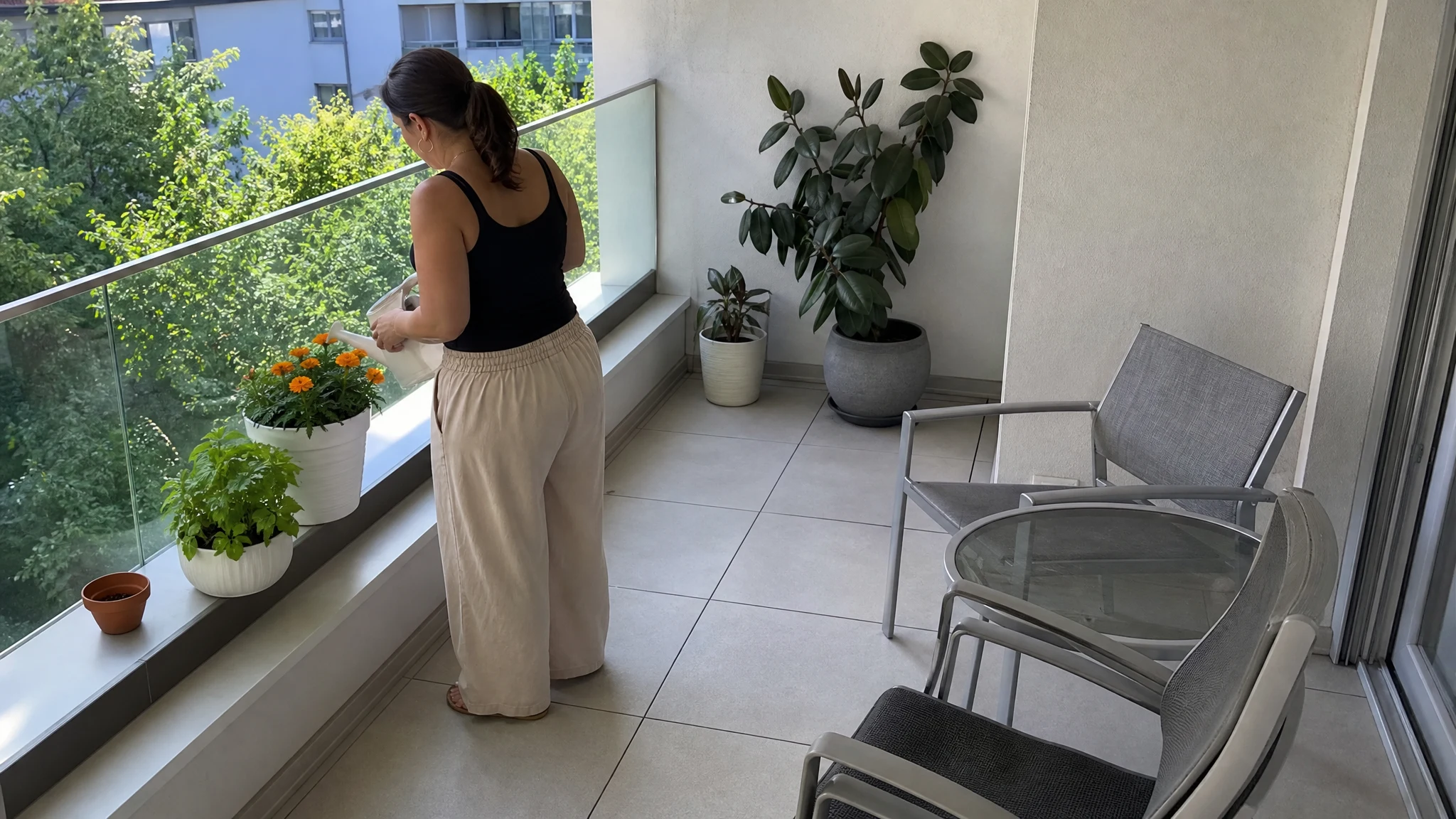
Growing Calendula in Pots: How Much Oil Will You Get?
Calendula is one of the friendliest flowers you can put in a pot: bright orange, cheerful from spring until the heat arrives, and the more you pick, the more it blooms. University of Florida extension notes call it well suited to containers. If you are growing it with oil in mind, the pleasant surprise is that a few pots will not fill a bottle, but they will give you a lovely small jar and a front-row seat to how the flower behaves.
Calendula Oil
Our own small-batch calendula oil, in sizes from 0.5 oz to bulk.
From $13.99
Shop Calendula Oil →How much flower does a calendula pot yield?
Utah State University Extension reports that a 60-foot row of calendula yields about 1 pound of dried flower heads, with plants thinned to 8 to 12 inches apart. Some arithmetic from those two numbers: a 60-foot row holds roughly 60 to 90 plants, so each plant gives somewhere around 5 to 8 grams of dried flowers over a season. That is a rough order of magnitude from garden rows in one climate, and your pot will vary.
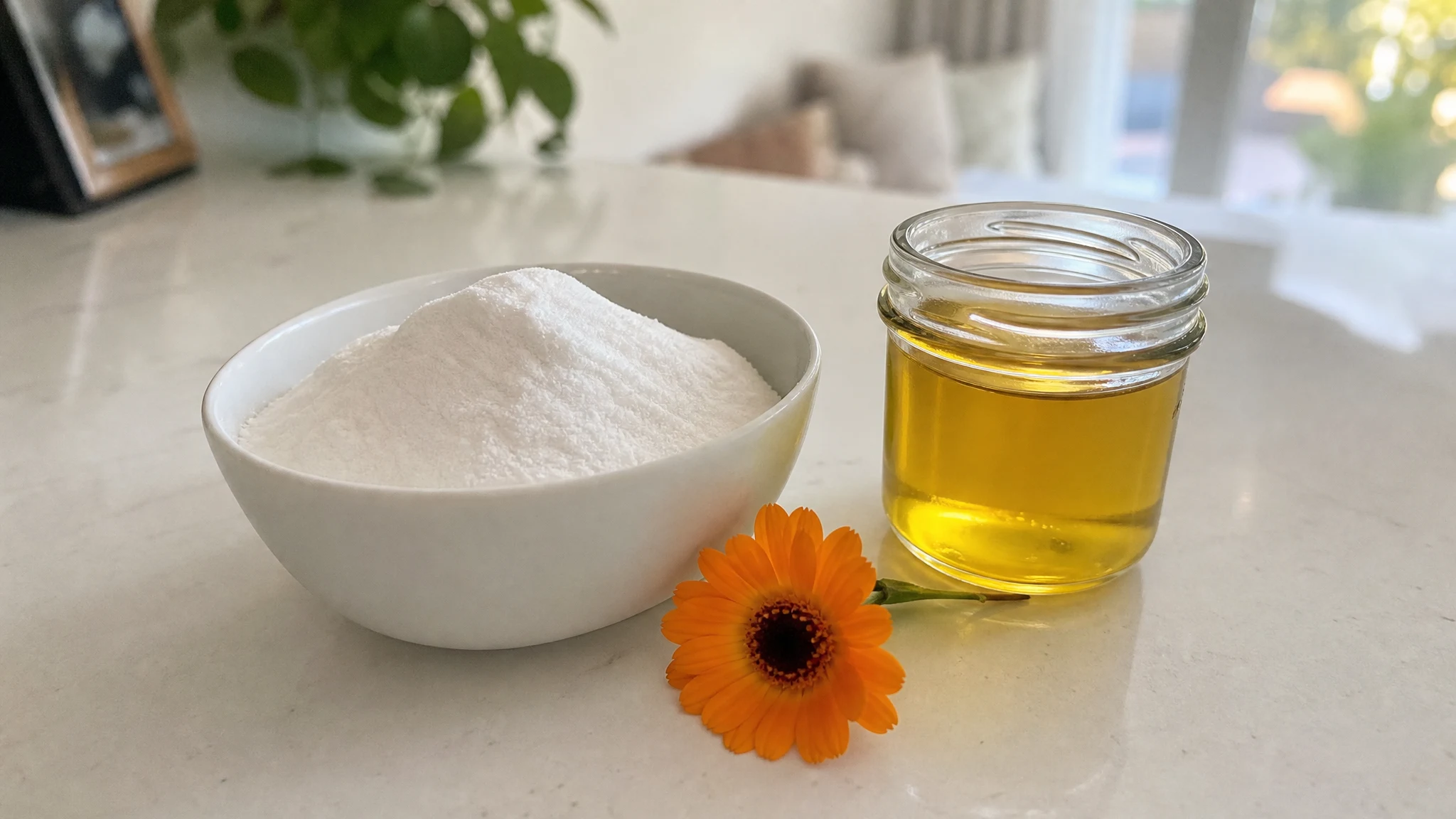
Three plants in a large pot would then yield around 15 to 25 grams dried. The EU herbal monograph lists a calendula oil extract at 1:10, flower to oil by weight, so 20 grams of dried flowers pairs with about 200 grams of oil. In other words, one generous pot makes one small bottle. Planting a few more containers scales it up nicely, and our growing and harvesting guide covers larger plots.
When to sow calendula and where to place pots
Calendula is a cool-season annual. In the mildest USDA zones (9b through 11) University of Florida says it is generally planted in the fall for winter and spring color. Elsewhere, Utah State recommends sowing seed a quarter inch deep once the soil reaches about 60 F, with germination in one to two weeks; transplants go out after the last frost.
Heat is the thing to plan around. Utah State says calendula prefers temperatures under 85 F and often stops blooming in extreme heat, though plants survive down to 25 F. A pot on a sunny patio warms up faster than a garden bed (that is our reasoning, not a sourced measurement), so in hot regions a spot with afternoon shade keeps the flowers coming longer. Florida notes full sun is best, with part shade tolerated.
How much room, soil and water do pots need?
The extension sheets give spacing for the ground: 8 to 12 inches in Utah, with Florida citing up to 12 to 18 inches for mass plantings, and plants reaching up to 2 feet tall and wide. Working from those figures, each plant wants roughly 6 inches or more of room, so a pot holding three plants should be well over a foot across. Treat that as a sensible starting point and not a tested container size. Use a fertile, well-drained mix with drainage holes. Utah State likes a soil pH of 6 to 7, recommends routine watering without overdoing it, and mentions an optional monthly side-dressing of fertilizer for steady blooms. Containers dry out faster than beds, so check with a finger before watering.
Deadheading and picking calendula flowers for re-bloom
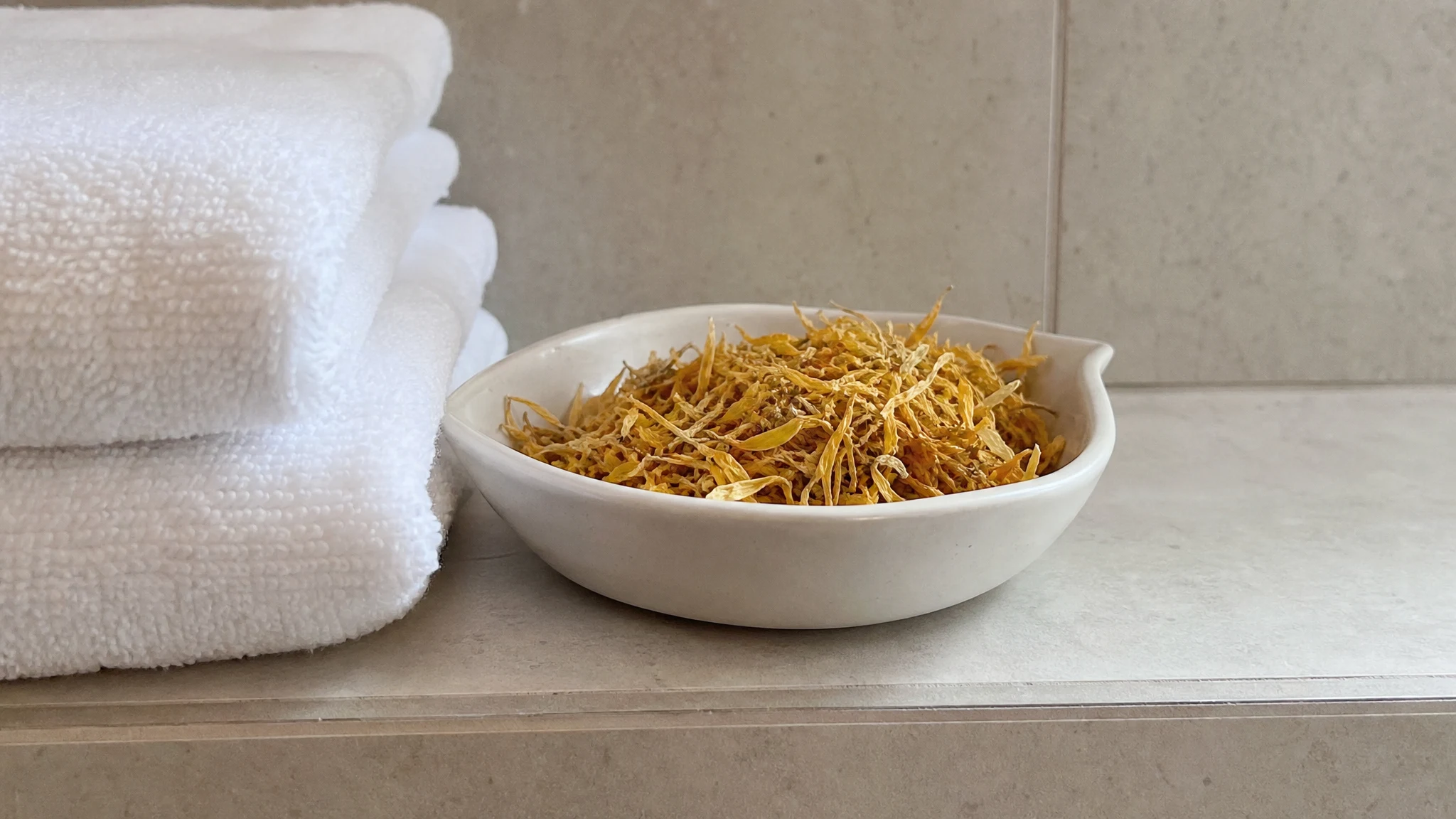
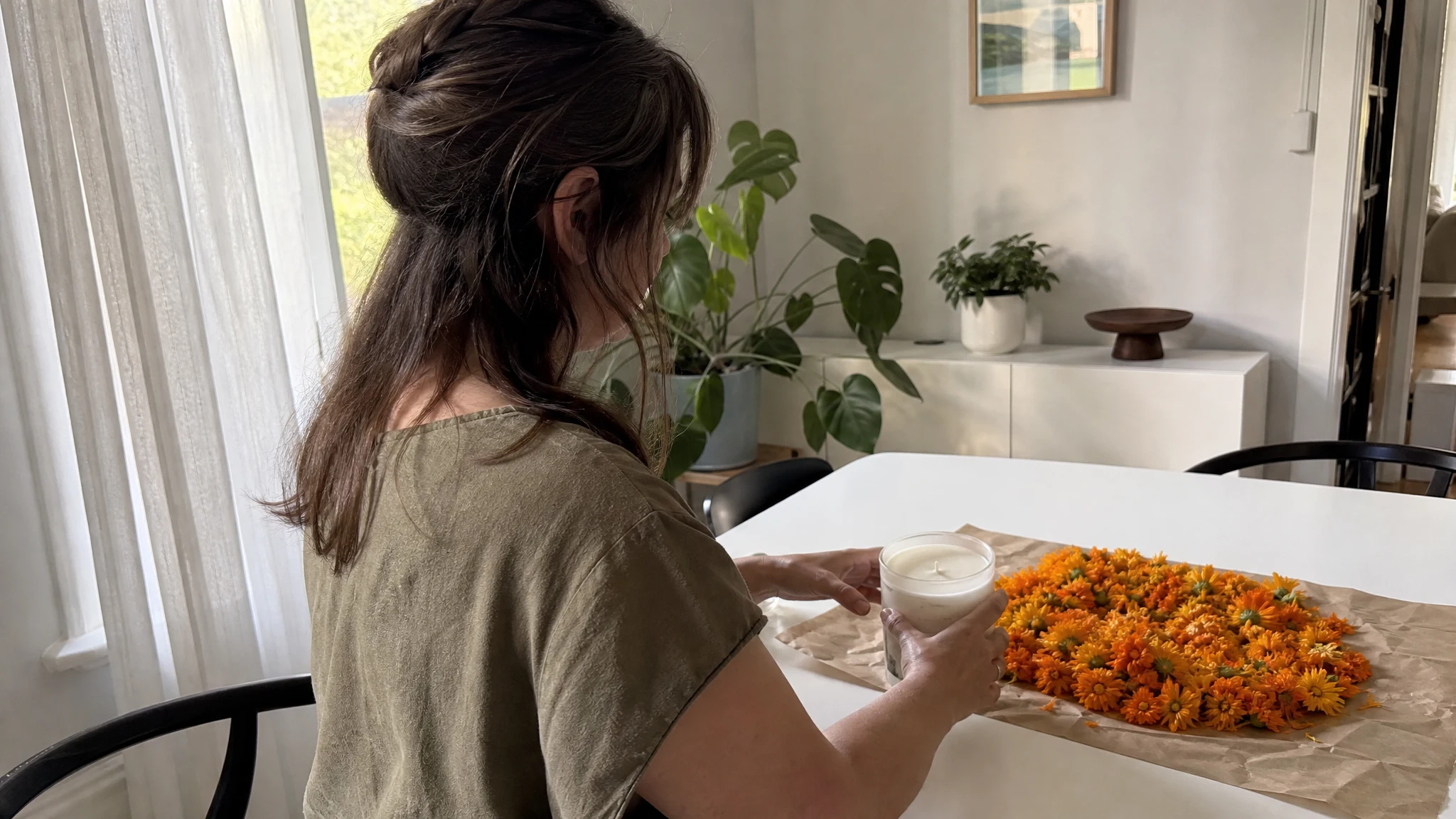
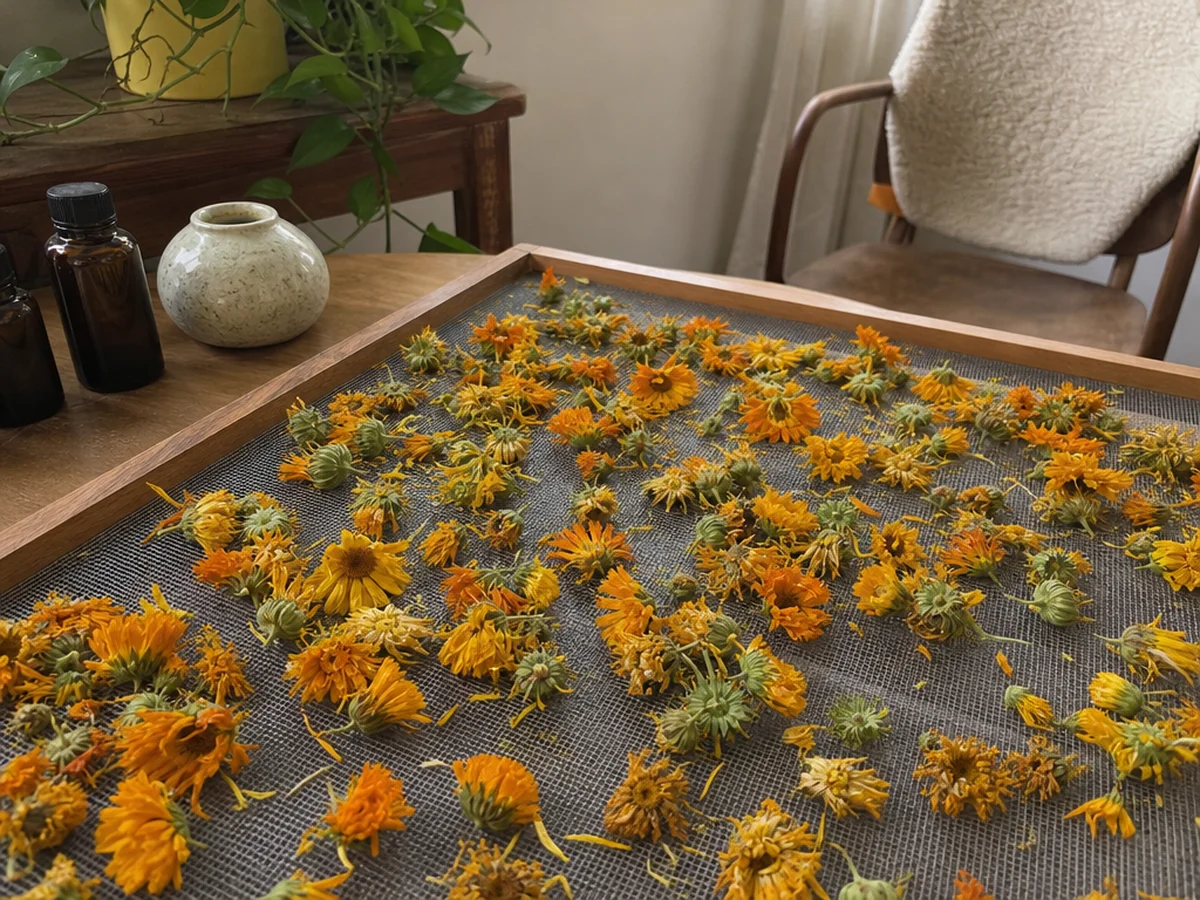
Here is the part we enjoy most. Removing spent flowers encourages re-bloom, and Utah State says plants re-bloom in about two weeks after a harvest. For oil growers, deadheading and harvesting are the same job: pick fully open flowers regularly, and the plant keeps producing. Dry them in a well-ventilated spot away from direct sunlight; Utah State says blooms dry in one to five days, then store them in a moisture-tight container somewhere cool and dark. Our drying guide walks through the details, and the dry flower is what we start from too: we buy dried calendula from growers on family farms in Egypt, Hungary, the Balkans and Turkey, then make the oil in-house.
A few practical notes from the same sheets: aphids can usually be controlled with a hard stream of water or insecticidal soap, powdery mildew prefers cool, damp, crowded conditions (so give pots some air), and calendula self-seeds readily, if you do not deadhead, so next year's plants may arrive uninvited.
Enjoying a pot garden by the back door
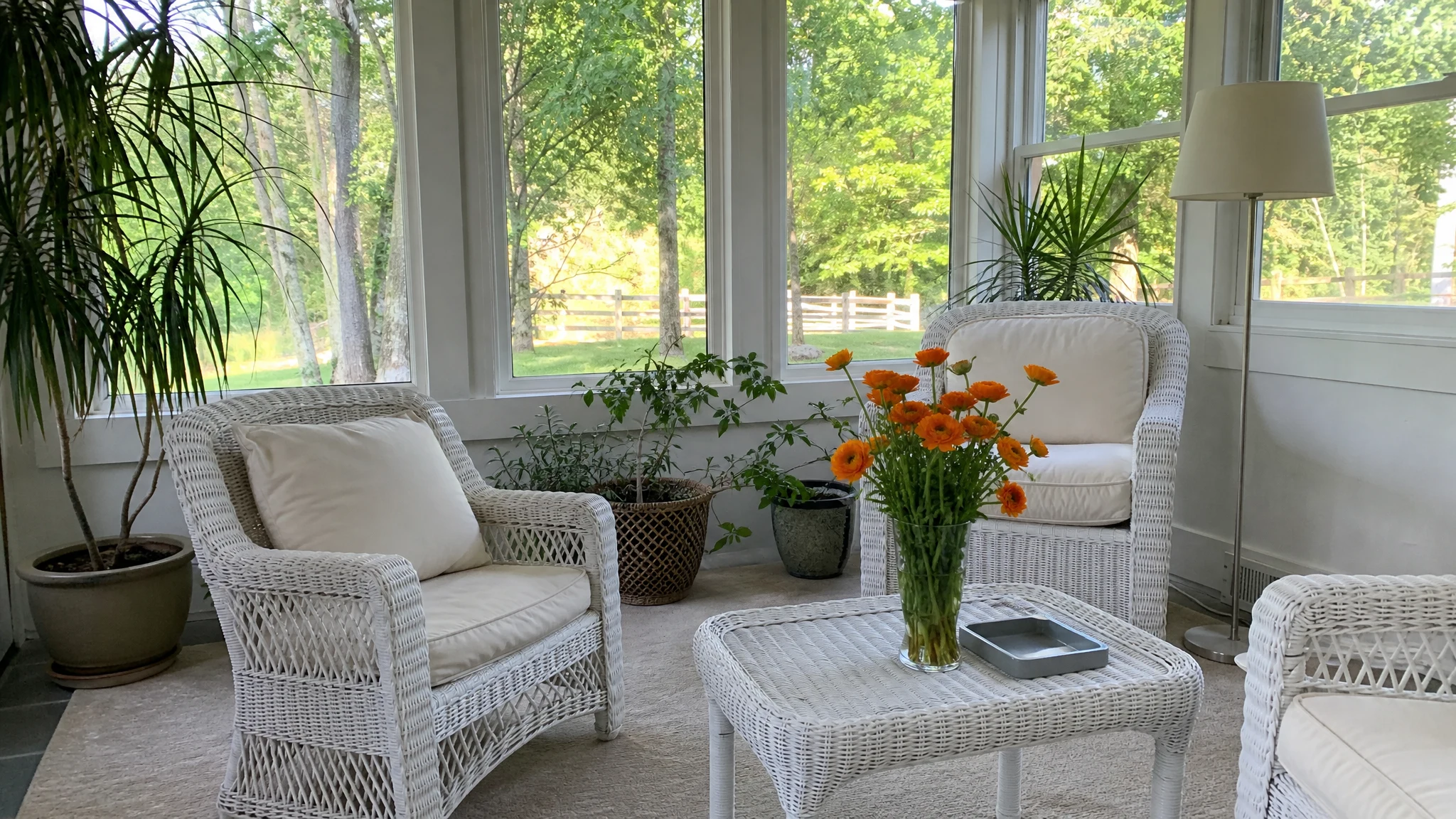
Part of the charm of growing in containers is how close everything is. Set the pot by the back door or on the patio steps and you will see the flowers every time you walk past, which makes picking a daily habit and not a chore. Keep a pair of small snips and a shallow basket in the same spot so the job is always ready.
A few practical choices make pots easier. Terracotta breathes and dries out faster than glazed pots, so it suits gardeners who tend to overwater, while glazed pots hold moisture longer in a hot spot. Whichever you choose, a saucer underneath saves your patio, and a note with the sowing date helps you spot when the first harvest should arrive.
Our advice for a first season is to start with one big pot and see how you like it. Calendula is forgiving, and a single pot of golden flowers on a sunny step is its own reward even before it becomes a jar of oil.
Daisy-family allergy and handling the flowers
Calendula belongs to the daisy family, and the EU monograph lists hypersensitivity to Asteraceae plants among its contraindications. If you react to ragweed, chamomile or daisies, handle the flowers lightly at first, and read our allergy article before making oil from your own harvest.
A pot by the back door, a pair of scissors and a small jar of oil by autumn: it is a modest project, and a very satisfying one.
Calendula Oil
Nature's Golden Botanical, bottled: small-batch calendula oil in sizes from 0.5 oz to bulk.
From $13.99
Shop Calendula Oil →Sources & Further Reading
- How to Grow Calendula in Your Garden (Utah State University Extension, 2020)
- Calendula officinalis: Calendula, Pot Marigold (FPS87, UF/IFAS Extension)
- European Union herbal monograph on Calendula officinalis L., flos (EMA/HMPC, 2018)