Calendula Oil for Estheticians: A Pre-Treatment Checklist
A client sits down for a facial and mentions that her skin reacts to almost everything. Before any oil comes out of the cupboard, three questions matter more than technique: who is this client, what is in this bottle, and where has it been kept. This is a short checklist for licensed estheticians weighing an infused calendula oil for the treatment room. Your state board decides what falls inside your scope of practice; what we can speak to is the oil itself.
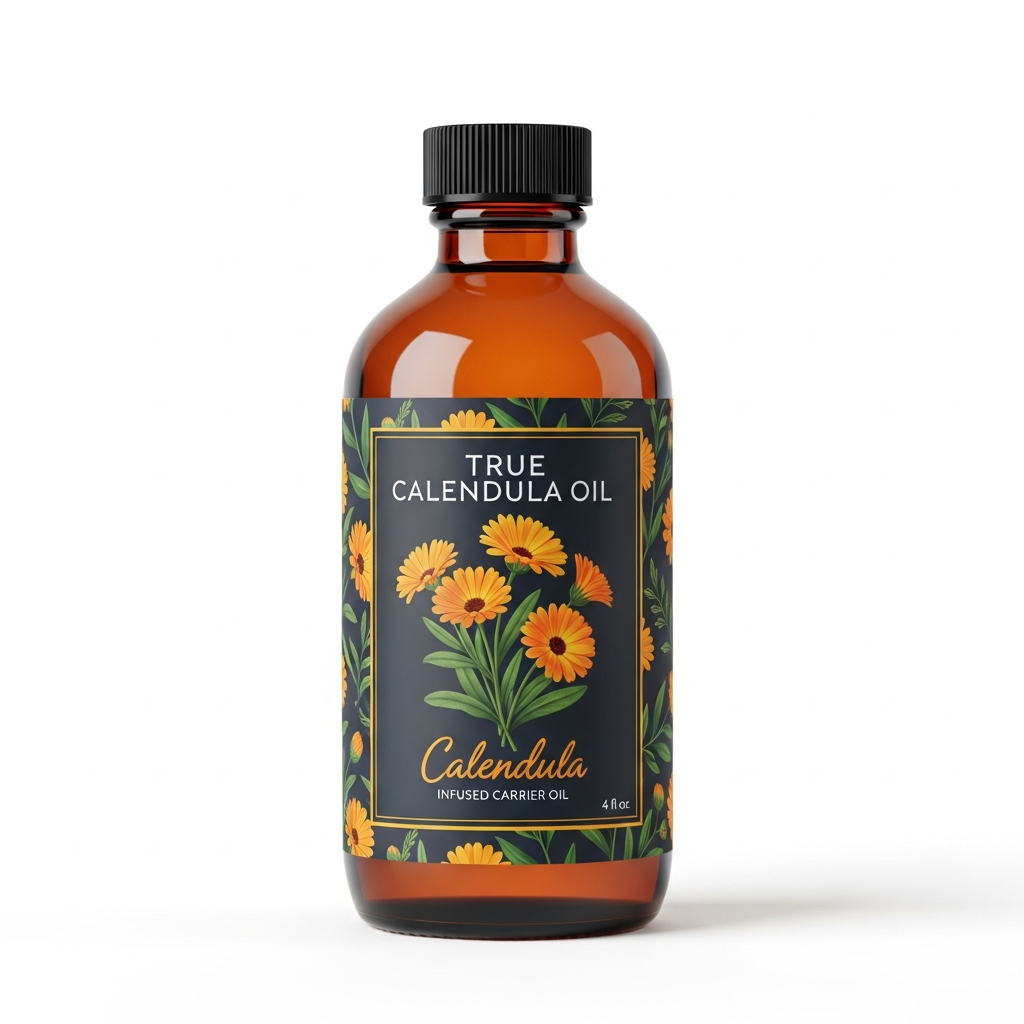
Calendula Oil
Our own small-batch calendula oil, in sizes from 0.5 oz to bulk.
From $13.99
Shop Calendula Oil →Client intake: asking about daisy-family plant allergy
The question worth adding to your form is whether the client reacts to plants in the daisy family. Calendula is a member of Asteraceae, alongside chamomile, arnica, chrysanthemum and ragweed. The EU herbal monograph for calendula flower lists hypersensitivity to Asteraceae plants as a contraindication, says skin sensitization has been reported with unknown frequency, and does not recommend use on children under 6 or during pregnancy and lactation because adequate data are lacking.
The research on cross-reactions is small but consistent in direction. A Danish study of people with Compositae allergy found that 8 of 12 chamomile-sensitive patients reacted to chamomile-containing products and 5 of 6 arnica-sensitive patients reacted to arnica products, and its authors concluded that Compositae-allergic people should be warned against topical use of Compositae-containing products. That study did not test calendula, so extending it here is a precaution rather than a finding. An Austrian series of 443 dermatitis patients found about 2 percent (9 people) reacted to marigold; those were clinic patients, so please do not read it as a rate for your clientele. The practical point is simply to ask.
Patch testing calendula oil for first-time clients
A same-visit dab on the wrist only tells you about the next few minutes. For a client who has never used calendula, a gentler approach is to send home a small sample to try on the inner forearm before the appointment. That is our suggestion, reasoned from how short a single visit is, and not a clinical protocol. Anyone with a history of contact dermatitis or eczema belongs with a dermatologist before a new botanical goes near the face.

Documentation checklist for infused oil suppliers
An infused oil is only as dependable as the paperwork behind it, so here is the list we would put to any supplier. We hold ourselves to it.
- What is the carrier? We buy dried calendula flowers, extract the calendula on its own, and then bring that extract into a carrier oil. The carrier is named on the batch paperwork, which matters if a client has a nut or seed allergy.
- Which tests were run, and by whom? Every batch of ours goes to independent third-party labs for physical assays, chemical assays and contaminant screening, and a Certificate of Analysis PDF is linked on our shop page. A certificate lists only the tests that were performed, and a review of how botanical ingredients get adulterated shows that some routine analytical methods can be fooled, so it is worth knowing exactly which tests sit behind any certificate you are shown.
- Is the bottle dated and lot-numbered? Ours is, in glass, in every size. The date tells you when to rotate stock, and the lot number lets you trace a question back to a batch. Email the lot number to support@truecalendulaoil.com and we will send the batch documentation.
- What else is in it? Nothing is added to ours: no synthetic preservatives, no tocopherol, no stabilizers.
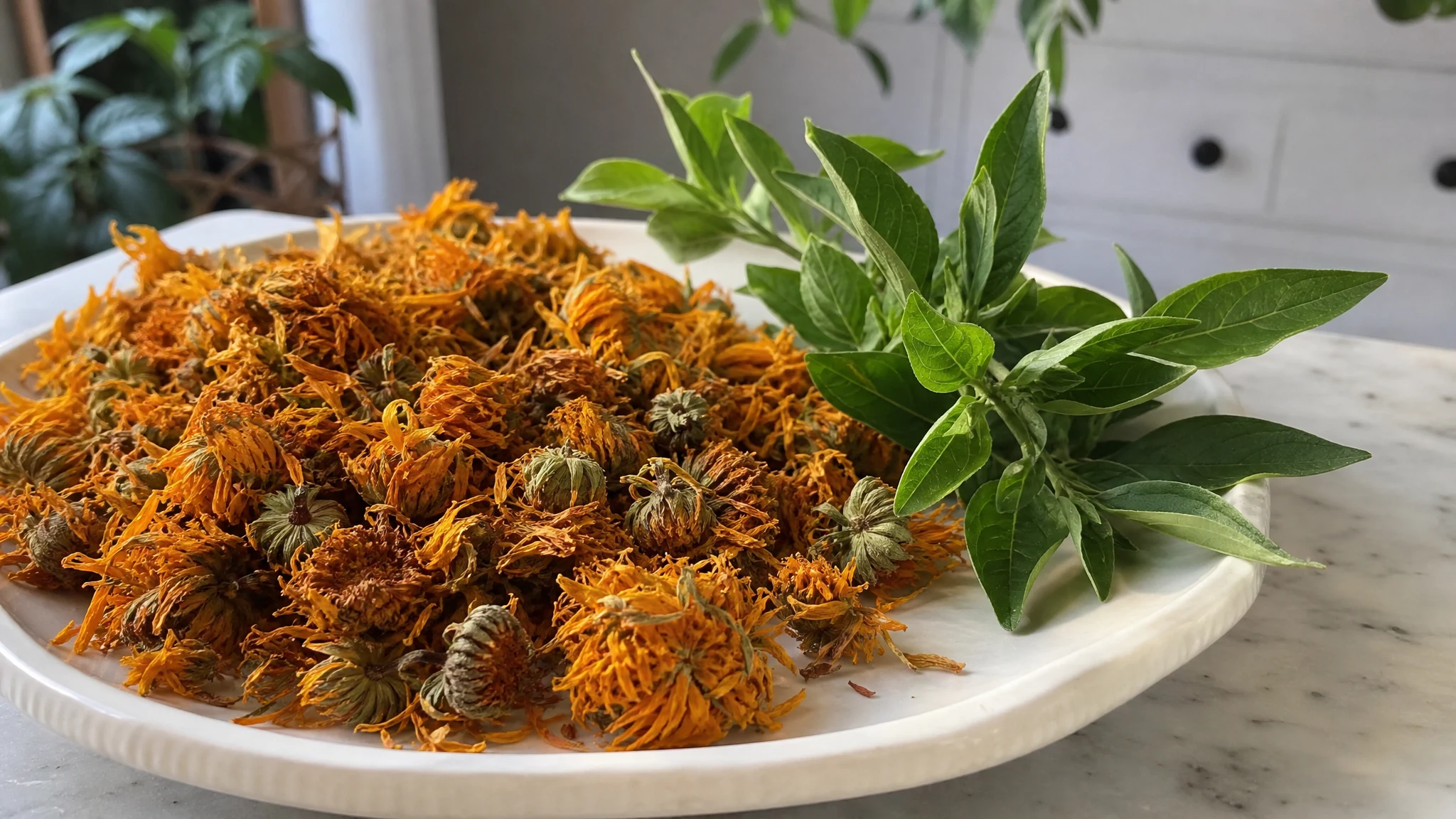
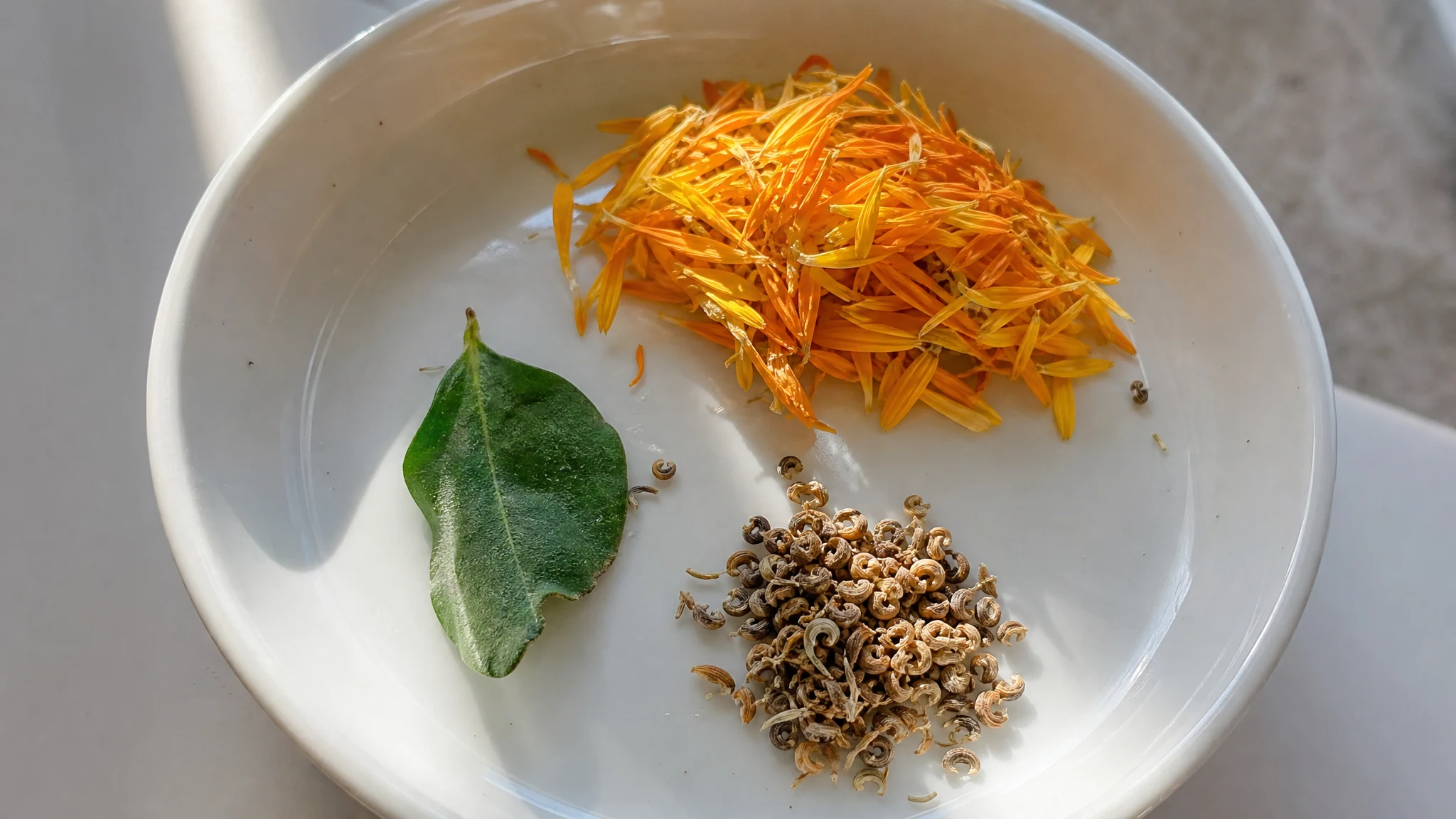
The flowers themselves come from family farms in Egypt, Hungary, the Balkans and Turkey, where they are organically grown, with no synthetic pesticides or fertilizers, and dried naturally without industrial heat or forced air. We separate the petals by hand from sound, whole dried flower heads rather than broken florets. If a season goes badly and the flowers do not meet our standard, we sell out instead of lowering it. Our quality article and buying guide go deeper on the comparison.
What do clients ask about calendula oil?
Clients tend to want plain answers: what is this, where do the flowers come from, what will it feel like. It helps to practice a one-sentence description so it comes out naturally. Ours would be that it is an infused oil, a whole-flower infusion in a carrier oil with nothing added, made from organically grown flowers from family farms.

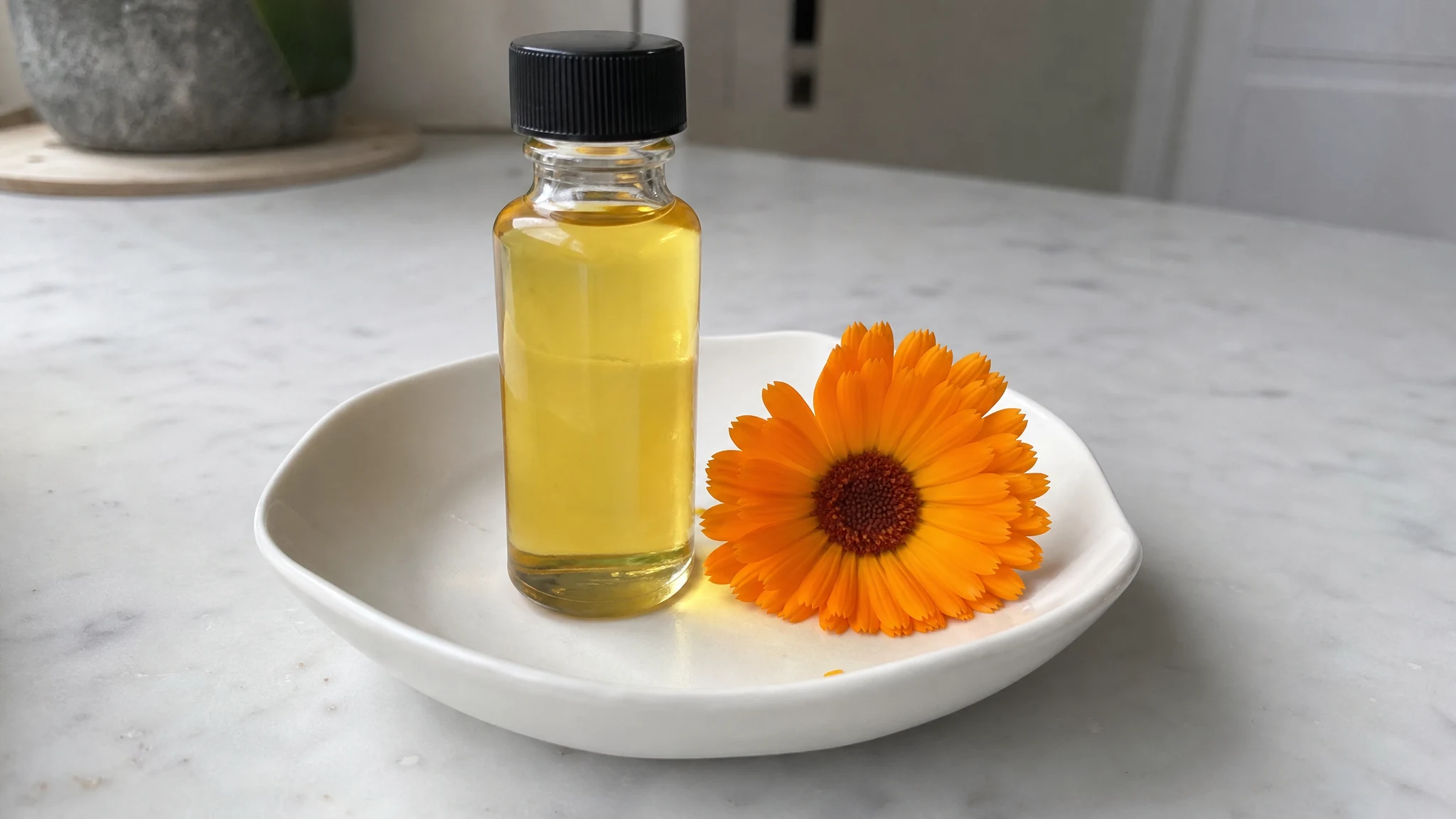
Before a first treatment, put a drop on the back of your own hand and watch it spread. Note the golden color and how it feels a minute later, so you can describe it honestly rather than from a label. A client who can see the oil in a small dish, and who hears how it was made, usually feels more at ease than one who is handed a mystery bottle.
Why are treatment rooms hard on calendula oil?
Treatment rooms are warm, bright and full of steam, which is hard on oils. A review of vegetable oil oxidation describes light and high temperatures as the factors that drive oils toward going off. Reasoning from that, a closed cupboard away from steamers, heaters and sunny windows is a sensible home, and decanting a week's worth into a small working bottle keeps the stock bottle closed. If an oil smells noticeably different from when it arrived, set it aside rather than using it on a client. Our storage guide has more.
Blending your own formulas: bottle sizes to test
If you blend your own formulas, we suggest starting with a 4 oz or 8 oz bottle to check stability and compatibility, and a 16 oz bottle for a first small production run. Larger sizes run up to bulk on the same shop page, with no separate wholesale gate. For deeper questions about batches, the contact page reaches us directly, and our guide to massage and blending covers dilution thinking.
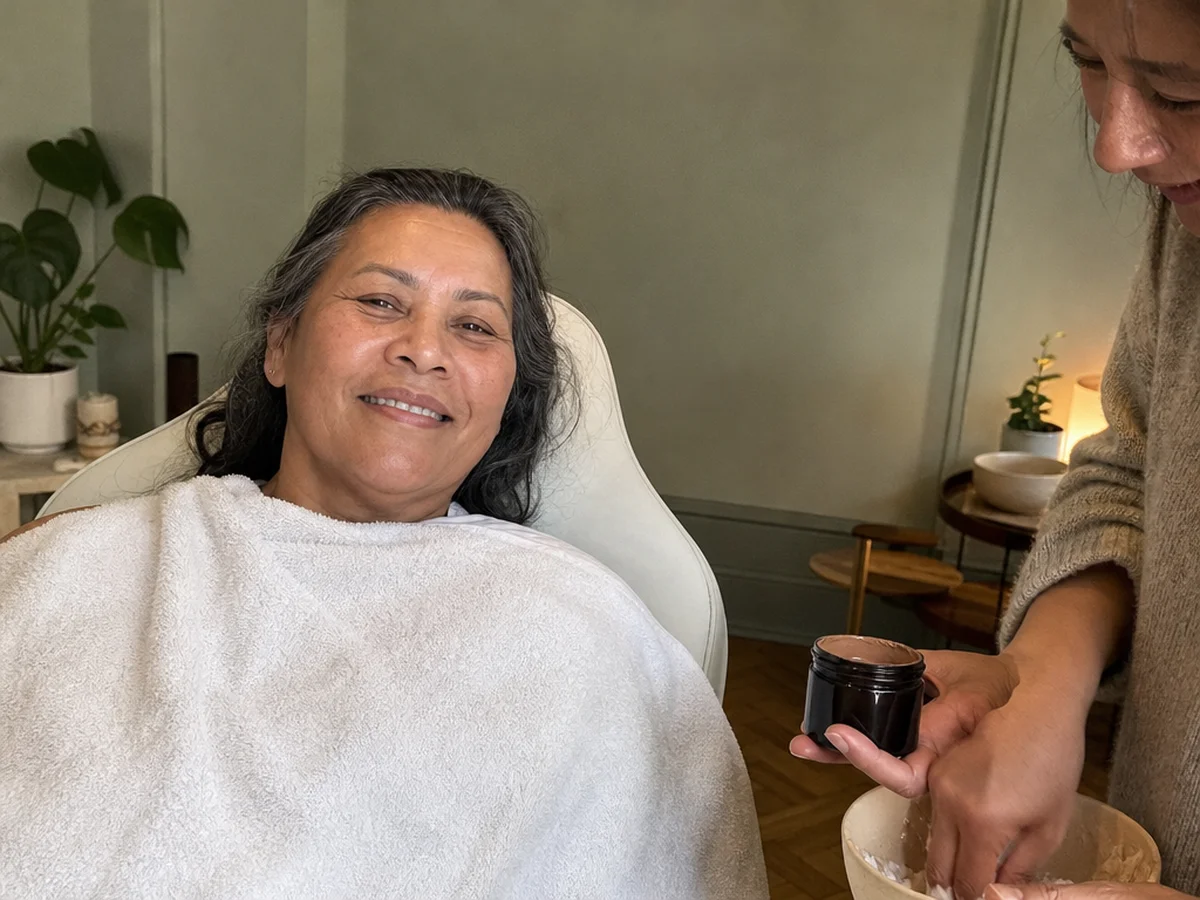
A treatment room runs on trust, and trust comes from asking plain questions and getting plain answers. A supplier who welcomes your checklist is usually one worth keeping.
Calendula Oil
Nature's Golden Botanical, bottled: small-batch calendula oil in sizes from 0.5 oz to bulk.
From $13.99
Shop Calendula Oil →Sources & Further Reading
- EMA/HMPC, 2018. European Union herbal monograph on Calendula officinalis L., flos.
- Paulsen E et al., 2008. Cosmetics and herbal remedies with Compositae plant extracts - are they tolerated by Compositae-allergic patients? Contact Dermatitis.
- Reider N et al., 2001. The seamy side of natural medicines: contact sensitization to arnica (Arnica montana L.) and marigold (Calendula officinalis L.). Contact Dermatitis.
- Gafner S et al., 2023. Botanical Ingredient Forensics: Detection of Attempts to Deceive Commonly Used Analytical Methods for Authenticating Herbal Dietary and Food Ingredients and Supplements. J Nat Prod.
- Gharby S et al., 2025. Vegetable oil oxidation: Mechanisms, impacts on quality, and approaches to enhance shelf life. Food Chem X.