How to Judge Calendula Oil Quality: What to Ask
Two bottles of calendula oil can sit side by side on a shelf, both golden, both labeled with the same flower, and still be quite different oils. Color and a friendly label only tell part of the story. Here is what we would look at if we were choosing a bottle, and how we make ours.
Calendula Oil
Our own small-batch calendula oil, in sizes from 0.5 oz to bulk.
From $13.99
Shop Calendula Oil →Calendula officinalis flowers: growing and drying methods
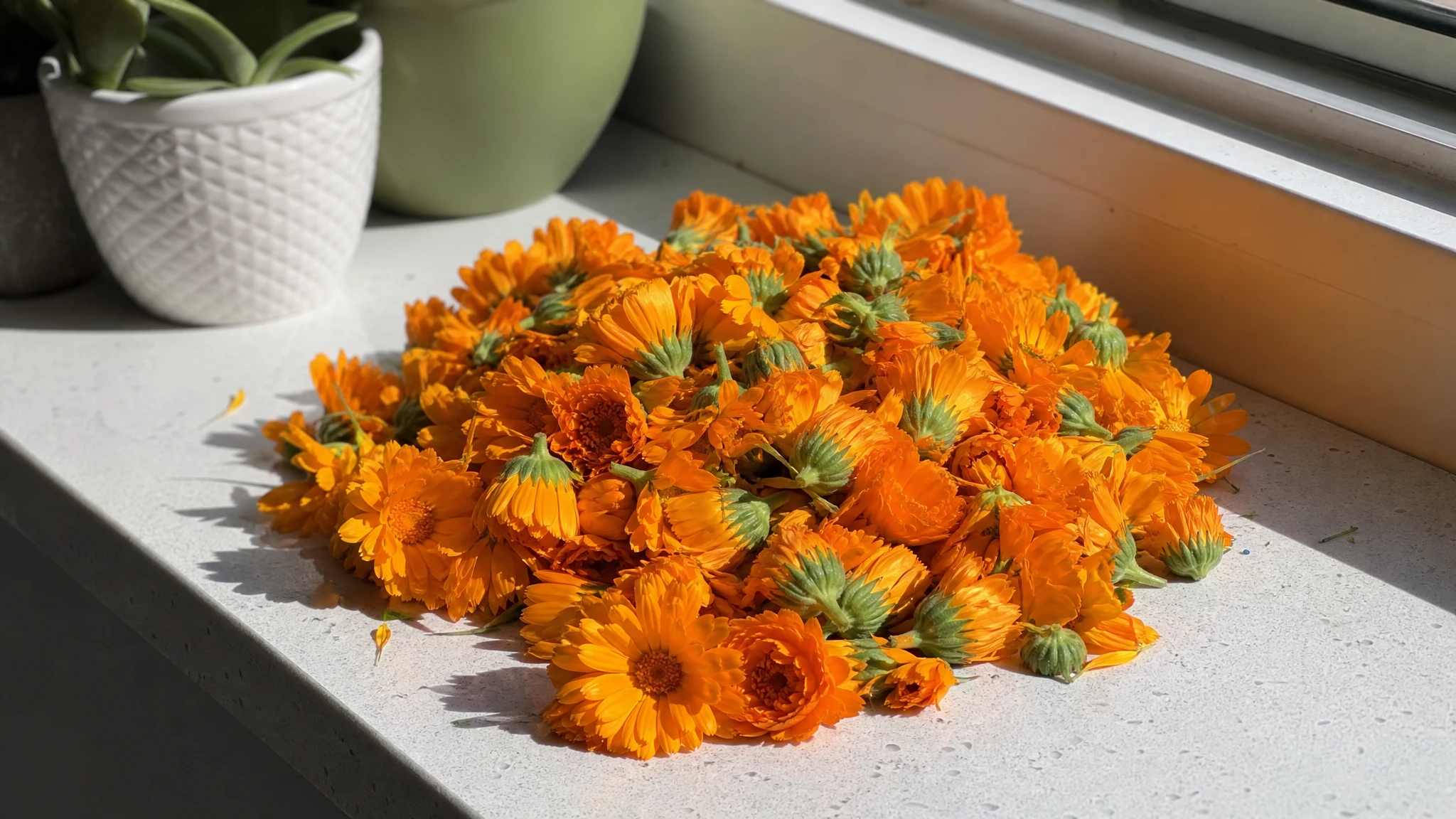
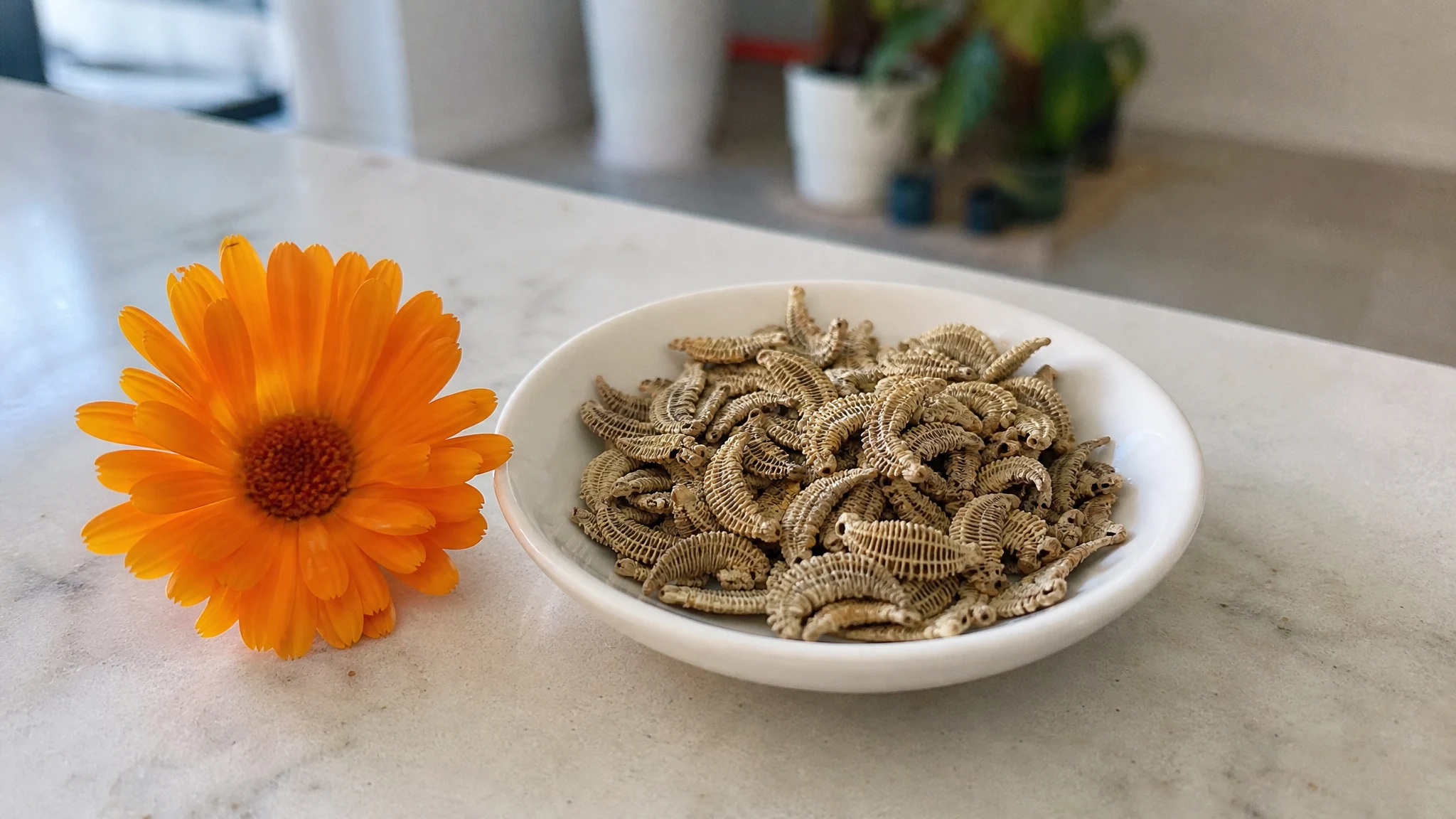
Everything starts with Calendula officinalis, the pot marigold. Our flowers are grown organically, with no synthetic pesticides or fertilizers, on family farms in Egypt, Hungary, the Balkans and Turkey, and we have worked with the same growers for over a decade. We say organically grown rather than certified organic, because we describe only what we can document. We buy dried flowers, dry them naturally by traditional methods with no industrial heat or forced air, and make the oil ourselves in-house, from dried flower to sealed bottle. If a season goes badly and the flowers do not meet our standard, we would rather sell out than lower it.
Why do hand-separated petals matter in infused oil?
We infuse petals separated by hand from sound, whole dried flower heads, not broken florets. It is the sort of detail that never shows up on a front label, yet it shapes the oil. Ask any maker which part of the flower goes in and how it is chosen.
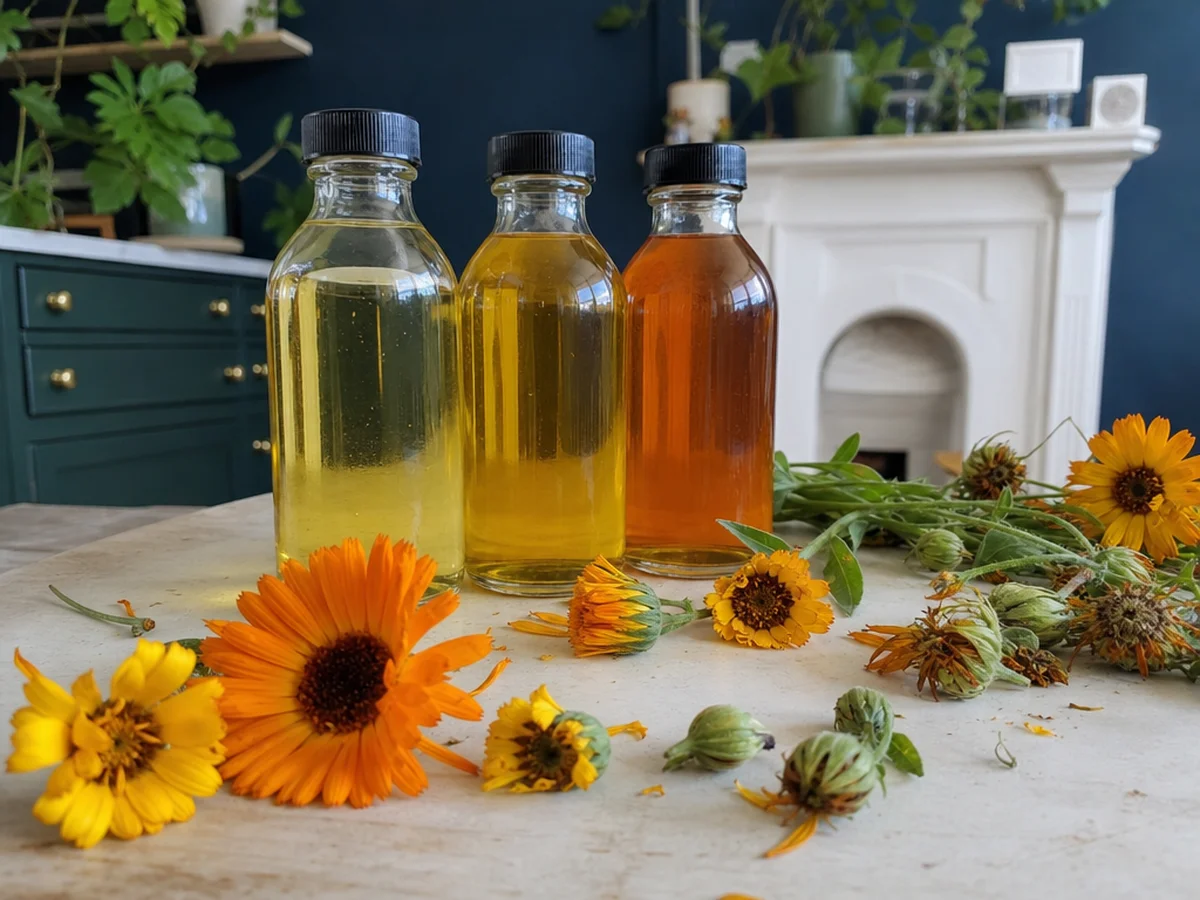
Can color tell you if calendula oil is good?
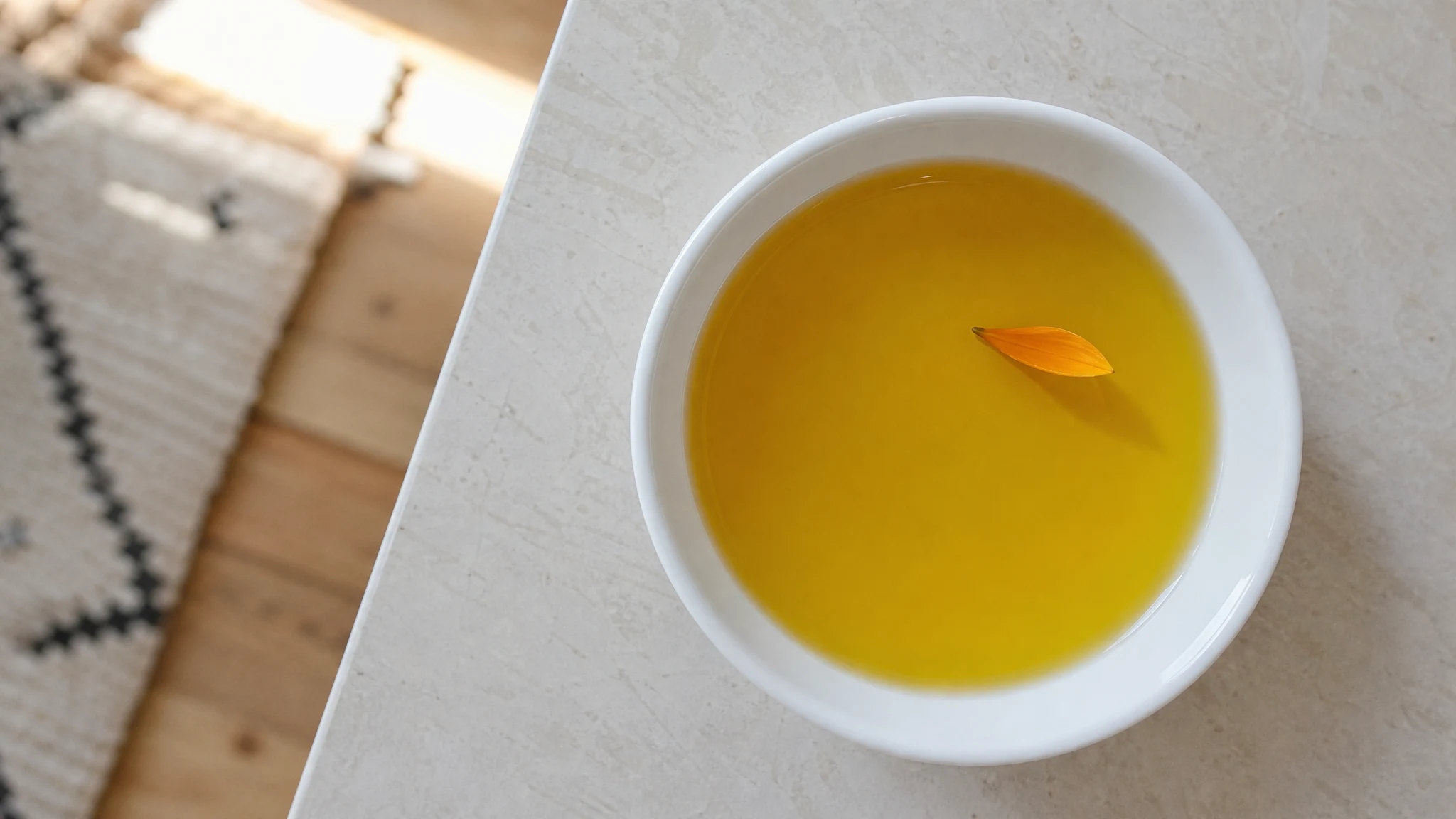
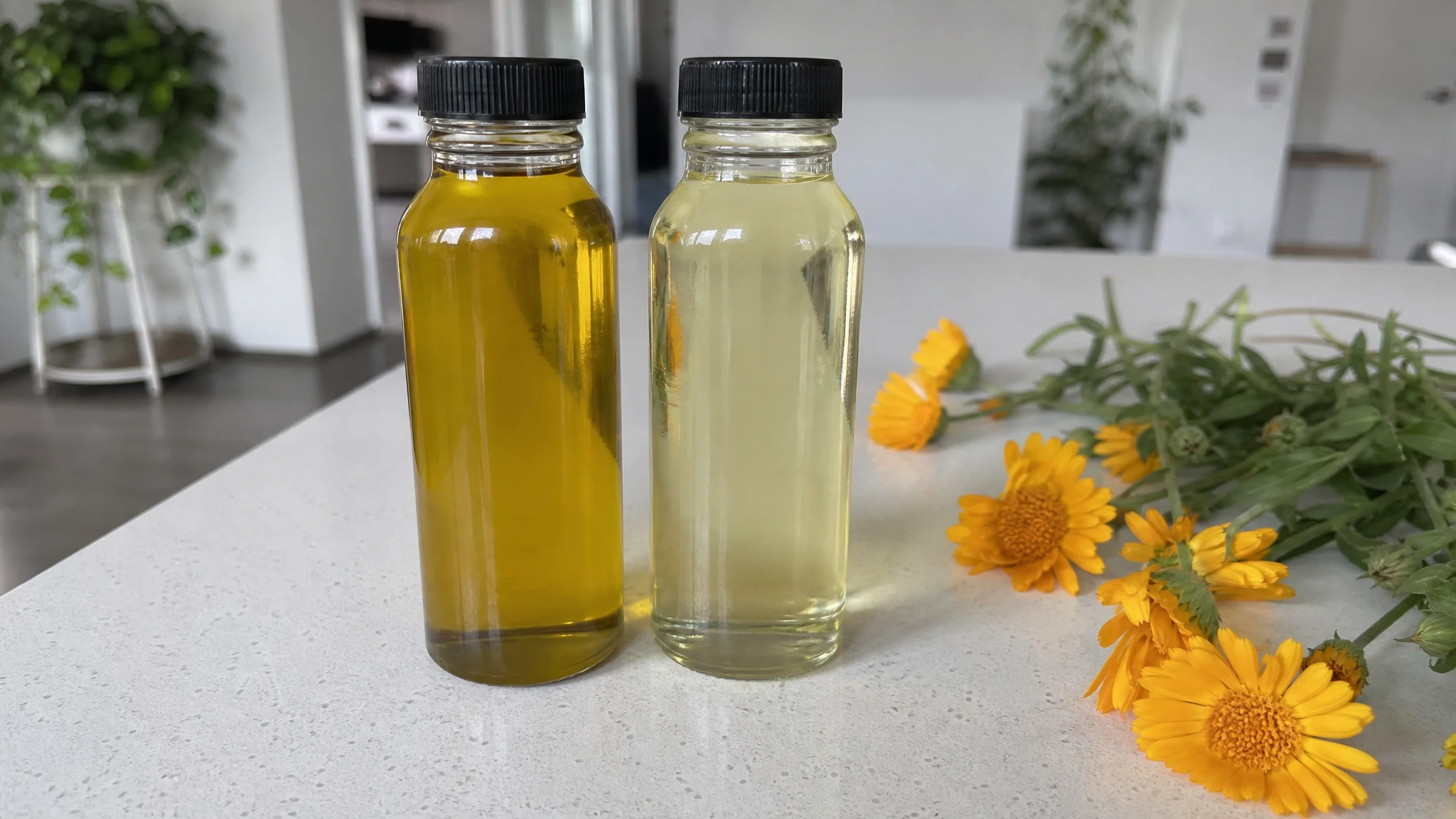
The orange in calendula comes from carotenoids, fat-soluble compounds that the flower holds (Isolation of Bioactive Compounds (Carotenoids, Tocopherols, and Tocotrienols) from Calendula Officinalis L., and Their Interaction with Proteins and Oils in Nanoemulsion Formulation). A deep color is pleasant to look at, but it is not a measurement. The depth of an infused oil will also depend on the flowers, the amount of petal used, and the carrier it rests in. Judge an oil by what its maker can tell you about each of those, not just by how it looks in the bottle.
Carrier oil choice in infused calendula oil
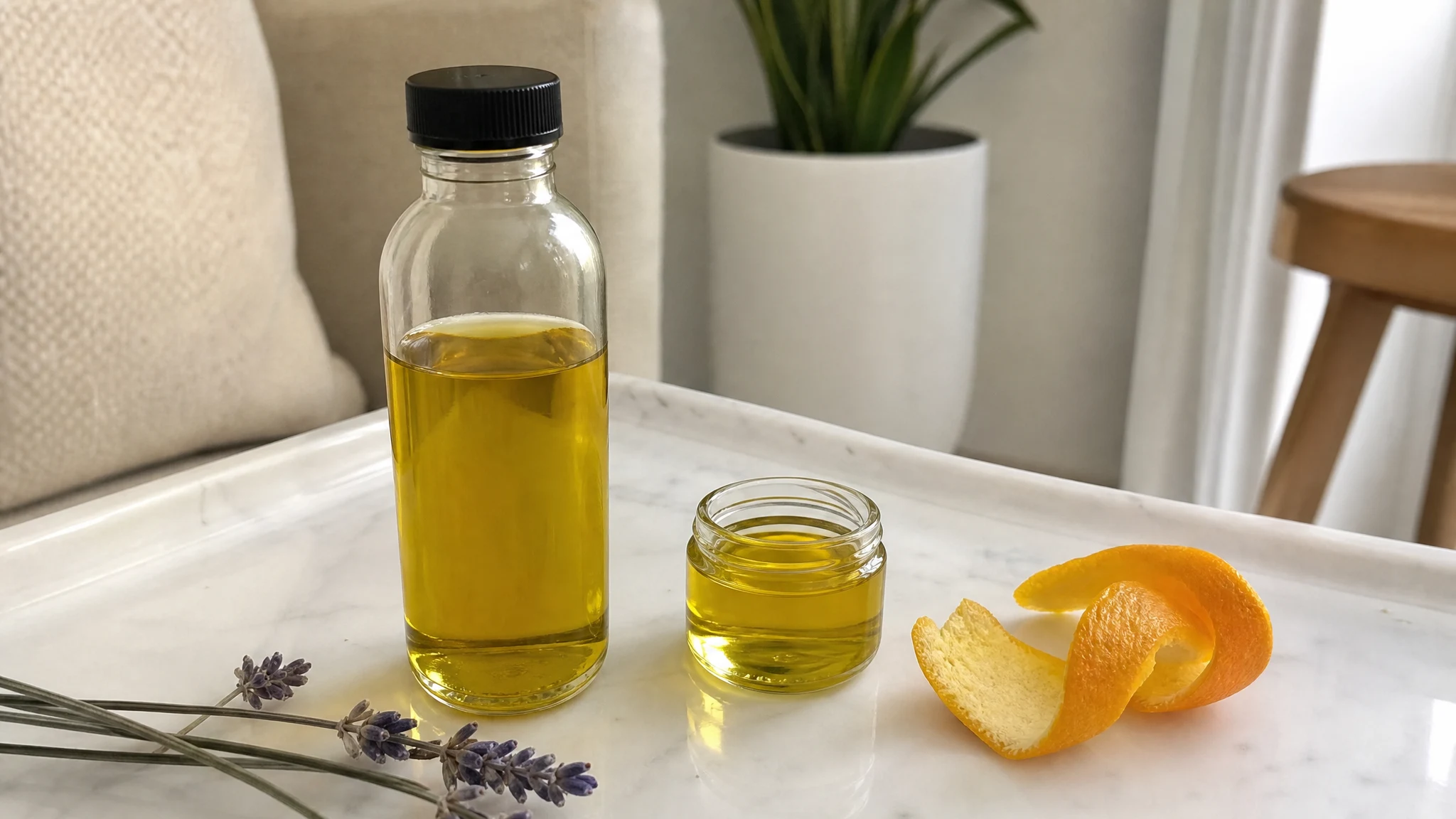
Because an infused oil is flower extract brought into a carrier oil, the carrier is most of what you are holding. It shapes how the oil feels, how it keeps and whether it suits anyone with an allergy. We make ours in two stages: we extract calendula on its own, then bring that extract into the carrier. The carrier is listed on our batch paperwork, so ask us for it by emailing your lot number to support@truecalendulaoil.com. Any supplier should be happy to tell you the same.
Which home checks work for an oil bottle?
Once the bottle is in your hands, a few simple looks tell you a lot. Hold it to the light: the oil should look clear and golden, not cloudy. Open it and smell it. You are looking for a gentle, plant-like aroma. Anything sharp, crayon-like or stale is worth a pause. Check that the bottle carries a date and a lot number, because without them you cannot tell how old the oil is.
Then rub a drop between your fingers. A good infused oil spreads easily and feels smooth rather than sticky. Do not judge it only by color, as we said above, but these small checks add up.
Batch paperwork and Certificate of Analysis as quality signals
"Tested" can mean many things, so we like the question: which tests, by whom, and on which batch? We send our oil to independent third-party labs for physical assays, chemical assays and contaminant screening, and a Certificate of Analysis PDF is linked on our shop page. Email the lot number from your bottle and we will send the batch documentation. Bottles are dated and lot-numbered, in top-grade glass in every size.
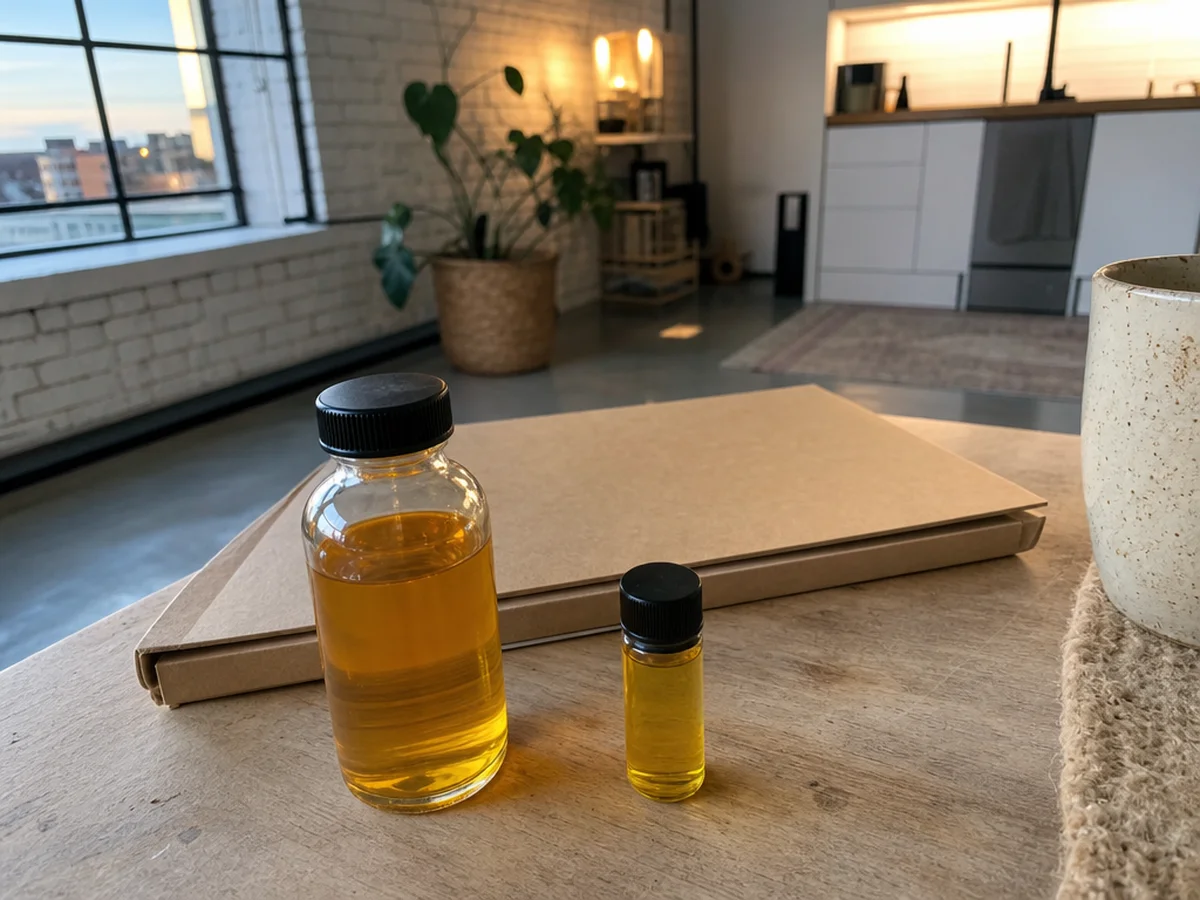
Which questions should you ask any oil supplier?
If you are comparing a few bottles, an email costs nothing. Ask which part of the flower goes in. Ask what the carrier oil is. Ask where the flowers were grown, whether the dates are on the bottle, and whether the batch paperwork is available. A maker proud of the oil will answer plainly, and one who dodges tells you something too.
Preservative-free calendula oil: freshness and bottle dates
We add nothing: no synthetic preservatives, no added tocopherol and no stabilizers. That keeps the ingredient list short and honest, and it makes the date on the bottle useful, since it tells you how old your oil is. Keep it in a cool, dark place with the cap closed; our storage guide has the details.
Three facts to record about an oil: maker, contents, source
We like to keep the questions simple, because a shopper should not need a chemistry degree to choose an oil. Our suggestion is to write down three things for any oil you consider: who makes it, what is in the bottle, and how we can learn more. If a label answers all three, that is encouraging. If it answers none, move on to the next one on the shelf.
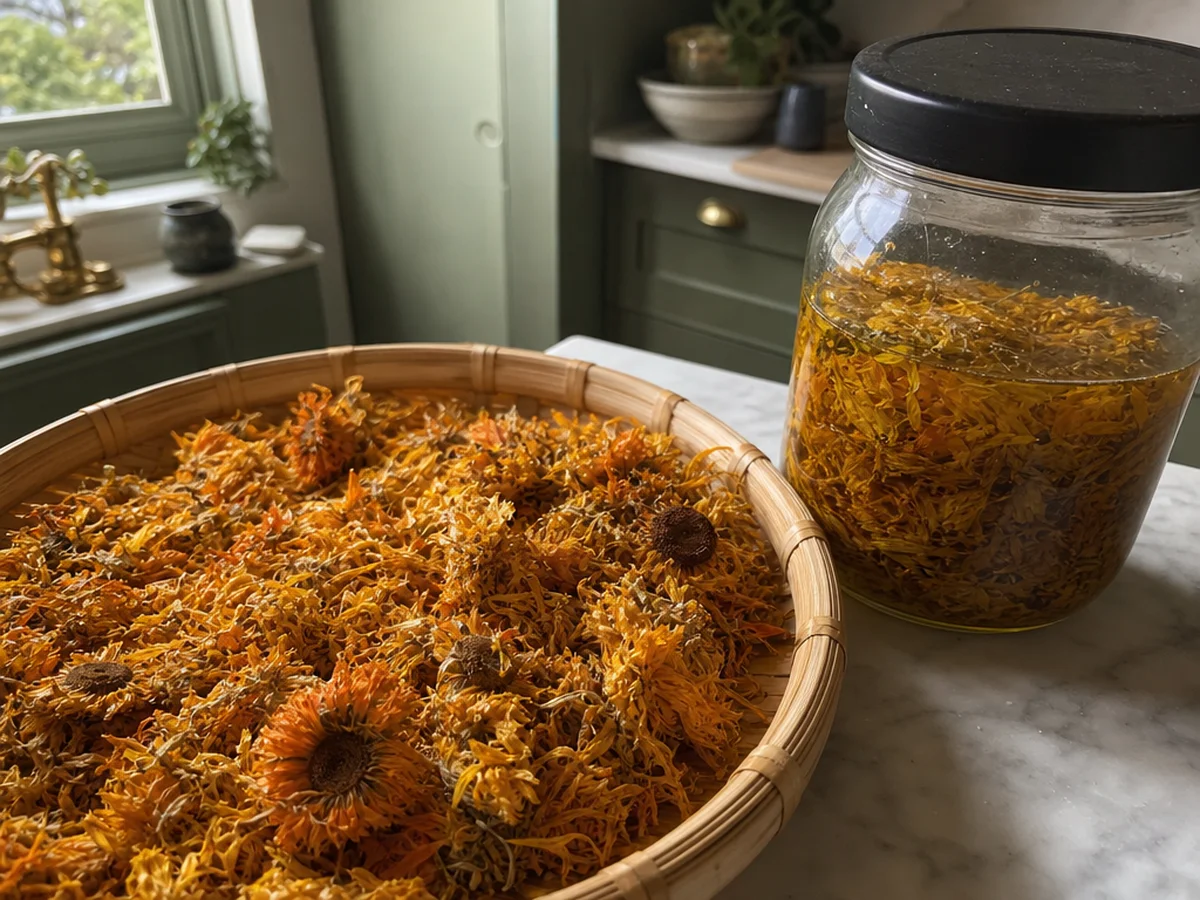
Daisy-family sensitivity and patch testing before any bottle
Calendula belongs to the daisy family, and the European herbal monograph lists hypersensitivity to that family as a contraindication (European Union herbal monograph on Calendula officinalis L., flos). Whatever bottle you choose, patch test first. Our buying guide and our organic explainer go further into the questions worth asking.
A good calendula oil is not a mystery. It comes from careful flowers, a clear process and a maker who answers questions, and we are always glad to.
Calendula Oil
Nature's Golden Botanical, bottled: small-batch calendula oil in sizes from 0.5 oz to bulk.
From $13.99
Shop Calendula Oil →