Calendula Chest Balm: How to Make a Cozy Evening Tin
There is something comforting about a tin of scented balm on the nightstand in the cold months. A calendula oil chest balm is that and nothing more: a soft, fragrant balm for the chest and shoulders, made from a base you may already have. If you are after a remedy for a cold or flu, a balm is not it, and the rest of this article is about making a pleasant one well.
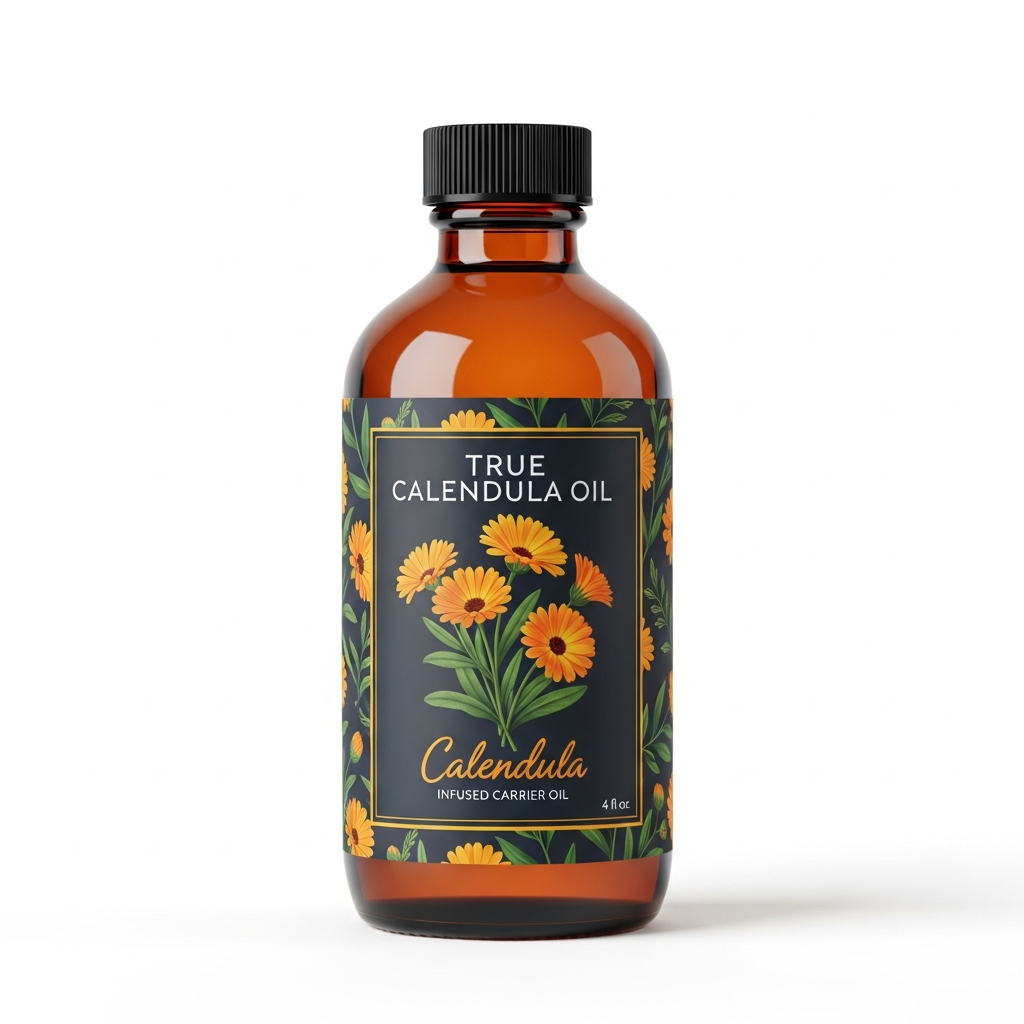
Calendula Oil
Our own small-batch calendula oil, in sizes from 0.5 oz to bulk.
From $13.99
Shop Calendula Oil →Why does calendula oil make a good balm base?
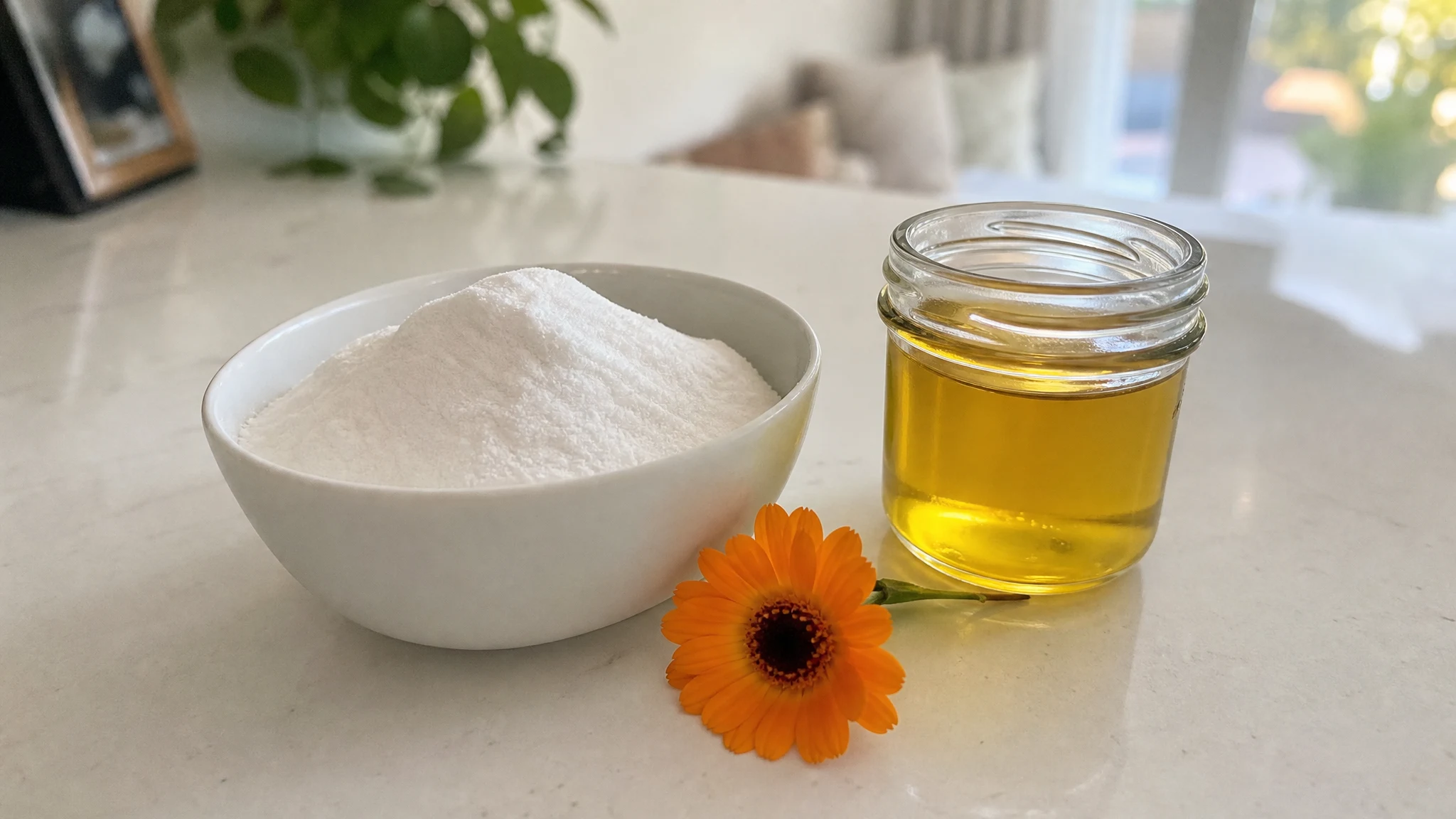
A balm is mostly carrier oil and wax, and an infused calendula oil does that job gracefully. Ours is made from dried flowers, extracted on their own and brought into a carrier oil, with nothing else added, so it melts into a balm like any gentle carrier. The carrier is on the batch paperwork, so email the lot number to support@truecalendulaoil.com if you want to know which one before you make it. Any plain carrier oil would work in this recipe too, and we mention that because the oil is a base here, not a star ingredient. Beeswax is easy to find at a craft shop or natural grocery store.
Beeswax to infused oil ratio for a balm
A common starting point for salves is about 1 part beeswax to 4 parts infused oil, softer with less wax and firmer with more. Mountain Rose Herbs' salve recipe uses 1 ounce of beeswax to 4 ounces of infused oil and suggests a cold spoon in the freezer to test consistency. Weighing is more accurate than measuring by volume, because wax and oil differ in density. Here is a 100 g batch, using the 1:4 idea as arithmetic:
- 80 g calendula oil and 20 g beeswax, melted together gently in a double boiler.
- Take it off the heat and let it cool a little before stirring in any scent, so the heat does not drive it off.
- Pour into a clean, dry tin and let it set.
A balm made of oil and wax contains no water, so it needs no preservative. Keep it that way by keeping water out of the tin and using clean, dry fingers.
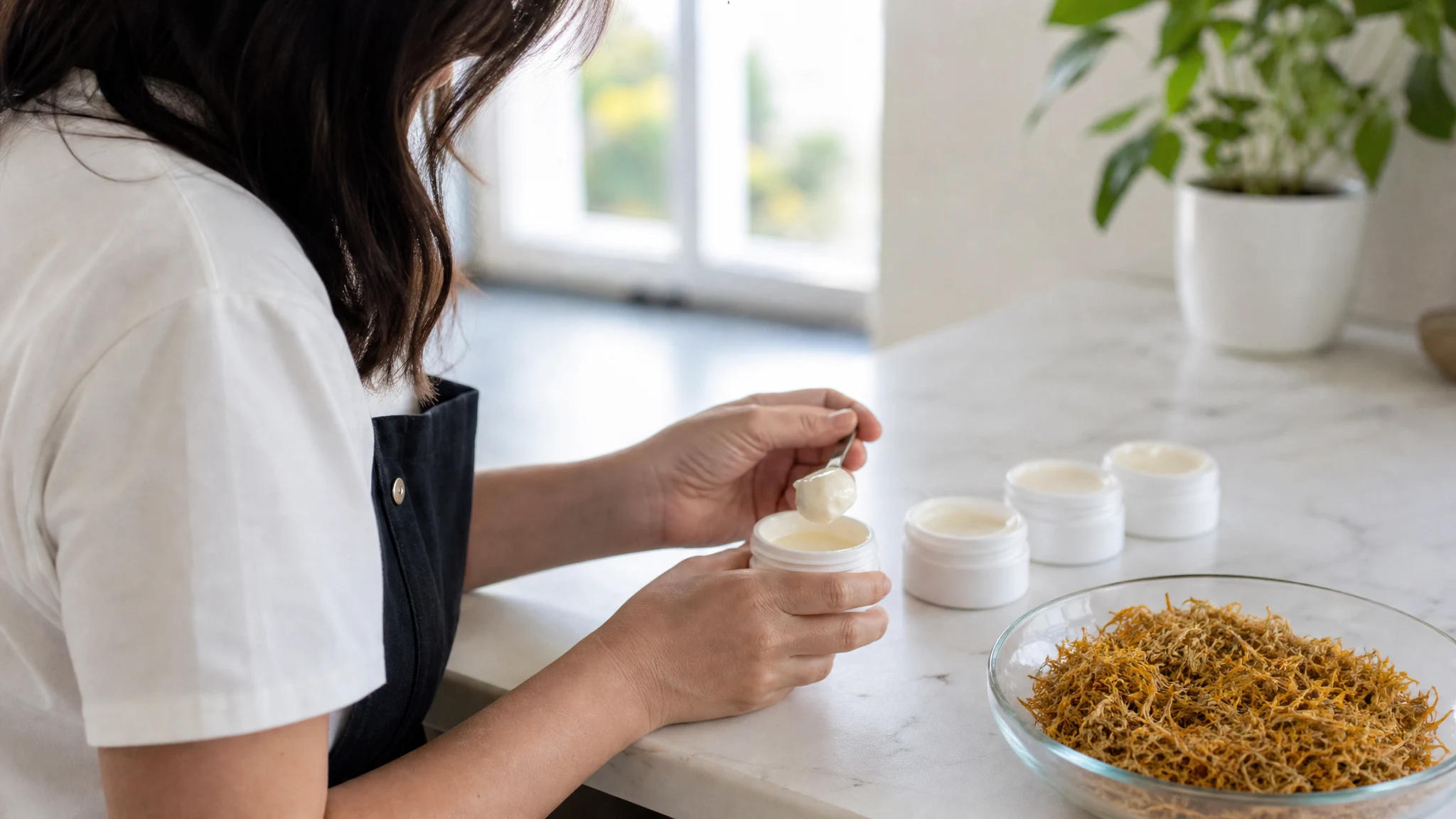
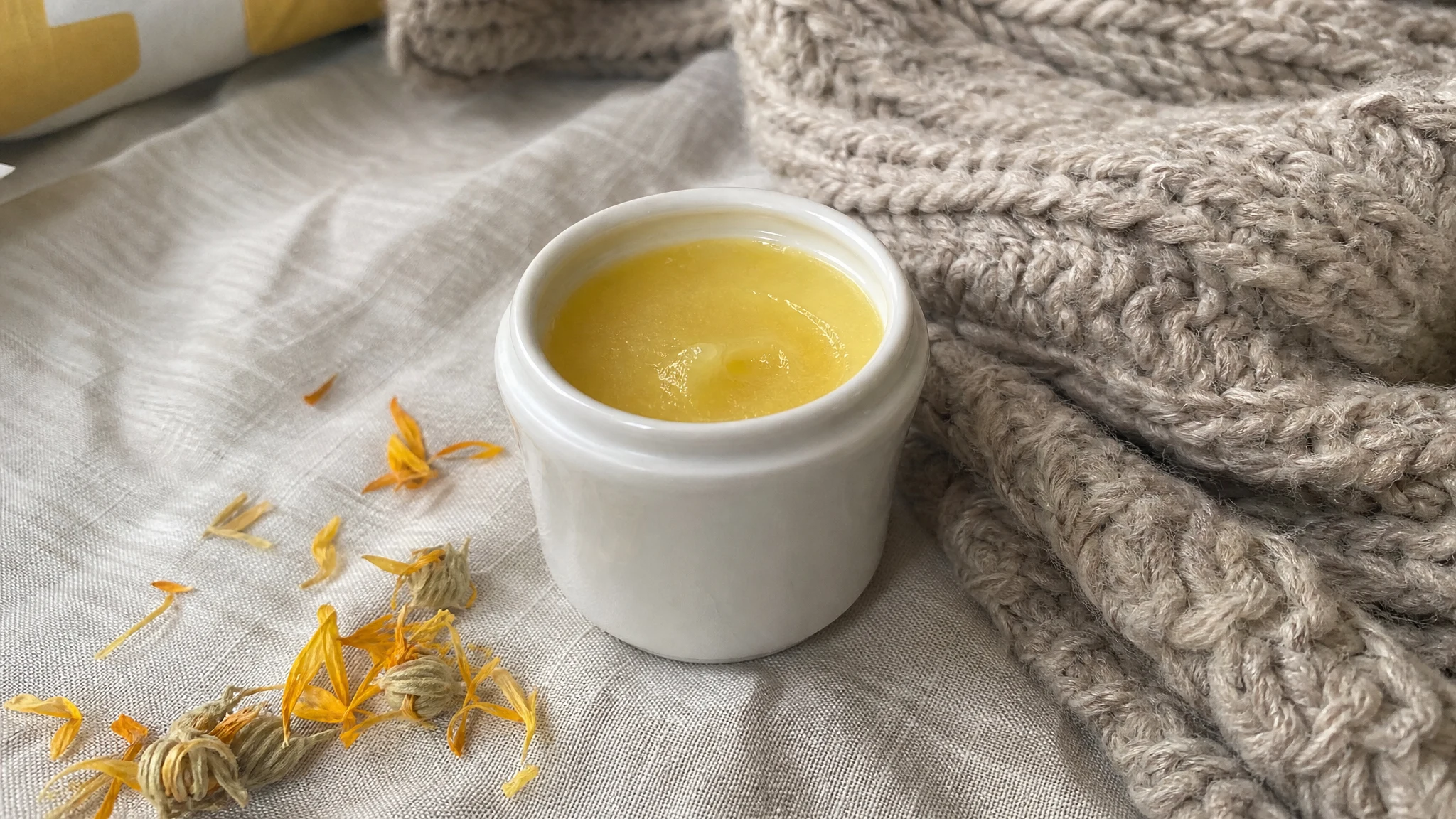
As the balm cools you will see it change from clear gold liquid to a soft, opaque set. If you want to check the firmness before you pour everything, dip a cold spoon into the mixture and wait a minute: that small sample sets quickly and tells you how the tin will feel. Too hard means a little more oil next time, too soft means a little more wax.
Essential oil dilution for a chest balm scent
If you add essential oils, the dilution is where care matters. The National Association for Holistic Aromatherapy says most blends fall between 1 and 5 percent. We would start at the bottom, 1 percent, which is 1 g of essential oil in the 100 g batch (a scale that reads to 0.1 g makes this practical, since drop sizes vary). Which oils to use is worth a conversation with a qualified aromatherapist. A plain, unscented balm is a lovely choice too, and it lets you see how skin takes to the calendula before anything else is added.
One note for households with pets. Pet Poison Helpline explains that cats can absorb essential oils through the skin or swallow them when they groom, and that essential oils and cats do not mix well. A balm on your chest is within reach of a cat that sleeps on you, so keep scented versions away from them and keep tins closed.
Who should skip a calendula chest balm?
Apply a thin layer to the chest only, wash your hands afterward so nothing reaches your eyes, and keep the tin out of children's reach. If a rash or burning appears, stop using it, as the FDA advises.
- Daisy-family allergy. The European herbal monograph lists hypersensitivity to Asteraceae plants as a contraindication, so patch test first. The dermatologists' repeated open application test usually means applying a product twice daily to the forearm for one to two weeks, according to a survey of American Contact Dermatitis Society members (no standard exists). That is longer than a cold lasts, so test before the season starts. See our allergy guide.
- Children. The monograph does not recommend calendula on skin under six. We do not offer a recipe for children; ask a pediatrician.
- Pregnancy and breastfeeding. The monograph says safety has not been established. An OB/GYN or midwife can advise.
- Broken or irritated skin. NAHA notes that damaged skin is often more permeable to essential oils. Keep the balm to intact skin, away from eyes and nose.
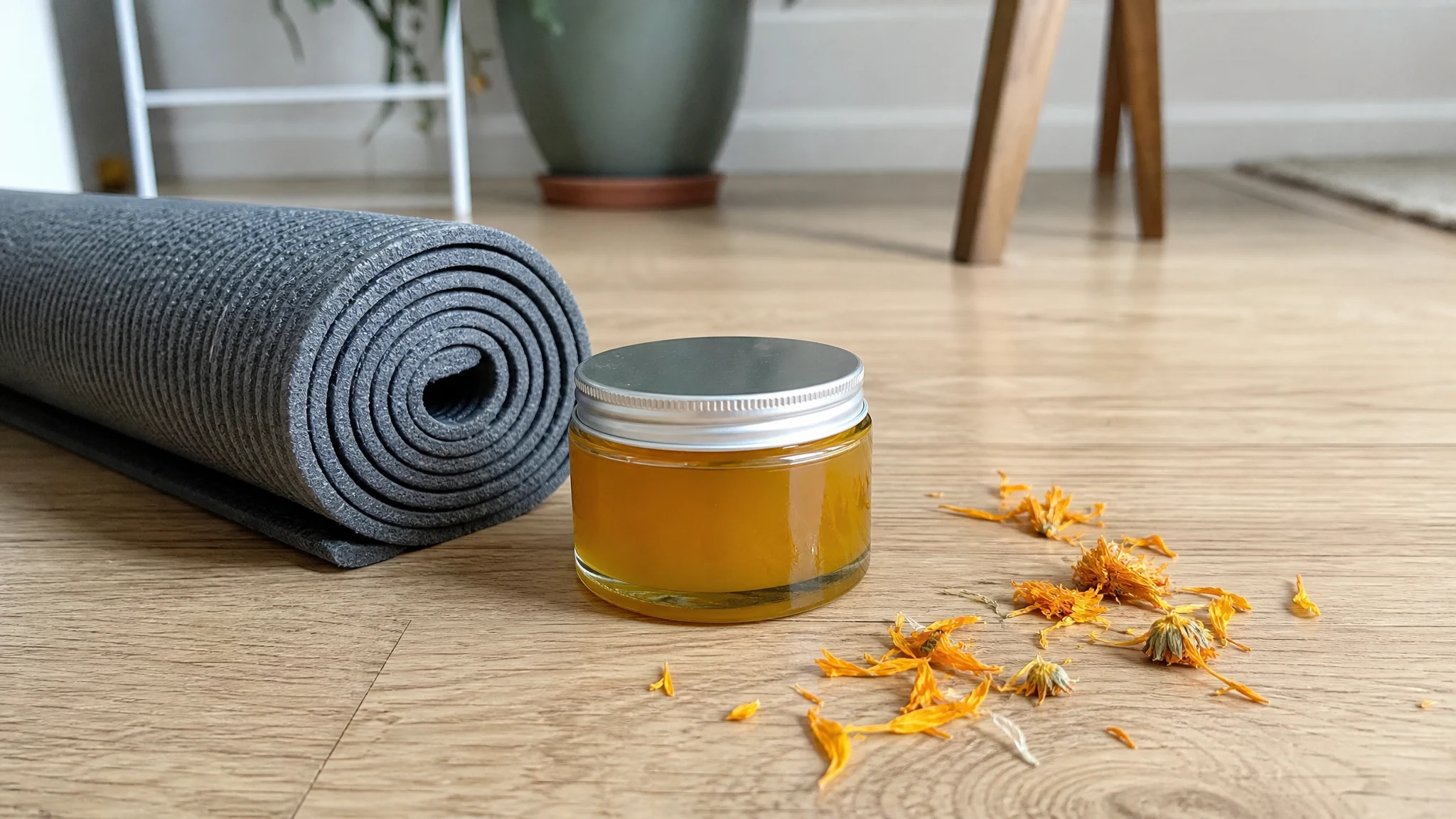
Tins are the nicest container for this, because you can see the golden surface and press a fingertip in. Choose a small one, about 1 to 2 ounces, so you finish it before the season turns. Label it with the date and what went in, and keep it on the nightstand or in a drawer rather than a sunny window.
What a calendula balm can and cannot do
A well-known 2010 trial in children with nighttime cough and cold symptoms compared a commercial vapor rub, petrolatum and no treatment, and found that parents rated the vapor rub best, while petrolatum alone was not significantly better than no treatment. Reasoning from that, a plain greasy base is a vehicle, and a calendula balm is a different product from the one tested. The FDA's aromatherapy guidance makes a related point from the regulatory side: how a product is regulated depends mainly on how it is intended to be used, and promises to relieve conditions move it into drug territory. We keep ours firmly in the cosmetic column. A balm makes a pleasant cold-season ritual; for fever, breathing difficulty or symptoms that worsen, call a doctor. More on how the oil behaves in other bases is in our salve article, and the storage guide keeps it fresh.
Warm it between your fingers, breathe in, and enjoy it for what it is: a small, soft comfort.
If a plain tin of warm, golden balm helps your evening feel a little slower and cozier, that is reason enough to make it.
Calendula Oil
Nature's Golden Botanical, bottled: small-batch calendula oil in sizes from 0.5 oz to bulk.
From $13.99
Shop Calendula Oil →Sources & Further Reading
- Mountain Rose Herbs: How to Make Herbal Salves
- National Association for Holistic Aromatherapy: Safety
- Pet Poison Helpline: Essential Oils and Cats
- European Medicines Agency: European Union herbal monograph on Calendula officinalis L., flos
- Brown GE et al., Dermatitis, 2015: Clinical Utilization of Repeated Open Application Test Among American Contact Dermatitis Society Members
- Paul IM et al., Pediatrics, 2010: Vapor rub, petrolatum, and no treatment for children with nocturnal cough and cold symptoms
- FDA: Aromatherapy
- FDA: Using Cosmetics Safely