14 Calendula Oil Uses in Natural First Aid
One rule runs through all fourteen entries below, and getting it right is the difference between a useful kit and a dangerous one: calendula oil is a cosmetic for intact skin. It is not sterile, it is not a dressing, and it does not belong in an open injury or on a fresh burn. What it does well is the part that comes afterwards, when the skin has closed and is dry, tight and flaking, and that is a real job that most first aid kits have nothing in them for.
 Calendula Oil
Our own small-batch calendula oil, in sizes from 0.5 oz to bulk. From $11.99.
Shop Calendula Oil →
Calendula Oil
Our own small-batch calendula oil, in sizes from 0.5 oz to bulk. From $11.99.
Shop Calendula Oil →
Each section below gives the current procedure for the situation first, then says plainly where the oil fits, and in four of the fourteen the honest answer is that it fits at the edges or not at all. Everything here concerns cosmetic appearance and comfort on unbroken skin. Nothing on this page is medical advice, and the situations that need a clinician are flagged as they come up.
1. Minor Cuts and Scrapes
The sequence is: stop the bleeding with firm direct pressure, rinse the area under clean running water until the grit is out, pat dry, and cover with an adhesive dressing. Covering matters more than most people assume, because a covered graze stays moist and closes with less crusting than one left open to the air.
Keep the oil out of the wound itself. A cold-infused botanical oil is poured in a workshop, not a cleanroom, and open skin is precisely where non-sterile material should not go; an oil film also makes a poor dressing, since it neither adheres nor absorbs. Where calendula oil earns its keep is on the intact skin around the dressing, which gets dried out and irritated by repeated adhesive, and later on the closed, tight, flaking skin once the dressing comes off for good.
Practical takeaway: Anything that will not stop bleeding after ten minutes of firm pressure, gapes open, was caused by something dirty or rusty, or later shows spreading redness, warmth, swelling or pus needs a clinician the same day.
2. Sunburn Support
Cool the skin and replace fluid. Cool showers or repeated cool damp cloths, plenty to drink, and loose clothing over the area. Skip the oil entirely at this stage, for the same reason grease is wrong on any burn: a film of it slows heat leaving the skin, which is the opposite of what the first hours require.
The stage where an oil genuinely helps arrives several days later, when the burn has settled into tight, itchy, peeling skin that is no longer broken. Apply to skin that is still damp from a cool shower rather than to dry skin, because the oil slows water leaving rather than supplying any, and leave the peeling alone rather than pulling it. Nothing topical undoes the UV damage underneath, which is why the only meaningful intervention here is the broad-spectrum SPF 30 or higher you apply fifteen to thirty minutes before going out.
Practical takeaway: Blistering, a burn covering a large area, fever, chills or confusion are reasons to call someone rather than to reach for a bottle.
3. Insect Bite Comfort
Scrape a honeybee sting out sideways with a fingernail or a card edge rather than pinching it, and do it fast; speed matters more than technique. Wash with soap and water, then apply a cold compress for ten to fifteen minutes, which is what actually reduces the swelling and the itch. Then leave it alone, because scratching is what turns a bite into a broken, crusted sore that takes a fortnight instead of two days.
Calendula oil goes on an unbroken bite and the intact skin around it, where it keeps the area from drying and tightening as it settles. If the skin has been scratched open, section one applies instead.
Practical takeaway: Difficulty breathing, swelling of the face, lips or tongue, dizziness, or hives somewhere other than the bite site is an emergency. Call for help immediately rather than applying anything.
4. Dry, Cracked Skin
This is the entry where calendula oil is genuinely the right tool, and the technique matters more than the product. Apply within a few minutes of getting out of the bath or shower, while the skin is still damp: an emollient oil slows the water leaving the stratum corneum rather than adding water to it, so applying it to bone-dry skin at bedtime wastes most of the effect.
Occlusion is the second lever. Heels and hands are thick, slow-turning skin, and an oil rubbed in at night is largely gone in twenty minutes. Apply, then pull on cotton socks or cotton gloves and leave them overnight, which holds the oil against the skin for eight hours instead. For the worst spots, use a wax-thickened balm rather than plain oil; dermatology guidance consistently favours the thicker ointment or cream over the thin lotion for dry skin, and the same logic holds in a jar you make yourself.
Practical takeaway: Cracks that are deep enough to bleed, or that sit over a joint and reopen daily, need covering and a clinician's eye rather than more oil. In diabetes, any foot crack is a same-week appointment.
5. Minor Burns

Twenty minutes of cool running water, started as soon as possible and still worth doing up to three hours after the injury. That is the figure the burns literature and national first aid guidance converge on, and it is associated with less scarring and faster re-epithelialisation in adult and paediatric data alike. Cool water, not iced. Take off rings, watches and anything tight before the area swells. Cover loosely with cling film or a clean non-fluffy cloth.
Put nothing greasy on it. Butter, oil and ointment on a fresh burn slow the release of heat from the skin so the tissue keeps cooking under the film, and grease can carry bacteria into skin that has lost its barrier. This has been standard emergency guidance for decades and it applies to calendula oil exactly as it applies to butter. The oil's turn comes weeks later, on skin that is fully closed and simply dry.
Practical takeaway: Seek care the same day for any burn that blisters, is larger than the palm of the hand, or sits on the face, hands, feet, genitals or across a joint, and for any burn from chemicals or electricity regardless of size.
6. Chapped Lips
Lips chap because of what they are made of. The vermilion has no sebaceous glands, no sweat glands and no hair follicles, and its stratum corneum runs only three to five cell layers, roughly a third the thickness of the stratum corneum on facial skin. The result is measurably higher water loss than anywhere adjacent, and a surface with no ability to oil itself. That is the whole explanation for why lips go first in January.
Because there is nothing to hold a product in place, frequency beats quantity: a thin film reapplied through the day outperforms a thick one applied once. A wax-thickened balm stays put far longer than plain oil, which is why section four's logic repeats here. And stop licking them, which is the single most effective change most people can make; saliva evaporates and takes surface water with it, so the habit feeds itself.
Practical takeaway: Cracking at the corners of the mouth that will not settle, or lip scaling that persists through a change of product, is worth showing to a clinician rather than reapplying over.
7. Diaper Rash Support
The three things that matter are frequent changes, patting rather than rubbing dry, and time out of the diaper altogether. Ten minutes kicking on a towel does more than any product in the drawer.
Be clear about the role you are assigning the oil, because the word barrier gets used loosely. Calendula oil is an emollient: it absorbs, softens and leaves skin smooth. It does not lay down the occlusive film that keeps moisture off skin, which is what the diaper area specifically needs. Use it as the massage oil for legs, back and arms rather than as the barrier product, keep expectations measured, and note that in a pilot assessor-blinded randomised trial of 115 healthy full-term newborns given olive oil, sunflower oil or no oil twice daily for four weeks, both oil groups gained stratum corneum hydration while showing less improvement in lipid lamellae structure than the babies who received no oil at all.
Practical takeaway: No essential oils on an infant at any dilution. Patch test a coin-sized area of outer thigh, read it at 24 and 48 hours, and ask your pediatrician before starting anything new. A rash with raised edges and satellite spots, or one that is not settling in three days, needs to be seen.
8. Bruise Support
A bruise is blood released under intact skin, and the colour sequence everyone recognises, red to purple to green to yellow, is haemoglobin being broken down in place. Nothing applied to the surface speeds that up, and any product that claims otherwise is overselling. What the first day or two responds to is cold and elevation: a covered ice pack for fifteen to twenty minutes at a time, and the limb raised where that is practical.
Calendula oil's contribution here is the massage, not the oil. Gentle work over a settled bruise gives glide so the hands can move without dragging, and it keeps skin that has been iced repeatedly from drying out. Keep the pressure light over tender tissue, and do not massage in the first 48 hours.
Practical takeaway: Bruises appearing without remembered injury, bruising that is unusually frequent or large, or a bruise with a hard lump under it that is growing should be assessed rather than rubbed.
9. Eczema Comfort Support
Eczema is a medical diagnosis with prescription options behind it, and a cosmetic oil is not in that category. The honest position is worth stating without hedging: use what your dermatologist has given you for the condition, and understand that anything on this page addresses how skin looks and feels, not the disease.
Two specifics should temper the assumption that a botanical oil is automatically kind to a damaged barrier. The neonatal trial cited above found less improvement in lipid lamellae structure in the oil groups than in the no-oil group, which is a real finding rather than a footnote. And sensitised skin is the skin most likely to react: in a series of 443 consecutive patch-tested patients, about 2% reacted to marigold and about 4% to the Compositae mix, and those numbers do not improve on inflamed skin. If you already react to ragweed, chrysanthemum or daisy, that matters here.
Practical takeaway: A flare is the worst possible time to introduce a new botanical. Patch test on clear skin, on the inner forearm, twice daily for seven to fourteen days, and involve your dermatologist before adding anything to a managed routine.
10. Nail and Cuticle Care
Set the timeframe before you start, because most disappointment here is a calendar problem. Measured in healthy young adults, fingernails grow about 3.47 mm a month and toenails about 1.62 mm, so a fingernail takes four to six months to grow out from matrix to free edge and a big toenail can take a year and a half. An oil changes how the cuticle and the nail surface look within days. It cannot change a nail plate that has already formed.
Apply after washing, while the nail folds are still slightly damp, and massage into the fold rather than painting the plate. The practical target is the skin: a soft, intact cuticle seals the gap at the base of the nail, and a dry, split one is what catches and tears. Leave the cuticle itself in place rather than cutting it.
Practical takeaway: A nail that is lifting from its bed, thickening, changing colour, or a fold that is red, hot and swollen is not a moisturiser problem and should be looked at.
11. Razor Burn Relief
Shaving is controlled abrasion: the blade takes the top of the stratum corneum along with the hair, which is why alcohol-based aftershave stings. Most of what gets blamed on the aftershave actually belongs to the shave. A blade used past its life pulls instead of cutting, shaving against the grain on the neck is the classic route to ingrown hairs, and stretching the skin flat while you shave sets the cut hair to retract below the surface. Fix those three and the rest largely takes care of itself.
Apply two or three drops to skin that is still damp, before it dries, and let it absorb before anything else goes on. More than that sits on the surface and transfers to the collar. Going a day between shaves where you can is the other change with a visible effect.
Practical takeaway: Persistent bumps along the jaw and neck that come back every shave, or anything that becomes tender and pustular, is worth a dermatologist's assessment rather than another product.
12. Age Spot and Blemish Support
This is a section where the useful answer is a limit. Age spots are solar lentigines: chronic UV exposure drives melanin production up and, in older skin with slower epidermal turnover, that pigment is also retained longer. The pigment sits in the epidermis and in melanin-laden cells below it. An emollient oil does not reach it and does not lighten it, and anyone telling you otherwise is selling something.
What does work on lentigines is prevention and procedure: broad-spectrum SPF 30 or higher applied fifteen to thirty minutes before going outdoors is the only intervention that stops new ones forming, and existing spots are a dermatologist's territory. Calendula oil's honest role on those hands is the same as in section four, which is keeping thin, dry, sun-exposed skin comfortable and less flaky. That is a smaller claim than the internet usually makes and it is the one that survives contact with the evidence.
Practical takeaway: Any pigmented spot that changes shape, colour or size, has an irregular border, bleeds, or simply looks different from its neighbours needs a dermatologist promptly. Do not apply anything to it and watch.
13. Stretch Mark Support
The evidence base for topical prevention of stretch marks is thin and mostly negative, and it is more respectful to say so. Reviews of prevention in pregnancy conclude that no preparation has been shown to prevent stretch marks developing, and cocoa butter and olive oil specifically have not performed. What limited positive signal exists attaches to formulations containing Centella asiatica and, weakly, to massage itself rather than to whatever was being massaged in.
Read that carefully, because it points at the one thing you control: the massage. Daily, deliberate, ten-minute work with an oil that gives glide is the part of the routine with any support behind it, and a slow-absorbing infused oil is a good vehicle for it. Skin stretched by pregnancy, growth or training also gets itchy and tight, and an emollient genuinely addresses that. Expect comfort and appearance, not erasure. Established silvery striae do not come back with any topical.
Practical takeaway: In pregnancy, clear any new topical with your midwife or obstetrician first, including botanical ones, and keep essential oils out of it entirely.
14. General Skin Irritation Support
For the everyday category that fits nowhere else, wind-scoured cheeks, a mask line, a patch rubbed raw by a rucksack strap or a new boot, the approach is the same each time. Remove whatever is causing the friction first, because no product outruns an ongoing rub. Wash with lukewarm water and a non-foaming cleanser rather than hot water and soap. Apply while damp. Then stop adding products, since stacked actives on already-irritated skin is the most common way people make a small problem last a fortnight.
A plain, fragrance-free, single-ingredient oil is a reasonable choice here precisely because it is boring. Fragrance and preservatives account for a large share of positive cosmetic patch test results, and a simplified routine removes those variables while the skin settles.
Practical takeaway: Redness that spreads, skin that is hot to the touch, anything weeping or crusting yellow, or irritation with fever is an infection question and needs a clinician, not a simplified routine.
Safety Considerations for Natural First Aid
Patch test properly. The clinic standard is a 48-hour occluded patch read at 48 and 96 hours, but for a leave-on product you plan to use daily the more informative home version is the repeat open application test: apply twice a day to the same 2 to 3 cm patch of inner forearm for seven to fourteen days and watch for anything that appears after day three. Single-day tests miss exactly the late reactions that matter. The background rates are low but not zero, at roughly 2% for marigold and 4% for the Compositae mix in that 443-patient series, and the Cosmetic Ingredient Review panel's 2010 amended assessment, which concluded calendula-derived cosmetic ingredients are safe at cosmetic use concentrations, also flagged them as possible mild ocular irritants. Keep it away from the eye itself.
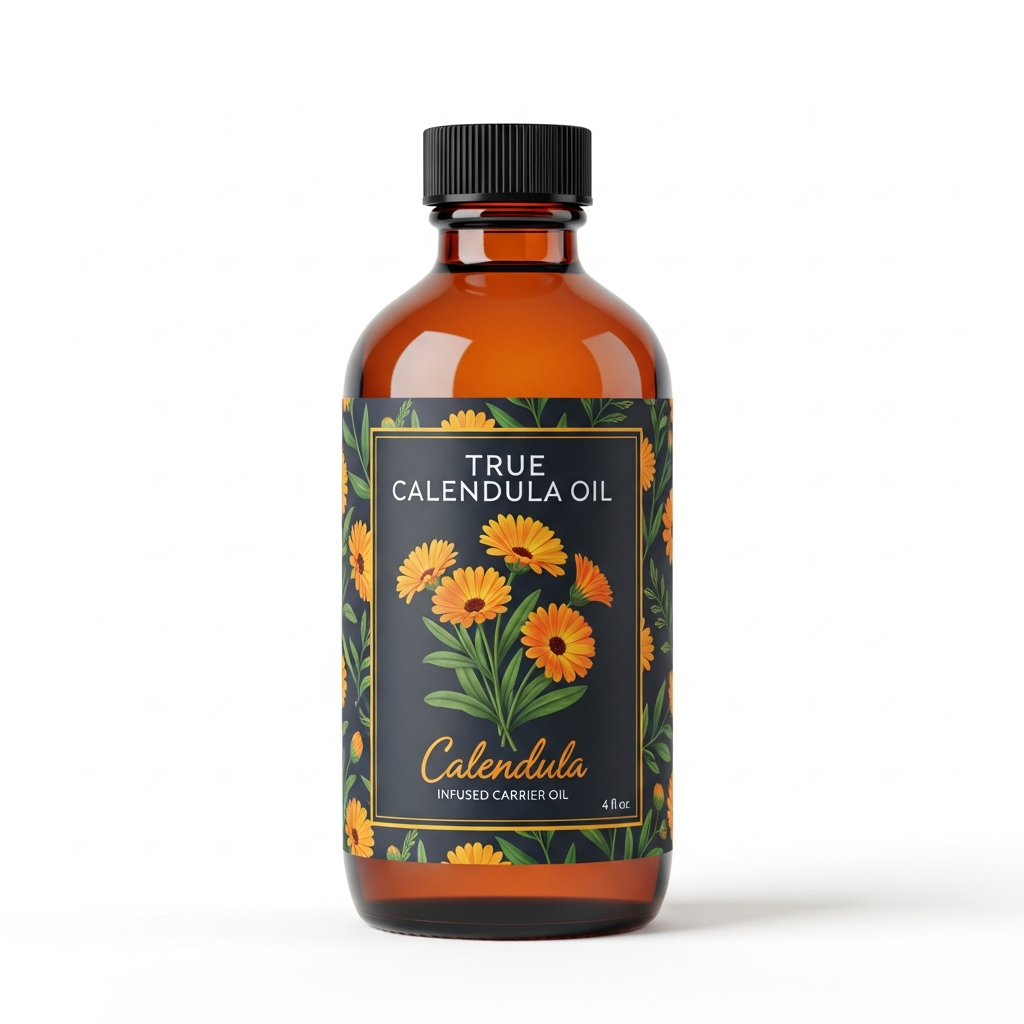
Buy an oil that publishes numbers, because a first aid kit is exactly where you do not want to be guessing. Our own True Calendula Oil is organic Calendula officinalis petals cold-infused into Helianthus annuus seed oil, and each batch carries a certificate of analysis reporting relative density 0.922 at 20°C against a range of 0.910 to 0.930, refractive index 1.475 against 1.465 to 1.477, and optical rotation +0.16° inside a window of -1.0° to +1.0°. A 0.5 oz bottle at $11.99 is the right size for a kit that gets opened occasionally; anything larger will oxidise before a kit uses it.
Important reminders: Nothing on this page is sterile and nothing on it is a dressing. Deep wounds, burns beyond the very minor, signs of infection and anything that is not settling belong with a clinician.
Building Your Natural First Aid Kit
The kit this article implies is mostly not oil, and that is the point. Cool running water is free and is the single most valuable burn intervention you have. Add adhesive dressings in two or three sizes, a roll of non-adherent dressing and tape, a reusable cold pack, disposable gloves, tweezers with a fine point for splinters and stingers, and blunt-nosed scissors. Calendula oil is the aftercare item on that list, alongside a wax-thickened balm for hands and lips.
Store it like the perishable it is. Infused oil in a sunflower base is rich in linoleic acid, which is what makes it light and quick to absorb and also what makes it oxidise; heat and light both accelerate that. A kit that lives in a car boot through a summer will hold oil that smells like putty by autumn. Amber glass, a cool cupboard, and a date written on the bottle solves it. Check the kit twice a year and replace what has turned.
Above all, keep the boundary straight in your own head, because that is what makes the kit safe rather than merely well stocked. Water cools burns. Pressure stops bleeding. Dressings cover wounds. Cold packs reduce swelling. Calendula oil looks after the dry, tight, intact skin that all of the above leaves behind, and that job is worth doing well.
Calendula Oil
Nature's Golden Botanical, bottled: small-batch calendula oil in sizes from 0.5 oz to bulk.
From $11.99
Shop Calendula Oil →